Face and Body Cleanser: Can One Wash Do Both? Best Picks (2026)
Yes, one gentle cleanser can do both if it is face-safe. Here is when to use one or two, the best face and body cleansers in India, and how to use them.


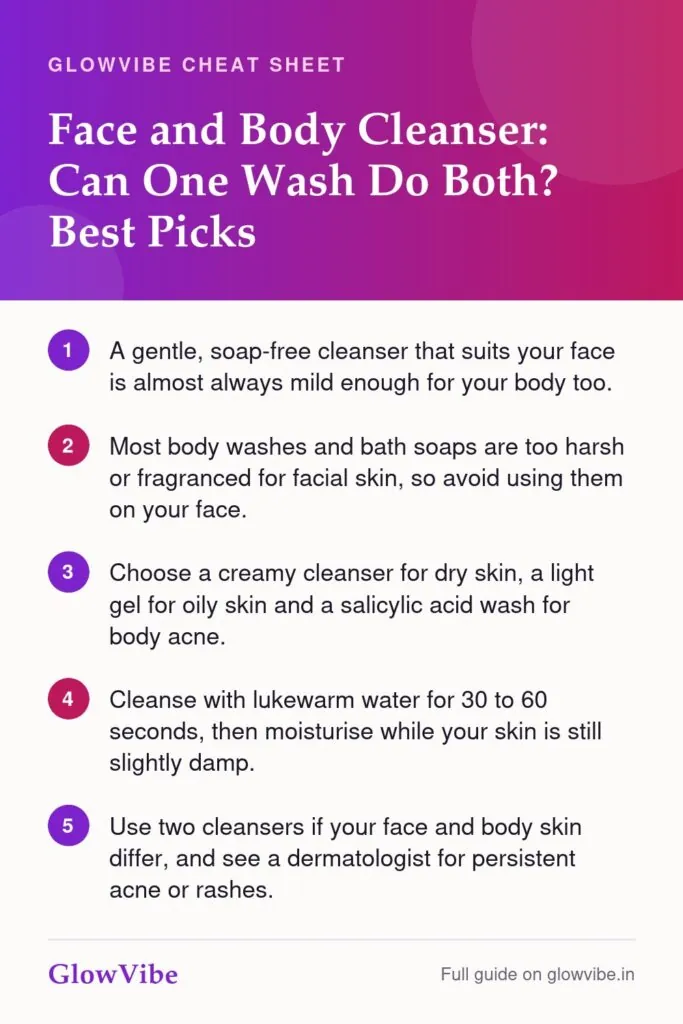
Yes, you can use one face and body cleanser for both, as long as it is gentle, soap-free and labelled for the face. A mild, low-foam wash that suits your facial skin will almost always be fine for your body, but the reverse is not true: most body washes are too harsh or too fragranced for the face.
This guide explains when a single cleanser makes sense, when you are better off with two, which well-known face and body cleansers sold in India are worth considering, and how to use them so your skin feels clean but never tight.
Can you use the same cleanser for face and body?
Facial skin is thinner, has more oil glands and is more reactive than the skin on your arms, legs or back. That is why a face cleanser has to be gentler. A cleanser built for the face, especially one that is Fragrance-freeA product with no added perfume or essential oils for scent. Often the safer pick for sensitive or reactive skin. "Unscented" can still contain masking fragrance.See glossary and close to skin’s natural pH, is usually mild enough for the whole body too.
Body washes and bathing soaps are a different story. Many contain stronger cleansing agents, more fragrance and a higher pH, which can leave facial skin dry, tight or prone to breakouts. So the safe rule is simple: start with a face-safe cleanser and extend it to the body, not the other way round.
When one cleanser works well
- Your face and body have roughly the same skin type (both normal, both dry).
- You want a short, budget-friendly routine or travel light.
- You have sensitive or eczema-prone skin and need one fragrance-free formula that never stings.
- You are cleansing a child’s or teenager’s skin and want to keep things simple.
When two cleansers are better
- Your face is oily or acne-prone but your body is dry (very common in Indian winters).
- You have body acne on the back or chest that needs an active ingredient like Salicylic acidThe most common BHA. It dissolves oil inside pores, which helps with blackheads, whiteheads and oily skin. Usually used at 0.5 to 2%.See glossaryRead the guide.
- You use active facial products such as RetinolA vitamin A derivative that speeds up skin renewal for smoother texture, fewer clogged pores and fewer visible fine lines. Use at night and wear sunscreen by day.See glossaryRead the guide, and want a very plain wash on the face.
- You love a scented shower gel; keep that for the body and use something unscented on the face.
Face and body cleansers at a glance
These are well-established cleansers, widely sold in India, that are labelled for use on both face and body. Check the current pack before you buy, as formulas and labels do change.
| Cleanser | Best for | Texture | Price band |
|---|---|---|---|
| Cetaphil Gentle Skin Cleanser | Sensitive, normal and dry skin | Light, low-foam lotion | Mid-range |
| CeraVe Hydrating Cleanser | Normal to dry skin, winter dryness | Creamy, non-foaming | Premium |
| CeraVe Foaming Cleanser | Normal to oily skin, humid summers | Gel that foams lightly | Premium |
| CeraVe SA Smoothing Cleanser | Rough, bumpy skin and body breakouts | Gel with salicylic acid | Premium |
| Sebamed Liquid Face & Body Wash | Normal and sensitive skin, families | Soap-free liquid wash | Mid-range |
The best face and body cleansers in India, in detail
1. Cetaphil Gentle Skin Cleanser
This is the classic dermatologist-friendly wash that many people already know. It is a thin, lotion-like cleanser that barely foams and is designed for face and body. You can rinse it off with water or, on very dry or irritated days, wipe it off with a soft cloth.
- Who it suits: sensitive, dry and normal skin; people who react to fragrance.
- Pros: very mild, easy to find, works for the whole family.
- Cons: will not remove heavy makeup or waterproof sunscreen on its own; may feel too light for very oily skin.
2. CeraVe Hydrating Cleanser
A creamy, non-foaming wash with CeramidesFats that naturally hold skin cells together like mortar between bricks. Moisturisers with ceramides help support a dry or damaged skin barrier.See glossaryRead the guide, Hyaluronic acidA humectant that holds water in the skin for a plump, hydrated look. Despite the name, it is not an exfoliating acid. Apply on damp skin.See glossaryRead the guide and GlycerinOne of the most common and effective humectants. It draws water into the skin and is found in most moisturisers and cleansers.See glossary. It cleans without that squeaky feeling, which makes it a good pick for dry skin, Delhi or north Indian winters, and anyone whose Skin barrierThe outermost layer of skin that keeps water in and irritants out. A damaged barrier feels tight, stings and reacts more easily.See glossaryRead the guide feels fragile.

- Who it suits: normal to dry skin, flaky shins and elbows, tight-feeling cheeks.
- Pros: fragrance-free, leaves skin soft, comfortable for daily face and body use.
- Cons: some oily-skin users find it does not feel “clean” enough in humid weather.
3. CeraVe Foaming Cleanser
The gel sibling of the hydrating version, made for normal to oily skin. It gives a light foam that lifts sweat and excess oil, which helps in Mumbai, Chennai or Kolkata humidity, but it still contains ceramides so it is not as stripping as a harsh soap.
- Who it suits: oily and combination skin; anyone who sweats a lot or works out daily.
- Pros: fresh, clean finish without tightness; fragrance-free.
- Cons: may be too much for dry or sensitive skin in winter.
4. CeraVe SA Smoothing Cleanser
This one contains salicylic acid, a gentle exfoliant that loosens dead skin and clears clogged pores. It is useful for rough, bumpy arms (keratosis pilaris), back and chest breakouts, and congested skin on the face.
- Who it suits: body acne, rough texture, oily and acne-prone faces.
- Pros: combines ExfoliationRemoving dead skin cells from the surface, either with acids and enzymes (chemical) or scrubs and tools (physical). Two to three times a week is plenty for most people.See glossary with ceramides; works well as a targeted body wash.
- Cons: not for daily face use if you also use retinol or other acids; can dry sensitive skin.
5. Sebamed Liquid Face & Body Wash
A soap-free liquid wash formulated at pH 5.5, close to the skin’s natural acidity. It is a sensible family bottle for the bathroom when different people with normal or sensitive skin share one cleanser.
- Who it suits: normal and sensitive skin; households that want one bottle.
- Pros: mild, soap-free, widely available at chemists.
- Cons: not designed to remove makeup; very reactive skin should check the label for fragrance before buying.
How to choose a face and body cleanser
Choose for your face first, because it is the more demanding area. Then check that the same cleanser feels comfortable on your body after a week of use. If you want a deeper read on the basics, our guide to soap-free cleansers explains why the formula type matters.
By skin type
- Oily skin: a gel or light foaming cleanser; salicylic acid two or three times a week if you get breakouts.
- Dry skin: cream or lotion cleansers with glycerin, ceramides or hyaluronic acid.
- Combination skin: a mild gel that balances oil without tightness.
- Sensitive skin: fragrance-free, soap-free, low-foam formulas with a short ingredient list.
For Indian weather and water
- Humid summers and monsoon: a light gel or foam handles sweat and sunscreen better than a cream.
- Dry winters: switch to a creamy wash and follow with moisturiser while skin is still damp.
- Hard water: minerals in hard water can leave skin feeling dry and tight, so a gentle, moisturising cleanser and a good body lotion matter even more.
- Pollution and heat: city dust and sweat call for a thorough evening cleanse, not harsher products.
Label checks
- Look for “face and body” or “for face” on the pack, not only “body wash”.
- Prefer “soap-free” and “fragrance-free” if your face is sensitive.
- Skip gritty scrub particles for daily face use; they are too rough.
- If your skin feels squeaky or tight after rinsing, the cleanser is too strong for you.
How to use a cleanser on your face and body
Good technique matters as much as the product. A gentle cleanser used roughly, with very hot water, can still dry your skin out.

On your face
- Wash your hands, then wet your face with lukewarm water.
- Use a coin-sized amount and massage it in with your fingertips for 30 to 60 seconds, including the sides of the nose and hairline.
- Rinse thoroughly and pat dry with a clean, soft towel.
- Apply moisturiser within a minute or two, and sunscreen in the morning.
- Keep the shower or bucket bath warm, not hot, and short.
- Focus the cleanser on sweaty areas: underarms, groin, feet, back and chest. Elsewhere, a light pass is enough.
- For a salicylic acid wash on body acne, leave the lather on for a minute before rinsing.
- Pat dry and apply body lotion on slightly damp skin. If your body is oily, see our picks for non-greasy body lotions for oily skin.
- Using bath soap on your face. Many bar soaps are alkaline and can leave facial skin tight and irritated.
- Over-washing. Cleansing three or four times a day strips oil and can make oily skin produce even more.
- Very hot water. It feels good, especially in winter, but it dries out both face and body.
- Scrubbing with loofahs every day. Rough loofahs and harsh scrubs can damage your skin barrier and darken friction areas.
- Stacking acids. Using a salicylic acid wash plus exfoliating toners and retinol at night can lead to redness and peeling.
- Skipping moisturiser. Even oily skin needs a light moisturiser after cleansing.
If you wear makeup or waterproof sunscreen, take it off first with a cleansing oil, balm or micellar water, then use your regular cleanser. Our guide to makeup remover face washes covers this double-cleanse step.
On your body
Common cleansing mistakes
If your skin already stings, flakes or feels tight with every product, read our guide to repairing a damaged skin barrier and keep your cleanser as plain as possible for a few weeks. For persistent body acne, painful cysts or a rash that does not settle, see a dermatologist rather than switching washes again and again.
Frequently Asked Questions
It is best not to, unless the pack says it is suitable for the face. Most body washes contain more fragrance and stronger cleansers than facial skin needs. A cleanser labelled “face and body” is the safer choice.
Yes. A face wash is usually gentle enough for the body, so it will not harm your skin. The only downside is cost, because small face wash tubes run out quickly when used for the whole body.
Twice a day suits most people: once in the morning and once at night. Dry or sensitive skin can do a water-only rinse in the morning. For more on this, read whether you should wash your face in the morning.
Use lukewarm water. Hot water strips natural oils and can leave skin red and dry, while cold water does not rinse away oil and sunscreen as well. A cool splash at the end is fine if you enjoy it.
Only if you wear makeup, waterproof sunscreen or heavy sunscreen on the face. In that case, an oil, balm or micellar water first and then your regular cleanser removes everything without scrubbing. On no-makeup days, one cleanse is enough.
Many people tolerate it daily on the back and chest, but start with three or four times a week and watch for dryness. Use it on the face only if you are not already using other acids or retinol. If breakouts persist after a few weeks, consult a dermatologist.
Quick poll
How much do you usually spend on one beauty product?
The bottom line
A good face and body cleanser is gentle, soap-free and comfortable enough for your face, because anything that suits your face will suit your body. Pick a creamy formula for dry skin, a light gel for oily skin, and keep salicylic acid washes for breakouts. Then pair it with moisturiser, as in a simple cleanser, toner and moisturiser routine, and your skin should feel clean, soft and never tight.