Functional Training: 8 Best Exercises + 4-Week Beginner Plan (2026)
Functional training builds real-life strength through squats, hinges, lunges, pushes, pulls and carries. Learn the 8 best beginner exercises and follow a simple 4-week plan.

Functional training means training movement patterns you actually use in daily life (squatting, hinging, pushing, pulling, lunging, carrying and rotating) instead of isolating one muscle at a time. Done two or three times a week, it builds strength, balance and stamina that carry over to lifting a gas cylinder, climbing stairs, picking up a child or playing weekend cricket without a sore back.
This guide explains what functional training is, how it differs from regular gym training, the best functional training exercises for beginners, and a simple 4-week plan you can follow at home or in the gym.
What is functional training?
Functional training is a style of exercise built around whole-body movements rather than machines that lock you into one path. Most exercises work several joints and muscle groups together, and many ask you to stabilise your trunk while your arms or legs move. That is exactly what your body does when you lift a bucket of water or reach for a suitcase on a high shelf.
It is not a special kind of equipment or a branded class. You can train functionally with just your bodyweight, or add dumbbells, kettlebells, resistance bands, a medicine ball or a sandbag. What matters is the movement, not the tool.
Most coaches group functional exercises into seven basic patterns:
- Squat: sitting down and standing up, getting up from the floor.
- Hinge: bending at the hips to pick something up with a flat back.
- Lunge: climbing stairs, stepping over things, single-leg balance.
- Push: pushing a door, getting up off the floor, lifting things overhead.
- Pull: pulling open a heavy door, rowing, drawing water, lifting a bag onto your shoulder.
- Carry: bringing home grocery bags or carrying a toddler.
- Rotate / anti-rotate: twisting to reach the back seat, or staying steady when something pulls you off balance.
Functional training vs traditional strength training
Traditional bodybuilding-style training often isolates muscles (bicep curls, leg extensions, chest fly machines) to grow each one. Functional training links muscles together and adds balance and coordination. Neither is “better”; they suit different goals, and most good programmes mix both.
| Aspect | Functional training | Traditional (isolation) training |
|---|---|---|
| Main focus | Movement patterns and real-life strength | Size and strength of individual muscles |
| Typical exercises | Squats, lunges, kettlebell swings, carries, push-ups | Bicep curls, leg extension, pec deck, lateral raises |
| Equipment | Bodyweight, kettlebells, dumbbells, bands, medicine ball | Machines, cables, barbells, dumbbells |
| Core involvement | High in almost every exercise | Lower; often trained separately |
| Balance and coordination | Trained directly | Trained little |
| Best for | General fitness, everyday ease, sports, healthy ageing | Muscle building, bodybuilding, fixing a weak muscle |
| Where you can do it | Home, park, terrace or gym | Mostly in a gym |
If you already follow a split like a push pull legs workout routine, you don’t need to abandon it. Swap one or two isolation moves per session for a functional one, such as walking lunges or farmer’s carries, and you get the best of both.
Benefits of functional training
Because each exercise uses many muscles at once, functional workouts give you a lot of return for the time spent. Here is what regular practice tends to improve:
- Everyday strength: lifting, carrying and climbing feel easier because you train those exact patterns.
- Core stability and posture: your trunk works in almost every move, which helps if you sit at a desk or on a two-wheeler for hours.
- Balance and coordination: single-leg and rotational moves train control, which becomes more important as you age.
- Heart fitness and calorie burn: full-body moves done in circuits raise your heart rate, so you get some cardio benefit alongside strength.
- Muscle maintenance: regular resistance work helps you keep muscle mass, which naturally declines from your thirties onwards.
- Lower injury risk in daily life: learning to hinge and brace properly can make you less likely to strain your back when lifting things.
- Flexibility in where you train: a small space and one or two pieces of kit are enough.
For a broader look at why moving more matters, see our guide to the benefits of exercise in India and how to start.
8 best functional training exercises for beginners
These eight exercises cover every basic pattern. Start with bodyweight or light loads, master the form, and only then add weight.
1. Goblet squat (squat)
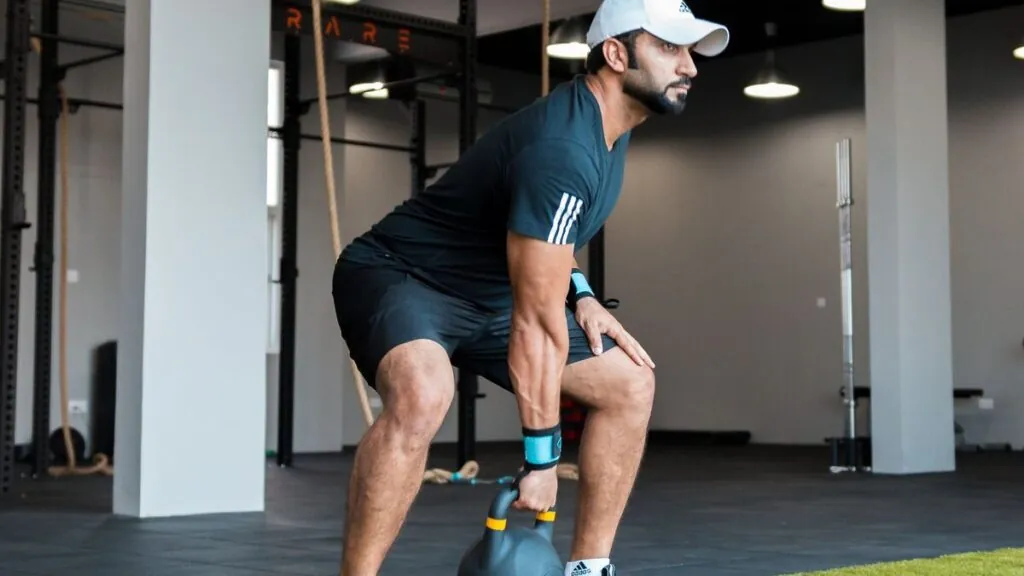
Hold a dumbbell or kettlebell at your chest, feet about shoulder-width apart. Sit your hips down and back, keeping your chest up and knees tracking over your toes, then stand by pushing through your whole foot. No weight yet? Do bodyweight squats to a chair first.
2. Kettlebell or dumbbell Romanian deadlift (hinge)
Stand tall holding the weight in front of your thighs. Soften your knees, push your hips back and slide the weight down your legs until you feel a stretch in your hamstrings, keeping your back flat. Squeeze your glutes to stand. This is the pattern that protects your back when you lift things off the floor.
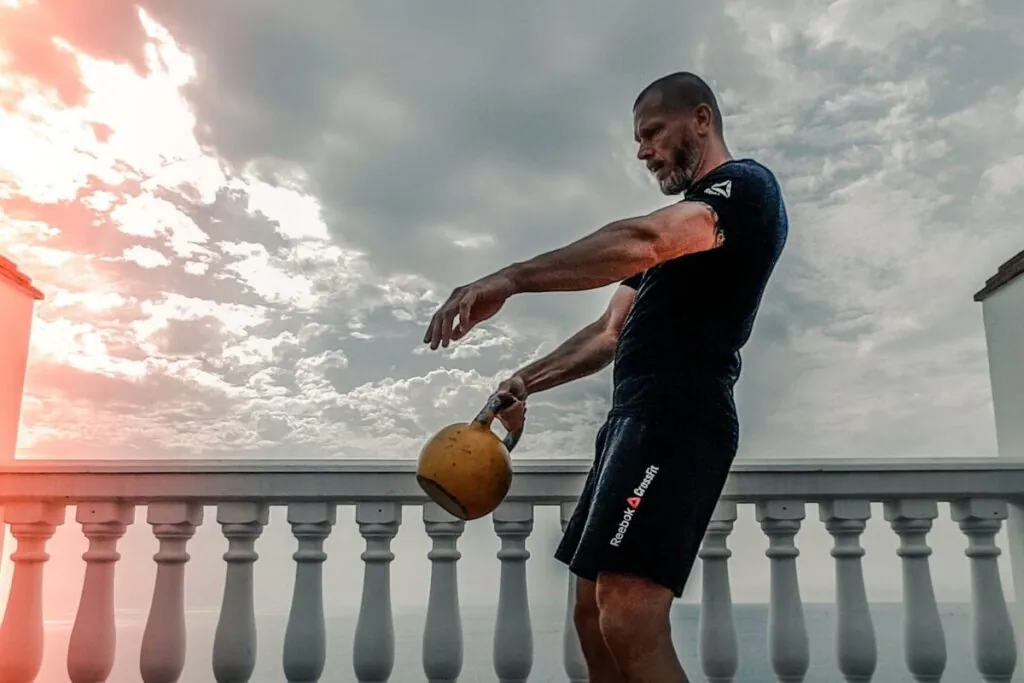
3. Kettlebell swing (explosive hinge)
Once your deadlift hinge is solid, the swing turns it into power. Hike the kettlebell back between your legs, then snap your hips forward so the bell floats to chest height. Your arms only guide it; the force comes from your hips. Keep sets short (10–15 reps) and stop when your form slips.
4. Reverse lunge (lunge)
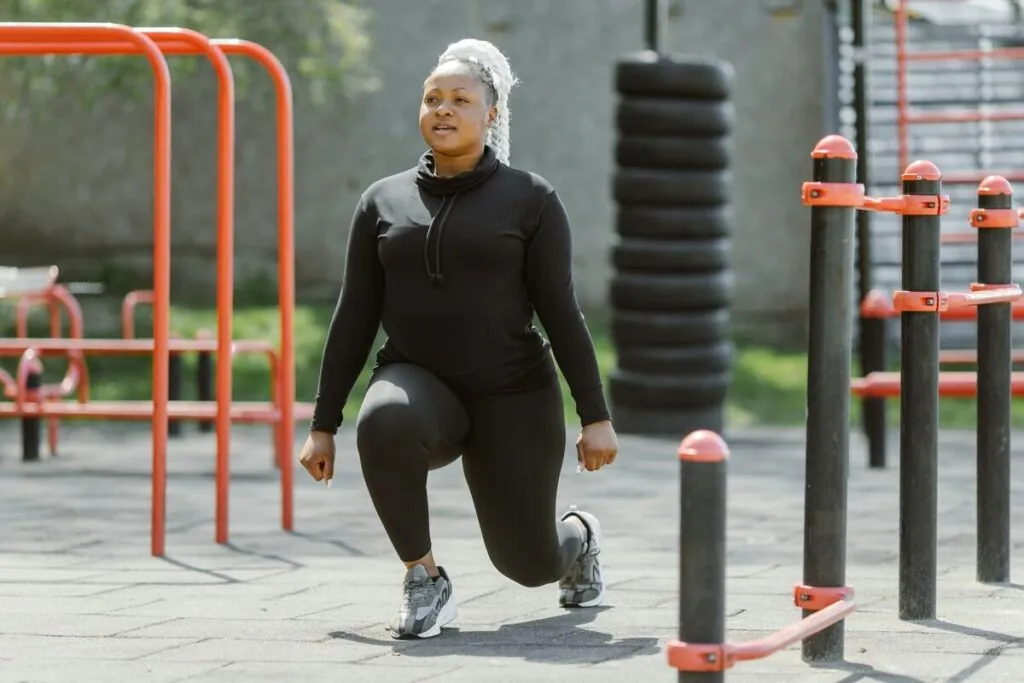
Step one foot back and lower until both knees are bent at roughly 90 degrees, front knee over the ankle and torso upright. Push through the front heel to return. Reverse lunges are kinder on the knees than forward lunges, so they are a good starting point.
5. Push-up (push)
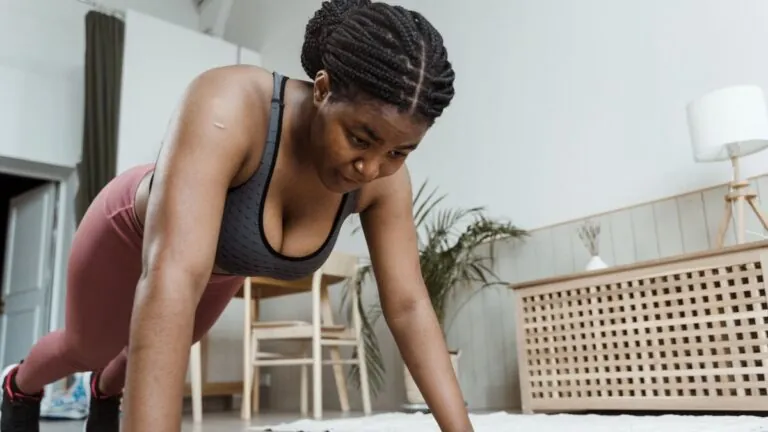
Hands slightly wider than shoulders, body in a straight line from head to heels. Lower your chest towards the floor with elbows at about 45 degrees to your body, then press up. If full push-ups are too hard, do them with your hands on a wall, a sturdy table or a step.
6. Single-arm dumbbell row or band row (pull)
Support one hand on a bench or chair, back flat, and pull a dumbbell towards your hip, squeezing your shoulder blade back. At home, loop a resistance band around a strong pole or door anchor and row it towards your ribs. Pulling balances all the pushing and sitting we do. Our back exercises for beginners guide has more pulling options.
7. Farmer’s carry (carry)
Hold a heavy dumbbell, kettlebell or even a filled water can in each hand. Stand tall, shoulders down, and walk for 20–30 metres without leaning. It builds grip, shoulders and core all at once, and is about as “real life” as exercise gets.
8. Dead bug or Pallof press (anti-rotation core)
For the dead bug, lie on your back with arms up and knees bent over hips, press your lower back gently into the floor, and slowly extend the opposite arm and leg. For the Pallof press, hold a band anchored to your side at chest height and press it straight out without letting it twist you. Both teach your core to resist movement, which is its main job. For more ideas, try this core exercise routine at home.
4-week beginner functional training workout plan
Train three non-consecutive days a week (for example Monday, Wednesday, Friday). Each session takes about 35–45 minutes including warm-up. Rest 60–90 seconds between sets.
| Week | Format | Sets x reps | Focus |
|---|---|---|---|
| Week 1 | Bodyweight or very light weights | 2 x 10 (carry: 2 x 20 m) | Learn form, slow and controlled |
| Week 2 | Light weights | 3 x 10 (carry: 3 x 20 m) | Same form, one extra set |
| Week 3 | Slightly heavier weights | 3 x 12 (carry: 3 x 30 m) | Add load or reps, not both at once |
| Week 4 | Circuit style | 3 rounds, 40 s work / 20 s rest | Build stamina while keeping form |
Workout A (Monday and Friday):
- Goblet squat
- Push-up (any variation)
- Single-arm row
- Farmer’s carry
Workout B (Wednesday):
- Romanian deadlift (add kettlebell swings from week 3 if your hinge feels solid)
- Reverse lunge
- Band or dumbbell row
- Dead bug or Pallof press
On the other days, walk, cycle or do light interval training to build your aerobic base. Keep at least one full rest day each week.
How to do a functional workout safely
Warm up for 5–8 minutes
Start with brisk marching or skipping, then move each joint: arm circles, hip circles, bodyweight squats, hip hinges with your hands on your thighs, and a few slow lunges. The goal is to feel warm and loose, not tired.
Put form before load
Move through a full, comfortable range with control. If you need to jerk, lean or bounce to finish a rep, the weight is too heavy. Filming a set on your phone is an easy way to check your back angle and knee position.
Progress slowly, regress without guilt
Each week, change only one thing: a little more weight, a couple more reps, or one extra set. On days you feel low on energy, or while coming back from a niggle, drop back to an easier version. Steady progress beats big jumps that end in injury.
Adjust for Indian weather
In humid summers and pre-monsoon heat, train early morning or after sunset, and keep a water bottle within reach. If you train on a terrace or in a park, take a few extra rest seconds when it is very hot, and stop if you feel dizzy or nauseous. Wipe sweaty hands before kettlebell work so the handle does not slip.
Recover with food, water and sleep
Muscles adapt during rest, not during the workout. Aim for 7–8 hours of sleep and include a protein source at each meal, such as dal, paneer, curd, eggs, chicken or soya. Our list of protein-rich Indian foods makes this easy to plan.
Common functional training mistakes
- Chasing fancy moves: balancing on a wobble board with weights looks impressive but builds little. Master the basic patterns first.
- Going too heavy too soon: swings and deadlifts with a rounded back are a common cause of back strain.
- Turning every session into a sweaty circuit: circuits are fun, but you also need slower sets with rest to actually get stronger.
- Skipping the pull and carry patterns: most people over-train pushing and squatting and neglect rows and carries.
- Holding your breath: breathe out on the effort and keep a gentle brace through your middle.
- Ignoring pain: muscle tiredness is normal; sharp or joint pain is a signal to stop and get it checked.
If you have a heart condition, high blood pressure, diabetes, a recent injury or surgery, joint problems, or you are pregnant, speak to your doctor or a physiotherapist before starting a new strength programme. A qualified trainer can also check your form in the first few sessions.
Frequently Asked Questions
It is exercise that trains the movements you use every day, like squatting, bending, lifting, pushing, pulling and carrying. Instead of working one muscle at a time, each exercise gets several muscles working together, so you become stronger and steadier in real life.
Yes. Bodyweight squats, lunges, push-ups, glute bridges and dead bugs are all functional and need no kit. For pulling and carrying, a resistance band and two filled water cans or bags work well until you buy dumbbells or a kettlebell.
Two to three sessions a week on non-consecutive days is enough for most beginners. That leaves time for recovery and for walking, cycling or other cardio on the remaining days.
It can help, because full-body moves use a lot of energy and help you keep muscle while you lose fat. But weight loss mostly depends on your overall diet and daily activity, so pair your workouts with balanced, protein-rich meals and regular walking.
Yes, as long as you keep making the exercises harder over time with more weight or reps. If maximum muscle size is your main goal, combine functional moves with some traditional isolation exercises and eat enough protein.
Generally yes, and it is especially useful for balance, getting up from the floor and staying independent. Older adults should start with easy versions, such as sit-to-stand from a chair and wall push-ups, and get a doctor’s go-ahead if they have any health conditions.
The bottom line
Functional training is simply smart strength training: squat, hinge, lunge, push, pull, carry and brace, done with good form and a little more challenge each week. Start with the eight exercises and 4-week plan above, train three days a week, and everyday tasks like lifting, carrying and climbing stairs should start to feel easier.