Back Exercises at the Gym for Beginners: 7 Moves + Workout Plan (2026)
The 7 best beginner back exercises at the gym, how to do each with good form, and a simple twice-a-week back workout plan for strength and posture.


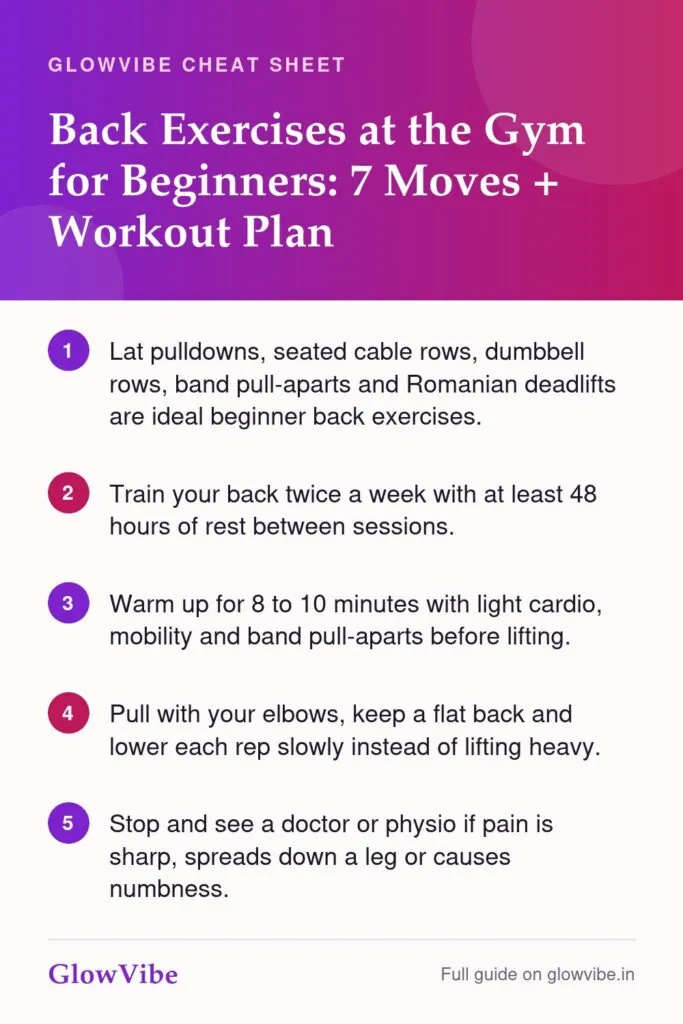
The best back exercises at the gym for beginners are the lat pulldown, seated cable row, single-arm dumbbell row, band pull-apart and a hip hinge such as the dumbbell Romanian deadlift. Do three or four of them, two times a week, with light weights and clean form, and you will build a stronger, better-looking back within a couple of months.
This guide walks you through each move step by step, gives you a ready-made beginner back workout, and covers the mistakes that cause most first-timer niggles. Whether your goal is better posture after long hours at a laptop or simply a stronger body, start here.
Why beginners should train their back
Most of us spend the day hunched forward: over phones, steering wheels and desks. Over time the chest gets tight and the upper back gets weak, which pulls the shoulders forward. Training the muscles that pull your shoulders back is one of the simplest ways to stand taller.
Your back is also a big group of muscles, so working it burns more energy than small isolation moves and helps with everyday tasks like lifting a suitcase or carrying groceries. A strong back balances out chest and shoulder training too, which keeps your shoulders healthier. If you already follow a split like the push pull legs workout routine, these moves slot straight into your pull day.
Know your back muscles (the short version)
- Lats (latissimus dorsi): the large wing-shaped muscles on the sides of your back. They pull your arms down and back, and give the “V” shape.
- Rhomboids and middle traps: between the shoulder blades. They squeeze the blades together and are key for posture.
- Rear delts: the back of the shoulder, often neglected and easy to train with bands.
- Erector spinae: the muscles running along your spine (your lower back). They keep your spine steady when you bend and lift.
A good beginner back workout hits all four: one vertical pull, one or two horizontal rows, one upper-back move and one hinge or lower-back move.
Warm up before you lift
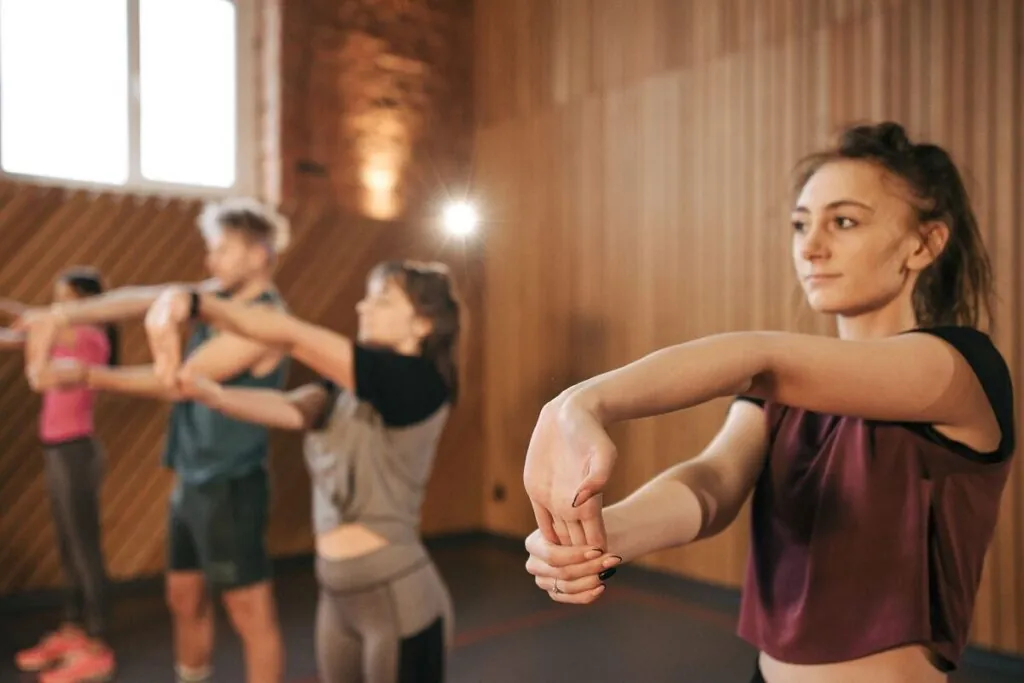
Spend 8–10 minutes warming up. It raises your heart rate, loosens stiff shoulders and upper back, and “wakes up” the muscles you are about to train, so the first working set feels smoother.
- Light cardio, 5 minutes: a brisk walk on the treadmill, cycling or the rowing machine.
- Mobility, 2–3 minutes: arm circles, cat-cow and thoracic (mid-back) rotations on all fours.
- Activation, 1–2 rounds: 10 band pull-aparts and 8 bird dogs per side.
- Warm-up set: one easy set of your first exercise with about half your working weight.
In a hot, humid Indian summer you will warm up faster, but do not skip mobility. Keep a water bottle handy, since you sweat more than you realise in a non-air-conditioned gym.
Best back exercises at the gym for beginners: quick comparison
| Exercise | Main muscles | Equipment | Difficulty |
|---|---|---|---|
| Lat pulldown | Lats, biceps | Cable machine | Easy |
| Seated cable row | Mid back, lats | Cable machine | Easy |
| Single-arm dumbbell row | Lats, rhomboids | Dumbbell, bench | Easy–moderate |
| Band pull-apart | Rear delts, upper back | Resistance band | Easy |
| Inverted (suspended) row | Whole upper back, core | Smith bar or suspension trainer | Moderate |
| Dumbbell Romanian deadlift | Lower back, glutes, hamstrings | Dumbbells | Moderate |
| Superman / bird dog | Lower back, core | Bodyweight | Easy |
How to do each beginner back exercise
1. Lat pulldown
The lat pulldown is the best starting point if you cannot do a pull-up yet. It trains the same movement with a weight you can control.
- Sit with thighs snug under the pads and grip the bar a little wider than shoulder width.
- Lean back very slightly, chest up, and pull the bar to your upper chest by driving your elbows down.
- Pause briefly, then let the bar rise slowly until your arms are straight.
- Pros: easy to learn, weight is simple to adjust, builds towards pull-ups.
- Watch out: do not pull the bar behind your neck or swing your body to move it.
2. Seated cable row
This row targets the middle of your back, the area that weakens most with desk work. Use the V-handle at first.
- Sit tall with knees softly bent and feet on the platform.
- Pull the handle to your lower ribs, squeezing your shoulder blades together.
- Return slowly, letting your shoulders move forward a little without rounding your lower back.
- Pros: supported position, very beginner-friendly, great for posture.
- Watch out: rocking back and forth turns it into a lower-back exercise; keep your torso still.
3. Single-arm dumbbell row
Working one side at a time helps you fix imbalances and feel the lats working. A flat bench gives you support so your lower back stays safe.
- Place one knee and the same-side hand on a bench, back flat and roughly parallel to the floor.
- Hold the dumbbell with your free arm hanging straight down.
- Pull the dumbbell towards your hip, keeping the elbow close to your body, then lower under control.
If a bench is taken, do the quadruped version: kneel on all fours on a mat and row a light dumbbell from the tabletop position. It is a tougher balance and core challenge, so go lighter.
- Pros: needs only one dumbbell, strong mind-muscle connection, works each side equally.
- Watch out: twisting your torso to heave the weight up means it is too heavy.
4. Resistance band pull-apart
A light band is all you need for this posture favourite. It strengthens the rear shoulders and the muscles between the shoulder blades, and it doubles as a warm-up.
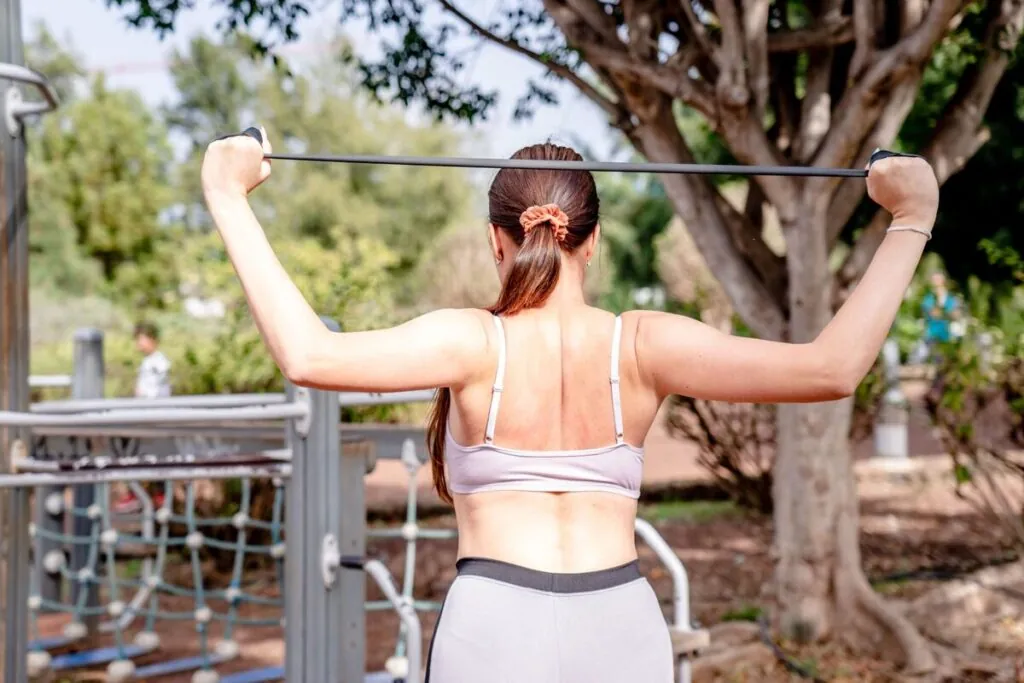
- Stand tall and hold the band at chest height with arms straight, hands shoulder-width apart.
- Pull the band apart until it touches your chest, squeezing your shoulder blades.
- Return slowly. Do 12–20 reps.
- Pros: cheap, portable, also works at home or in office breaks.
- Watch out: do not shrug your shoulders up towards your ears.
5. Inverted row (suspended row)
Set a Smith machine bar at waist height, or use a suspension trainer such as TRX straps. Hang underneath with straight body and heels on the floor, then pull your chest to the bar or handles.
The more upright your body, the easier it gets; walk your feet forward to make it harder. It trains your whole upper back and core and also improves grip.
- Pros: bodyweight strength, easy to scale, great step towards pull-ups.
- Watch out: keep your hips up; sagging means your core has switched off.
6. Dumbbell Romanian deadlift
The hip hinge is the safest way for a beginner to strengthen the lower back along with the glutes and hamstrings. Learn it with dumbbells before trying a barbell deadlift.
- Stand with feet hip-width apart, dumbbells in front of your thighs, knees softly bent.
- Push your hips back and slide the weights down your legs, keeping your back flat and chest proud.
- Stop when you feel a stretch in your hamstrings (usually around mid-shin), then drive your hips forward to stand.
- Pros: teaches the lifting pattern you use every day, builds the whole back chain.
- Watch out: a rounded lower back. If you cannot keep it flat, shorten the range.
7. Superman and bird dog
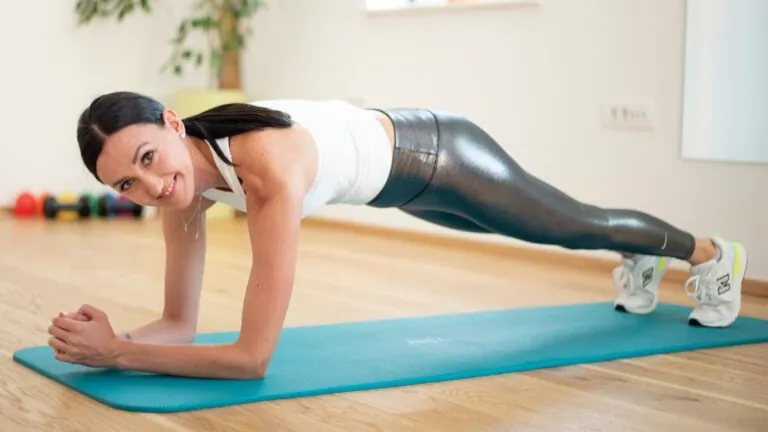
These floor moves need no equipment. For the superman, lie face down and gently lift your arms, chest and legs a few centimetres, hold for two seconds and lower. For the bird dog, kneel on all fours and extend the opposite arm and leg while keeping your hips level.
Both build lower-back endurance and core control. Pair them with a solid core exercise routine at home on non-gym days.
Beginner back workout plan
Do this workout twice a week with at least two days between sessions, for example Monday and Thursday. Rest 60–90 seconds between sets.
| Exercise | Sets | Reps |
|---|---|---|
| Lat pulldown | 3 | 10–12 |
| Seated cable row | 3 | 10–12 |
| Single-arm dumbbell row | 2 | 10 per side |
| Band pull-apart | 2 | 15–20 |
| Dumbbell Romanian deadlift | 2 | 10 |
| Bird dog (finisher) | 2 | 8 per side |
Pick a weight that leaves you with two or three reps “in the tank” at the end of each set. When you can complete every set at the top of the rep range with good form, add a small amount of weight next session. That steady progression is what builds muscle.
Want to train the rest of your body too? Pair this session with shoulder exercises in the gym, or browse our free workout plans for full weekly schedules.
Tips for faster, safer progress
- Lead with your elbows: think of your hands as hooks and pull with your elbows; you will feel your back more and your arms less.
- Slow the lowering phase: take two to three seconds to return the weight.
- Ask for a form check: most Indian gyms have a floor trainer; request a quick look at your first few sessions.
- Eat enough protein: muscles grow between workouts. Include dal, paneer, eggs, curd, chicken or fish, and consider a supplement only if food falls short; our guide to natural whey protein explains the options.
- Sleep and hydrate: seven to eight hours of sleep and plenty of water, especially in summer, help recovery.
Common mistakes beginners make
- Going too heavy too soon: ego lifting leads to swinging, jerking and a sore lower back.
- Rounding the spine on rows and deadlifts: keep a long, neutral back throughout.
- Using only the arms: if your biceps tire before your back, reduce weight and focus on squeezing the shoulder blades.
- Short range of motion: half reps cut results; let your arms straighten fully at the start of each pull.
- Training back every day: muscles need around 48 hours to recover, so two sessions a week is plenty to begin with.
- Skipping the warm-up: cold, stiff muscles are more likely to get strained.
When to be careful or see a doctor
Mild muscle soreness a day or two after training is normal. Sharp pain, pain that shoots down a leg, numbness or tingling is not. Stop the exercise and see a doctor or physiotherapist before continuing.
If you have an existing back problem such as a slipped disc, recent surgery, or are pregnant, get clearance from your doctor first and ideally work with a qualified trainer or physio. Exercise supports a healthy back, but it is not a treatment for a diagnosed condition on its own.
Frequently Asked Questions
Three to five exercises is enough. Choose one vertical pull (lat pulldown), one or two rows, an upper-back move like band pull-aparts and one hinge or lower-back move. Around 10–14 total sets per session works well for most beginners.
Twice a week, with at least 48 hours between sessions, is ideal. This gives your muscles time to recover and grow. Once you have trained consistently for a few months you can adjust volume based on your programme.
The lat pulldown and seated cable row are the easiest to learn and the safest starting points, because the machine supports your body. The single-arm dumbbell row is a close third and needs only a bench and one dumbbell.
Yes, but learn the hip hinge first with a dumbbell Romanian deadlift and light weights. Once you can keep a flat back for every rep, a trainer can teach you the barbell deadlift. Rushing to heavy barbell deadlifts is a common cause of lower-back strain.
Strengthening the upper and middle back can help you hold your shoulders back more easily and reduce slouching. Combine rows and pull-aparts with regular breaks from sitting and chest stretches for the best results.
Absolutely. Back training will not make women “bulky”; it builds strength, improves posture and gives a toned look. The same exercises and plan above work for everyone, and they fit easily into a workout plan for weight loss for females.
Stop the set, lower the weight and check your form, especially on rows and hinges. If the pain is sharp, spreads down your leg or does not settle within a few days, see a doctor or physiotherapist before training again.
Final thoughts
You do not need a complicated routine to build a strong back. Master the lat pulldown, cable row, dumbbell row, band pull-apart and Romanian deadlift, train twice a week and add weight slowly. Focus on form over numbers, and within a few months you will notice better posture, easier everyday lifting and a back you can be proud of.