Natural Whey Protein: Types, Benefits and How to Choose (2026)
What natural (raw, unflavoured) whey protein really is, how concentrate and isolate differ, and how to choose, dose and use it safely in India.


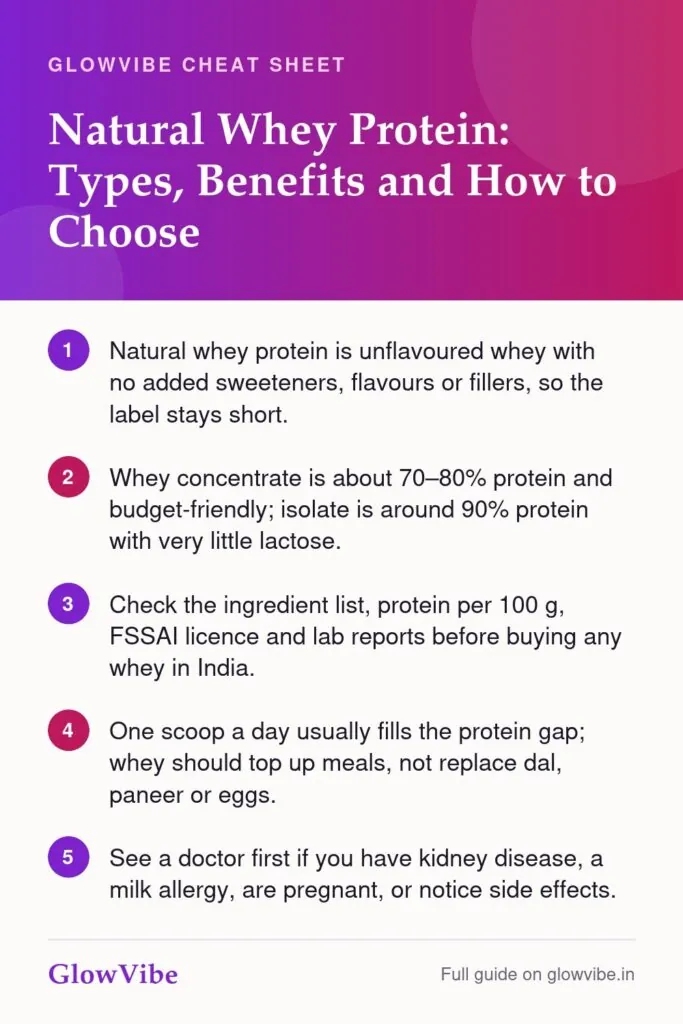
Natural whey protein is whey powder with nothing extra added: no artificial flavours, sweeteners, colours or added fillers, and often sold as “raw” or “unflavoured” whey. It gives you the same high-quality milk protein as a flavoured tub, with a shorter ingredient list and more control over what goes into your shake.
This guide explains what “natural” actually means on a whey label, how concentrate and isolate differ, how to pick a good product in India, and how to use it without wasting money or upsetting your stomach.
What is natural whey protein?
Whey is the liquid left behind when milk is turned into cheese or paneer. It is filtered, concentrated and dried into a powder that is rich in protein and all nine essential amino acids, including leucine, the amino acid most closely linked to muscle building.
“Natural” is not a legally defined term for protein powders, so brands use it loosely. In practice, a genuinely natural whey usually means:
- Unflavoured: no cocoa, vanilla or fruit flavouring, so it tastes mildly milky.
- Unsweetened: no sucralose, acesulfame-K or added sugar.
- No added fillers: no maltodextrin, creamers or thickening gums to bulk up the scoop.
- Short label: often just whey protein concentrate or isolate, sometimes with a small amount of soy or sunflower lecithin to help it mix.
Some products also say “grass-fed” or “from cow’s milk”. These are sourcing claims, not quality guarantees, so treat them as a bonus rather than the main reason to buy.
Types of natural whey protein: concentrate vs isolate
Almost every unflavoured whey you will find in India is either a concentrate (WPC), an isolate (WPI), or a blend of both. The difference comes down to how much the whey is filtered after it leaves the dairy.
Whey protein concentrate (WPC)
Concentrate is the least processed form. Most raw whey concentrates sold for fitness are around 70–80% protein by weight, with the rest made up of some lactose, milk fat and minerals. That gives it a creamier taste and makes it the more budget-friendly choice.
- Suits: beginners, people who digest milk well, anyone watching their budget.
- Pros: affordable, tastes closer to milk, mixes easily into food.
- Cons: contains some lactose, slightly more carbs and fat per scoop.
Whey protein isolate (WPI)
Isolate goes through extra filtering to strip out most of the lactose, fat and carbohydrate. It is typically 90% protein or more by weight, so you get more protein per scoop with fewer extra calories.

- Suits: people with mild lactose sensitivity, those on a calorie deficit, anyone wanting maximum protein per scoop.
- Pros: leaner, usually gentler on the stomach, mixes thin and clear.
- Cons: costs more, and is not suitable for a true milk-protein allergy.
Natural whey vs flavoured whey: quick comparison
| Feature | Natural / raw concentrate | Natural / raw isolate | Typical flavoured whey |
|---|---|---|---|
| Protein by weight | Roughly 70–80% | Roughly 90% or more | Varies; flavour and sweetener take up some space |
| Lactose | Some | Very little | Depends on base |
| Sweeteners and flavours | None | None | Yes |
| Taste | Mild, milky | Very neutral | Sweet, chocolate, vanilla etc. |
| Cost | Budget | Mid-range to premium | Budget to premium |
| Best use | Shakes, oats, home cooking | Lean diets, sensitive stomachs | Convenience, taste-first shakes |
Benefits of natural whey protein
Whey is not magic, but it is one of the most convenient ways to close a protein gap. Many Indian vegetarian diets lean heavily on rice, roti and dal, and it can be hard to reach your daily protein target from food alone.
- Muscle repair and growth: whey is a complete protein that digests quickly, which makes it handy after strength training.
- Fullness during fat loss: protein keeps you satisfied for longer and helps you hold on to muscle while eating less.
- Convenience: 20–25 g of protein in a minute, with no cooking.
- Fewer additives: the natural version skips sweeteners and flavours, which suits people who dislike the aftertaste or want a cleaner label.
- Kitchen-friendly: because it is unflavoured, you can stir it into savoury or sweet dishes.
If you are still unsure whether whey is safe or “only for bodybuilders”, read our breakdown of common myths about whey protein.
How to choose the best natural whey protein in India
The Indian supplement market has a real problem with fake and under-dosed products, so the buying process matters as much as the product itself. Use this checklist before you pay.
1. Read the ingredient list, not the front of the tub
A natural whey should list whey protein concentrate and/or isolate first, and very little else. If you see maltodextrin, sugar, creamer or a long list of added “amino acids” such as glycine or taurine, it is not a clean raw whey.
2. Check protein per scoop and per 100 g
Divide the protein per serving by the serving size. A concentrate should land around 0.7–0.8 (70–80%), an isolate around 0.9. Numbers much lower suggest a diluted product.
3. Look for FSSAI licence and lab reports
Every food supplement sold in India must carry an FSSAI licence number. Better brands also publish batch-wise lab reports or carry independent testing seals. Buy from the brand’s own website or authorised sellers, and check for an authenticity code on the tub where available.
4. Match the type to your stomach and goal
If regular milk gives you bloating, start with an isolate. If milk suits you and you are on a budget, a raw concentrate is perfectly good. For fat loss, isolate saves a few calories per scoop; for general fitness, the difference is small.
5. Think about Indian heat and humidity
Unflavoured whey has no flavour to mask staleness, so storage shows quickly. Pick a pack size you will finish within a couple of months, keep it sealed in a cool cupboard away from the stove, and always use a dry scoop. During the monsoon, a clumpy or sour-smelling powder is a sign of moisture damage.
Examples of unflavoured whey sold in India
Several established brands sell raw or unflavoured whey online and in stores, such as MuscleBlaze Raw Whey Protein, AS-IT-IS Nutrition Whey Protein Concentrate 80% and Nakpro Raw Whey Protein Concentrate, along with unflavoured isolates from various brands. Formulations change, so check the current label and lab reports against the checklist above rather than relying on any brand name. For a look at imported options, see our guide to international protein brands.
How much natural whey protein should you take?
Think in terms of total daily protein, not scoops. Many active adults do well somewhere around 1.2–1.6 g of protein per kg of body weight per day, from all sources combined. A sedentary adult needs less.
For most people, one scoop a day (about 20–25 g of protein) is enough to fill the gap; two at most if your food intake is low. Whey should top up your diet, not replace dal, paneer, curd, eggs or soya. Our list of protein-rich foods for weight loss has easy ways to get more from meals first.
How to use unflavoured whey: simple routine and recipes
- Pick your timing: within a couple of hours after training, or at breakfast if your morning meal is low in protein. Timing matters far less than your daily total.
- Mix it cold or lukewarm: add the powder to water or milk in a shaker and shake for 15–20 seconds. Very hot liquids make whey clump.
- Add flavour yourself: a banana, a few dates, cocoa powder, cinnamon or a spoon of peanut butter.
- Pair it with training: protein helps most when you are actually challenging your muscles. A structured plan such as a push pull legs workout routine gives that protein a job to do.
Because natural whey has no sweetness, it works in everyday Indian food too:
- Protein lassi: blend curd, water, a scoop of whey and a pinch of roasted jeera or a little jaggery.
- Overnight oats: stir whey into oats and milk, refrigerate, and top with fruit in the morning.
- Besan or oats chilla: mix a few spoons into the batter (not the whole scoop, or it turns rubbery).
- Cooled dalia or poha: stir it in after cooking, once the dish is warm rather than piping hot.
Common mistakes to avoid
- Buying the cheapest tub online: unusually low prices from unknown sellers are the biggest red flag for fakes.
- Treating whey as a meal replacement: a plain scoop in water lacks fibre, carbs and micronutrients.
- Taking three or four scoops a day: extra protein beyond your needs just adds calories and cost.
- Ignoring stomach signals: persistent gas or bloating with a concentrate is a cue to try an isolate or a smaller serving.
- Expecting results without training: whey supports progress; it does not create it. Pair it with a plan like these free workout plans.
Who should check with a doctor first
Whey is a food-based protein and is well tolerated by most healthy adults. Speak to a doctor or registered dietitian before using it if you have kidney or liver disease, a diagnosed milk allergy, are pregnant or breastfeeding, or are giving it to a teenager. Stop and get advice if you notice rashes, persistent digestive trouble or acne flare-ups after starting.
Frequently Asked Questions
The protein itself is the same; the difference is what is added. Natural whey skips sweeteners and flavours, which suits people who want a cleaner label or plan to cook with it. If a flavoured whey helps you stay consistent, it is not a bad choice.
Concentrate tastes mildly milky, a bit like milk powder, while isolate is almost neutral. Most people find it easy to drink in milk or blended with a banana. In plain water it can taste flat, so add cocoa, cinnamon or fruit.
Many people with mild lactose intolerance manage whey isolate well because most of the lactose is removed. Start with half a scoop and see how you feel. A milk-protein allergy is different, and whey is not suitable in that case.
It can make a calorie deficit easier by keeping you full and helping you keep muscle, but it does not burn fat on its own. Use it alongside balanced meals and regular exercise, such as this beginner workout plan for weight loss.
Yes. Whey will not make women “bulky”; muscle gain depends on training and total calories. Many Indian women fall short on protein, and a scoop a day is an easy way to improve that.
Buy from the brand’s website or an authorised seller, check the FSSAI number and batch details, and use any authenticity code on the pack. Genuine whey dissolves reasonably well and smells fresh and milky; a strange smell, gritty texture or unusually low price are warning signs.
Yes, and it is one of the main reasons to choose the unflavoured kind. Add it to dishes after cooking or in small amounts to batters, because high heat makes whey clumpy and rubbery. Overnight oats, lassi and smoothies are the easiest places to start.
The bottom line
Natural whey protein is simply whey without the extras, and that makes it a flexible, honest way to add protein to an Indian diet. Pick concentrate for value or isolate for a gentler, leaner option, buy only from trusted sellers with an FSSAI licence and lab reports, and keep it to one or two scoops alongside real food and regular training.