10 Best Shoulder Exercises in the Gym + Workout Plan (2026)
The 10 best shoulder exercises in the gym, how to do each with good form, and simple beginner and intermediate shoulder workouts to build width and strength safely.

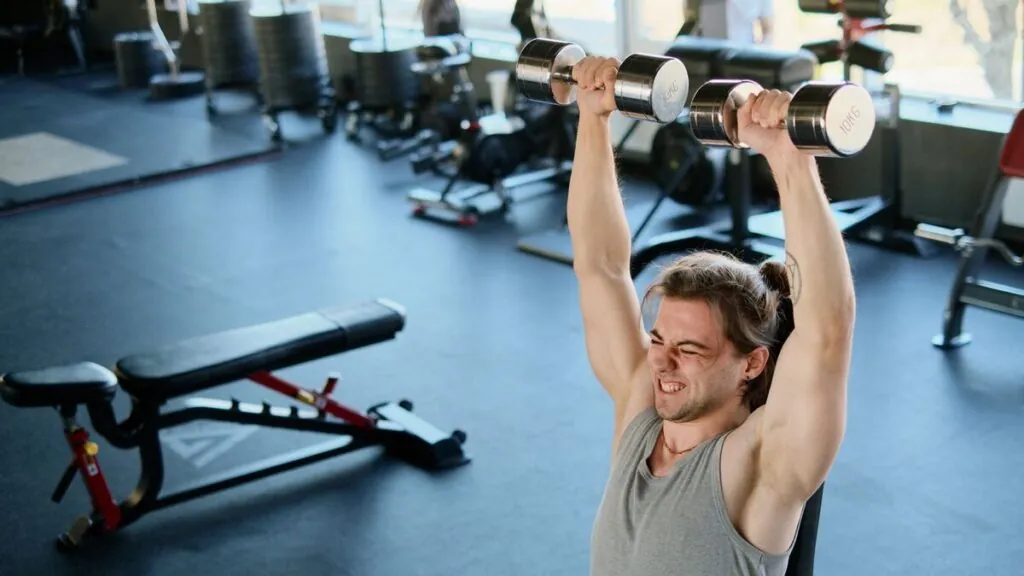
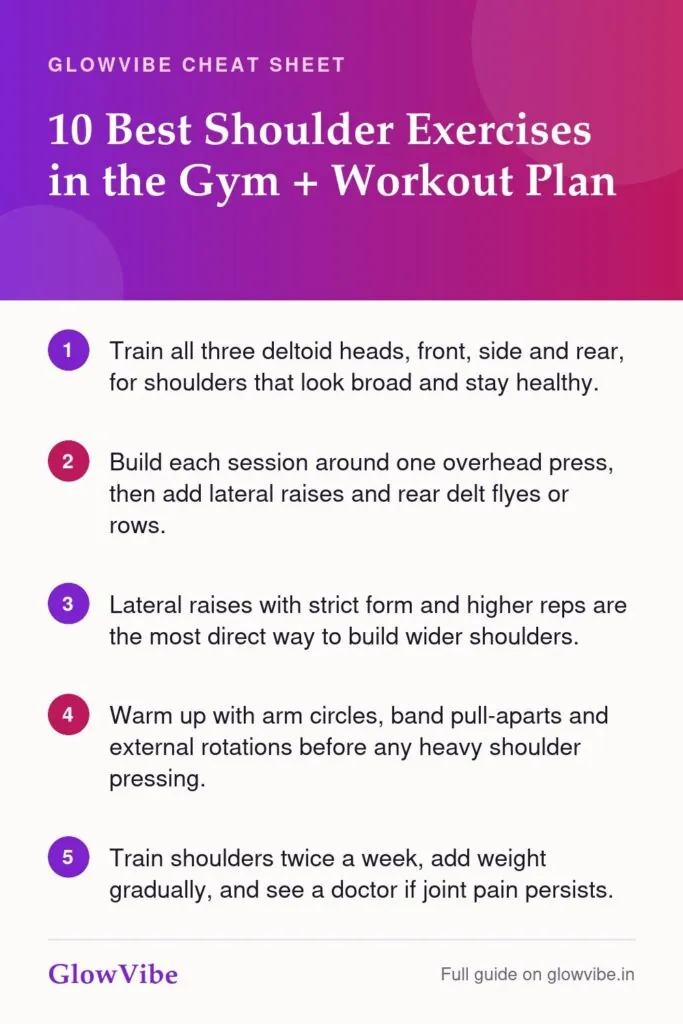
The best shoulder exercises in the gym are an overhead press (barbell or dumbbell) for overall size and strength, lateral raises for width, and rear delt flyes or rows for the back of the shoulder. Do one pressing move and two or three raises or rows, two times a week, and you will cover all three heads of the deltoid.
This guide walks you through the 10 most useful shoulder exercises, how to do each one with good form, and ready-made beginner and intermediate shoulder workouts. You will also find the warm-up that keeps your rotator cuff happy and the mistakes that stall progress for most gym-goers.
Shoulder anatomy in 60 seconds
Your deltoid has three heads. The front (anterior) delt lifts your arm forward and does a lot of work in every press, including the bench press. The side (lateral) delt lifts your arm out to the side and is what makes shoulders look broad. The rear (posterior) delt pulls your arm back and supports good posture.
Underneath sit the four small rotator cuff muscles, which keep the ball of the upper arm centred in its socket. Most people overtrain the front delts and neglect the side and rear, which leads to rounded shoulders and nagging pain. A good shoulder workout fixes that balance.
Quick list: the 10 best shoulder exercises in the gym
- Standing barbell overhead press (military press) – the main strength builder
- Seated dumbbell shoulder press – fixes left-right imbalances
- Seated barbell press – heavy pressing with less lower-back demand
- Push press – explosive, lets you handle more weight
- Arnold press – longer range of motion for the front and side delts
- Lateral raise – the number one move for wider shoulders
- Front raise – optional isolation for the front delts
- Rear delt fly – isolates the back of the shoulder
- Rear delt row – rear delts plus upper back
- Upright row (wide grip) – side delts and traps
Shoulder exercises compared
| Exercise | Main target | Type | Level | Rep range |
|---|---|---|---|---|
| Barbell overhead press | Front and side delts, triceps | Compound | Beginner to advanced | 5–8 |
| Seated dumbbell press | Front and side delts | Compound | Beginner | 8–12 |
| Seated barbell press | Front and side delts | Compound | Intermediate | 6–10 |
| Push press | Whole shoulder, triceps, legs | Compound, explosive | Intermediate | 3–6 |
| Arnold press | Front and side delts | Compound | Beginner to intermediate | 8–12 |
| Lateral raise | Side delts | Isolation | Beginner | 12–20 |
| Front raise | Front delts | Isolation | Beginner | 10–15 |
| Rear delt fly | Rear delts | Isolation | Beginner | 12–20 |
| Rear delt row | Rear delts, upper back | Compound | Beginner | 10–15 |
| Wide-grip upright row | Side delts, traps | Compound | Intermediate | 10–15 |
Warm up your shoulders first
Shoulders are the joint most likely to complain if you go straight to heavy pressing. Spend five to eight minutes getting blood into the area and switching on the rotator cuff before your first working set.

- Arm circles: 10 forward and 10 backward, small to large.
- Band pull-aparts: 2 sets of 15, squeezing your shoulder blades together.
- Band or cable external rotations: 2 sets of 12 per arm, elbow tucked to your side.
- Ramp-up sets: 2–3 light sets of your first pressing exercise before the working weight.
How to do each shoulder exercise
1. Standing barbell overhead press (military press)
This is the classic test of shoulder strength. Stand with feet hip-width apart, grip the bar just outside shoulder width and start with it resting on your upper chest. Brace your abs and glutes, press straight up while moving your head slightly back, then push your head “through the window” once the bar passes your forehead.
- Pros: builds real strength; trains your core too; easy to track progress.
- Cons: technical; leaning back can strain your lower back.
2. Seated dumbbell shoulder press
Set a bench to upright (around 80–90 degrees) and hold the dumbbells at shoulder height, palms forward, elbows slightly in front of your body. Press up until your arms are nearly straight, then lower slowly until the dumbbells are about ear level.
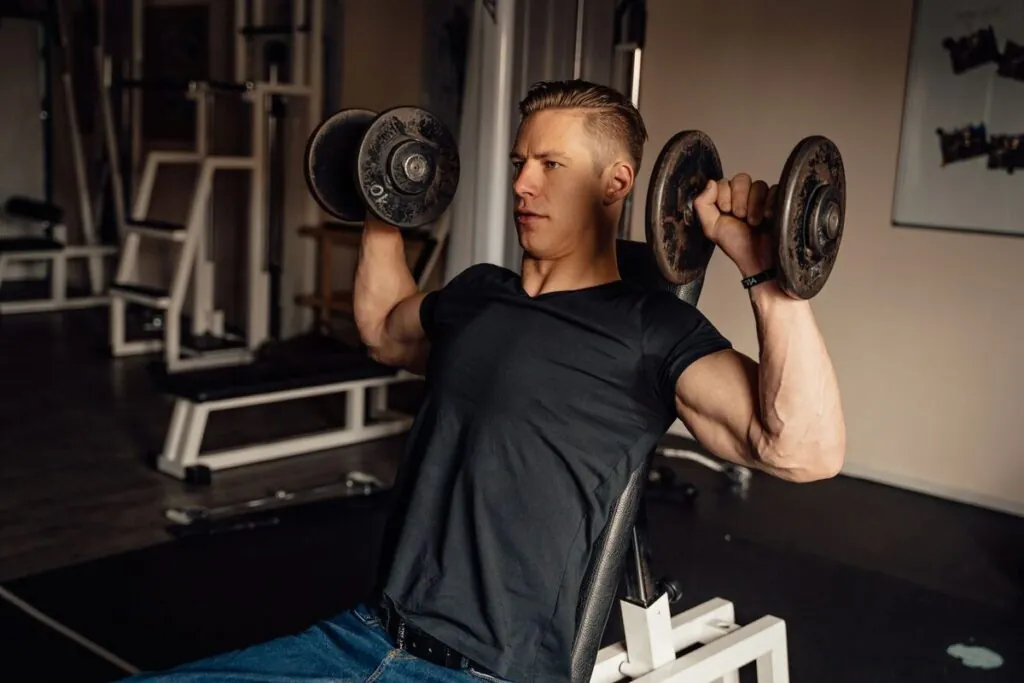
Because each arm works on its own, your weaker side cannot hide behind the stronger one. That makes this the best first press for beginners.
- Pros: balances both sides; back support makes form easier.
- Cons: getting heavy dumbbells into position gets tricky as you get stronger.
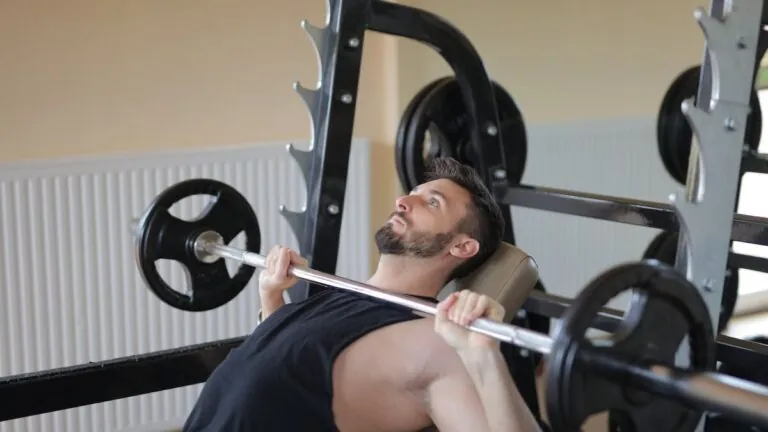
3. Seated barbell press
Do this inside a power rack or on a Smith-style shoulder press bench with the bar set at chin height. Sitting removes the leg drive and most of the balance demand, so your delts do almost all the work. Lower the bar to your upper chest, not behind your neck.
4. Push press
Set up like the standing press, dip your knees a few inches, then drive up with your legs and use that momentum to press the bar overhead. Lower it under control. It lets you handle more weight than a strict press and builds power for sport, but learn the strict press first.
5. Arnold press
Start seated with dumbbells in front of your shoulders, palms facing you. As you press up, rotate your palms so they face forward at the top, then reverse on the way down. Go lighter than your normal dumbbell press; the rotation makes it harder.
6. Lateral raise
If you want broader shoulders, this is the exercise to get good at. Stand tall with light dumbbells at your sides, a soft bend in your elbows. Raise your arms out to the sides until they are roughly parallel to the floor, leading with your elbows, then lower over two to three seconds.
- Pros: directly targets the side delts; easy on joints; works well with cables too.
- Cons: people swing too much weight and shift the work to their traps.
7. Front raise
Hold dumbbells or a plate in front of your thighs and raise to eye level with straight-ish arms. Your front delts already work hard in every press and in chest training, so treat this as optional. It is useful if your front delts are a genuine weak point.
8. Rear delt fly
Hinge forward at the hips until your chest is nearly parallel to the floor (or lie face down on an incline bench). With light dumbbells and a slight elbow bend, sweep your arms out to the sides, thinking “wide” rather than “squeeze.” The reverse pec deck machine is an easy alternative.
9. Rear delt row
Using a cable with a rope or a barbell, row towards your upper chest or face with your elbows flared out at about shoulder height. This hits the rear delts and the upper back muscles together and pairs well with the moves in our back exercises for beginners guide.
10. Upright row (wide grip)
Hold a barbell or cable bar with a grip wider than shoulder width and pull it up along your body to about the bottom of your chest, elbows leading. A narrow grip and pulling to the chin pinches the shoulder for many people, so keep it wide and stop lower. Skip it if it causes any pain.
Shoulder workouts you can follow in the gym
Train shoulders directly once or twice a week, with at least 48 hours between hard sessions. Rest 2–3 minutes after heavy presses and 60–90 seconds after raises. If you follow a split like push pull legs, the presses fit on push day and rear delt work fits on pull day.
Beginner shoulder workout (first 8–12 weeks)
- Seated dumbbell shoulder press – 3 sets of 8–12
- Lateral raise – 3 sets of 12–15
- Rear delt fly or reverse pec deck – 3 sets of 12–15
- Band external rotation – 2 sets of 15 per arm
Intermediate shoulder workout
- Standing barbell overhead press – 4 sets of 5–8
- Arnold press or seated dumbbell press – 3 sets of 8–12
- Lateral raise (dumbbell or cable) – 4 sets of 12–20
- Rear delt row – 3 sets of 10–15
- Rear delt fly – 3 sets of 15–20
Use progressive overload: when you hit the top of the rep range on all sets with clean form, add a small amount of weight or one more rep next time. Log your sessions so you know what to beat. For more complete programmes, see our free workout plans.
How to choose the right shoulder exercises for you
- Complete beginner: start with machines and dumbbells (seated press, lateral raise, reverse pec deck) before barbell work.
- Want wider shoulders: prioritise lateral raises, doing more sets than you think you need, at moderate weight and high reps.
- Rounded posture from desk work: do two rear delt or upper back sets for every pressing set.
- Stiff shoulders or limited overhead mobility: use a landmine press or a slightly inclined bench instead of pressing straight overhead.
- Crowded gym at peak hours: dumbbells and a single cable station are enough for a full shoulder workout, no rack needed.
Training in a hot, humid Indian gym without good ventilation? Sip water between sets, bring a towel for slippery grips and use chalk or gloves on heavy barbell days. Fatigue and dehydration ruin form well before your muscles give up.
Common shoulder training mistakes
- Going too heavy on raises: if you have to swing your body, the weight is too heavy. Side delts respond to control, not momentum.
- Skipping rear delts: leads to imbalance, rounded shoulders and a higher chance of pain.
- Arching the lower back on presses: brace your core and squeeze your glutes; if you still lean back, lower the weight.
- Behind-the-neck pressing: it puts the shoulder in a vulnerable position for most people, so press in front of your face instead.
- Training through sharp pain: muscle burn is fine, but a pinching or sharp pain in the joint is a signal to stop.
- Ignoring recovery: muscles grow between sessions. Sleep 7–9 hours and eat enough protein; our guide to protein-rich Indian foods lists easy veg and non-veg options.
If shoulder pain lasts more than a week or two, wakes you at night, comes with clicking and weakness, or started after a fall, stop training that movement and see a doctor or physiotherapist. They can check for rotator cuff or impingement problems and guide your return to lifting.
Frequently Asked Questions
It is not a good idea. Your shoulders already work during chest, back and arm training, and they need time to recover. Two direct shoulder sessions a week, spaced at least two days apart, is plenty for most people.
Two can work if you choose wisely, for example an overhead press plus a lateral raise, with rear delt work on your back day. For balanced development, though, three or four exercises covering the front, side and rear delts is a better target.
The lateral raise, in dumbbell or cable form, is the most direct way to build the side delts that create a wider look. Do it with strict form and higher reps, and train it at least twice a week.
Push-ups mainly train the chest and triceps, with the front delts helping. They are not enough on their own for complete shoulders. Pike push-ups move more of the work onto your shoulders if you are training at home.
External rotations with a band or cable, face pulls, band pull-aparts and rear delt flyes strengthen the muscles that stabilise the joint. Combine them with a good warm-up and sensible weight increases.
Yes. Pike push-ups, plank shoulder taps, wall walks and handstand holds against a wall all challenge your shoulders. Pair them with a core routine at home for a solid no-equipment session.
With consistent training, enough protein and good sleep, most beginners notice visible changes in two to three months. Progress depends on your genetics, diet and how regularly you train, so judge it over months, not weeks.
The bottom line
Strong, balanced shoulders come from a simple formula: one solid press, plenty of lateral raises and regular rear delt work, done twice a week with good form. Warm up properly, add weight gradually and stop if something hurts in the joint. Pick the beginner or intermediate workout above, log your sessions and give it three months.