Acetone vs Non-Acetone Nail Polish Remover: Which to Use
Which nail polish remover suits regular polish, glitter and gel, how to limit dryness and peeling with either type, and what brittle nails after removal do and don't mean.

Use non-acetone remover for regular polish if you change colours often, and acetone for gel, stubborn glitter and any polish that refuses to budge. Acetone works faster but dries nails and skin more, while non-acetone asks for more rubbing and sometimes still leaves colour behind.
Neither one is dangerous when used sensibly. An occasional acetone clean-up may leave your nails feeling dry for a while, and how you use a remover and care for your nails afterwards matters too. This guide covers what suits each type of polish, how to limit peeling, and what brittle nails after removal do and don’t mean.
The quick answer
| What’s on your nails | Start with | Why |
|---|---|---|
| Regular polish, light or sheer | Non-acetone | It usually comes off easily, so there’s little reason to use the stronger solvent. |
| Regular polish, dark or several coats | Non-acetone first, acetone if it smears or stains | Gentler removers can struggle with dark shades and some formulas. |
| Fine glitter | Either, using the press-and-hold method below | Giving the remover time to work beats scrubbing. |
| Chunky glitter | Acetone with the foil method | Thick glitter is slow to dissolve, and acetone is the stronger solvent. |
| Soak-off gel | Acetone, or a salon appointment | The American Academy of Dermatology (AAD) says acetone is required to remove gel polish. |
| Acrylic or other artificial nails | Salon removal | These are often soaked in acetone or filed off, and doing it badly can harm the nail. |
How acetone and non-acetone removers differ
Both are solvents that dissolve the film of polish on your nail. The difference lies in how strong that solvent is and how long it has to stay in contact with you to get the job done.
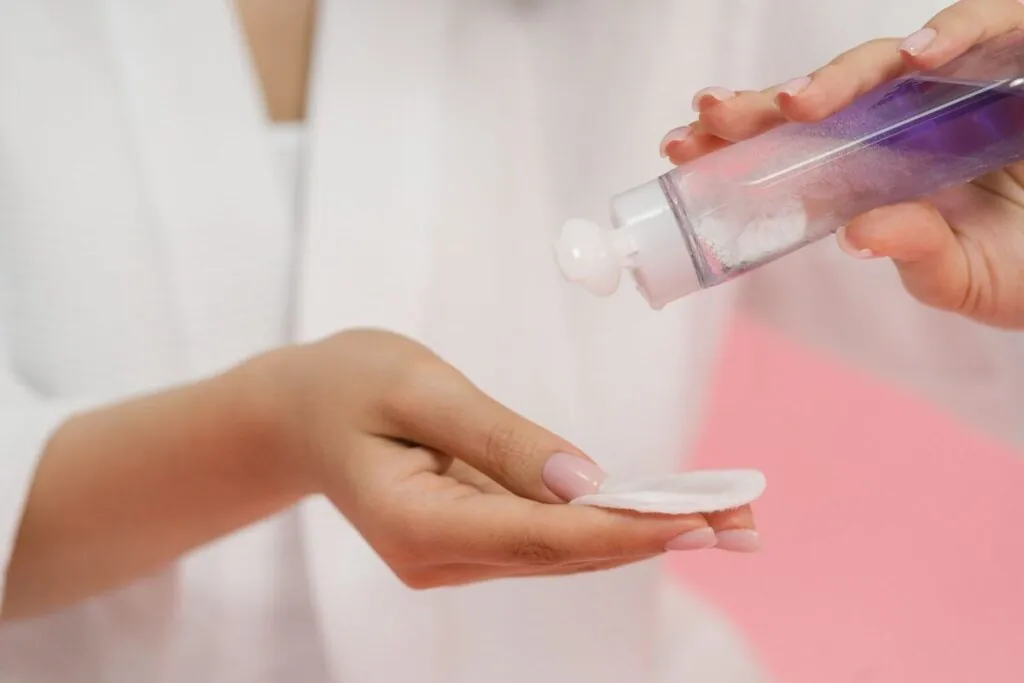
Acetone is the classic, sharp-smelling remover. Poison Control in the US notes that it dries out skin, which can lead to peeling and flaking, and that repeated use on the nails can make them brittle. Notice the word “repeated”: this is mainly a problem of frequency, not of one use before a family function.
Non-acetone removers use other solvents instead. Depending on the brand, labels can list ethyl acetate, butyl acetate, gamma butyrolactone or soy-based ingredients. “Acetone-free” tells you what is missing, not that the bottle is free of solvents or harmless, so it deserves the same care around flames, eyes and children.
| Point of comparison | Acetone | Non-acetone |
|---|---|---|
| Speed | Fast, with few swipes | Slower, especially on dark shades |
| Dryness | More drying to nails and skin | Generally described as less drying, though more rubbing adds its own friction |
| Gel polish | Works with soaking | Not a dependable option |
| Best for | Occasional use and stubborn polish | Frequent colour changes on regular polish |
| Handling | Use with ventilation, away from flame | Use with ventilation, away from flame |
One caveat: good head-to-head studies measuring nail damage from each type are hard to find. Treat “gentler” as a general expectation, not a measured promise, and judge by how your own nails respond.
Which remover to use for each polish type
Regular polish
If you repaint weekly or swap colours for every outfit, a non-acetone remover is the sensible everyday choice. Dampen a cotton pad, press it on the nail for a moment, then swipe from the base towards the tip in one movement instead of scrubbing back and forth.
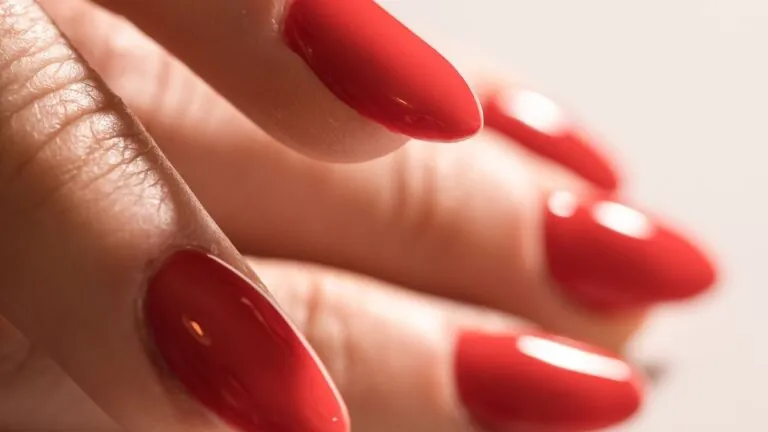
Deep reds, wines and plums can smear onto the skin or leave a tint behind. Those are often the shades people reach for at festive times, so if you’ve picked something rich from this guide to nail polish colours for Indian skin, keep a small bottle of acetone for the end of the wear. Using it now and then is unlikely to cause lasting trouble for healthy nails.
Glitter polish
Glitter is the polish most likely to tempt you into scrubbing, and scrubbing mostly pushes the particles around. Medical bodies don’t cover this, so the method below comes from manicurists and beauty guides: let the remover sit before you wipe. Acetone is the usual pick for chunky glitter, while fine glitter may shift with non-acetone, so try the gentler one first there. For a look like those in this party makeup guide, this little extra patience saves a lot of rubbing later.
- Soak a small piece of cotton so it is damp but not dripping.
- Place it on the nail only, keeping it off the surrounding skin as far as you can.
- For chunky glitter, wrap the fingertip in a small square of foil so the remover doesn’t evaporate.
- Wait about 5 minutes (thicker glitter can take longer), then check one nail. If the glitter has loosened, press down and slide the cotton off towards the tip without twisting.
- Repeat on any stubborn spots instead of scraping them with a tool.
Gel polish
Gel is the one case with no real debate. The AAD says acetone is required to remove gel polish, which is also why it suggests that people allergic to acetone consider traditional polish instead. It also suggests booking your manicurist to take it off, which is the simplest option if you are unsure.
For removal at home, the AAD describes soaking cotton balls in acetone, placing them on the nails, wrapping them in foil and waiting about 15 minutes, after which the polish should come off easily. Keep the acetone to your fingertips, not your whole hand. If it doesn’t lift, wrap it again for a little longer instead of picking at it or levering it with another nail or a tool.
Acrylics and other artificial nails
The AAD notes that artificial nails often have to be soaked in acetone or filed off, and suggests asking for soak-off gels over ones that must be filed. Filing takes a steady hand, so this is a good job to leave to a trained technician at a parlour you trust.
How to limit dryness and peeling with either remover
These habits help with both types of remover.
- Keep contact short for regular polish. One dermatologist’s published advice for acetone is to swipe polish off quickly with cotton and not to soak your nails in the remover. Save soaking for gel and stubborn glitter.
- Remove less often. Touching up a chip with a matching coat means one less round of remover.
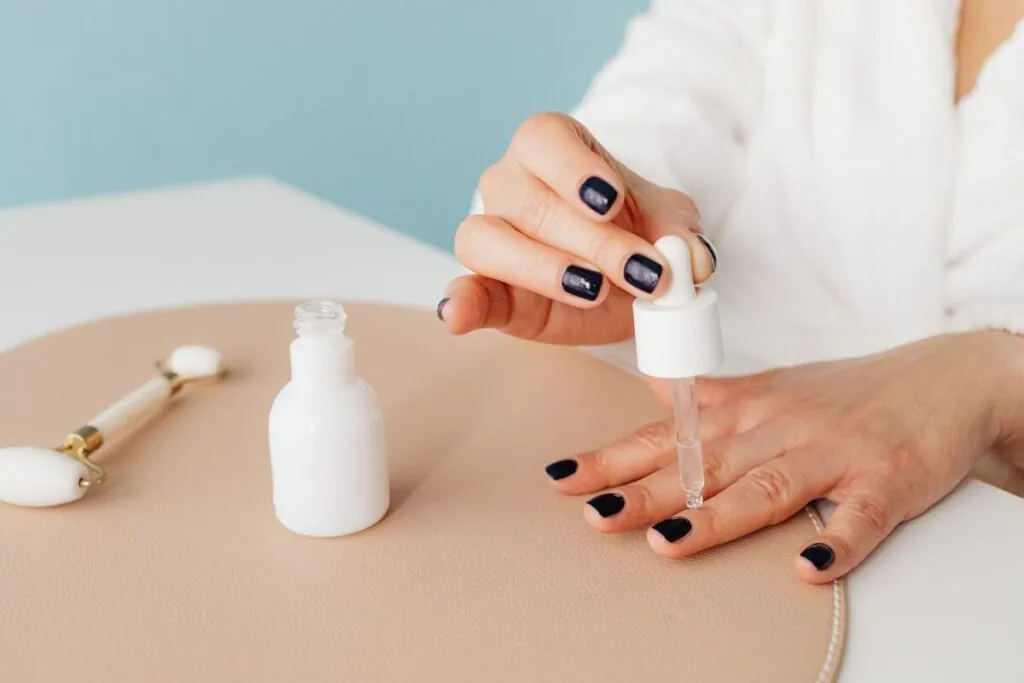
- Wash, then moisturise straight away. Rinse off the remover with mild soap and water, then massage cream into your nails, cuticles and fingertips.
- Use something rich if you’re dry. In its gel manicure advice, the AAD suggests a moisturising product such as petroleum jelly on nails and cuticles several times a day between manicures. Try any new product on a small area first and stop if it stings or itches.
- Take breaks. The same AAD advice suggests going without polish for one to two weeks or longer from time to time, so nails have a chance to recover.
- Wear gloves for chores. The AAD and NHS both advise gloves when your hands are often in water or cleaning products. A daily pile of utensils is hard on nails too.
- Leave your cuticles alone. The AAD warns that removing them can damage the nail. File snags gently with an emery board instead.
Dry winter air can make all of this more noticeable, since the skin around your nails is under the same strain as the rest of your hands. These dry skin care tips and this winter routine for dry skin cover the wider picture. If your hands react to most creams, these moisturiser options for sensitive skin are a good place to look.
Using nail polish remover safely
These plain precautions apply to every remover, acetone-free bottles included.
- Ventilate. Open a window or sit near an open door, and don’t do a long soak in a small closed bathroom.
- Keep it away from flame. Poison Control advises storing and using remover away from flames, cigarettes and sources of heat. At home, that means well away from a gas stove, diya or agarbatti.
- Keep it away from children. Store the bottle capped and out of reach. Don’t leave it open on a dressing table while you step away.
- Protect your eyes. If remover splashes in an eye, flush it with water for 10 to 15 minutes and get medical advice if irritation continues.
- Watch your skin. Poison Control notes that acetone can cause redness, itching and burning, so wash it off and stop if that happens.
If anyone swallows remover, especially a child, get medical help right away and take the bottle with you. Don’t make the person vomit unless a doctor tells you to. If you are pregnant, or if you are removing polish for a child, it’s worth asking a doctor about product choice.
What brittle nails after removal do and don’t mean
Nails that feel dry, look chalky or peel at the tips right after removal don’t mean your nails are permanently ruined. Brittle nails are also very common: one published paper puts nail fragility at up to 20% of the population, especially women over 50.
What they often mean
- Dehydration from repeated exposure. Published work on nail health links nail plate dehydration to contact with detergents, removers and solvents, and repeated wetting and drying can make nails more fragile.
- Surface whiteness. Chalky white patches can follow frequent remover use, and a tint can be polish staining the nail. The NHS lists applying a lot of nail varnish as one cause of staining.
- Normal ageing. The NHS notes that nails can become thicker or more brittle as you get older. Nails can also change during pregnancy and should improve within about six months of having a baby.
In these cases, try a few weeks of no polish, regular moisturising and gloves for chores. Keep in mind that a damaged tip tends to grow out rather than mend overnight, and that fingernails can take around six months to grow back fully after an injury. Trim peeling edges short so they don’t catch and tear further.
What they don’t automatically mean
Brittle nails don’t prove that remover is to blame. They can have other causes, including thyroid problems, and the link with low iron is less well studied. They also don’t prove a vitamin shortage or mean you need a supplement. BiotinA B vitamin (B7) common in hair supplements. It tends to help mainly when someone is actually low in it; it can also affect some blood test results.See glossary is often suggested, but the studies behind it are small and poorly controlled, and high doses can interfere with some lab test results, so talk to a doctor before starting one.
When to see a doctor or dermatologist
Book an appointment if a nail changes shape or colour, or falls off, and you don’t know why, or if the changes persist after a few weeks of gentler care. Skin around the nail that is sore, red, swollen and warm can signal an infection, so get that checked too. If you have diabetes or poor circulation, the AAD says it’s especially important to seek treatment for any nail problem.
Common mistakes
- Peeling off gel or old polish. Doing this can take layers of nail along with it.
- Scrubbing with a dry, thin pad. Extra friction and repeated passes only spread the colour, so use a damp pad and let it sit.
- Dipping whole fingers in a bowl of acetone. This exposes far more skin than the job needs.
- Applying fresh polish over dry nails straight away. Give your nails a break after a gel removal, and moisturise in between.
- Assuming acetone-free means safe near flame. Any remover should stay away from fire and heat.
Frequently Asked Questions
Occasional use dries nails and skin but isn’t dangerous for most people. Repeated use is what can make nails brittle. Keep contact short and moisturise afterwards.
Don’t count on it. The AAD says acetone is required for gel polish, so a soak-off at home or a salon visit is the practical route. If you’re allergic to acetone, traditional polish is the better option.
Its solvents are usually less aggressive on polish, so dark shades and some formulas take more time and can leave colour behind. Holding a damp pad on the nail before wiping usually helps. If it still doesn’t work, use acetone once rather than rubbing for ages.
There is no agreed safe number, so let your nails guide you. If they start peeling or feeling dry, change polish less often, touch up chips and take a break for a week or two. Non-acetone is the easier choice for frequent changes.
Dryness from occasional use usually settles with moisturiser and a break from polish. Peeling at the tips tends to grow out with time rather than disappear quickly. See a doctor if changes persist or the skin around the nail looks infected.
Quick poll
How much do you usually spend on one beauty product?
The bottom line
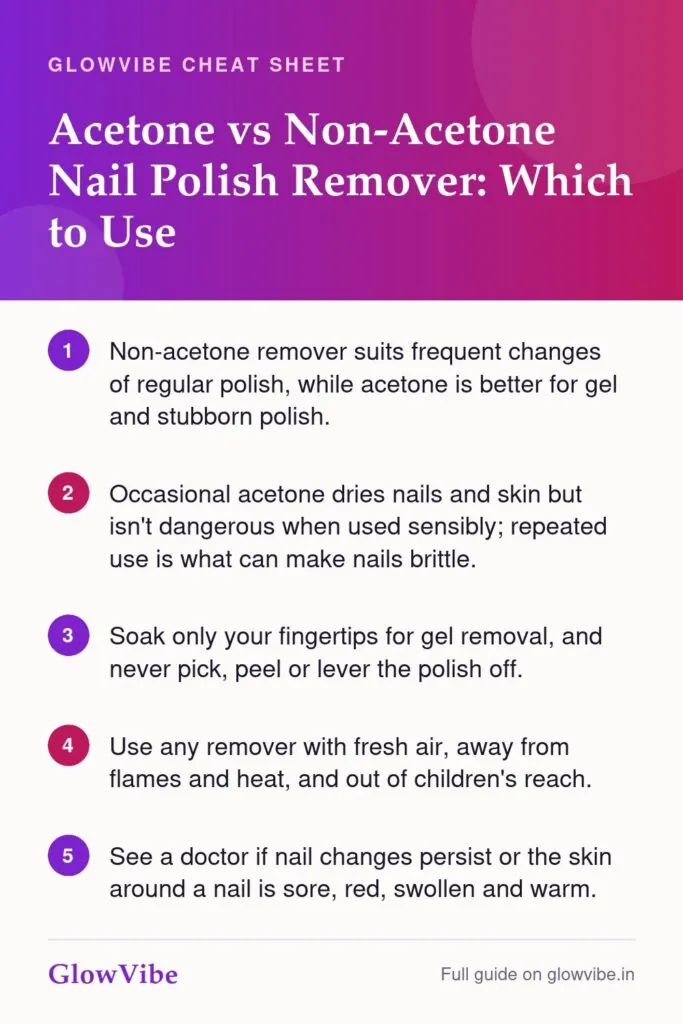
Pick non-acetone for frequent changes of regular polish, and keep acetone for gel and for polish that won’t shift. With either one, keep contact brief, skip the scraping, moisturise afterwards and give your nails regular time off. Use remover with fresh air, away from flame and out of children’s reach, and see a doctor if nail changes persist or look infected.