Dry Skin Remedies That Work: Home Care and Products for Winter (2026)
Simple dry skin remedies that work: better bathing habits, home remedies rated honestly, the best creams for very dry skin in India and when to see a doctor.

The dry skin remedies that actually work are simple: wash with lukewarm water and a gentle cleanser, then apply a thick moisturiser within a few minutes of bathing while your skin is still damp. Add a humidifier, a few kitchen staples with real evidence behind them (Coconut oilA common Indian hair oil that can soak into the hair shaft, which may reduce protein loss during washing. It can feel heavy on fine hair.See glossary, colloidal oatmeal, honey) and a barrier cream for stubborn patches, and most people see softer, less flaky skin within one to two weeks.
Below: why skin gets dry in an Indian winter, which home remedies are worth your time, the creams worth buying, and when to see a doctor.
Quick answer: what to do tonight
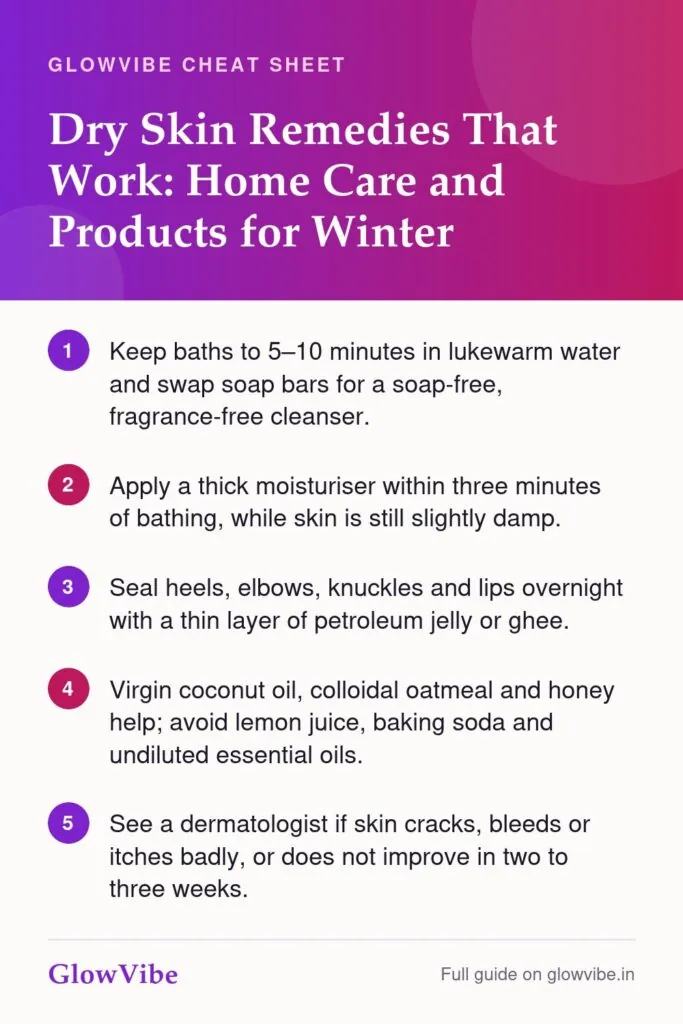
- Shorten your bath to 5 to 10 minutes and turn the geyser down to lukewarm.
- Swap soap bars for a soap-free, Fragrance-freeA product with no added perfume or essential oils for scent. Often the safer pick for sensitive or reactive skin. "Unscented" can still contain masking fragrance.See glossary cleanser on your face and body.
- Pat, don’t rub, and apply moisturiser within three minutes while skin is still slightly damp.
- Seal very dry spots (heels, elbows, knuckles, lips) with a thin layer of petroleum jelly or ghee at night.
- Add moisture to the air with a humidifier or a bowl of water near the heater in your bedroom.
What causes dry skin?
Your skin’s outer layer works like a brick wall: skin cells are the bricks and natural fats (CeramidesFats that naturally hold skin cells together like mortar between bricks. Moisturisers with ceramides help support a dry or damaged skin barrier.See glossaryRead the guide, cholesterol and fatty acids) are the mortar. When that mortar thins out, water escapes, and you get tightness, flakes and that chalky, ashy look on brown skin.
- Winter air: Cold, low-humidity air in Delhi, Punjab, Rajasthan or the hills pulls water out of skin. Heaters dry indoor air further.
- Hot showers: A steaming bath feels great in December, but hot water dissolves skin oils quickly.
- Harsh soaps and detergents: Many bathing bars are alkaline and lather heavily, which strips the barrier. Strong detergents and dishwashing liquids do the same to hands.
- Hard water: Common in many Indian cities, hard water leaves mineral residue and reacts with soap, which can leave skin feeling tight and itchy after a bath.
- Ageing: Oil production drops with age, so skin after 40 or 50 tends to get drier, especially on the shins and arms.
- Medical causes: Eczema (atopic dermatitis), psoriasis, an underactive thyroid, diabetes and some medicines (such as isotretinoin or diuretics) can cause dryness that home care alone won’t fix.
Dry skin treatment: the habits that actually help
Fix the routine before you buy anything. These changes cost nothing and often beat any single cream.
Use lukewarm water and a gentle cleanser
Keep water warm, not hot, and limit baths to about 10 minutes. Choose a soap-free cleanser such as Cetaphil Gentle Skin Cleanser or a mild cream-based body wash, and use it only where you need it (underarms, groin, feet) if your skin is very dry. Our Cetaphil face wash review explains which variant suits dry versus oily skin.
Layer humectant, emollient and occlusive
Good moisturisers combine three types of ingredients, and knowing them helps you read labels:
- HumectantAn ingredient that attracts water, such as glycerin or hyaluronic acid. Humectants hydrate best when sealed in with a moisturiser.See glossaryRead the guide pull water into the skin: GlycerinOne of the most common and effective humectants. It draws water into the skin and is found in most moisturisers and cleansers.See glossary, Hyaluronic acidA humectant that holds water in the skin for a plump, hydrated look. Despite the name, it is not an exfoliating acid. Apply on damp skin.See glossaryRead the guide, urea, honey, aloe.
- EmollientAn ingredient that softens and smooths skin or hair by filling gaps between cells, such as squalane, shea butter or plant oils.See glossary smooth and fill gaps between skin cells: ceramides, shea butter, plant oils.
- OcclusiveAn ingredient that forms a protective layer to stop water escaping from the skin, such as petrolatum, shea butter or dimethicone.See glossaryRead the guide form a seal that stops water escaping: petrolatum (petroleum jelly), lanolin, dimethicone, beeswax.
In very dry air, humectants alone have little water to draw from, so a hyaluronic serum on its own often isn’t enough in winter. Follow it with a cream, and add an occlusive on the driest spots.
Moisturise on damp skin
After a bath, pat yourself with a towel so skin is damp rather than dripping, then apply moisturiser straight away. Reapply on hands every time you wash them and on the face whenever it feels tight.
Fix your surroundings
- Run a humidifier in the bedroom while heaters are on, or keep a bowl of water near the heater.
- Wear soft cotton next to your skin. Wool and synthetic sweaters can itch, so layer them over a cotton inner.
- Use a mild, fragrance-free detergent and skip strong fabric softeners if you itch after wearing fresh clothes.
For a full morning and night plan built around these steps, follow our winter skincare routine for dry skin. If you live in a city with heavy smog, the winter smog skincare guide covers cleansing without over-stripping.
Home remedies for dry skin: what the evidence says
Some kitchen remedies genuinely help; others rest on habit more than evidence, and a few irritate damaged skin. Here’s an honest rating.
| Remedy | Evidence | Best use | Watch out for |
|---|---|---|---|
| Virgin coconut oil | Good: studies show it improves skin hydration and is useful in mild eczema | Body, hands, feet; on damp skin after a bath | Can clog pores on acne-prone faces |
| Colloidal oatmeal bath | Good: an accepted skin protectant ingredient for itch and dryness | Itchy body skin, kids’ eczema-prone skin | Use finely ground oats; rinse and moisturise after |
| Honey | Moderate: a natural humectant with soothing properties | 10-minute face mask, chapped lips | Sticky; patch test if you have pollen allergies |
| Aloe vera gel | Moderate: soothing and hydrating, but light | Under a cream, after sun or shaving | Not enough on its own in winter; some people react to it |
| Malai or milk cream | Limited: traditional, fats and lactic acid may soften skin | Short face mask, then rinse | Can smell sour and clog pores; not for acne-prone skin |
| Ghee for lips | Limited but sensible: works as an occlusive like any pure fat | Lips, cuticles, cracked heels at night | Keep it off the face if you get breakouts |
| Lemon juice | Poor: acidic and irritating | Not recommended | Stinging, redness, patchy pigmentation in sunlight |
| Baking soda | Poor: strongly alkaline, disrupts the barrier | Not recommended | Worsens dryness and itch |
| Undiluted essential oils | Poor: common cause of allergic reactions | Not recommended neat | Burns, rashes, contact dermatitis |
How to use the remedies that work
- Coconut oil: After your bath, apply a few drops to damp arms and legs and massage until absorbed. Use cold-pressed virgin oil, not fragranced hair oil.
- Oatmeal bath: Grind plain oats into a very fine powder, tie a few tablespoons in a muslin cloth and swish it in a bucket of lukewarm water. Soak or pour over yourself for 10 minutes, pat dry and moisturise.
- Honey mask: Spread a thin layer of raw honey on clean, damp skin, leave for 10 to 15 minutes, rinse with lukewarm water and follow with your cream.
- Aloe vera: Use fresh gel from the leaf (scrape out the clear part, avoid the yellow sap) or a fragrance-free gel, and always layer a moisturiser on top.
- Ghee for lips: Dab a little on lips before bed. For flaky lips, a gentle scrub once a week helps; our lip scrub guide shows how to do it without making them sore.
Patch test any new remedy on your inner arm for 24 hours first, especially if your skin is red, cracked or prone to eczema.
Best cream for very dry skin: products sold in India
When home remedies aren’t enough, a well-formulated cream is the most reliable fix. All of these are widely sold in Indian pharmacies and online.
| Product | Best for | Key ingredients | Price range |
|---|---|---|---|
| CeraVe Moisturising Cream | Very dry face and body, eczema-prone skin | Ceramides, hyaluronic acid, petrolatum | Mid-range |
| Cetaphil Moisturising Cream | Sensitive, dry skin; whole family | Glycerin, petrolatum, sweet almond oil | Mid-range |
| Nivea Creme | Hands, feet, elbows, rough patches | Mineral oil, glycerin, lanolin alcohol | Budget |
| Nivea Soft | Light daily face and body moisture | Glycerin, jojoba oil, vitamin E | Budget |
| Vaseline Intensive Care Deep Moisture lotion | Dry body skin, large areas | Glycerin, petroleum jelly | Budget |
| Bioderma Atoderm range | Very dry and atopic-prone skin | Lipid-replenishing emollients, glycerin | Mid-range to premium |
| Vaseline Original Petroleum Jelly | Sealing lips, heels, cracked knuckles | Pure petrolatum | Budget |
CeraVe Moisturising Cream
A rich, fragrance-free cream in a tub that suits very dry and eczema-prone skin. Its ceramides help rebuild the barrier, and petrolatum seals it in. Use it on the face at night and on the body after bathing.
- Pros: barrier-repair ingredients, fragrance-free, works on face and body
- Cons: can feel heavy in humid weather; pricier than mass-market creams
Cetaphil Moisturising Cream
A thick, gentle cream that sensitive skin usually tolerates well. It is a safe choice if you want one tub for the whole family, including older parents with dry shins. If sensitivity is your main issue, see our best moisturizer for sensitive skin roundup for more options.
- Pros: gentle, widely available, good for daily body use
- Cons: contains almond oil, so skip it if you have a nut allergy
Nivea Creme and Nivea Soft
The blue tin of Nivea Creme is thick and greasy in the best way for hands, feet and elbows. Nivea Soft is lighter and better for daytime face and body use if you dislike heavy textures.
- Pros: budget-friendly, easy to find in any chemist shop
- Cons: both are fragranced, which may sting cracked or eczema-prone skin
Vaseline Intensive Care Deep Moisture and Bioderma Atoderm
Vaseline’s Deep Moisture lotion spreads easily over legs and back for daily use. Bioderma’s Atoderm creams and balms are made for very dry, atopic-prone skin and are a good step up when milder creams fall short.
- Pros: Vaseline is affordable and quick to absorb; Atoderm is formulated for severe dryness
- Cons: a lotion may not be enough for cracked areas; Atoderm is costlier
How to get rid of dry skin on face, body, hands and feet
Face
Wash once a day with a cream or gel cleanser and simply rinse with water in the morning. Apply a hydrating serum or toner on damp skin, then a ceramide cream, and sunscreen in the day. Pause strong actives like retinol, scrubs and high-strength acids until flaking settles; a gentle lactic acid product once or twice a week is fine once your skin is calm. The cleanser, toner, moisturiser routine explains the order.
Body
Shins, arms and back dry out first. Use lotion or oil on damp skin after the bath, a richer cream on shins at night, and skip loofahs while skin is flaky.
Hands and feet
Wear gloves for dishes and laundry, and moisturise after every hand wash. For cracked heels, soak feet in lukewarm water for 10 minutes, gently file, apply a thick cream or petroleum jelly and wear cotton socks overnight. Creams with urea are especially helpful for thick, rough heels.
Common mistakes that make dry skin worse
- Taking very hot, long baths and then waiting until you’re dressed to moisturise.
- Scrubbing flaky skin hard with besan, sugar or a loofah every day.
- Using only aloe gel or a hyaluronic serum without a cream on top.
- Applying lemon, toothpaste, baking soda or neat essential oils on dry patches.
- Licking chapped lips, which dries them faster.
- Skipping sunscreen in winter; UV still damages the barrier on clear, cold days.
When to see a dermatologist
Ordinary dry skin improves within two weeks of consistent moisturising. See a dermatologist if you notice any of these:
- Deep cracks that bleed, ooze or look infected.
- Itching that keeps you awake or makes you scratch until skin breaks.
- Red, scaly or thickened patches, especially in elbow and knee folds, which can be signs of eczema or psoriasis.
- Dryness with tiredness, weight gain, hair thinning or feeling cold all the time, which may point to a thyroid problem.
- No improvement after two to three weeks of good home care.
A doctor can confirm the cause and prescribe medicated creams if needed. Avoid over-the-counter steroid creams without advice; misuse can thin the skin.
Frequently Asked Questions
The quickest relief comes from applying a thick moisturiser or virgin coconut oil on damp skin right after a lukewarm bath. For very rough spots, add a thin layer of petroleum jelly on top overnight.
You may be using a product that is too light, applying it on fully dry skin, or still using a harsh soap and hot water. Switch to a cream with ceramides or petrolatum and apply it on damp skin. If dryness persists for weeks, conditions like eczema or thyroid problems are worth ruling out.
Coconut oil works well on the body, but it can clog pores and trigger breakouts on acne-prone faces. If your face is dry but not prone to pimples, a few drops at night are usually fine. Otherwise, choose a non-comedogenic ceramide cream for the face.
For very dry or eczema-prone skin, fragrance-free barrier creams such as CeraVe Moisturising Cream, Cetaphil Moisturising Cream or Bioderma Atoderm are reliable choices. For hands and feet on a budget, Nivea Creme or petroleum jelly works well.
Drinking extra water does little for dry skin unless you are actually dehydrated. Dryness is mostly about the skin barrier losing water from the outside. Moisturising and gentler bathing habits matter far more.
Once a week at most, and only when skin isn’t cracked or inflamed. Gentle chemical exfoliants like lactic acid or urea are kinder than gritty scrubs. Always moisturise straight afterwards.
Quick poll
What is your biggest skin concern right now?
The bottom line
Dry skin is mostly a barrier problem, so the best remedies protect and rebuild that barrier: shorter lukewarm baths, gentle cleansers and a rich cream on damp skin. Coconut oil, oatmeal and honey are useful helpers, while lemon, baking soda and neat essential oils are best left in the kitchen cupboard.
Stay consistent for two weeks and most dryness settles. If yours cracks, bleeds or itches badly, get it checked by a dermatologist so you treat the real cause.