Which Face Serum Should You Use? A Guide by Skin Concern (2026)
Match your skin concern to the right serum ingredient: vitamin C, niacinamide, salicylic acid, hyaluronic acid, alpha arbutin or retinol, with AM/PM use and layering tips.


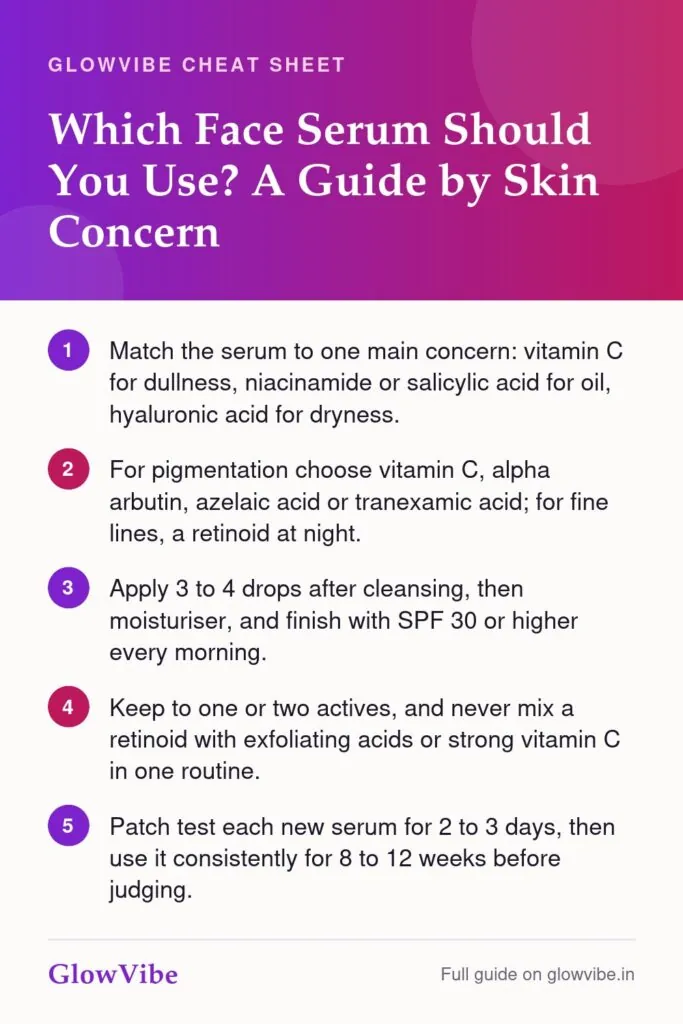
The best face serum for you is the one whose active ingredient matches your main skin concern: Vitamin CAn antioxidant that brightens dull skin, helps fade the look of dark spots and supports sunscreen against daily damage. Best used in the morning.See glossaryRead the guide for dullness, NiacinamideA form of vitamin B3 that helps with oiliness, the look of large pores, uneven tone and barrier support. Gentle and easy to pair with most ingredients.See glossaryRead the guide or Salicylic acidThe most common BHA. It dissolves oil inside pores, which helps with blackheads, whiteheads and oily skin. Usually used at 0.5 to 2%.See glossaryRead the guide for oil and pores, Hyaluronic acidA humectant that holds water in the skin for a plump, hydrated look. Despite the name, it is not an exfoliating acid. Apply on damp skin.See glossaryRead the guide for dryness, and ingredients like Alpha arbutinA gentle brightening ingredient that helps fade the look of dark spots and uneven tone over several weeks. Often paired with niacinamide.See glossary or Azelaic acidA gentle acid that helps with redness, bumps and uneven tone. It is usually well tolerated by sensitive and acne-prone skin.See glossary for pigmentation. Pick one concern, choose the ingredient that treats it, and use that serum consistently for 8 to 12 weeks before judging it.
Serums are light, water- or gel-based formulas that carry a higher dose of one or two actives than a moisturiser can. This guide matches each concern to the right ingredient, tells you whether it goes in your morning or night routine, and helps you avoid the layering mistakes that cause irritation.
Which serum is best for face? The quick answer
Find your main concern and start with the ingredient next to it.
- Dull skin, want a glow: vitamin C (morning).
- Oily skin and open pores: niacinamide (morning or night); add salicylic acid if you also get blackheads.
- Dry or dehydrated skin: hyaluronic acid, ideally followed by a CeramidesFats that naturally hold skin cells together like mortar between bricks. Moisturisers with ceramides help support a dry or damaged skin barrier.See glossaryRead the guide moisturiser.
- Pigmentation, dark spots and tan: vitamin C, alpha arbutin, azelaic acid or Tranexamic acidA brightening ingredient in serums that helps fade the look of stubborn dark patches and uneven tone. It is usually gentle on skin.See glossary.
- Fine lines and early ageing: retinol or another retinoid (night), or peptides if your skin is sensitive.
- Acne and breakouts: salicylic acid (night) plus niacinamide.
No matter which serum you choose, a broad-spectrum sunscreen every morning is non-negotiable.
Face serum by skin concern: the complete table
Use this table to shortlist your serum. “AM” means your morning routine and “PM” means your night routine.
| Skin concern | Key ingredient | When to use | Caution | Example products in India |
|---|---|---|---|---|
| Dullness, uneven glow | Vitamin C (ascorbic acid or derivatives such as ethyl ascorbic acid) | AM, under sunscreen | Pure ascorbic acid can sting and oxidise; store away from heat and light | Minimalist Vitamin C 10% Face Serum, Plum 15% Vitamin C Face Serum |
| Oily skin, large-looking pores | Niacinamide | AM or PM | High strengths can cause redness in some people; start once a day | The Ordinary Niacinamide 10% + Zinc 1%, Minimalist Niacinamide 10% Face Serum |
| Blackheads, clogged pores | Salicylic acid (BHA) | PM, 2 to 4 times a week to start | Drying if overused; avoid on broken or very dry skin | Minimalist Salicylic Acid 2% Face Serum |
| Dryness, dehydration, tightness | Hyaluronic acid; ceramides | AM and PM | Apply on damp skin and seal with a moisturiser | The Ordinary Hyaluronic Acid 2% + B5, Minimalist Hyaluronic Acid 2% serum |
| Dark spots, tanning, post-acne marks | Vitamin C, alpha arbutin | AM (vitamin C), AM or PM (alpha arbutin) | Needs daily sunscreen; results take 8 to 12 weeks | Minimalist Alpha Arbutin 2% Face Serum, The Ordinary Alpha Arbutin 2% + HA |
| Stubborn pigmentation, redness | Azelaic acid; tranexamic acid | AM or PM | Azelaic acid can tingle at first; see a dermatologist for melasma | The Ordinary Azelaic Acid Suspension 10%, Minimalist Tranexamic 3% Face Serum |
| Fine lines, rough texture | Retinoids (retinol, retinal); peptides | PM only (retinoids); AM or PM (peptides) | Retinoids cause dryness and peeling early on; avoid during pregnancy | The Ordinary Retinol 0.2% in Squalane, The Ordinary Multi-Peptide + HA Serum (“Buffet”) |
| Acne, oily breakouts | Salicylic acid; niacinamide | PM (salicylic acid); AM or PM (niacinamide) | Do not stack multiple acne actives at once | The Derma Co 10% Niacinamide Face Serum, Minimalist Salicylic Acid 2% Face Serum |
These are examples of widely available options, not paid recommendations. What matters most is the active, its strength and how well your skin tolerates it.
Serum for each concern, explained
Face serum for glowing skin: vitamin C
Vitamin C is the go-to face serum for glowing skin because it is an antioxidant that helps fade dullness and uneven tone over time. It also helps defend against environmental stress under sunscreen, so it belongs in your morning routine.
Suits: normal, combination and oily skin; anyone dealing with dullness or mild tan.
How to use: 3 to 4 drops on clean skin in the morning, followed by moisturiser and sunscreen. If you are new to it, start every other day.
- Pros: visible brightness with steady use; pairs well with sunscreen; many budget options in India.
- Cons: pure L-ascorbic acid can sting sensitive skin; serums oxidise (turn dark orange or brown) once opened, so buy small bottles.
If you want a deeper look at using vitamin C alongside retinol, read our guide to retinol and vitamin C serum benefits.
Best serum for oily skin: niacinamide or salicylic acid
For most people, niacinamide is the best serum for oily skin. It helps balance oil, makes pores look smaller and is gentle enough for daily use. Salicylic acid is the better pick when your main complaint is blackheads and clogged pores, because it is oil-soluble and works inside the pore.
Suits: oily, combination and acne-prone skin, especially in humid cities like Mumbai, Chennai or Kolkata.
How to use: niacinamide morning or night; salicylic acid at night, starting 2 to 3 times a week.
- Pros: lightweight, non-greasy textures; niacinamide is easy to pair with almost everything.
- Cons: salicylic acid can dry out cheeks if used daily too soon; very high niacinamide strengths irritate some people.
We have a detailed breakdown of how niacinamide works in our post on why Plum’s niacinamide serum works, and a full oily face skincare routine if you want the complete set of steps.
Serum for dry skin: hyaluronic acid and ceramides
The best serum for dry skin is a hydrating one built around hyaluronic acid, which draws water into the upper layers of skin so it feels plumper and less tight. Ceramides help repair the skin barrier so that water stays in. Ceramides are more often found in moisturisers, so pairing the two works well.
Suits: dry, dehydrated and sensitive skin; also oily skin that feels tight after cleansing.
How to use: apply on slightly damp skin, morning and night, and always follow with a moisturiser.
- Pros: very low irritation risk; safe to combine with almost any other active.
- Cons: no brightening or anti-ageing effect on its own; works best as part of a routine.
For a full cold-weather plan, see our winter skincare routine for dry skin.
Serum for pigmentation: vitamin C, alpha arbutin, azelaic acid, tranexamic acid
Tanning, dark spots and post-pimple marks are common in Indian skin. A good serum for pigmentation works by reducing excess melanin production, and the main options are:
- Vitamin C: overall dullness and mild tan.
- Alpha arbutin: gentle; dark spots and post-acne marks.
- Azelaic acid: marks plus redness; suits acne-prone skin.
- Tranexamic acid: stubborn, patchy pigmentation.
How to use: pick one, use it consistently for at least 8 to 12 weeks, and wear sunscreen every single day, reapplying if you are outdoors. Without sun protection, no pigmentation serum will keep up.
- Pros: several gentle options; can be combined with niacinamide.
- Cons: slow results; melasma and deep pigmentation usually need a dermatologist’s treatment plan, not just a serum.
Fine lines and early ageing: retinoids and peptides
Retinoids (retinol, retinal and prescription tretinoin) are the most proven over-the-counter option for fine lines and rough texture. They speed up skin cell turnover, which is also why they cause dryness and peeling at first. Peptides are a gentler, subtler alternative.
How to use: retinoids only at night, starting 2 nights a week on dry skin, and building up slowly. Avoid retinoids if you are pregnant or trying to conceive.
- Pros: retinoids also help with acne and uneven texture.
- Cons: an adjustment period of a few weeks; increases sun sensitivity.
Acne and breakouts: salicylic acid and niacinamide
For acne-prone skin, salicylic acid helps keep pores clear while niacinamide calms redness and controls oil. Salicylic acid at night and niacinamide in the morning is a simple, effective pairing. If you get painful, cystic or widespread acne, see a dermatologist; serums are support, not a treatment for severe acne.
How to use face serum: step by step
Here is the basic order:
- Cleanse with a gentle face wash and pat your skin dry.
- Toner (optional): use a hydrating toner if you like one. Our cleanser, toner, moisturiser guide explains when it helps.
- Serum: take 3 to 4 drops (or a pea-sized amount for gels), press it into your face and neck, and wait about a minute.
- Moisturiser: this seals in the serum and protects your barrier.
- Sunscreen (morning only): SPF 30 or higher, two finger-lengths for face and neck.
At night, skip the sunscreen and use your treatment serum (retinoid or salicylic acid) after cleansing, followed by moisturiser.
How to layer serums without irritating your skin
You do not need five serums; one or two actives, used well, is enough.

- Thinnest to thickest: apply watery serums first, then gels, then creams, then oils.
- Maximum 1 to 2 actives per routine: for example, vitamin C in the morning and niacinamide at night, or hyaluronic acid plus one treatment serum.
- Split actives between AM and PM: antioxidants like vitamin C in the morning; retinoids and exfoliating acids at night.
- Introduce one new serum at a time: wait 2 to 3 weeks before adding another.
If you are chasing a dewy, glass-skin look, our list of the best glass skin serums for Indian skin covers Korean hydrating formulas in more depth.
Serum combinations to avoid
Avoid these pairings in the same routine:
- Retinoid + AHA/BHA (glycolic, lactic or salicylic acid): too much exfoliation at once; use them on alternate nights.
- Retinoid + strong vitamin C: both can irritate; keep vitamin C for the morning and retinoid for the night.
- Two exfoliating acids together: for example, a glycolic acid serum plus a salicylic acid serum.
- Benzoyl peroxide + retinol: some retinoids are made less effective by benzoyl peroxide, and the combination is very drying.
Niacinamide and vitamin C used to be called a bad match, but most modern formulas can be used together without problems. If your skin flushes, just use them at different times of day.
Patch test before you start
Every new serum deserves a patch test, especially acids and retinoids. Apply a small amount behind your ear or along your jawline once a day for 2 to 3 days. If you see redness, itching, burning beyond a brief tingle, or small bumps, do not use it on your face.
Mild tingling with vitamin C or azelaic acid is common at first; persistent burning or rash is not. Stop the product and see a dermatologist if a reaction does not settle within a day or two, or if you have a skin condition such as rosacea or eczema.
Adjusting your serum for Indian summer, monsoon and winter
- Summer and monsoon (hot, humid): go lighter. Water-based niacinamide, salicylic acid and gel textures suit this weather. Use a gel moisturiser and reapply sunscreen, since sweat wears it off.
- Winter (dry, especially in North India): lean on hyaluronic acid and a richer ceramide moisturiser. Cut salicylic acid and retinoid frequency if your skin starts flaking.
- Heat and storage: keep vitamin C and retinoid serums away from hot bathroom shelves and direct sunlight. A cool cupboard is fine.
Common serum mistakes to avoid
- Using too many actives at once: the most common cause of redness and breakouts after starting serums.
- Skipping sunscreen: especially harmful with vitamin C, acids, retinoids and any pigmentation serum.
- Giving up after two weeks: most actives need 6 to 12 weeks to show visible change.
- Using an oxidised vitamin C serum: if it has turned dark brown, it has lost much of its strength.
- Choosing by trend, not concern: a serum that went viral may not treat what your skin actually needs.
Frequently Asked Questions
Niacinamide or hyaluronic acid is the easiest place to start because both are gentle and suit most skin types. Choose niacinamide if your skin is oily, and hyaluronic acid if it is dry.
Yes, most serums such as niacinamide, hyaluronic acid and vitamin C are made for daily use. Exfoliating acids and retinoids are different; start them 2 to 3 times a week and build up slowly based on how your skin feels.
It depends on the ingredient. Vitamin C works best in the morning under sunscreen, while retinoids and salicylic acid belong at night. Niacinamide and hyaluronic acid can be used at either time or both.
Yes, as long as you keep to one or two actives and layer from thinnest to thickest. A hydrating serum plus one treatment serum is a safe combination. Avoid combining a retinoid with exfoliating acids or strong vitamin C in the same routine.
No. A serum delivers active ingredients, while a moisturiser keeps water in and protects your skin barrier.
Hydrating serums feel good straight away, but treatment results take longer. Expect 4 to 8 weeks for oil and texture changes and 8 to 12 weeks for dark spots and pigmentation, provided you use sunscreen daily.
Alpha arbutin, vitamin C, azelaic acid and tranexamic acid are all good options for dark spots and tanning. Start with one, use it for at least three months with daily sunscreen, and see a dermatologist if the pigmentation is spreading or does not improve.
Quick poll
How often do you wear sunscreen?
Final word
Choosing a serum gets much simpler once you stop asking which product is best and start asking which ingredient your skin needs. Pick your main concern, match it to the active in the table above, patch test, and use it consistently alongside a moisturiser and sunscreen. Keep to one or two actives, adjust for the season, and give your skin a few months.