Best Niacinamide Serum in India (2026): Benefits, Picks and How to Use
Six niacinamide serums worth buying in India, what niacinamide really does for oil, marks and redness, which strength to pick, and how to use it morning and night.


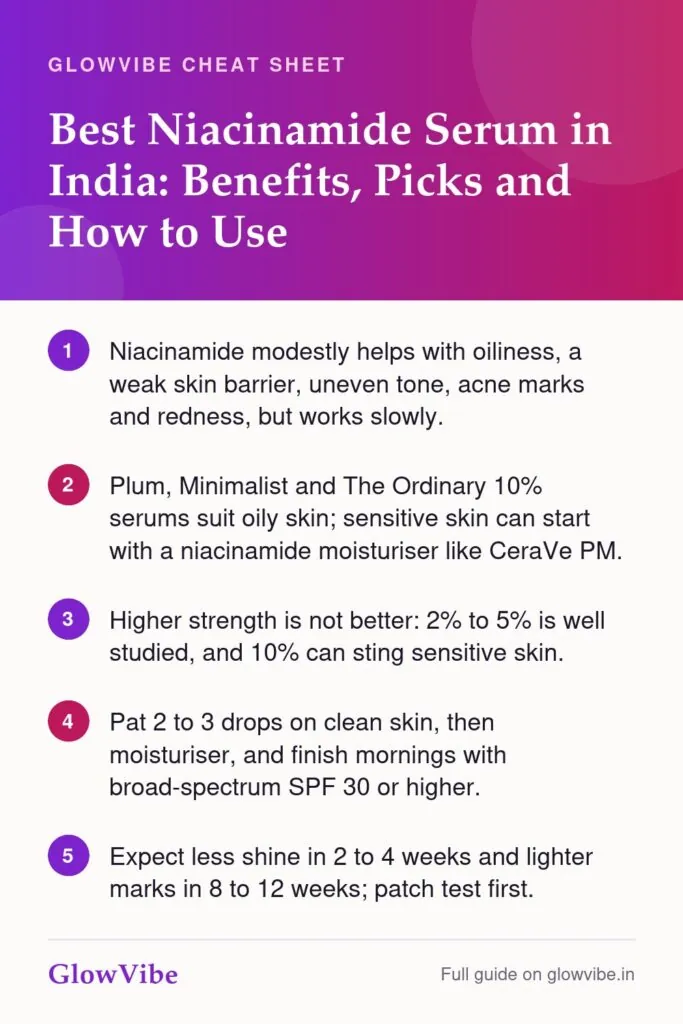
The best NiacinamideA form of vitamin B3 that helps with oiliness, the look of large pores, uneven tone and barrier support. Gentle and easy to pair with most ingredients.See glossaryRead the guide serum in India for most people is a simple, Fragrance-freeA product with no added perfume or essential oils for scent. Often the safer pick for sensitive or reactive skin. "Unscented" can still contain masking fragrance.See glossary formula you can use every day without irritation, and good options include Plum 10% Niacinamide Face Serum, Minimalist Niacinamide 10% + Zinc 1% and The Ordinary Niacinamide 10% + Zinc 1%. Niacinamide helps with oiliness, a weak Skin barrierThe outermost layer of skin that keeps water in and irritants out. A damaged barrier feels tight, stings and reacts more easily.See glossaryRead the guide, uneven tone, acne marks and redness, but it works slowly and modestly, so pick one that suits your skin and use it consistently for a couple of months.
This guide covers what niacinamide can and cannot do, which strength makes sense, six picks that are easy to buy in India, and how to fit one into your morning and night routine.
Best Niacinamide Serums in India: Quick Picks
- Plum 10% Niacinamide Face Serum: a solid everyday pick for oily and combination skin, from an Indian brand that is easy to find online and in stores.
- Minimalist Niacinamide 10% + Zinc 1%: a budget favourite for oily, acne-prone skin with clear ingredient labelling.
- The Ordinary Niacinamide 10% + Zinc 1%: the well-known original version of the niacinamide-and-zinc formula, for oily skin.
- The Derma Co 10% Niacinamide Face Serum: a widely available Indian option aimed at acne marks and oil control.
- Paula’s Choice 10% Niacinamide Booster: a premium pick that you can use on its own or mix into your moisturizer.
- CeraVe PM Facial Moisturising Lotion: not a serum. It is a gentle moisturizer that contains niacinamide, so it’s a good option for sensitive skin that reacts to 10% serums.
Niacinamide Serum Comparison Table
| Product | Format | Best for | Price range |
|---|---|---|---|
| Plum 10% Niacinamide Face Serum | Serum | Oily and combination skin, uneven tone | Budget to mid-range |
| Minimalist Niacinamide 10% + Zinc 1% | Serum | Oily, acne-prone skin, acne marks | Budget |
| The Ordinary Niacinamide 10% + Zinc 1% | Serum | Oily skin, visible pores | Budget to mid-range |
| The Derma Co 10% Niacinamide Face Serum | Serum | Acne marks, oil control | Budget to mid-range |
| Paula’s Choice 10% Niacinamide Booster | Booster (serum) | Pores and texture, mixing into moisturizer | Premium |
| CeraVe PM Facial Moisturising Lotion | Moisturizer with niacinamide | Sensitive or dry skin, barrier support | Mid-range |
Niacinamide Benefits for Skin: What It Really Does
Niacinamide is a form of vitamin B3. On skin, it is one of the best-studied and most tolerable actives around, which is why you’ll find it in serums, moisturizers and even sunscreens. Its benefits are real but gradual, so it’s worth knowing what to expect.

- Oil control: regular use can reduce how shiny your skin looks by midday. That is useful in humid Mumbai, Chennai or Kolkata summers. It won’t stop oil completely.
- Barrier support: niacinamide helps skin make its own CeramidesFats that naturally hold skin cells together like mortar between bricks. Moisturisers with ceramides help support a dry or damaged skin barrier.See glossaryRead the guide, the fats that hold moisture in. A stronger barrier means less tightness and fewer flare-ups from pollution or harsh face washes.
- Uneven tone and marks: it reduces the transfer of pigment to the surface skin cells, so dark patches and post-acne marks can slowly look lighter. This matters for Indian skin, which marks easily after breakouts.
- Redness: it has a calming effect, so mild redness and blotchiness may settle over time.
- Pores and texture: pores can look a little smaller as oiliness drops, though no serum shrinks them permanently.
What it won’t do: cure acne, remove melasma or replace sunscreen. If you have painful cystic acne or spreading pigmentation, see a dermatologist rather than relying on a serum alone.
Niacinamide for Acne Marks
The flat brown or dark spots left behind after a pimple heals (post-inflammatory HyperpigmentationPatches of skin that are darker than the surrounding skin, such as acne marks, sun spots or tanning. Very common on Indian skin tones.See glossary) respond well to patience, sunscreen and niacinamide. Expect gradual fading over 8 to 12 weeks, not overnight results. Red or purple marks and pitted scars are different. Niacinamide does little for pitted scars, which need in-clinic treatment.
Which Strength Is Right? Higher Isn’t Better
Most of the research on niacinamide used 2% to 5%, and that range is plenty for most people. Most serums sold in India are 10%. Many people tolerate 10% well, but it’s more likely to cause stinging, redness or small bumps, especially on sensitive or freshly over-exfoliated skin.
A 10% serum is not twice as effective as a 5% one. If a 10% serum irritates you, use it every other day, apply it over moisturizer, or switch to a moisturizer that contains niacinamide. Brands selling 15% or 20% are competing on marketing. Your skin doesn’t need that much.
The Best Niacinamide Serums in India, Reviewed
1. Plum 10% Niacinamide Face Serum
Plum’s niacinamide serum is many Indian buyers’ first serum. It has a light, watery texture that sinks in quickly and sits well under sunscreen and makeup, which makes it easy to use in hot weather. Plum is a vegan Indian brand, and you can buy the serum almost anywhere.
Who it suits: oily and combination skin, dullness and uneven tone, first-time serum users.
- Pros: lightweight, layers well, easy to find, beginner-friendly.
- Cons: 10% may sting sensitive skin; dry skin will still need a proper moisturizer on top.
2. Minimalist Niacinamide 10% + Zinc 1%
Minimalist made ingredient-led skincare affordable in India, and this serum is one of its bestsellers. The added zinc is aimed at oily, breakout-prone skin. The formula is simple, and the label tells you exactly what you’re getting.
Who it suits: oily and acne-prone skin, people focused on acne marks and shine.
- Pros: budget-friendly, widely available, good for oil control.
- Cons: can pill if you use too much or layer it under heavy creams; may be drying for dry skin.
3. The Ordinary Niacinamide 10% + Zinc 1%
This is the serum that made niacinamide famous worldwide, and it’s now sold in India through major beauty retailers. It’s a slightly thicker gel-serum and works best in small amounts.
Who it suits: oily skin, visible pores, anyone who wants a proven formula.
- Pros: well-known formula, a little goes a long way.
- Cons: prone to pilling under some sunscreens; some sensitive users find it tingly; buy from authorised sellers to avoid fakes.
4. The Derma Co 10% Niacinamide Face Serum
The Derma Co is a popular Indian active-skincare brand, and its niacinamide serum is marketed for acne marks and oily skin. It’s a reasonable alternative if your usual pick is out of stock.
Who it suits: oily and combination skin with post-acne marks.
- Pros: easy to buy, lightweight, aimed at Indian skin concerns.
- Cons: 10% strength isn’t ideal for reactive skin; the marketing can promise more than any serum delivers.
5. Paula’s Choice 10% Niacinamide Booster
Paula’s Choice designed its booster so you can use it alone or mix a few drops into your moisturizer. Mixing makes it easy to control how much you use, which helps if your skin is sometimes sensitive.
Who it suits: enlarged pores and uneven texture, people who prefer to keep their routine to fewer steps.
- Pros: flexible to use, elegant texture, fragrance-free.
- Cons: premium price; mainly sold online in India.
6. CeraVe PM Facial Moisturising Lotion (Gentle Alternative)
If every 10% serum makes your face sting, you can skip serums and get niacinamide from your moisturizer instead. CeraVe’s PM lotion combines niacinamide with ceramides and Hyaluronic acidA humectant that holds water in the skin for a plump, hydrated look. Despite the name, it is not an exfoliating acid. Apply on damp skin.See glossaryRead the guide in a light, fragrance-free base that works for both oily and dry skin.
Who it suits: sensitive, dry or easily irritated skin; anyone using retinoids or prescription creams.
- Pros: gentle, supports the skin barrier, one step instead of two.
- Cons: results on marks are slower than with a dedicated serum; very dry skin may need something richer in winter.
How to Choose a Niacinamide Serum for Your Skin
- Oily or acne-prone skin: a niacinamide and zinc serum (Minimalist or The Ordinary) or Plum works well. Follow with a gel moisturizer.
- Combination skin: Plum or The Derma Co, applied all over. Use a slightly richer moisturizer only on dry areas.
- Dry skin: use any serum under a good cream, or use Paula’s Choice mixed into your moisturizer.
- Sensitive skin: start with a niacinamide moisturizer such as CeraVe PM, or use a 10% serum on alternate nights over moisturizer. Our guide to the best moisturizers for sensitive skin has more gentle options.
Indian conditions matter too. In humid weather, pick a thin, watery serum and a gel moisturizer so your skin doesn’t feel heavy. Hard water and Delhi-winter pollution can leave skin tight and reactive, so the barrier-support benefit becomes more useful. In those months, pair your serum with a moisturizer that contains ceramides.
How to Use Niacinamide Serum (AM and PM)
- Cleanse: use a gentle face wash. A harsh one undoes the barrier benefits. See our picks for the best face wash in India.
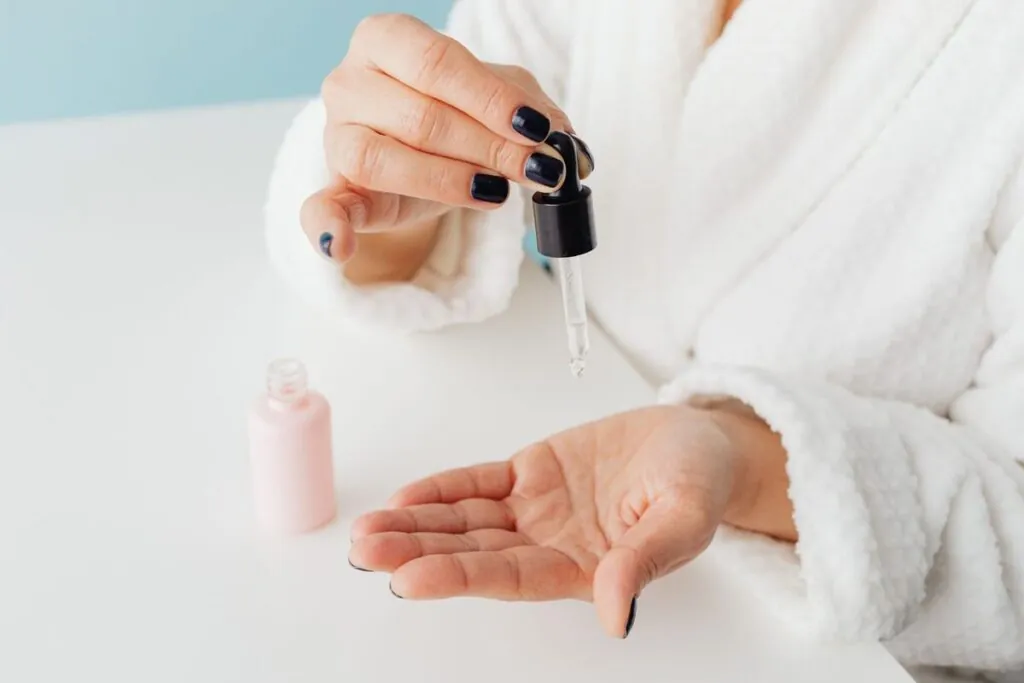
- Apply 2 to 3 drops: pat the serum onto dry or slightly damp skin. That is enough for your whole face; more just pills.
- Moisturize: wait a minute, then apply moisturizer.
- Sunscreen (morning): finish with a Broad spectrumA sunscreen label meaning it protects against both UVB rays (which cause burning) and UVA rays (which cause tanning and ageing).See glossaryRead the guide SPF (sun protection factor)A measure of protection against UVB rays, which cause sunburn. SPF 30 blocks about 97% of UVB and SPF 50 about 98%, if you apply enough and reapply.See glossaryRead the guide 30 or higher. Without sunscreen, marks and uneven tone won’t fade, whatever serum you use.
You can use niacinamide in the morning, at night or both. Once a day is enough to start. Build up to twice a day only if your skin is comfortable. For the full order of steps, follow our daily skincare routine or the basic cleanser, toner, moisturizer routine.
What Pairs Well With Niacinamide
- Vitamin C: the old warning that niacinamide and vitamin C “cancel out” comes from outdated lab tests using high heat. In modern skincare they work fine together. If your skin is sensitive, use vitamin C in the morning and niacinamide at night. Read more about retinol and vitamin C serum benefits.
- Retinoids: a good pairing. Niacinamide’s barrier support can make retinol or adapalene easier to tolerate. Apply niacinamide first, or use it on alternate nights.
- Hyaluronic acid, ceramides, sunscreen: all easy partners.
- AHAs and BHAs: fine for most people, but don’t use strong acids and a 10% niacinamide serum in the same routine if your skin is reactive.
Always Patch Test First
Apply a small amount behind your ear or along your jawline once a day for 3 to 5 days. Mild tingling for a few seconds can be normal. Burning, itching, a rash or new clusters of bumps are not, so stop using it. If a reaction doesn’t settle, or you’re pregnant or using prescription acne treatment, check with a dermatologist.
How Long Does Niacinamide Take to Work?
Some people notice less shine and calmer-looking skin within 2 to 4 weeks. Changes in tone, acne marks and texture usually need 8 to 12 weeks of daily use with sunscreen. Take a photo in the same light on day one so you can judge fairly, because slow changes are easy to miss.
Common Niacinamide Mistakes to Avoid
- Chasing higher percentages: going from 10% to 20% adds irritation, not results.
- Using too much: half a dropper is plenty. Extra product leads to pilling under sunscreen.
- Stacking several niacinamide products: serum, toner, moisturizer and sunscreen all with niacinamide can add up and irritate your skin.
- Skipping sunscreen: sun exposure keeps creating new pigment faster than any serum can fade it.
- Quitting after two weeks: niacinamide is slow. Give it at least two months before you judge it.
- Ignoring irritation: persistent redness or bumps mean the product or strength isn’t right for you.
Frequently Asked Questions
There isn’t one best serum for everyone. Plum 10% Niacinamide Face Serum, Minimalist Niacinamide 10% + Zinc 1% and The Ordinary Niacinamide 10% + Zinc 1% are reliable, widely available choices for oily and combination skin. If you have sensitive skin, a niacinamide moisturizer such as CeraVe PM Facial Moisturising Lotion is a gentler way to start.
Yes. Niacinamide is gentle enough for daily use for most people, and consistency matters more than strength. Start once a day and move to morning and night only if your skin stays comfortable.
Many people use 10% without problems, but it can irritate sensitive skin. Research shows good results at 2% to 5%, so a higher percentage isn’t necessary. If 10% stings, use it on alternate days or over moisturizer.
Yes. The idea that they cancel each other out is a myth based on old lab conditions that don’t apply to modern skincare. If your skin is sensitive, use vitamin C in the morning and niacinamide at night.
It can help flat, dark post-acne marks fade gradually over 8 to 12 weeks, especially with daily sunscreen. It doesn’t treat active acne on its own or fix pitted scars. For those, see a dermatologist.
Yes, they pair well, and niacinamide may make retinol easier to tolerate. Apply niacinamide first and let it absorb before retinol, or use them on alternate nights while your skin adjusts.
Usually before, on clean skin, as serums are thinner than moisturizers. If your skin is sensitive, applying it after moisturizer slightly reduces irritation without making it useless.
Quick poll
How often do you wear sunscreen?
The Bottom Line
Niacinamide is an easy, low-risk addition to most routines in India. It modestly helps with oil, barrier strength, redness and acne marks when you use it daily for a couple of months. Choose a simple formula such as Plum, Minimalist or The Ordinary, and don’t assume a higher percentage works better.
Patch test first, use only a few drops, and always finish your morning routine with sunscreen. If your skin stays irritated, or your acne or pigmentation is getting worse, see a dermatologist.