Daily Skincare Routine for Women (2026): Simple AM and PM Steps
A simple daily skincare routine for women: the 3-step core, optional actives, AM and PM steps, routines by skin type and how to adjust for Indian summer, monsoon and winter.


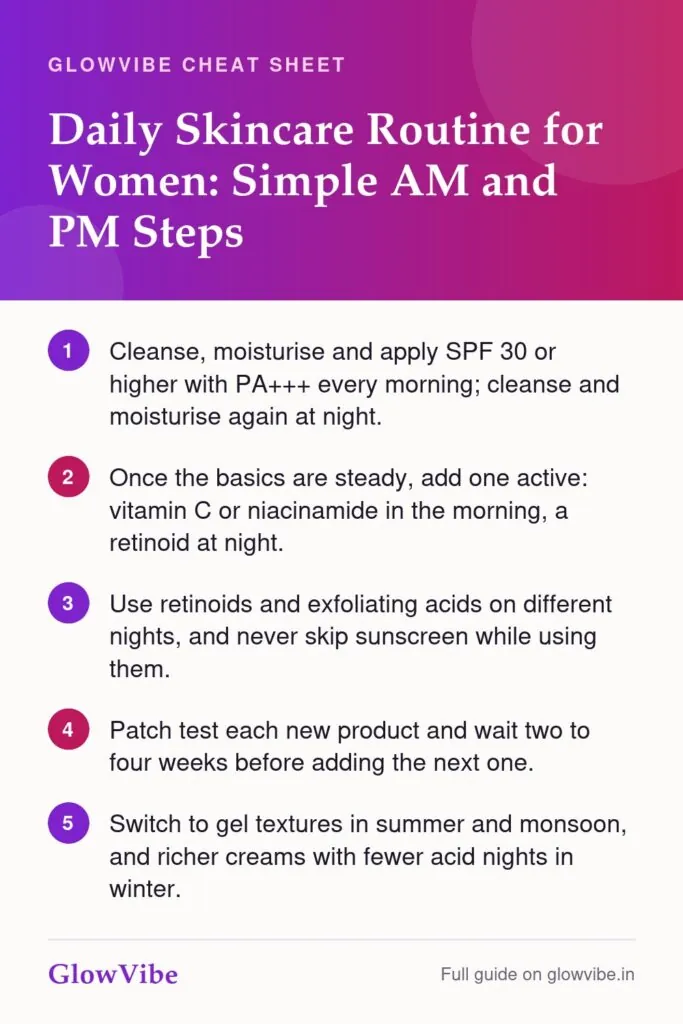
A good daily skincare routine for women needs only three steps: cleanse, moisturise and apply sunscreen every morning, then cleanse and moisturise again at night. Once that habit is steady, you can add one or two targeted actives, such as Vitamin CAn antioxidant that brightens dull skin, helps fade the look of dark spots and supports sunscreen against daily damage. Best used in the morning.See glossaryRead the guide in the morning or a retinoid at night, to work on glow, dark spots or breakouts.
This guide is built for beginners and for anyone who has a shelf full of products but no clear plan. You will get a simple morning and night routine, a table of routines by skin type, how to add actives without irritating your skin, and how to change things for Indian summers, monsoon and winter.
The 3-Step Core: Cleanse, Moisturise, Sunscreen
Every effective routine, from a ten-step Korean routine to a dermatologist’s basic plan, is built on these three steps. Get them right first. Most “my skin is dull” or “my skin is breaking out” problems improve noticeably when these basics are done daily and correctly.
1. Cleanse
A cleanser removes sweat, oil, sunscreen and pollution without stripping your skin. Pick a gentle, pH-balanced face wash: gel or foam for oily skin, cream or lotion for dry and sensitive skin. If your face feels tight or squeaky after washing, your cleanser is too harsh.
Popular, widely available options include Cetaphil Gentle Skin Cleanser for dry or sensitive skin and CeraVe Foaming Cleanser for normal to oily skin. For more choices by skin type, see our guide to the best face wash for women in India.
2. Moisturise
Moisturiser supports your Skin barrierThe outermost layer of skin that keeps water in and irritants out. A damaged barrier feels tight, stings and reacts more easily.See glossaryRead the guide, the outer layer that keeps water in and irritants out. Even oily skin needs it; skipping moisturiser often makes skin produce more oil. Look for GlycerinOne of the most common and effective humectants. It draws water into the skin and is found in most moisturisers and cleansers.See glossary, Hyaluronic acidA humectant that holds water in the skin for a plump, hydrated look. Despite the name, it is not an exfoliating acid. Apply on damp skin.See glossaryRead the guide, CeramidesFats that naturally hold skin cells together like mortar between bricks. Moisturisers with ceramides help support a dry or damaged skin barrier.See glossaryRead the guide or PanthenolPro-vitamin B5, a soothing and hydrating ingredient used in skin and hair products to calm and soften.See glossary.
A water-gel like Neutrogena Hydro Boost Water Gel suits oily and combination skin, while a richer cream like CeraVe Moisturising Cream works well for dry skin. If you react easily, read our picks for the best moisturizer for sensitive skin.
3. Sunscreen (Every Morning)
Sunscreen is the single most important step for preventing tanning, dark spots and early lines, and Indian UV levels are high for most of the year. Use a Broad spectrumA sunscreen label meaning it protects against both UVB rays (which cause burning) and UVA rays (which cause tanning and ageing).See glossaryRead the guide SPF (sun protection factor)A measure of protection against UVB rays, which cause sunburn. SPF 30 blocks about 97% of UVB and SPF 50 about 98%, if you apply enough and reapply.See glossaryRead the guide 30 or higher with PA+++ or above. Apply roughly two finger-lengths for the face and neck, and reapply every two to three hours if you are outdoors.
A light, matte formula such as Neutrogena Ultra Sheer Dry-Touch Sunscreen SPF 50+ is easy to wear daily. Whatever you choose, the best sunscreen is the one you will actually apply every single day, including indoors near windows and on cloudy days.
Wondering where toner fits? It is optional. If you like one, use an alcohol-free hydrating toner after cleansing. Our cleanser toner moisturizer (CTM) guide explains when a toner actually helps.
Optional Actives for Glowing Skin
Actives are ingredients that target a specific concern. They go after cleansing and before moisturiser. You do not need all of them; one or two well-chosen actives are better than five fighting each other.
- Vitamin C (morning): An antioxidant that helps brighten dullness and fade dark spots over time, and adds extra protection under sunscreen. Store it away from heat and light; if it turns dark orange or brown, it has oxidised.
- Niacinamide (AM or PM): A gentle, well-tolerated ingredient that helps with oil control, the look of large pores, uneven tone and barrier support. Minimalist Niacinamide 10% + Zinc 1% serum is a common budget choice in India.
- Retinoid (night): Retinol and its relatives speed up cell turnover, helping with fine lines, texture, acne and pigmentation. It can cause dryness and peeling at first, so start slowly. Minimalist Retinol 0.3% is a widely sold beginner-friendly option.
- Exfoliating acids (night, a few times a week): AHAs like glycolic and lactic acid smooth texture and dullness; BHA (salicylic acid) gets into pores and suits oily, acne-prone skin. Paula’s Choice Skin Perfecting 2% BHA Liquid Exfoliant is a well-known leave-on BHA.
Rule of thumb for beginners: use a retinoid and an exfoliating acid on different nights, not together. Niacinamide pairs comfortably with almost everything.
Skincare Routine by Skin Type
Not sure of your type? Wash your face, wait an hour without applying anything, and check. Shiny all over means oily; tight or flaky means dry; an oily T-zone with normal or dry cheeks means combination; stinging, redness or itching with many products means sensitive.
| Skin type | Cleanser | Moisturiser | Sunscreen | Best first active |
|---|---|---|---|---|
| Oily / acne-prone | Gel or foaming, with or without salicylic acid | Oil-free gel or water-gel | Matte, gel or fluid SPF 50 | Niacinamide (AM) or BHA (PM, 2–3x a week) |
| Dry | Cream or non-foaming lotion cleanser | Rich cream with ceramides | Hydrating cream or lotion SPF | Hydrating serum; later a gentle retinoid |
| Combination | Mild gel cleanser | Light lotion; extra cream on dry patches | Lightweight fluid SPF | Niacinamide or vitamin C (AM) |
| Sensitive | Fragrance-free cream cleanser | Fragrance-free barrier cream (ceramides, panthenol) | Mineral or sensitive-skin SPF | Usually none at first; niacinamide once stable |
Combination skin is the most common type in India. You do not need two full routines; just use a lighter layer on the T-zone and a little extra moisturiser on your cheeks.
Morning Skincare Routine (AM Steps)
Your morning skincare routine is about protection: clean skin, light hydration and sunscreen. It should take under five minutes.

- Cleanse: Use a gentle face wash, or just rinse with water if your skin is dry and you cleansed well the night before.
- Toner (optional): A few pats of alcohol-free hydrating toner.
- Vitamin C or niacinamide serum (optional): Two to three drops on dry skin; let it settle for a minute.
- Moisturiser: A light layer; oily skin can use a gel or skip this if the sunscreen is hydrating enough.
- Sunscreen: The last skincare step, applied generously to face, neck and ears. Wait a few minutes before makeup.
Night Skincare Routine (PM Steps)
Your night skincare routine is about cleaning off the day and repairing. This is where retinoids and exfoliants belong, because sunlight is not a factor and skin can recover overnight.
- First cleanse (if you wore makeup or heavy sunscreen): Massage a cleansing oil or balm on dry skin, then emulsify with water. Our guide to oil cleansers for oily skin explains why this works even for oily faces.
- Second cleanse: Your regular gentle face wash.
- Treatment: Retinoid on some nights, exfoliant on others, or a plain hydrating or niacinamide serum on rest nights.
- Eye cream (optional): A simple fragrance-free one if your under-eyes feel dry.
- Moisturiser: Slightly richer than your morning one if your skin likes it, to lock in hydration overnight.
Weekly Extras
These are nice-to-haves, not essentials. Keep them to the days you are not using a retinoid or acid.

- Clay mask (once a week): Good for oily T-zones and humid weather. Apply only where you get oily, and rinse before it cracks completely.
- Hydrating or sheet mask (once or twice a week): A quick boost for dry or dehydrated skin, especially in AC rooms and winter.
- Gentle exfoliation: If you do not use a leave-on acid, a mild chemical exfoliant once a week is kinder than harsh scrubs with large granules.
- Clean the tools: Change pillowcases twice a week, wash makeup brushes weekly and wipe your phone screen. It is the easiest acne prevention there is.
How to Introduce Actives Safely
Most bad reactions come from adding too much, too fast. Follow this order and you will know exactly what your skin likes.
- Patch test first: Apply a small amount behind the ear or along the jawline for two to three nights. Skip the product if you see redness, itching, burning or bumps.
- One new product at a time: Wait two to four weeks before adding the next. If you break out, you will know the cause.
- Start low and slow: Use a retinoid two nights a week, then three, then every other night as your skin adjusts. The same goes for acids.
- Buffer if needed: If a retinoid stings, apply moisturiser first and the retinoid on top, or mix it with moisturiser.
- Never skip sunscreen: Retinoids and acids make skin more sun-sensitive, so daily SPF is non-negotiable when you use them.
If you are pregnant, trying to conceive or breastfeeding, avoid retinoids and check every active with your doctor first.
Adjusting Your Routine for Indian Seasons
Summer (Hot and Sunny)
Switch to a gel moisturiser and a matte or gel sunscreen, and reapply SPF if you step out in the afternoon. Keep a soft tissue or blotting paper handy instead of washing your face five times a day, which strips the barrier. Vitamin C in the morning is especially useful against summer tanning.
Monsoon (Humid and Sticky)
Humidity means more oil, clogged pores and sometimes fungal acne. Use lighter layers, a salicylic acid cleanser or BHA a few times a week if you are breakout-prone, and do not skip sunscreen just because it is cloudy. Dry your face with a clean towel and change it often.
Winter (Dry and Polluted)
Move to a cream cleanser, a richer moisturiser and fewer acid nights. Avoid very hot water. North Indian winters also bring smog, so a thorough night cleanse matters more. See our winter skincare routine for dry skin and the winter smog skincare guide for Indian cities for detailed plans.
Common Skincare Mistakes to Avoid
- Using too little sunscreen: A thin smear gives far less protection than the label says.
- Over-washing or scrubbing: Twice a day is enough. Harsh scrubs and soap bars cause redness and more oil.
- Layering several actives at once: Retinoid, acids and vitamin C on the same night is a fast route to irritation.
- Trying DIY with lemon, baking soda or toothpaste: These can burn skin and leave dark marks, especially on brown skin.
- Switching products every week: Most products need four to eight weeks to show results. Give them time.
- Sleeping in makeup: Even on tired nights, a quick cleanse is better than none.
When to See a Dermatologist
A home routine handles everyday concerns, but some problems need professional care. Book an appointment with a dermatologist if you notice any of these:
- Painful, deep or cystic acne, or acne that leaves scars or dark marks
- No improvement after two to three months of a consistent routine
- Melasma, stubborn pigmentation or sudden patches of colour change
- Persistent redness, rashes, burning or swelling after products
- A mole or spot that changes in size, shape or colour, or bleeds
Avoid using steroid creams or “fairness” creams bought without a prescription. They can thin the skin and cause lasting damage.
Frequently Asked Questions
Go from thinnest to thickest texture. In the morning that is cleanser, toner (optional), serum, moisturiser and sunscreen. At night it is cleanser, treatment serum and moisturiser.
Start with just a gentle cleanser, a moisturiser that suits your skin type and a broad-spectrum SPF 30 or higher. Use them consistently for a month before adding any serum or active.
Daily sunscreen, a gentle cleanse, good moisturising and enough sleep make the biggest difference. Drinking enough water and eating plenty of fruits and vegetables support your skin too. For extra radiance, a vitamin C serum in the morning helps over a few weeks.
Yes, if you sit near windows or step out even briefly, because UVA rays pass through glass and clouds. One morning application is usually enough on indoor days; reapply if you go out.
Oily skin usually tolerates a chemical exfoliant two to three times a week, while dry or sensitive skin does better with once a week or less. Stop if you notice stinging, redness or a tight, shiny look.
Yes, but not at the same time. Use vitamin C in the morning under sunscreen and retinol at night. This keeps irritation low and lets each work at the time of day it suits best.
Hydration and comfort improve within days. Changes in dullness, texture and mild breakouts usually take four to eight weeks, and dark spots can take a few months.
Quick poll
How many steps are in your skincare routine?
Keep It Simple and Consistent
Glowing skin comes from doing a few things every day, not from owning the most products. Lock in cleanse, moisturise and sunscreen, add one active at a time, and adjust your textures as the seasons change.
Give your routine at least a month before judging it, and see a dermatologist if a concern does not budge. Your skin will thank you for the patience.