Best Moisturizer for Sensitive Skin in India (2026): 8 Picks
Fragrance-free moisturizers for sensitive dry, oily and combination skin in India, plus a barrier-repair ingredient guide, patch testing and when to see a dermatologist.


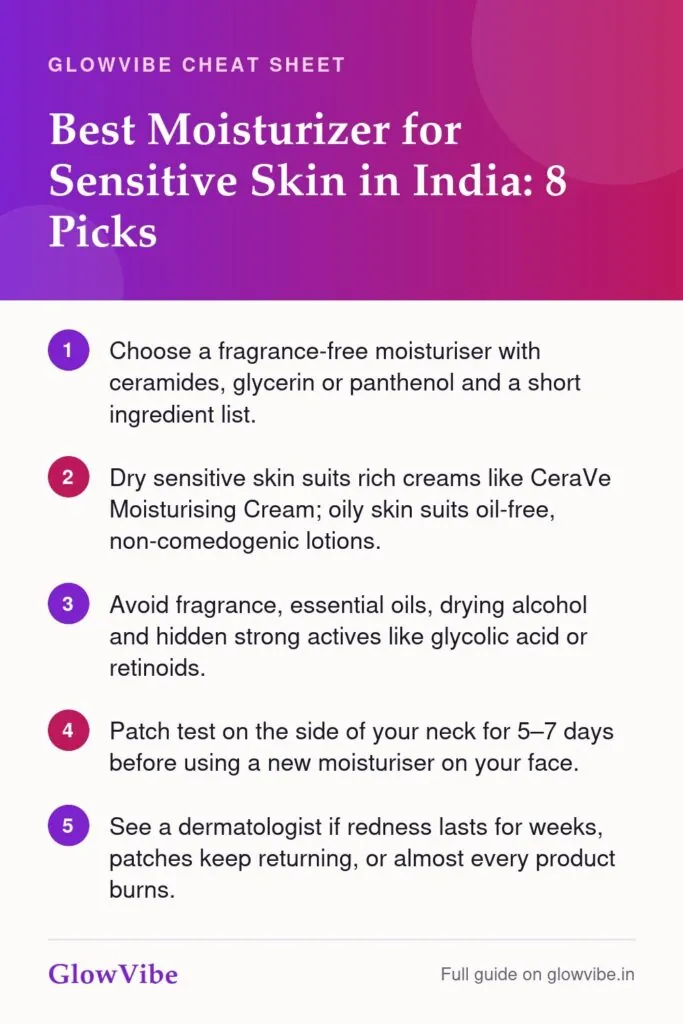
The best moisturizer for sensitive skin is a Fragrance-freeA product with no added perfume or essential oils for scent. Often the safer pick for sensitive or reactive skin. "Unscented" can still contain masking fragrance.See glossary formula built around barrier-repair ingredients like CeramidesFats that naturally hold skin cells together like mortar between bricks. Moisturisers with ceramides help support a dry or damaged skin barrier.See glossaryRead the guide, GlycerinOne of the most common and effective humectants. It draws water into the skin and is found in most moisturisers and cleansers.See glossary and PanthenolPro-vitamin B5, a soothing and hydrating ingredient used in skin and hair products to calm and soften.See glossary, with as short an ingredient list as possible. In India, reliable choices include CeraVe Moisturising Cream and Cetaphil Moisturising Cream for dry skin, and lighter options like CeraVe PM Facial Moisturising Lotion or Minimalist Vitamin B5 10% Moisturizer for oily, acne-prone skin.
Below: what “sensitive” means, which ingredients calm skin, picks by skin type, Delhi winter versus Mumbai monsoon, and when redness needs a dermatologist.
What sensitive skin actually means
Sensitive skin is not a medical diagnosis. It is a description: skin that stings, burns, itches, flushes or tightens more easily than average, often after a new product, hot water, sun, wind or a change in weather.
In most cases the root cause is a weakened Skin barrierThe outermost layer of skin that keeps water in and irritants out. A damaged barrier feels tight, stings and reacts more easily.See glossaryRead the guide, the outer layer that holds water in and keeps irritants out. When that barrier is thin or damaged, ingredients that normal skin ignores can get through and trigger a reaction. Over-exfoliating, harsh face washes, hard water and strong actives are common culprits.
A gentle routine with the right moisturizer can strengthen the barrier over a few weeks. Our guide to sensitive skin products covers cleansers and sunscreens too.
Quick answer: best moisturizers for sensitive skin in India
- CeraVe Moisturising Cream: best overall for sensitive dry skin
- Cetaphil Moisturising Cream: best classic rich cream for very dry face and body
- La Roche-Posay Cicaplast Baume B5+: best for irritated, flaky or over-exfoliated patches
- Bioderma Atoderm Crème: best for dry, reactive skin in winter
- CeraVe PM Facial Moisturising Lotion: best for sensitive oily or combination skin
- Minimalist Vitamin B5 10% Moisturizer: best budget pick for oily, acne-prone skin
- Re’equil Ceramide & Hyaluronic acidA humectant that holds water in the skin for a plump, hydrated look. Despite the name, it is not an exfoliating acid. Apply on damp skin.See glossaryRead the guide Moisturiser: best Indian brand for normal to dry sensitive skin
- Simple Kind to Skin Hydrating Light Moisturiser: best lightweight daily option for humid weather
Comparison table
| Product | Best for | Texture | Hero ingredients | Price range |
|---|---|---|---|---|
| CeraVe Moisturising Cream | Dry, very dry | Rich cream | Ceramides, hyaluronic acid | Mid-range |
| Cetaphil Moisturising Cream | Very dry, face and body | Thick cream | Glycerin, EmollientAn ingredient that softens and smooths skin or hair by filling gaps between cells, such as squalane, shea butter or plant oils.See glossary | Mid-range |
| La Roche-Posay Cicaplast Baume B5+ | Irritated, damaged patches | Balm | Panthenol, madecassoside, shea butter | Premium |
| Bioderma Atoderm Crème | Dry, reactive, winter | Rich cream | Glycerin, emollients | Mid-range |
| CeraVe PM Facial Moisturising Lotion | Oily, combination | Light lotion | Ceramides, NiacinamideA form of vitamin B3 that helps with oiliness, the look of large pores, uneven tone and barrier support. Gentle and easy to pair with most ingredients.See glossaryRead the guide, hyaluronic acid | Mid-range |
| Minimalist Vitamin B5 10% Moisturizer | Oily, acne-prone | Gel-cream | Panthenol | Budget |
| Re’equil Ceramide & Hyaluronic Acid Moisturiser | Normal to dry | Cream | Ceramides, hyaluronic acid | Budget to mid-range |
| Simple Kind to Skin Hydrating Light Moisturiser | Normal, combination, humid weather | Light lotion | Glycerin, pro-vitamin B5 | Budget |
Barrier-repair ingredient guide: what to look for
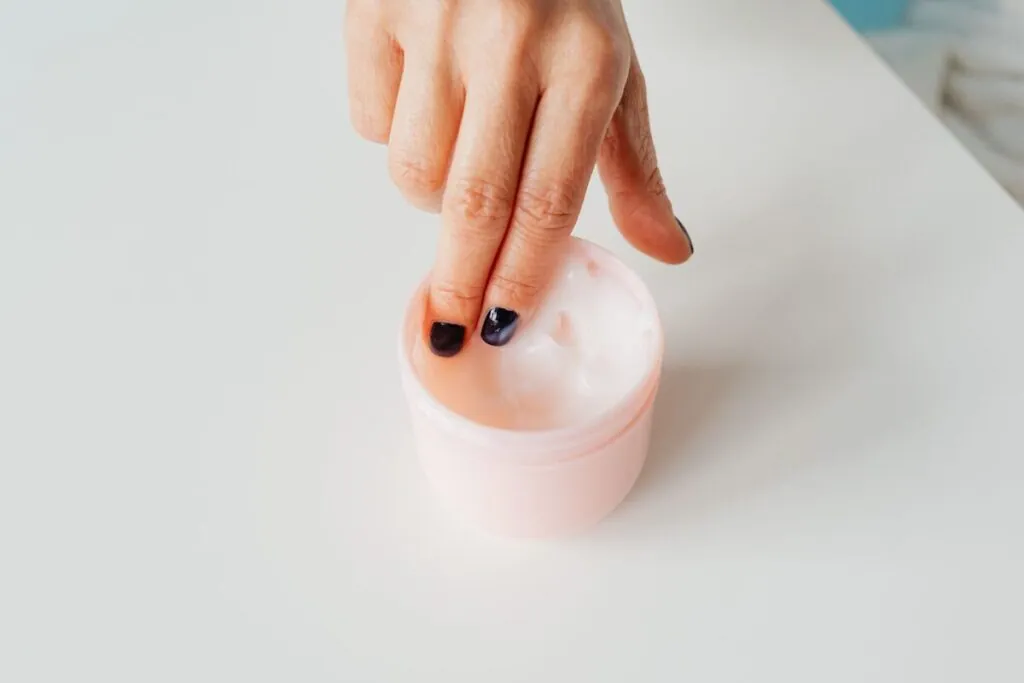
- Ceramides: fats that naturally make up a large part of your skin barrier. Topping them up helps seal cracks and reduce water loss.
- Glycerin: a humble, well-tolerated humectant that pulls water into the skin. It is cheap, effective and rarely irritating.
- Panthenol (pro-vitamin B5): hydrates and soothes, and is a staple in creams for irritated or post-procedure skin.
- Centella asiatica (cica) and madecassoside: plant-derived soothing ingredients popular in Korean and French pharmacy brands for redness and discomfort.
- Squalane: a light, stable oil that softens skin without the heaviness of many plant oils. Useful for dry skin that hates greasy creams.
Fragrance-free moisturizer in India: what to avoid
- Fragrance or parfum: the most common cause of cosmetic allergy. “Unscented” is not always the same as fragrance-free, so read the ingredient list.
- Essential oils: lavender, tea tree, citrus, peppermint and eucalyptus oils are natural, but natural does not mean gentle.
- High amounts of drying alcohol: alcohol denat. or ethanol high up the list can sting and dry out sensitive skin. Fatty alcohols like cetyl or cetearyl alcohol are different and are fine.
- Strong actives in a “moisturizer”: glycolic acid, high-strength vitamin C or retinoids hidden in a day cream are a common reason a new product burns.
Best moisturizer for sensitive dry skin
1. CeraVe Moisturising Cream
Who it suits: Dry to very dry sensitive skin, eczema-prone skin (alongside a doctor’s advice), and anyone whose face feels tight after washing.
Key ingredients: Three essential ceramides and hyaluronic acid in a fragrance-free base, released slowly through the brand’s MVE technology.
How to use: Use a small amount on slightly damp skin after cleansing, morning and night. It also works on elbows, hands and heels.
- Pros: Fragrance-free and widely recommended by dermatologists
- Pros: Large tub works for face and body
- Cons: Can feel heavy on oily skin or in humid months
2. Cetaphil Moisturising Cream
Who it suits: Very dry, flaky or rough sensitive skin, especially in North Indian winters.
Key ingredients: A glycerin-rich, fragrance-free cream with emollients that soften and cushion the skin.
How to use: Apply at night or on dry patches during the day. On the body, use it right after a bath.
- Pros: Thick, comforting texture
- Pros: Easy to find in pharmacies across India
- Cons: Too rich for oily or acne-prone faces
- Cons: Tub packaging is less hygienic than a pump
3. La Roche-Posay Cicaplast Baume B5+
Who it suits: Skin that is already irritated: red patches, flaking around the nose, skin that stings after over-exfoliating or after a retinoid.
Key ingredients: Panthenol, madecassoside and shea butter in a fragrance-free balm.
How to use: Use a thin layer as the last step at night on irritated areas, or as a short-term “rescue” moisturizer for a week or two.
- Pros: Very soothing on compromised skin
- Pros: Small tube is easy to carry
- Cons: Leaves a white, slightly sticky film
- Cons: Premium price for a small tube
4. Bioderma Atoderm Crème
Who it suits: Dry, reactive skin that flares in cold weather or after hot showers.
Key ingredients: A fragrance-free, glycerin-based cream with emollients from a brand known for very dry and atopic-prone skin.
How to use: Use once or twice daily on face and body. Pair with a gentle, soap-free cleanser.
- Pros: Comforting without being too greasy
- Pros: Good family pick for kids and adults
- Cons: Can feel rich on the face in summer
Best moisturizer for sensitive oily skin
Oily skin can still be sensitive, and it still needs a moisturizer. Skipping one often makes skin feel tighter and more reactive, especially if you use acne treatments. Look for lotions or gel-creams labelled non-comedogenic.
5. CeraVe PM Facial Moisturising Lotion
Who it suits: Sensitive oily, combination or acne-prone skin that wants barrier support without heaviness.
Key ingredients: Ceramides, niacinamide and hyaluronic acid in a light, oil-free, fragrance-free lotion.
How to use: Despite the name, you can use it morning and night. In the morning, follow with sunscreen.
- Pros: Lightweight and non-comedogenic
- Pros: Good partner for adapalene or benzoyl peroxide routines
- Cons: Niacinamide can tingle on very reactive skin at first
6. Minimalist Vitamin B5 10% Moisturizer
Who it suits: Oily, acne-prone or combination skin on a budget, especially in humid cities.
Key ingredients: Panthenol (vitamin B5) in a lightweight gel-cream from an Indian brand that lists its key ingredients up front.
How to use: Apply a pea-sized amount after cleansing and any serum. Use twice daily.
- Pros: Budget friendly and easy to find online
- Pros: Absorbs quickly, good under sunscreen
- Cons: Not rich enough for very dry skin in winter
Best moisturizer for combination and normal sensitive skin
7. Re’equil Ceramide & Hyaluronic Acid Moisturiser
Who it suits: Normal to dry sensitive skin, and combination skin in cooler months.
Key ingredients: Ceramides and hyaluronic acid in a cream from an Indian dermatology-focused brand.
How to use: Use morning and night after cleansing. On combination skin, apply more on dry cheeks and less on the T-zone.
- Pros: Budget-to-mid-range alternative to imported ceramide creams
- Pros: Comfortable, not greasy
- Cons: May be too light for severely dry skin
8. Simple Kind to Skin Hydrating Light Moisturiser
Who it suits: Normal and combination sensitive skin, and anyone who wants a light daily layer in heat and humidity.
Key ingredients: Glycerin, pro-vitamin B5 and vitamin E, with no added perfume or colour.
How to use: Apply in the morning before sunscreen, and at night if your skin does not feel dry.
- Pros: Very light and fast-absorbing
- Pros: Budget friendly and widely available
- Cons: Not enough on its own for dry skin in winter
Other good brands to know: Sebamed and Avène also make sensitive-skin moisturizers sold in India; check each variant for fragrance.
How to choose: skin type and Indian weather
By skin type
- Dry sensitive skin: choose a cream with ceramides, glycerin, shea butter or squalane. Richer is fine, especially at night.
- Oily or acne-prone sensitive skin: choose an oil-free lotion or gel-cream labelled non-comedogenic. Avoid heavy butters on the face.
- Combination skin: a light lotion for the whole face, with a richer cream only on dry cheeks.
Winter vs humid weather
North Indian winters bring cold, dry air, indoor heaters and smog, all of which strip moisture. This is the season to move up to a richer cream at night and to keep showers lukewarm. Our winter skincare routine for dry skin and winter smog skincare guide go into more detail.
In humid cities like Mumbai, Chennai and Kolkata, or during the monsoon, heavy creams feel suffocating and can clog pores. Switch to a lightweight lotion or gel-cream.
Hard water
Hard water can leave sensitive skin tight and itchy. Use a gentle low-foam cleanser, pat dry and moisturize within a minute or two.
How to patch test a new moisturizer
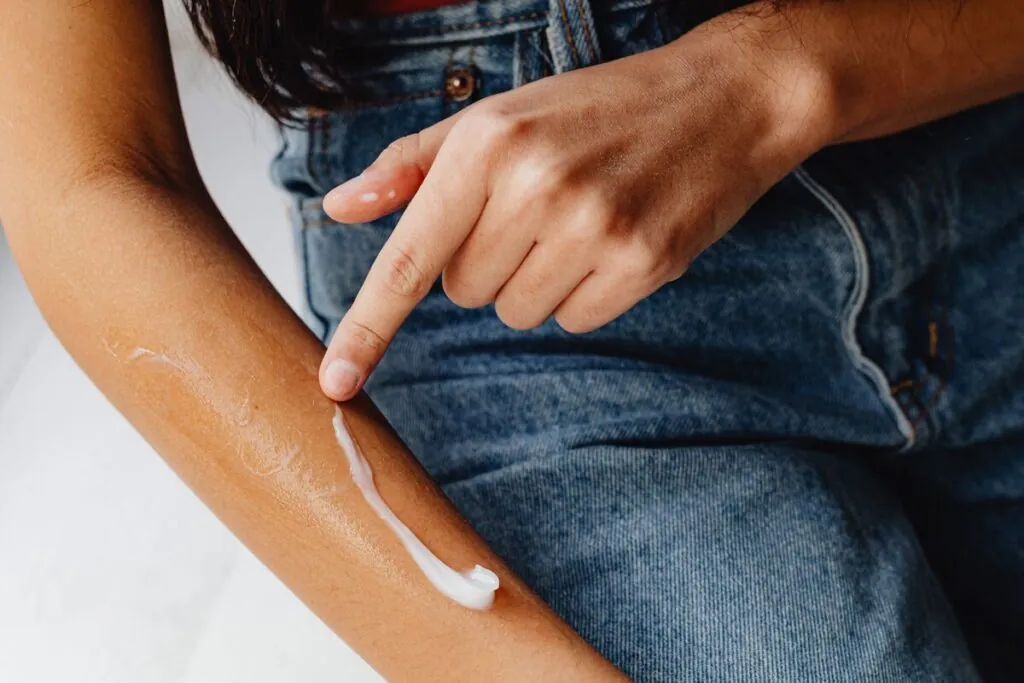
- Apply a small amount to the side of your neck or just below your ear, once or twice a day.
- Repeat for 5 to 7 days, since some reactions take time to appear.
- Watch for redness, itching, burning, bumps or swelling.
- If the area stays calm, try it on one cheek for a few days before using it on your whole face.
Simple routine for sensitive skin
- Cleanse with a gentle, fragrance-free cleanser and lukewarm water. On makeup days, a mild cleansing oil helps; see our pick of oil cleansers for sensitive skin.
- Treat (optional) with one active at a time, introduced slowly.
- Moisturize on slightly damp skin, using about a pea-to-almond-sized amount for the face.
- Protect with a broad-spectrum sunscreen every morning. Mineral sunscreens with zinc oxide are often easier on reactive skin.
If you want the full step-by-step logic, our cleanser, toner, moisturizer guide explains when a toner helps and when to skip it.
Common mistakes that make sensitive skin worse
- Switching products too often. Give a new moisturizer 3 to 4 weeks unless it clearly irritates.
- Layering many actives. Vitamin C, AHAs, retinoids and niacinamide all at once is a recipe for stinging.
- Over-exfoliating. Scrubs, peel-off masks and daily acid toners thin out the barrier.
- Skipping moisturizer on oily skin. Dehydrated oily skin often becomes more reactive.
When redness or stinging means it is time to see a dermatologist
A good moisturizer supports skin, but it does not treat skin conditions. See a dermatologist if you notice any of these:
- Redness that stays for weeks, flushing with heat, spicy food or sun, or visible small blood vessels, which can point to rosacea.
- Itchy, dry, rough or cracked patches that keep returning, especially in skin folds, which can point to eczema (atopic dermatitis).
- Burning or stinging with almost every product, even very gentle ones.
- Swelling, oozing, blisters or a rash that spreads after using a product. Stop the product and seek care promptly.
A dermatologist can confirm the cause, run patch testing for allergies if needed, and prescribe treatment that a moisturizer alone cannot provide.
Stuck between two brands? Read CeraVe vs Cetaphil moisturiser by skin type.
Frequently Asked Questions
For dry sensitive skin, CeraVe Moisturising Cream and Cetaphil Moisturising Cream are dependable, widely available picks. For oily or acne-prone sensitive skin, CeraVe PM Facial Moisturising Lotion or Minimalist Vitamin B5 10% Moisturizer are lighter options.
Fragrance is one of the most common causes of skin allergy and irritation, so it is the easiest trigger to remove. If your skin reacts easily, choose products that are labelled fragrance-free and check that the ingredient list has no “parfum” or essential oils.
It is better not to. Oily skin can still lack water, and a dehydrated barrier tends to sting and react more. Use a light, oil-free, non-comedogenic lotion or gel-cream instead of skipping the step.
Yes. Ceramides are naturally present in your skin barrier, and they are generally very well tolerated.
Apply a small amount behind the ear or on the side of the neck daily for 5 to 7 days. If there is no redness, itching or bumps, try it on a small area of your face before using it all over.
Many people do better with two. A richer cream helps during dry North Indian winters, while a light lotion or gel-cream feels more comfortable in humid summers and the monsoon.
No. A gentle moisturizer is an important part of managing these conditions, but it does not cure them. If you suspect eczema or rosacea, see a dermatologist for a proper diagnosis and treatment plan.
Quick poll
How much do you usually spend on one beauty product?
The bottom line
Sensitive skin calms down when you give it fewer, gentler products and a moisturizer that rebuilds the barrier. Pick a fragrance-free formula with ceramides, glycerin or panthenol, match the texture to your skin type and the season, patch test before you commit, and give it a few weeks. If redness, burning or itchy patches persist, a dermatologist visit will save you time, money and discomfort.