CeraVe vs Cetaphil Moisturiser: Which Suits Indian Skin?
CeraVe vs Cetaphil moisturiser for Indian skin: the variants sold in India, key ingredients, and the best pick for dry, oily, sensitive or eczema-prone skin.


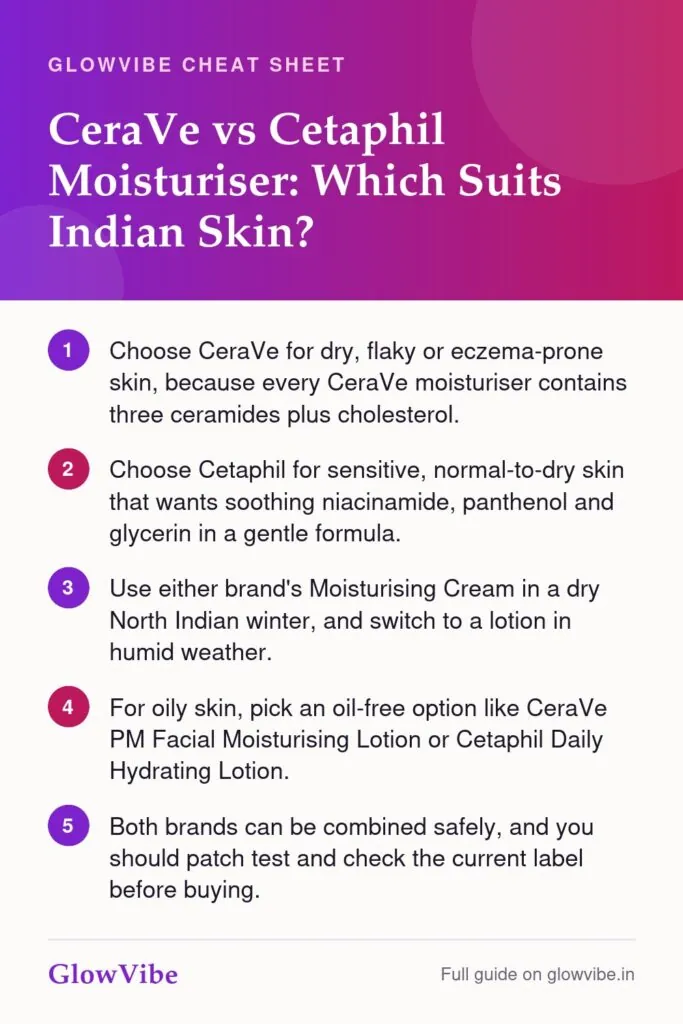
Choose CeraVe if your skin is dry, flaky, itchy or eczema-prone and you want CeramidesFats that naturally hold skin cells together like mortar between bricks. Moisturisers with ceramides help support a dry or damaged skin barrier.See glossaryRead the guide to rebuild the barrier. Choose Cetaphil if your skin is sensitive and reacts easily, and you want a soothing NiacinamideA form of vitamin B3 that helps with oiliness, the look of large pores, uneven tone and barrier support. Gentle and easy to pair with most ingredients.See glossaryRead the guide and PanthenolPro-vitamin B5, a soothing and hydrating ingredient used in skin and hair products to calm and soften.See glossary formula that sits a little lighter in Indian heat. Both are Fragrance-freeA product with no added perfume or essential oils for scent. Often the safer pick for sensitive or reactive skin. "Unscented" can still contain masking fragrance.See glossary, gentle and sold widely in India, so neither is a wrong pick. What matters is your skin type and your weather.
This guide compares the cream and lotion versions of both brands that are actually on Indian shelves, using the ingredient lists on CeraVe India and Cetaphil India. GlowVibe has not tested these products. This is a guide to what is in each formula and who it suits. Formulas change from time to time, so always check the current label on the pack you buy.
Quick verdict by skin type
- Very dry or flaky skin: CeraVe Moisturising Cream.
- Normal to dry, sensitive skin: Cetaphil Moisturising Cream or Cetaphil Moisturising Lotion.
- Oily or acne-prone skin: CeraVe PM Facial Moisturising Lotion or Cetaphil Daily Hydrating Lotion, both oil-free.
- Eczema-prone skin: CeraVe Moisturising Cream or Lotion, with your dermatologist’s advice.
- North Indian winter: either brand’s cream.
- Humid coastal weather or monsoon: either brand’s lotion.
Which CeraVe and Cetaphil moisturisers are sold in India?
Both brands sell a smaller range in India than in the US, so a lot of online advice talks about variants you won’t find here. L’Oréal brought CeraVe to India, and Galderma markets Cetaphil. These are the moisturisers each brand lists on its Indian website:
- CeraVe Moisturising Cream for dry to very dry skin, for face and body. Sold in tubes and large tubs.
- CeraVe Moisturising Lotion, an oil-free face and body lotion. The brand lists it for normal to dry skin and says it also suits dry to very dry skin.
- CeraVe PM Facial Moisturising Lotion, a lightweight night moisturiser for the face.
- CeraVe AM Facial Moisturising Lotion with SPF (sun protection factor)A measure of protection against UVB rays, which cause sunburn. SPF 30 blocks about 97% of UVB and SPF 50 about 98%, if you apply enough and reapply.See glossaryRead the guide, a day moisturiser with sunscreen. Check the pack for the SPF number, as the Indian product page is not consistent on it.
- Cetaphil Moisturising Cream for dry to normal, sensitive skin, for face and body.
- Cetaphil Moisturising Lotion for dry to normal, sensitive skin.
- Cetaphil Daily Hydrating Lotion, a newer, oil-free Hyaluronic acidA humectant that holds water in the skin for a plump, hydrated look. Despite the name, it is not an exfoliating acid. Apply on damp skin.See glossaryRead the guide face lotion.
Most of this guide compares the two classic pairs: each brand’s Moisturising Cream and Moisturising Lotion.
The core difference: ceramides vs niacinamide and panthenol
Your Skin barrierThe outermost layer of skin that keeps water in and irritants out. A damaged barrier feels tight, stings and reacts more easily.See glossaryRead the guide is held together by lipids, and ceramides make up a large share of them. When the barrier is damaged, water escapes and irritants get in, and skin feels tight, rough and itchy. If that sounds like your skin, our guide to repairing a damaged skin barrier explains the signs in detail.
What CeraVe is built around
Every CeraVe moisturiser contains three ceramides (Ceramide NP, AP and EOP) together with cholesterol and phytosphingosine, which are other lipids found in skin. They also contain hyaluronic acid (listed as sodium hyaluronate) and GlycerinOne of the most common and effective humectants. It draws water into the skin and is found in most moisturisers and cleansers.See glossary to draw in water. The cream adds petrolatum, which seals moisture in.
CeraVe also uses what it calls MVE Technology, a layered emulsion that the brand says releases moisture slowly over 24 hours. The idea is to put back the lipids that a damaged barrier is missing.
What Cetaphil is built around
The Indian Cetaphil Moisturising Cream and Lotion are built on glycerin, niacinamide (vitamin B3) and panthenol (pro-vitamin B5). The cream adds petrolatum, sweet almond oil, sunflower seed oil and vitamin E. The lotion uses avocado oil, sunflower seed oil and vitamin E instead.
Niacinamide helps skin make more of its own ceramides, and panthenol is known for calming and softening. Cetaphil’s Indian ingredient lists for these two products do not include added ceramides. The brand says both give 48-hour hydration and restore the moisture barrier within a week.
Put simply, CeraVe adds barrier lipids directly, while Cetaphil hydrates, softens and helps the skin repair itself.
CeraVe vs Cetaphil: side-by-side table
| Feature | CeraVe Moisturising Cream / Lotion | Cetaphil Moisturising Cream / Lotion |
|---|---|---|
| Hero ingredients | 3 ceramides, cholesterol, hyaluronic acid, glycerin | Niacinamide, panthenol, glycerin, plant oils |
| Added ceramides | Yes | Not in the Indian ingredient lists |
| Occlusive in the cream | Petrolatum | Petrolatum |
| Plant oils | None | Almond oil (cream); avocado oil (lotion); sunflower oil (both) |
| Skin type on Indian site | Dry to very dry (cream); normal to dry (lotion) | Dry to normal, sensitive (both) |
| Fragrance | Fragrance-free, the brand says | Fragrance-free, the brand says |
| Pores | Non-comedogenic, the brand says | Won’t clog pores, the brand says |
| Eczema positioning | Lotion accepted by the US National Eczema Association, the brand says | Positioned for sensitive skin |
| Face and body | Yes | Yes |
| Best weather | Cream for winter; lotion all year | Cream for winter; lotion for humid months |
Best pick for each skin type
Dry skin
CeraVe Moisturising Cream is the stronger match for skin that flakes, feels tight after washing or looks ashy on the shins. It combines ceramides, glycerin, hyaluronic acid and petrolatum in a thick cream, which covers water-drawing, barrier repair and sealing in one step.
Cetaphil Moisturising Cream is also a good dry-skin cream, thanks to glycerin, petrolatum and almond oil. It suits you if your skin is dry but not cracked, or if you simply prefer its texture.
Oily and acne-prone skin
Oily skin still needs moisturiser, especially if you use acne actives like salicylic acid or adapalene. Skip both thick creams for your face. Look at the oil-free lotions instead.
- CeraVe PM Facial Moisturising Lotion: lightweight and oil-free, with ceramides, niacinamide and hyaluronic acid. Despite the name, it is light enough to wear in the morning under sunscreen.
- Cetaphil Daily Hydrating Lotion: an oil-free, ultra-light hyaluronic acid lotion that the brand positions for sensitive and combination skin.
- CeraVe Moisturising Lotion: oil-free and non-comedogenic, the brand says. It’s a little richer than the PM lotion, so it suits combination skin in cooler months.
Cetaphil Moisturising Lotion contains isopropyl palmitate and plant oils. The brand says it won’t clog pores, but if you break out easily, try it on a small area first. For a full AM and PM plan, see our oily face skincare routine.
Sensitive skin
Here the two brands are closest. Both are fragrance-free, and Cetaphil also calls its cream and lotion paraben-free and hypoallergenic. Cetaphil’s whole range is built around sensitive skin, and panthenol is a classic soothing ingredient. That makes Cetaphil Moisturising Lotion or Cream a natural first choice if your skin stings with most products.
One thing to watch: Cetaphil uses almond and avocado oil. If you have a nut allergy, check the label and ask your doctor before using it. CeraVe contains no plant oils, so it can be the simpler choice for anyone who reacts to botanicals. We compare more options, including other Indian brands, in our list of the best moisturiser for sensitive skin in India.
Eczema-prone skin
CeraVe’s Indian site tags its range for mild eczema-prone skin. It says the Moisturising Lotion is accepted by the US National Eczema Association and that the cream can be used on eczema-prone areas. Ceramide-rich creams are a common dermatologist suggestion for skin that dries out and itches easily, which makes CeraVe Moisturising Cream the more targeted pick.
Be clear about what any moisturiser can do. It supports the skin barrier and eases dryness, but it does not treat eczema. CeraVe itself says it does not treat underlying skin conditions. If you have red, weeping, cracked or very itchy patches, or a child with eczema, see a dermatologist, who may prescribe treatment alongside a moisturiser.
Winter vs humid weather: which texture to use
Dry winter in North India
From November to February, cities like Delhi, Chandigarh, Lucknow and Jaipur have dry air, cold winds and hot showers, which all strip the skin. This is cream season. Either brand’s Moisturising Cream works. CeraVe suits skin that cracks or itches, and Cetaphil suits skin that is dry but reactive.
Apply the cream within a few minutes of washing, while your skin is still slightly damp, to lock in water. On very dry patches like elbows, heels and the sides of the nose, add a second thin layer at night. Our full winter skincare routine for dry skin shows where the moisturiser fits with sunscreen, cleansing and night care.
Humid weather: Mumbai, Chennai, Kolkata and the monsoon
In sticky, humid air the thick creams can feel heavy and leave a shine. Switch to a lotion. For the face, choose CeraVe PM Facial Moisturising Lotion or Cetaphil Daily Hydrating Lotion if you’re oily. Choose Cetaphil Moisturising Lotion or CeraVe Moisturising Lotion if you’re normal to dry.
You can keep the cream for air-conditioned offices, flights or a short winter trip up north. A pea-sized amount of lotion is usually enough for the whole face in humid weather.
Can you use both?
Yes. The formulas are gentle and fragrance-free, so you can combine them without much risk of irritation. Here are three ways to mix them:
- Face and body split: a light lotion from one brand on your face, and a cream from the other on your body after bathing.
- Day and night split: a lightweight lotion in the morning under sunscreen, and CeraVe Moisturising Cream at night when your skin is drier.
- Season split: lotion from March to October, cream from November to February.
If you’re building a routine from scratch, start with our cleanser, toner and moisturiser routine guide and slot either brand into the last step.
How to apply your moisturiser for the best results
- Wash with a gentle, non-foaming or low-foam cleanser and pat dry, leaving the skin slightly damp.
- Apply any serum first and wait about a minute.
- Use a pea-sized amount of lotion or a fingertip of cream for the face and neck. Press it in rather than rubbing hard.
- In the morning, finish with sunscreen. Even CeraVe’s AM lotion with SPF needs a generous amount to protect you, so it is worth adding a separate sunscreen on long sunny days. Our guide to sunscreen in winter explains why it matters even on cool, hazy days.
- For the body, apply within three minutes of bathing.
Patch test any new moisturiser first. Apply a little behind your ear or on your inner arm for two to three days before using it on your whole face, especially before a wedding or event.
Common mistakes
- Using the tub cream on oily skin in humid weather. It can feel greasy and may lead to clogged pores. Switch to a lotion.
- Expecting a moisturiser to fix eczema or acne. It supports your skin, but treatment comes from a dermatologist.
- Buying overseas variants online. US-only versions may have different formulas or labels. Buy from authorised Indian sellers and check the pack.
- Switching too fast. Give a new moisturiser two to three weeks before deciding it isn’t working, unless it stings or causes a rash.
Frequently Asked Questions
Neither is better for every Indian skin type. CeraVe suits dry, barrier-damaged and eczema-prone skin because of its ceramides. Cetaphil suits sensitive, normal-to-dry skin that wants soothing hydration. Your climate also matters: creams for dry winters, lotions for humid cities.
The ingredient list on Cetaphil India’s page for the Moisturising Cream does not include ceramides. It relies on glycerin, petrolatum, niacinamide, panthenol and plant oils. Niacinamide helps skin produce its own ceramides, so it still supports the barrier, just in a different way.
Yes. CeraVe says the cream is for both face and body and is non-comedogenic. It feels rich, so it works best on dry skin or as a night cream in winter. If your face is oily, the PM Facial Moisturising Lotion is a lighter option.
Both brands have an oil-free option. CeraVe PM Facial Moisturising Lotion adds niacinamide and ceramides, while Cetaphil Daily Hydrating Lotion is a very light hyaluronic acid lotion. Pick the CeraVe if you use drying acne actives, and the Cetaphil if you want the lightest possible feel.
Cetaphil sells a separate baby range in India, and that is the safer choice for infants. For a baby with dry patches or eczema, ask your paediatrician or dermatologist before using any adult moisturiser.
Use the cream if your skin is dry, if it’s winter, or if you’re treating your body after a bath. Use the lotion if your skin is normal, combination or oily, or if you live somewhere humid. You can also keep one of each and switch with the seasons.
Quick poll
How much do you usually spend on one beauty product?
The bottom line
CeraVe and Cetaphil are both gentle, fragrance-free and widely sold in India, so the choice comes down to what your skin needs. Reach for CeraVe when your barrier needs rebuilding, with dryness, flakes, itch or eczema-prone patches. Reach for Cetaphil when your skin is sensitive and you want calm, soft hydration. Match the texture to your weather: cream in a dry North Indian winter, lotion in humid coastal months. Patch test first, and check the current label before you buy.