Honey for Face: Benefits, Face Packs and How to Use It (2026)
What honey really does for your skin, which honey to buy, six easy honey face packs with steps, how often to use them and who should skip honey altogether.

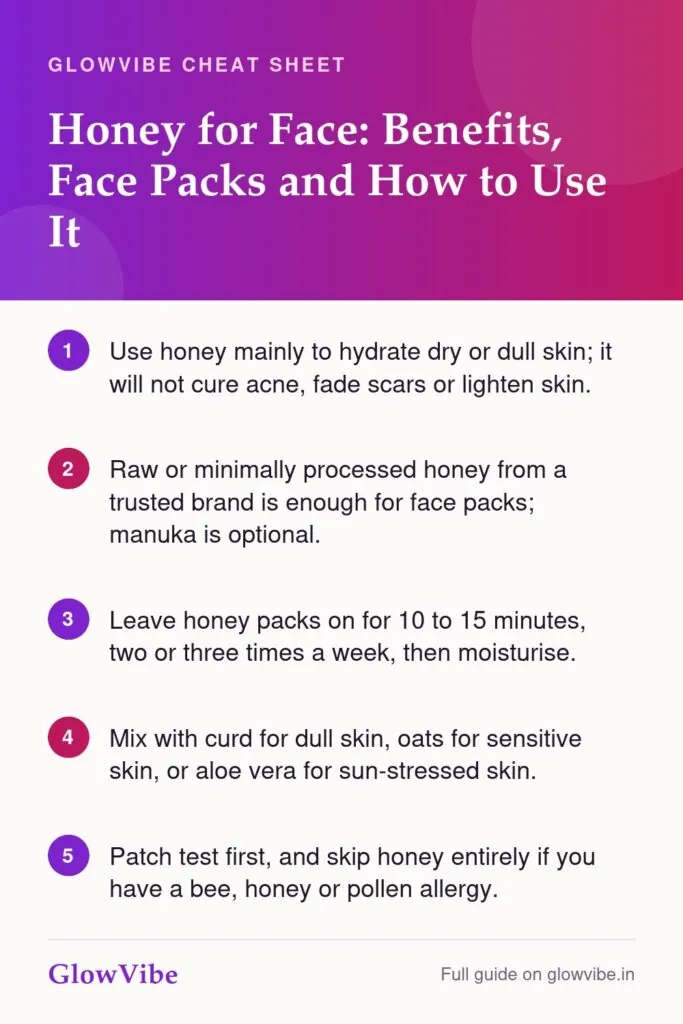
Honey is good for your face mainly because it holds on to water and is mildly antibacterial, so it leaves skin feeling soft and hydrated, especially when it is dry or dull. It is not a miracle cure for pimples, scars or tanning, but as a gentle 10–15 minute face pack two or three times a week it suits most skin types.
This guide covers what honey can and cannot do for your skin, which honey to buy, six easy face packs using things you probably already have at home, how often to use them, and who should skip honey altogether.
Honey for Face: The Quick Answer
- What it does well: hydrates (it is a HumectantAn ingredient that attracts water, such as glycerin or hyaluronic acid. Humectants hydrate best when sealed in with a moisturiser.See glossaryRead the guide), soothes dry or tight skin and leaves a soft, glowy finish.
- What the evidence says about acne: limited. Honey has antibacterial properties in the lab, but trials on acne have not shown a clear benefit.
- Which honey: raw or minimally processed honey from a trusted brand is enough for face packs. Manuka is optional, not essential.
- How often: a quick honey wash can be daily for normal-to-dry skin; leave-on packs 2–3 times a week.
- Who should avoid it: anyone with a bee, honey or pollen allergy, and people with very oily or fungal-acne-prone skin should be cautious.
- What it will not do: change your natural skin tone or “fade” deep acne scars.
Honey Face Packs at a Glance
| Face pack | Best for | Time on skin | How often |
|---|---|---|---|
| Honey + curd | Dull, dry or normal skin | 10–15 min | 2–3 times a week |
| Honey + besan | Normal to combination skin | 10 min | 1–2 times a week |
| Honey + oats | Dry, sensitive or itchy skin | 10–15 min | 2–3 times a week |
| Honey + turmeric | Normal skin, festive glow | 10 min | Once a week |
| Honey + aloe vera | Sun-stressed, combination or mildly oily skin | 10–15 min | 2–3 times a week |
| Plain honey wash | Normal to dry skin | 1–2 min | Daily, if your skin likes it |
Honey Benefits for Skin: What the Evidence Actually Says
1. It hydrates (well supported)
Honey is a humectant, meaning it draws water into the top layer of skin and holds it there, much like GlycerinOne of the most common and effective humectants. It draws water into the skin and is found in most moisturisers and cleansers.See glossary in your moisturiser. That is why your face feels plump and soft after a honey pack. This is the most reliable benefit, and it is most noticeable on dry, tight or winter-dull skin.
2. It is antibacterial (true, with a catch)
Honey’s sugar content, low pH and natural hydrogen peroxide activity make it hostile to many bacteria. Medical-grade honey is genuinely used in hospitals as a wound dressing. But medical-grade honey is sterilised and standardised. The jar in your kitchen is not, so never put it on open wounds, burns or broken skin.
3. Honey for pimples (weak evidence)
Because honey fights bacteria in the lab, people assume it treats acne. The research does not back that up yet. One clinical trial published in 2016 tested a kanuka honey product (a close cousin of manuka) on adults with acne and found no meaningful benefit over standard care with antibacterial soap.
A honey pack may make an occasional pimple feel calmer, and it is gentler than scrubbing. But for regular breakouts, proven ingredients like Salicylic acidThe most common BHA. It dissolves oil inside pores, which helps with blackheads, whiteheads and oily skin. Usually used at 0.5 to 2%.See glossaryRead the guide, Benzoyl peroxideAn acne ingredient that targets acne-causing bacteria. It can dry the skin and bleach towels and pillowcases, so start with a low strength.See glossaryRead the guide, AdapaleneA retinoid used in acne gels to keep pores from clogging. It can cause dryness at first, so it is usually started a few nights a week with moisturiser and daily sunscreen.See glossaryRead the guide or niacinamide will do far more. If your acne is painful, cystic or leaving marks, see a dermatologist.
4. Glow, scars and “brightening” (mostly short-term)
The glow you see after a honey pack is real but temporary: hydrated skin reflects light better. Honey contains small amounts of enzymes and antioxidants, but there is no good evidence that it fades acne scars, removes pigmentation or lightens skin. For dark spots, sunscreen every day matters far more than any kitchen remedy.
Raw vs Processed vs Manuka Honey: Which Should You Use?
| Type | What it is | For your face |
|---|---|---|
| Raw honey | Strained but not heated or heavily filtered; may look cloudy or crystallise | Best everyday choice for face packs |
| Processed honey | Heated and finely filtered for a clear, runny look; some brands may be blended | Still hydrates; fewer natural enzymes. Fine if it is pure honey |
| Manuka honey | From New Zealand’s manuka plant, graded by UMF or MGO for antibacterial strength | Optional and premium; not proven better for acne |
| Medical-grade honey | Sterilised, standardised honey in wound dressings | For wounds under medical advice only, not face packs |
Our take: for a weekly face pack, raw or minimally processed honey from a brand you trust is all you need. If you choose manuka, check for a UMF or MGO number on the label, and do not expect it to work miracles on acne.
6 Honey Face Packs and How to Make Them
Always start on a clean face, use a clean spoon (not one that has been in your mouth), and make a fresh batch each time. Leftover homemade packs spoil quickly in Indian heat.
1. Honey and curd face pack (for dull or dry skin)
Curd adds a cooling, creamy texture and a mild dose of Lactic acidA gentle AHA (first found in milk) that exfoliates and also hydrates. A good starter acid for dry or sensitive skin.See glossary, which gently smooths the skin’s surface. This is the easiest honey face pack for a quick glow.
- Mix 1 teaspoon honey with 1 tablespoon plain, unsweetened curd.
- Spread a thin layer over your face, avoiding the eyes.
- Leave for 10–15 minutes, then rinse with lukewarm water and moisturise.
2. Honey and besan face pack (for normal to combination skin)
Besan (gram flour) is a traditional ubtan base that absorbs a little excess oil. Honey keeps it from drying your skin out.
- Mix 1 tablespoon besan, 1 teaspoon honey and enough rose water or plain water to make a smooth paste.
- Apply evenly and leave for about 10 minutes. Do not let it dry until it cracks.
- Wet your fingers and rinse off with gentle circles. Do not scrub hard.
If you want to swap the water, our guide to rose water for face explains how to pick a pure one.
3. Honey and oats face pack (for dry or sensitive skin)
Colloidal oatmeal is a well-studied skin soother, and plain powdered oats give a similar calming feel at home. This is the gentlest pack here.
- Grind 1 tablespoon plain rolled oats (not flavoured instant oats) to a fine powder.
- Add 1 teaspoon honey and 1–2 teaspoons milk or water to make a paste.
- Apply for 10–15 minutes, then rinse with cool water, pressing rather than rubbing.
4. Honey and turmeric face pack (for a festive glow)
Turmeric is a much-loved Indian beauty ingredient, but a little goes a long way.
- Mix 1 teaspoon honey, 1 teaspoon curd or besan and just a pinch of turmeric.
- Apply for no more than 10 minutes.
- Rinse with lukewarm water. If a yellow tint stays, wipe gently with a little milk or your usual cleanser.
Staining caution: kitchen turmeric can leave a yellow tint on fair or light skin, and it stains towels, pillow covers and clothes permanently. Use an old towel, keep it away from your hairline and brows, and consider kasturi (wild) turmeric, which stains less. Skip this pack on irritated or broken skin.
5. Honey and aloe vera face pack (for sun-stressed or combination skin)
Aloe gel feels light and cooling, so this pack is good after a hot day outdoors or for skin that gets oily in the T-zone but dry on the cheeks.
- Mix 1 teaspoon honey with 1 tablespoon fresh aloe gel or a plain store-bought aloe gel.
- Apply a thin layer for 10–15 minutes.
- Rinse with cool water. Follow with a light gel moisturiser and sunscreen if it is daytime.
If you use fresh aloe from a plant, let the yellow sap (latex) drain from the cut leaf first, as it can irritate skin. Honey soothes heat-stressed skin, but it does not treat a real sunburn; for blistering or peeling burns, see a doctor.
6. Plain honey wash (a 2-minute daily option)
- Splash your face with water. If you wear makeup or sunscreen, remove it first with your usual cleanser.
- Massage half a teaspoon of honey onto damp skin for 30–60 seconds.
- Rinse well with lukewarm water and moisturise.
Want another kitchen staple for glow? Try our rice water for face guide, which works well on alternate days with honey packs.
How to Use Honey on Your Face (and How Often)
- Patch testTrying a small amount of a new product behind the ear or on the inner arm for a few days to check for a reaction before using it widely.See glossary first (see below), especially if you have never used honey on your skin.
- Cleanse with a gentle face wash and pat skin slightly damp. Honey spreads more easily on damp skin.
- Apply a thin layer with clean fingers, avoiding the eyes, lips and hairline. Tie your hair back, because honey is sticky.
- Wait 10–15 minutes. Longer does not mean better.
- Rinse with lukewarm water, not hot. Pat dry.
- Moisturise, and apply sunscreen if it is daytime.
How often: two or three leave-on packs a week is plenty for most people. A quick honey wash can be daily for normal or dry skin if it feels comfortable. In humid months (Mumbai, Chennai, Kolkata in the monsoon), oily skin may prefer once a week. In dry winters, honey packs fit well into a winter skincare routine for dry skin.
Treat honey as an add-on, not a replacement. Your basics are still cleanser, moisturiser and sunscreen; our daily skincare routine shows where a weekly face pack fits.
Who Should Avoid Honey on Their Face
- Bee, honey, propolis or pollen allergy: skip it entirely. Honey can carry traces of pollen and trigger itching, swelling or rashes.
- Very oily skin: honey is not harmful, but the sticky layer can feel heavy in humid weather. Rinse-off use and aloe-based packs suit you better.
- Fungal-acne-prone skin: if you get small, itchy, same-sized bumps on the forehead, chest or back, these may be fungal (Malassezia) folliculitis, not regular acne. Avoid leaving sugary or oily masks on, and get it checked by a dermatologist.
- Broken skin, active eczema, rosacea flares or open wounds: wait until the skin heals, and ask your dermatologist first.
- Anyone on prescription acne or retinoid treatment: check with your doctor before adding home packs, especially those with besan or turmeric.
How to Do a Patch Test
- Apply a small amount of the exact pack you plan to use on your inner forearm or behind your ear.
- Leave it on for the same time you would on your face, then rinse.
- Watch the area for 24 hours. Redness, itching, burning, bumps or swelling mean you should not use it on your face.
If you ever get swelling of the lips, eyes or throat, or difficulty breathing after using honey, wash it off and get medical help immediately.
Honey Skin Myths vs Facts
| Myth | Fact |
|---|---|
| Honey lightens your skin tone. | It does not change your natural skin colour. Any “glow” is from hydration and is temporary. |
| Honey cures acne. | Evidence is limited, and one clinical trial found no benefit over standard care. Use proven acne treatments. |
| Honey fades acne scars. | No good evidence. Pitted scars need dermatologist procedures; dark marks fade mainly with time and sunscreen. |
| Honey and lemon is the best combo. | Lemon juice is very acidic and can irritate skin and make it react badly to sun. Leave lemon out. |
| Only expensive manuka works. | Raw or pure honey hydrates just as well for home face packs. |
| Natural means safe for everyone. | Honey can cause allergies. Always patch test. |
Common Mistakes to Avoid
- Leaving packs on for too long. Besan and turmeric packs left to dry and crack can leave skin tight and irritated.
- Scrubbing the pack off. Rinse with water and soft circles; harsh rubbing undoes the soothing effect.
- Adding lemon, baking soda or toothpaste. These are common “hacks” that irritate skin.
- Skipping moisturiser and sunscreen afterwards. A face pack does not replace either.
Frequently Asked Questions
Yes, for most normal and dry skin a quick honey wash (30–60 seconds, then rinse) is gentle enough for daily use. Leave-on face packs are best kept to two or three times a week. If you have very oily or fungal-acne-prone skin, use it less often or skip it.
Honey is mildly antibacterial and gentle, so it will not usually make pimples worse, but the evidence that it treats acne is weak. One clinical trial of a kanuka honey product found no benefit over standard care. For regular breakouts, use proven ingredients like salicylic acid or benzoyl peroxide and see a dermatologist if acne is painful or scarring.
It is not a good idea. Honey is sticky, transfers to your pillow, attracts dust and ants, and can feel heavy on oily skin. Ten to fifteen minutes gives you the hydration benefit, so rinse it off and use a proper night moisturiser instead.
Raw or minimally processed pure honey from a brand you trust works well for home face packs. Manuka honey, graded by UMF or MGO, is stronger as an antibacterial but is not proven to work better on acne. Avoid flavoured or syrup-blended “honey” products.
No. Honey can make tanned, dull skin look more hydrated and fresher, but it does not remove tan or change your natural skin tone. Daily sunscreen is the best way to prevent tan, and it fades naturally over a few weeks.
Quick poll
How often do you wear sunscreen?
The Bottom Line
Honey is a lovely, low-cost way to give dry or dull skin a hydration boost, and pairing it with curd, oats, besan or aloe makes an easy weekly ritual. Just keep your expectations honest: it will not cure acne, fade scars or change your skin tone.
Patch test, keep packs short, rinse gently and follow with moisturiser and sunscreen. Used that way, honey is a pleasant extra in your routine, not a replacement for the basics.