Rose Water for Face: Benefits, Best Picks and How to Use (2026)
What rose water really does for skin, how to pick a pure one, the best rose water in India and how to use it as a toner, mist, face pack base and under-eye pad.

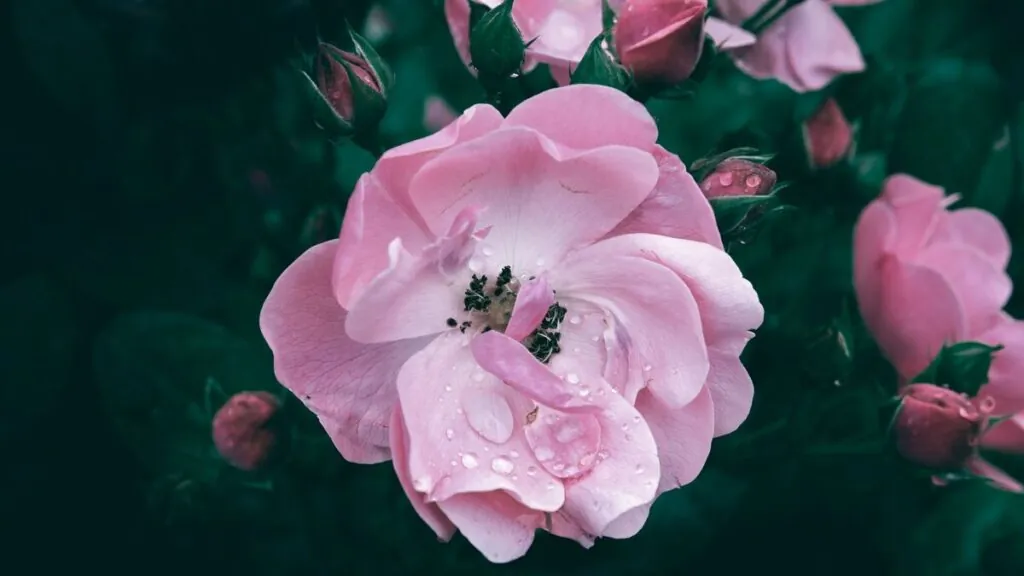
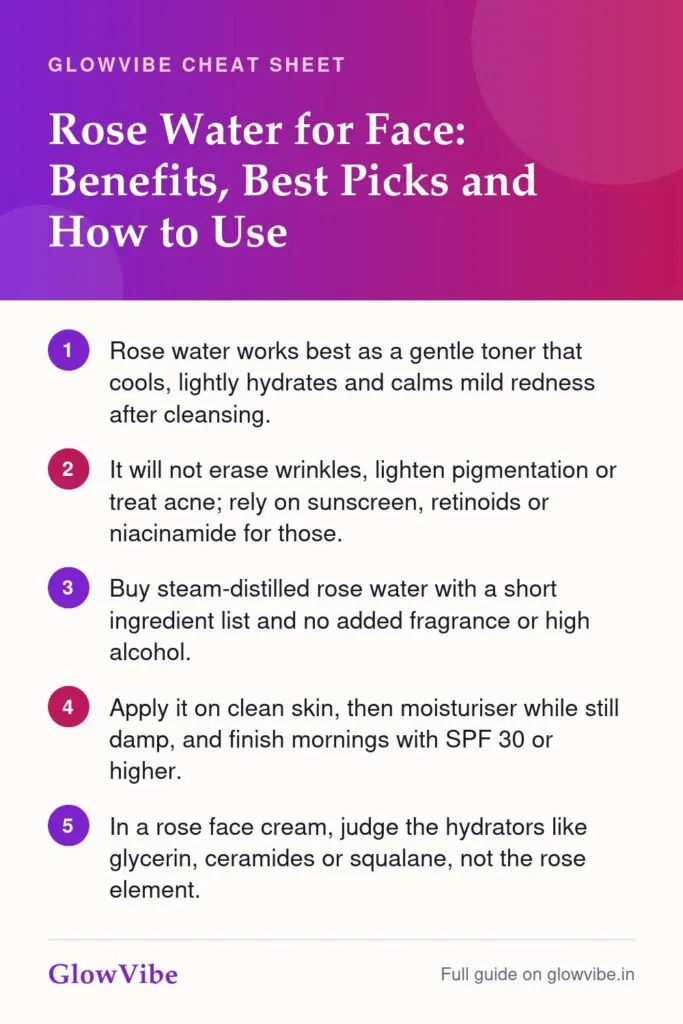
Rose water for face works best as a gentle, refreshing toner: it cools hot skin, adds a light layer of hydration after cleansing and can calm mild redness. It will not erase wrinkles, lighten pigmentation or make you look ten years younger, but a good, pure rose water is one of the cheapest and most pleasant steps you can add to a daily routine.
This guide covers the realistic benefits of rose water for skin, how to spot a good bottle, the best rose water in India across budget, mid-range and premium, and easy ways to use it: as a toner, a mist over makeup, in face packs and on under-eye pads. We also look at rose face creams and what is actually worth paying for in one.
Quick answer: best rose water in India
- Best budget rose water: Dabur Gulabari Premium Rose Water
- Best mid-range pure rose water: Kama Ayurveda Pure Rose Water
- Best premium face mist: Forest Essentials Facial Tonic Mist Pure Rosewater
Rose water benefits for skin: what it can and cannot do
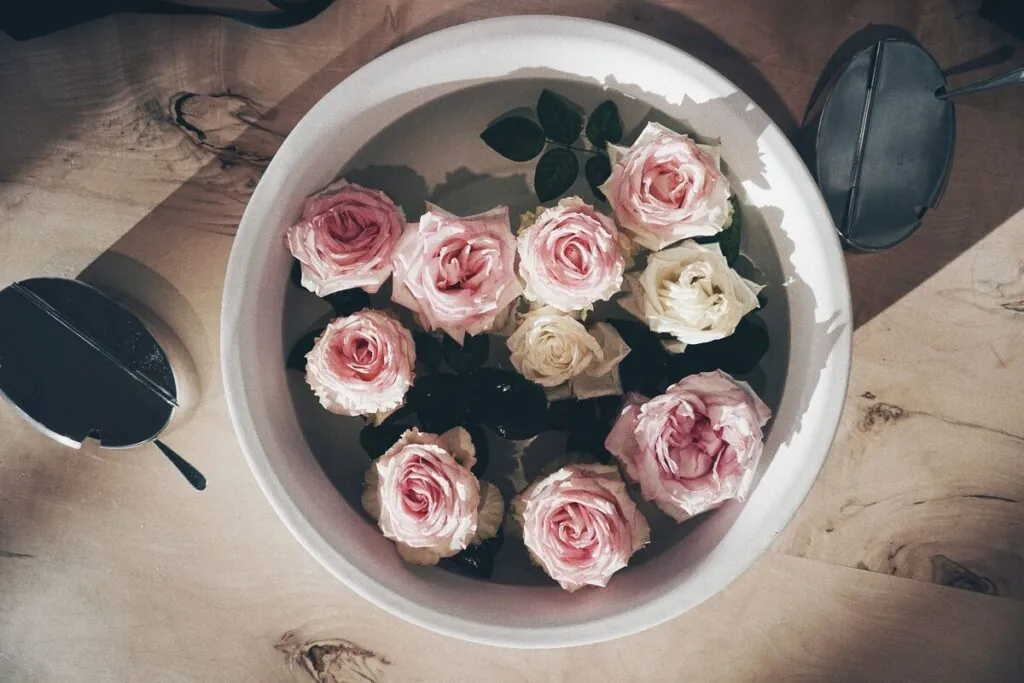
Rose water (gulab jal) is the fragrant water left behind when rose petals are steam-distilled to make rose oil. It is mostly water, with small amounts of the natural compounds that give roses their scent. That is why it feels lovely but works gently.
What rose water genuinely does
- Refreshes and cools: a few sprays from a chilled bottle feel great after a commute in 38-degree heat.
- Light hydration: applied on damp skin before moisturiser, it helps your cream spread more easily.
- Mildly soothing: many people find it calming on skin that feels warm or a little irritated after sun or shaving.
- Wipes away residue: on a cotton pad, it lifts the last traces of cleanser, sweat or hard-water film.
What it will not do
Rose water is not an anti-ageing treatment. It does not build collagen, fade dark spots, shrink pores or treat acne. If those are your goals, look at sunscreen, retinoids, NiacinamideA form of vitamin B3 that helps with oiliness, the look of large pores, uneven tone and barrier support. Gentle and easy to pair with most ingredients.See glossaryRead the guide or Vitamin CAn antioxidant that brightens dull skin, helps fade the look of dark spots and supports sunscreen against daily damage. Best used in the morning.See glossaryRead the guide, and see our guide on which face serum to use for each skin concern.
Think of rose water as a nice-to-have, not a must-have. Its job is to make your routine more pleasant and to prep your skin for the products that do the heavy lifting.
How to choose a good rose water
Shelves are full of “rose water” that is really scented water. Check the label before you buy.
- Steam-distilled: look for words like “rose distillate”, “Rosa damascena flower water” or “steam distilled”. These are the real thing.
- Short ingredient list: ideally rose distillate plus, at most, a mild preservative. Water-based products do need something to stop bacteria growing once opened.
- No added fragrance or “parfum”: real rose water already smells of roses. Added perfume is a common trigger for irritation.
- No alcohol high on the list: denatured alcohol or “alcohol denat.” near the top can leave skin tight and dry, especially in winter.
- Spray bottle or narrow cap: a mist nozzle is more hygienic than dipping cotton into a wide-mouth bottle.
Kannauj in Uttar Pradesh and the Damask rose belts of the country have a long tradition of distilling gulab jal. Some small regional brands make excellent rose water, but quality varies, so the label check above matters more than the brand name.
Best rose water in India: comparison
| Product | Price range | Format | Best for |
|---|---|---|---|
| Dabur Gulabari Premium Rose Water | Budget | Bottle (spray and pour packs) | Everyday toner, face packs |
| Kama Ayurveda Pure Rose Water | Mid-range | Spray bottle | Those who want a pure, minimal formula |
| Forest Essentials Facial Tonic Mist Pure Rosewater | Premium | Fine mist spray | Setting makeup, gifting, a luxury mist |
1. Dabur Gulabari Premium Rose Water
Gulabari has been in Indian homes for decades, and it is the easiest rose water to find in any chemist or kirana store. It is the practical choice when you want a big bottle for daily toning and mixing into multani mitti or besan packs without worrying about cost.
Who it suits: students, first-time users and anyone who uses rose water generously. How to use: spray or swipe on with cotton after washing your face, then moisturise.
- Pros: very affordable, available everywhere, familiar and pleasant scent.
- Cons: the formula is not as minimal as pure distillates; check the current label if you have fragrance-sensitive skin.
2. Kama Ayurveda Pure Rose Water
Kama Ayurveda positions this as a pure, steam-distilled rose water, and it is one of the most recommended options for people who want a clean, short ingredient list. The scent is natural and soft rather than perfumey.
Who it suits: dry, normal and combination skin, and anyone who reads labels closely. How to use: mist on after cleansing, or spray on a cotton pad and press gently over the face.
- Pros: minimal formula, natural rose scent, convenient spray.
- Cons: costs noticeably more than mass-market rose water; mostly sold online and in brand stores.
3. Forest Essentials Facial Tonic Mist Pure Rosewater
This is the luxury pick. The mist is very fine, which makes it pleasant over makeup or as a midday refresh at your desk. It is also a popular gift, especially around Diwali and weddings.
Who it suits: anyone who wants a premium face mist and uses it daily. How to use: hold the bottle about an arm’s length away, close your eyes and mist two or three times.
- Pros: fine, even spray; elegant packaging; works well as a makeup mist.
- Cons: premium price for what is still essentially rose water; the result on skin is not dramatically different from good mid-range options.
How to use rose water on face
As a rose water toner
This is the most useful way to use it. In a cleanser, toner, moisturiser (CTM) routine, rose water sits in the toner slot.
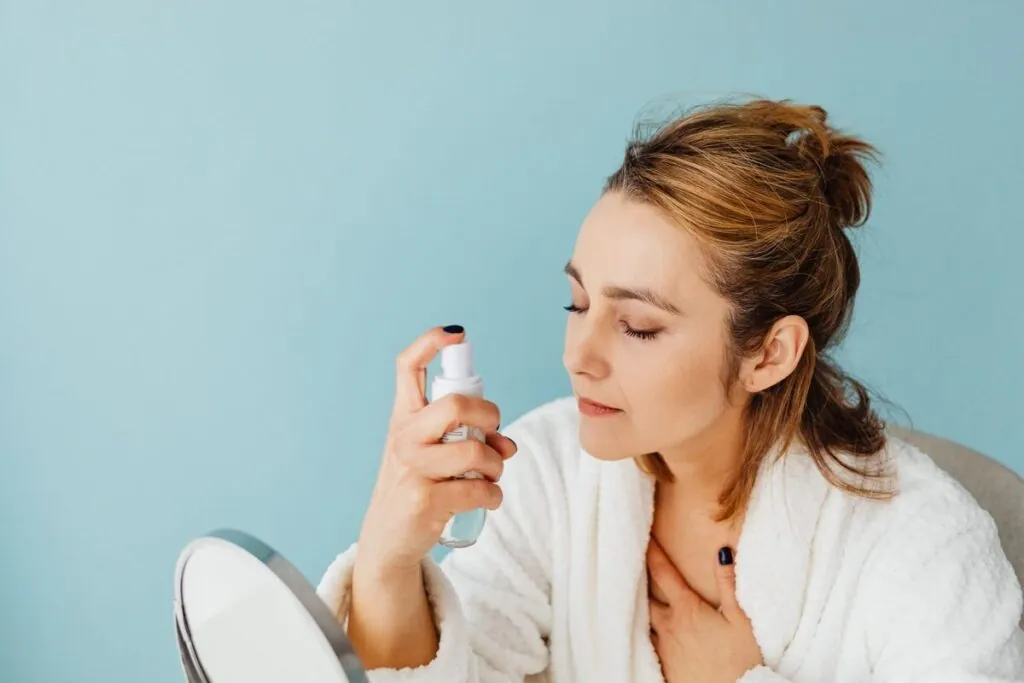
- Wash your face with a gentle cleanser and pat it half-dry.
- Spray rose water directly, or apply with a cotton pad using light pressing motions, not rubbing.
- While skin is still slightly damp, apply serum (if you use one) and moisturiser.
- In the morning, finish with sunscreen of SPF (sun protection factor)A measure of protection against UVB rays, which cause sunburn. SPF 30 blocks about 97% of UVB and SPF 50 about 98%, if you apply enough and reapply.See glossaryRead the guide 30 or higher.
For the full order of steps morning and night, see our simple daily skincare routine for women.
As a mist over makeup
A light mist after powder can take away the cakey, dry look and help makeup sit better on skin. Use a fine spray and let it dry on its own; do not wipe. It will not replace a proper setting spray on a humid wedding night, but it is a nice touch for everyday makeup.
In face packs with multani mitti or besan
Rose water is the classic liquid for desi face packs because it makes them smell nicer than plain water.
- For oily skin: 1 tablespoon multani mitti with enough rose water to make a smooth paste. Leave on for 8 to 10 minutes, and rinse before it cracks fully.
- For normal or combination skin: 1 tablespoon besan, a pinch of turmeric (optional, it can stain) and rose water. Leave on for 10 minutes, then rinse with lukewarm water.
- For dry skin: add a teaspoon of curd or a few drops of GlycerinOne of the most common and effective humectants. It draws water into the skin and is found in most moisturisers and cleansers.See glossary to the besan and rose water mix, and skip multani mitti, which can be drying.
Once or twice a week is plenty. Always moisturise afterwards.
As cooling under-eye pads
Soak two cotton pads in chilled rose water, squeeze out the excess and rest them on closed eyes for 5 to 10 minutes. The cold helps tired, puffy eyes feel fresher. It will not fix pigmented dark circles; for those, read our guide to under-eye creams for dark circles by type.
Rose face creams: what to look for
Rose face creams use rose water, rose extract, rose oil or rosehip oil inside a moisturiser. The rose element mostly adds scent and a pleasant feel. What makes a rose cream good or bad is the rest of the formula.
- Proven hydrators: glycerin, Hyaluronic acidA humectant that holds water in the skin for a plump, hydrated look. Despite the name, it is not an exfoliating acid. Apply on damp skin.See glossaryRead the guide, CeramidesFats that naturally hold skin cells together like mortar between bricks. Moisturisers with ceramides help support a dry or damaged skin barrier.See glossaryRead the guide or SqualaneA light, stable oil similar to the oils your skin makes. It moisturises without feeling heavy and suits most skin types.See glossary do the real moisturising.
- Rosehip oil is different from rose oil: rosehip is a seed oil rich in fatty acids and suits dry skin. Rose essential oil is mainly fragrance.
- Texture for your skin type: gel-creams for oily skin and humid cities, richer creams for dry skin and North Indian winters.
- SPF for daytime: if it is your day cream, it should have SPF 30 or higher, or you need a separate sunscreen on top.
- Be wary of big promises: “reverses ageing” or “removes dark spots in 7 days” on a rose cream is marketing, not science.
If you simply want a reliable moisturiser, our list of the best daily face creams for glowing skin sorts picks by skin type. You can always get the rose experience from a separate rose water toner and keep your cream Fragrance-freeA product with no added perfume or essential oils for scent. Often the safer pick for sensitive or reactive skin. "Unscented" can still contain masking fragrance.See glossary.
Choosing rose water for your skin type and Indian weather
- Oily skin and humid cities (Mumbai, Chennai, Kolkata): rose water is a light, non-greasy toner that works well. Keep it in the fridge for a cooling midday mist.
- Dry skin and dry winters (Delhi, Punjab, Jaipur): always follow with a moisturiser. Misting and leaving skin bare can make it feel drier as the water evaporates.
- Hard water areas: a swipe of rose water after washing can help remove the dull, tight film that hard water sometimes leaves.
- Acne-prone skin: rose water is fine as a gentle toner, but it is not an acne treatment. Keep your actives and see a dermatologist for persistent breakouts.
Who should patch test first
Rose water is gentle for most people, but rose naturally contains fragrance compounds, and some products add extra perfume. Patch test first if you have sensitive skin, eczema, rosacea or a known fragrance allergy.
Apply a little behind your ear or on your inner arm once a day for two to three days. If you see redness, itching, burning or small bumps, stop using it. If you have very reactive skin, a fragrance-free routine is often safer; our moisturisers for sensitive skin guide is a good place to start. See a dermatologist if irritation does not settle within a few days.
Common mistakes with rose water
- Buying scented water: skipping the label and ending up with fragrance and alcohol instead of rose distillate.
- Using it instead of moisturiser: rose water hydrates for a moment; it does not seal moisture in.
- Keeping an old bottle forever: if the smell turns sour or the liquid looks cloudy, throw it out. Use within the period on the label once opened.
- Dipping cotton straight into the bottle: this contaminates the whole bottle. Pour or spray onto the pad instead.
- Mixing it with lemon juice: a popular DIY, but lemon can irritate skin and increase sun sensitivity.
- Expecting anti-ageing results: for fine lines, sunscreen and a retinoid will do far more than any rose product.
Frequently Asked Questions
Yes. A pure, fragrance-free rose water is gentle enough for daily use, morning and night, as a toner. Just follow it with moisturiser, and with sunscreen in the morning.
Not in any lasting way. It can make skin look fresher and more hydrated for a while, but it does not reduce wrinkles or build collagen. Daily sunscreen, a good moisturiser and a retinoid are the proven anti-ageing basics.
Yes, it is a light, water-based toner that does not feel greasy, which makes it popular in humid weather. It will not control oil on its own, but it pairs well with a gel moisturiser and a multani mitti pack once a week.
You can, but there is little point leaving it on alone because it evaporates quickly. Apply it after cleansing at night and then put on your night cream or moisturiser to lock in hydration.
Rose water works as a simple hydrating toner. It does not exfoliate like toners with AHAs or BHAs, so if you need help with clogged pores or texture, you would use an exfoliating product separately and keep rose water for gentle days.
It is not required, but it helps. A chilled bottle feels more refreshing in summer and is lovely for under-eye pads. Always keep it away from direct sunlight and close the cap tightly.
It is uncommon, but people sensitive to fragrance can react to rose or to added perfume. Patch test for a few days, choose products without added fragrance, and stop using it if you notice itching, redness or bumps.
Quick poll
How much do you usually spend on one beauty product?
The bottom line
Rose water is a small, affordable pleasure: a refreshing toner, a handy makeup mist and the perfect base for desi face packs. Pick a steam-distilled bottle with a short ingredient list, use it on damp skin before your moisturiser, and keep your expectations realistic.
Start with Dabur Gulabari if you want value, Kama Ayurveda if you want a minimal formula, or Forest Essentials if you want a treat. Then let sunscreen and a good moisturiser do the real work of keeping your skin healthy.