Rice Water for Face: Benefits, How to Make It and Use It (2026)
How to make rice water for your face (soaked, boiled or fermented), use it as a toner, mist or face pack, store it safely, and what it can and cannot do for skin.

Rice water for face care is simple: soak, boil or ferment a handful of rice, strain the cloudy water and use it as a toner, mist or face mask. It can leave skin feeling soft, calm and hydrated, but it is a traditional remedy with limited clinical evidence, so treat it as a gentle extra and not a treatment.
This guide covers what rice water can and cannot do for your skin, three ways to make it at home, how to use it, how long it keeps in Indian weather, and who should skip it.
Rice water for face: the quick answer
- What it may do: soothe mild irritation, add light hydration and leave skin feeling smoother for a few hours.
- What it won’t do: lighten your skin tone, cure acne, erase pigmentation or replace sunscreen.
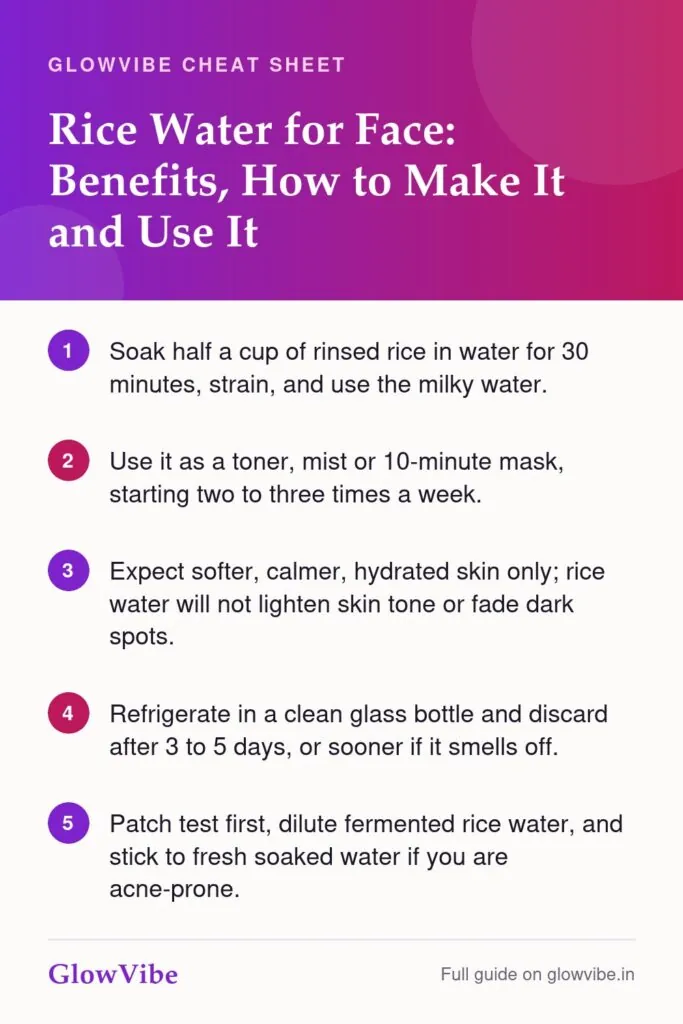
- Easiest method: soaked rice water, ready in 30 minutes.
- How to use: as a toner or mist after cleansing, or as a 10-minute mask, 2–4 times a week.
- Shelf life: refrigerate in a clean bottle and discard after 3–5 days, or sooner if it smells sour or looks mouldy.
- Always: Patch testTrying a small amount of a new product behind the ear or on the inner arm for a few days to check for a reaction before using it widely.See glossary first, especially if you have sensitive or acne-prone skin.
Rice water benefits for skin: what the evidence says
Rice water has a long history in Japanese and Chinese beauty traditions, and rice ferments and rice extracts are now common in K-beauty toners and sunscreens. The cloudy water carries starch along with small amounts of amino acids, B vitamins, minerals and antioxidant compounds such as ferulic acid and inositol from the grain.

The research is thin. One small study found that bathing in rice starch water helped damaged skin recover its barrier, and lab studies on fermented rice extracts show antioxidant activity. That is promising but far from proof. Most of what you read about “glass skin from rice water” comes from tradition and personal experience, not clinical trials on faces.
Here is a fair summary of the likely benefits:
- Soothing: starch forms a light film that can make skin feel calmer, the same reason oat and rice starch baths are used for itchy skin.
- Light hydration: skin feels softer and less tight after use, especially after cleansing with hard water.
- A temporary smooth, matte feel: the starch can briefly soften the look of texture and shine on oily skin.
- Cheap and low-effort: you already have the ingredient in your kitchen.
The “glow” people notice is mostly well-hydrated, calm skin reflecting light better. It is not a change in your skin tone, and no amount of rice water will make you fairer.
How to make rice water for skin: 3 methods compared
Any plain white rice works, including sona masoori, kolam or basmati. Use filtered or boiled-and-cooled water if your tap water is hard, and wash your hands, bowl and bottle well before you start.
| Method | Time | Strength | Best for | Keeps in fridge |
|---|---|---|---|---|
| Soaked | 30 minutes | Mild | Beginners, sensitive skin, daily toner | 3–5 days |
| Boiled | 20–25 minutes | Thicker, more starchy | Masks and face packs, dry skin | 3–4 days |
| Fermented | 12–48 hours plus soaking | Strongest, slightly acidic | Normal or dry skin that tolerates ferments | 3–5 days (dilute before use) |
Method 1: Soaked rice water (easiest)
- Take ½ cup of uncooked rice and rinse it once quickly to remove dust and loose husk. Throw that first rinse water away.
- Add 1½–2 cups of clean water to the rinsed rice.
- Let it soak for 30 minutes, swirling or pressing the grains with your fingers now and then until the water turns milky.
- Strain the water into a clean glass bottle or spray bottle. Cook the rice as usual, so nothing goes to waste.
Method 2: Boiled rice water (thicker)
- Rinse ½ cup of rice once and drain.
- Boil it in 3 cups of water, the way many Indian homes cook rice with extra water and drain it.
- When the rice is soft, strain off the starchy water (the maand, or kanji).
- Let it cool completely. If it is very thick, dilute it with an equal amount of clean water before using it as a toner.
Method 3: Fermented rice water for face
Fermenting is the traditional Japanese approach, and fans say it feels more effective. Fermentation lowers the pH and creates new compounds, but it also grows microbes, so hygiene and timing matter more here.
- Make soaked rice water using Method 1.
- Pour it into a clean glass jar and cover loosely with a lid or a cloth.
- Leave it at room temperature until it smells slightly sour. In Indian summers or a humid monsoon kitchen, this can take just 12–24 hours; in a cool winter, up to 48 hours.
- Move it to the fridge straight away to slow fermentation.
- Dilute 1 part fermented rice water with 2–3 parts clean water before applying it to your face.
A mild, yoghurt-like sourness is normal. A rotten smell, fizzing, slimy texture, or any fuzzy spots mean it has gone bad, so throw it out.
How to use rice water on your face
As a rice water toner
After cleansing, soak a cotton pad and swipe it gently over your face, or pour a little into your palms and pat it in. Let it dry for a minute, then follow with your serum and moisturiser. It slots into the toner step of a basic daily skincare routine without changing anything else.

As a face mist
Fill a clean spray bottle and mist over your face after cleansing, or on hot afternoons to refresh. Keep the bottle in the fridge and don’t carry it around in your bag all day, since warmth speeds up spoilage. Always follow with a moisturiser so the water doesn’t evaporate and leave your skin drier.
As a sheet or cotton mask
Soak a compressed sheet mask or a few thin cotton pads in chilled rice water and lay them over your face for 10–15 minutes. Remove, pat in what’s left and moisturise. This feels especially good on skin that’s tight after a day in the sun.
DIY face packs with rice water
- Rice water and besan pack (normal to oily skin): mix 2 tablespoons of besan with enough rice water to make a smooth paste. Apply, leave for 10 minutes (don’t let it crack completely), then rinse with lukewarm water.
- Rice water and aloe vera pack (dry or sun-stressed skin): mix 1 tablespoon of fresh aloe gel or plain aloe vera gel with 1 tablespoon of rice water. Apply a thin layer for 10–15 minutes and rinse.
- Rice flour and rice water pack (gentle polish): mix 1 tablespoon of rice flour with rice water into a loose paste. Massage very lightly for 30 seconds, leave for 5 minutes and rinse. Use this no more than once a week.
Skip lemon juice, baking soda and toothpaste, which often appear in viral rice recipes. They can irritate skin and disrupt its barrier.
How often to use it
Start with 2–3 times a week. If your skin is happy after two weeks, you can use soaked rice water as a daily toner. Keep fermented rice water and face packs to 2–3 times a week.
How long does rice water last?
Homemade rice water has no preservatives, and it’s full of starch, which bacteria and moulds love. Treat it like fresh food.
- Store it in a clean, airtight glass bottle in the fridge, never at room temperature.
- Discard it after 3–5 days, even if it looks fine. In hot, humid months, lean towards 3 days.
- Throw it out right away if you notice a strong sour or rotten smell, cloudiness that turns stringy or slimy, or any mould on the surface or neck of the bottle.
- Make small batches. A ½-cup batch is plenty for a few days.
- Pour out what you need instead of dipping fingers or cotton into the bottle.
- For longer storage, freeze it in an ice-cube tray and thaw one cube at a time.
Who should be careful with rice water
Rice water is gentle for most people, but “natural” doesn’t mean it suits everyone.
- Acne-prone skin: fermented rice water contains yeasts and bacteria, and some people find ferments trigger bumps, especially if they get fungal acne (small, itchy, uniform bumps on the forehead or chest). The starchy film can also feel heavy on very oily skin. Stick to fresh, diluted soaked water and rinse off masks fully.
- Sensitive or reactive skin: start with soaked water only, use it every other day at first, and follow with a soothing moisturiser for sensitive skin.
- Eczema, rosacea or broken skin: avoid applying it to cracked, weeping or freshly treated skin. Ask your dermatologist first.
- Skin on prescription treatment: if you’re using tretinoin, AdapaleneA retinoid used in acne gels to keep pores from clogging. It can cause dryness at first, so it is usually started a few nights a week with moisturiser and daily sunscreen.See glossaryRead the guide or other prescription creams, check with your doctor before adding DIY steps.
How to patch test: apply a little rice water on the side of your neck or behind your ear once a day for 2–3 days. If you see redness, itching, stinging or new bumps, don’t use it on your face. If you’re dealing with persistent breakouts, our guide on how long acne treatment takes explains what a dermatologist can offer.
Rice water myths vs facts
| Myth | Fact |
|---|---|
| Rice water makes your skin fairer. | It cannot change your natural skin tone. Any “glow” is from hydration and calmer skin. |
| It removes dark spots and pigmentation. | There’s no good evidence for this. For pigmentation, sunscreen and proven actives like NiacinamideA form of vitamin B3 that helps with oiliness, the look of large pores, uneven tone and barrier support. Gentle and easy to pair with most ingredients.See glossaryRead the guide or Vitamin CAn antioxidant that brightens dull skin, helps fade the look of dark spots and supports sunscreen against daily damage. Best used in the morning.See glossaryRead the guide are better bets. |
| It’s the secret to Korean glass skin. | Glass skin comes from layered hydration, gentle cleansing and daily sunscreen. Rice is one ingredient among many. |
| Fermented rice water is always better. | It’s stronger and more acidic, which some skin likes and some doesn’t. Soaked water is the safer start. |
| Natural means it can’t irritate. | Any ingredient can cause a reaction, and spoiled rice water can cause breakouts. Patch test. |
| It can replace your moisturiser or sunscreen. | It’s a light, watery step. You still need a moisturiser and SPF (sun protection factor)A measure of protection against UVB rays, which cause sunburn. SPF 30 blocks about 97% of UVB and SPF 50 about 98%, if you apply enough and reapply.See glossaryRead the guide every day. |
| The longer you ferment it, the stronger it works. | Over-fermented water just spoils. A few hours to two days, depending on the heat, is enough. |
Common mistakes to avoid
- Keeping a bottle on the bathroom shelf for a week or two.
- Using undiluted fermented water straight on the face.
- Leaving face packs on until they crack and pull at your skin.
- Skipping moisturiser afterwards, which can leave skin feeling tight.
- Expecting it to fix acne, melasma or tanning on its own.
- Adding lemon, baking soda or essential oils to “boost” it.
Prefer ready-made? Rice-based products in India
If you don’t want to make a fresh batch every few days, formulated products give you rice extracts with preservatives and stable textures. Two well-known K-beauty options sold in India are I’m From Rice Toner, a milky hydrating toner, and Beauty of Joseon Relief Sun: Rice + Probiotics, a lightweight sunscreen with rice extract.
Neither is a miracle product, and you don’t need either for healthy skin. A good moisturiser matters more, and our guide to the best face cream for glowing skin is a better place to spend your money if you’re choosing just one thing.
Frequently Asked Questions
Yes, fresh soaked rice water is gentle enough for daily use as a toner if your skin tolerates it. Start with 2–3 times a week for the first couple of weeks. Keep fermented rice water and face packs to 2–3 times a week.
No. Rice water cannot change your skin tone, and there’s no solid evidence that it fades dark spots. Daily sunscreen and proven ingredients like niacinamide, vitamin C or Azelaic acidA gentle acid that helps with redness, bumps and uneven tone. It is usually well tolerated by sensitive and acne-prone skin.See glossary do much more for uneven tone.
As a thin toner layer under your moisturiser, yes, that’s fine. Don’t sleep in thick face packs or undiluted fermented water, as they can irritate or clog pores. Rinse masks off after 10–15 minutes.
Not necessarily. Fermented water is more acidic and has extra compounds that some people find works better for them, but it’s also more likely to irritate or trigger breakouts. If you’re new to rice water, start with the soaked method.
It can feel refreshing and leave a temporary matte finish on oily skin. But it isn’t an acne treatment, and fermented versions can cause bumps in some people. Use fresh, diluted soaked water, patch test, and stop if you break out.
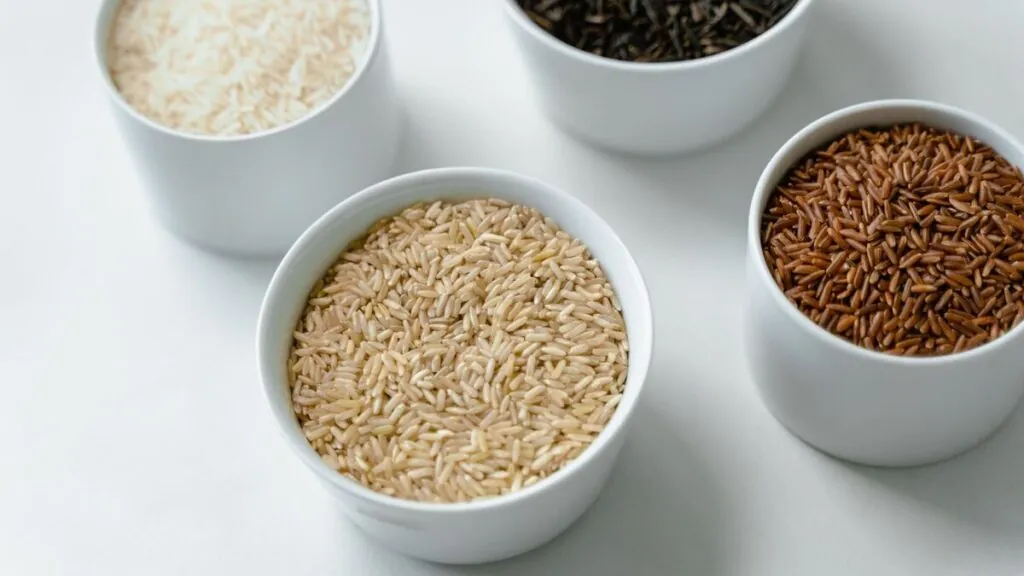
Any plain, uncooked white rice works well, whether basmati, sona masoori or regular kolam rice. Brown rice can be used too, but it releases less starch when soaked. The key is clean water and a clean container.
Throw it out if it smells strongly sour or rotten, turns slimy or stringy, fizzes, or shows any mould. Even if it looks fine, discard refrigerated rice water after 3–5 days.
Quick poll
How often do you wear sunscreen?
The bottom line
Rice water is a cheap, gentle extra that can make skin feel soft, calm and hydrated. Soaked water is the easiest and safest place to start, boiled water is thicker and good for packs, and fermented water is for skin that tolerates ferments well.
Keep your expectations realistic. Make small batches, refrigerate them, patch test, and pair rice water with the basics that actually move the needle: gentle cleansing, a good moisturiser and daily sunscreen.