Salon Hair Treatments Compared: Keratin, Hair Botox, Smoothening
What keratin, hair botox and smoothening actually do to your hair, how long each lasts, the formaldehyde question, and what to ask your stylist before you book.


Choose hair botox if your main problem is dryness and dullness, KeratinThe protein that hair is made of. "Keratin treatments" are salon smoothing services, and some contain formaldehyde-releasing chemicals.See glossary or smoothening if frizz is the problem and you are comfortable with heat and stronger chemicals, and rebonding only if you want hair straight until it grows out. None of them heals hair, so pick by the look you want and the upkeep you can manage, and only after you have seen the product’s ingredient list.
Below is what each treatment does, how long it tends to last and what to ask. To work on dry or rough hair at home first, start with this guide to hair masks for damaged hair.
The quick answer
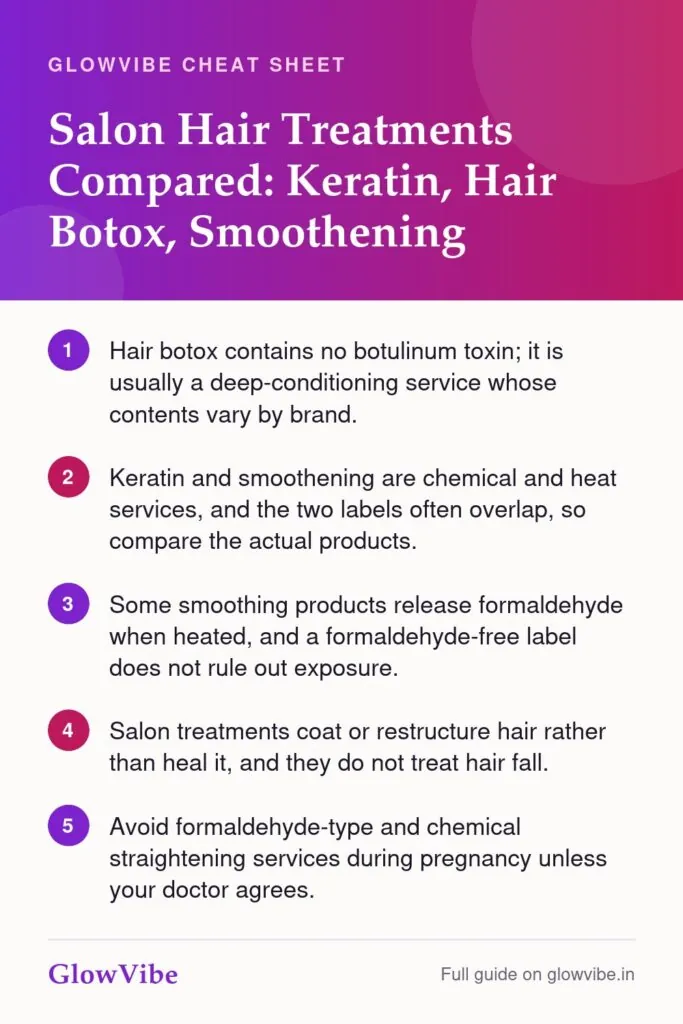
- Hair botox: a deep-conditioning service, usually with no straightening. It contains no botulinum toxin, and the name is only marketing.
- Keratin treatment: a chemical and heat service that reduces frizz and loosens texture for a few months.
- Smoothening: a loose salon word for a similar chemical and heat service. Ask what the product really is.
- Rebonding: a permanent straightening process for the treated lengths. New growth keeps your natural texture.
- Safety point: some keratin and smoothing products release formaldehyde when heated, even when the label suggests otherwise.
What each treatment actually does to your hair
The hair you can see is non-living fibre, so it cannot repair itself the way skin does. Salon treatments coat it, cross-link it or break and reset its bonds. Hair can look far better afterwards, but “revive” and “heal” are sales words, and the damage is still there underneath.
Keratin treatment
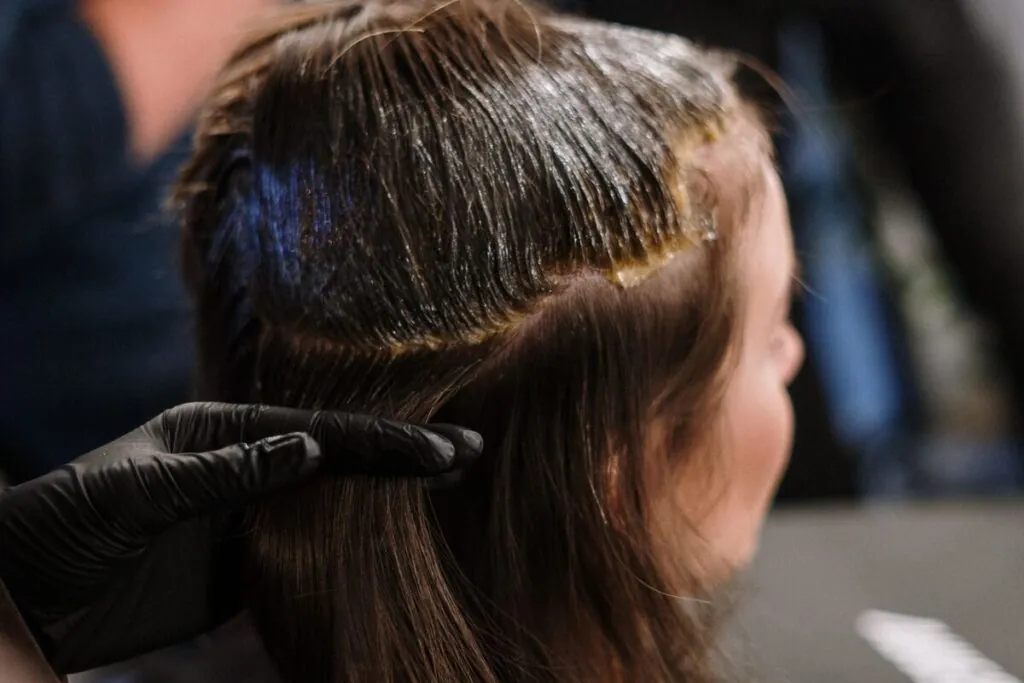
The name suggests protein going back into your hair, but the smoothing mostly comes from an active chemical and a hot flat iron. Older Brazilian-style formulas used formaldehyde, which links keratin in the product to keratin in the hair under heat. A dermatology journal review of 33 articles found no evidence that the added keratin travels into the inner hair to rebuild it, as is often claimed.
Many newer formulas swap formaldehyde for glyoxylic acid or similar acids, covered further down.
Hair botox
Hair botox has no botulinum toxin, involves no injections and has no legal definition. It usually means a rich conditioning mask, often with amino acids, collagen, Hyaluronic acidA humectant that holds water in the skin for a plump, hydrated look. Despite the name, it is not an exfoliating acid. Apply on damp skin.See glossaryRead the guide or oils, though contents vary by brand. Conditioning ingredients work on the surface, by reducing static and helping lifted cuticle scales lie flatter.
Because the term is unregulated, a service sold as “botox” could be something stronger. If the stylist promises straighter hair or plans to seal it with a flat iron, ask the same safety questions you would ask about keratin.
Smoothening
“Smoothening” has no fixed chemical meaning in Indian salons. Indian beauty sites describe it as a formaldehyde-type solution set with a flat iron, and others present it as a milder alternative to rebonding. Two salons can use the same word for different products, so the product name matters more than the menu name.
Rebonding, the one often confused with these
Rebonding works closer to a relaxer. A chemical breaks the bonds that give hair its shape, hot irons hold it straight, and a neutraliser resets it. Published work describes this kind of straightening as permanent in the treated area, and scale opening and fissures on the hair surface have been reported with relaxers.
Keratin vs botox vs smoothening at a glance
| Treatment | What it does | Rough duration | Upkeep |
|---|---|---|---|
| Hair botox | Coats and conditions; usually no straightening | A few weeks to about 3 months | Repeat sessions, gentle washing |
| Keratin | Chemical and heat smoothing; curl often loosens | About 2 to 6 months | Sulfate-freeShampoo made without strong sulfate cleansers like SLS. Gentler on dry, curly or colour-treated hair, though it may lather less.See glossaryRead the guide wash, repeat sessions |
| Smoothening | Varies by product; often sold as a milder alternative to rebonding | About 3 to 6 months | Sulfate-free wash, root line shows as hair grows |
| Rebonding | Breaks and resets hair bonds | Treated lengths stay straight until grown out | Regrowth touch-ups, heavier conditioning |
Treat these durations as rough. They come from salon, clinic and beauty-site pages rather than controlled trials, and thick, curly or often-washed hair may see a shorter result. The dermatology review above says only that acid-type straighteners have variable durability and can build up with repeated sessions, so your hair may stay straighter than you expected after several rounds.
Which treatment suits which hair problem
| Your main problem | Option to consider | Keep in mind |
|---|---|---|
| Dry, dull hair but you like your natural texture | Regular masks at home, or hair botox | Shine fades as the coating washes out |
| Monsoon frizz on wavy hair | Serum and good conditioning first; keratin if that is not enough | Check the ingredient list before booking |
| Thick curls that take too long to style | Keratin or smoothening, understanding curls will loosen | Your curl pattern may not bounce back fully after repeat sessions |
| You want poker-straight hair | Rebonding | Regrowth shows clearly, and it is a long commitment |
| Bleached or heavily coloured hair | Conditioning only until a stylist has strand-tested it | Stacked chemical services raise breakage risk |
| Hair falling from the root, or thinning patches | None of these; see a dermatologist | A coating or straightener does not treat hair loss |
If you have curls and are unsure, try a better wash-day routine first, such as this curly hair routine for Indian weather, because humidity frizz often settles with the right products. Not sure what your hair needs? The GlowVibe hair care quiz can give you a starting routine before you spend on a salon service.
Hair loss is a separate question. This look at hair loss treatment options in India explains what has evidence behind it. A breaking strand has snapped along its length with no bulb at the end, and that points to damage, not hair fall.
The formaldehyde question
The US FDA warns that some hair smoothing products release formaldehyde gas when heated, and that both stylists and clients can breathe it in if the salon is poorly ventilated. Reported reactions include eye irritation, breathing problems, nausea, chest pain, vomiting and rash. The International Agency for Research on Cancer classifies formaldehyde as a human carcinogen, and the FDA ties the cancer concern to high levels or prolonged exposure.
On the ingredient list, look for formaldehyde, formalin, methylene glycol, methanal, methanediol and formaldehyde monohydrate. The US workplace safety agency OSHA also warns that products claiming to be “formaldehyde free” can still expose workers to it, and that some labels leave it out altogether. So treat that phrase as a reason to ask more questions, not as an answer.
Most of this advice comes from US regulators, so it cannot tell you what is in a particular bottle at your local salon. The FDA’s own advice applies anywhere: if the professional is unsure whether formaldehyde is present, you may not want to use the product.
Are glyoxylic acid treatments the safer swap?
Not automatically. Glyoxylic acid is sold as a formaldehyde alternative, but it has its own problems. In a lab study on curly hair, both treatments damaged the hair surface, though formaldehyde weakened the fibre far more. The dermatology review above also groups glyoxylic acid with substances that release formaldehyde during heating. There are also case reports of sudden kidney injury after straightening treatments suspected to contain it, including a woman treated in Geneva whose report noted 27 earlier published cases.
This is not proof, and how often it happens is not known. The authors of the Geneva report did not test the product used. Still, if you develop vomiting, pain in your side or severe tiredness in the days after a straightening service, see a doctor promptly and mention the treatment. If you already have kidney disease, ask your doctor before booking.
Upkeep on Indian hair
Salon aftercare usually means not washing or tying your hair for 48 to 72 hours, then using sulfate-free shampoo and conditioner to make the result last. The rules vary by product, so follow your stylist’s instructions. Clips and tight plaits in those first days can leave marks, so ask about them, and about oiling, too.
Sweat and frequent washing in summer can shorten the result, and hard water can leave hair feeling rough and dull, which makes any smoothing look less impressive. Regular conditioning helps, and treated hair still needs gentle heat: the American Academy of Dermatology suggests the lowest setting, about once a week or less.
Natural texture appears at the root as hair grows, and here is how fast hair really grows if you want to estimate when it will show.
For relaxer-type services, one trichology paper says touch-ups should wait 12 weeks or longer and cover new growth only, because breakage often happens where new and previously treated hair meet. The American Academy of Dermatology also advises one chemical service at a time. If you want both, do the relaxer first and colour two weeks later.
What to ask your stylist before you agree
- Which exact product is this? Ask to see the bottle and read its ingredient list yourself, not just the salon’s menu card.
- Does it contain or release formaldehyde? Check the names listed above, and be cautious if nobody can answer.
- Is glyoxylic acid in it? Ask this too if the product is sold as formaldehyde free.
- How will the room be ventilated during ironing? Good airflow matters most while heat is on the hair.
- Can you do a Patch testTrying a small amount of a new product behind the ear or on the inner arm for a few days to check for a reaction before using it widely.See glossary and a strand test first? Book these ahead of the appointment day, especially on coloured hair.
- Will the product stay off the scalp? Relaxers in particular can burn skin, so product should sit away from the scalp.
- What will the hair look like as it grows out? Also ask how soon a repeat is needed and whether your curl pattern will return.
Tell the stylist about everything you have had done in the past year or so, including Henna (mehendi)A plant dye that stains hair reddish-brown and coats strands for a glossy feel. Pure henna is different from "black henna", which can contain harsh dyes.See glossaryRead the guide, box dye and highlights. If your hair has been lightened, read this guide to bleach on dark Indian hair first, because stacking straightening chemicals on bleached lengths is where breakage risk climbs.
Who should skip these or check first
- If you are pregnant: avoid formaldehyde-type and chemical straightening services unless your doctor agrees. MotherToBaby notes that studies of people working around formaldehyde have suggested a higher chance of miscarriage, though those studies looked at workers, not salon clients. Ask about breastfeeding too.
- Children and teens: ask a doctor first, and don’t assume adult salon services are suitable.
- Asthma, kidney disease or other long-term conditions: ask your doctor, and share the ingredient list.
- Scalp eczema, psoriasis, cuts or soreness: wait, and speak to a dermatologist. Published reports link formaldehyde to scalp eczema, and relaxers to eczema and burns.
- A past reaction to any hair service: tell the stylist and don’t repeat that product.
During any service, stinging eyes, coughing or a burning scalp are signs to stop. Ask for the product to be rinsed out, and see a doctor if symptoms continue. If hair keeps breaking or thinning after you change your routine, a dermatologist or trichologist can check for other causes.
Common mistakes
- Booking by the name on the menu. “Keratin”, “botox” and “smoothening” don’t guarantee a particular formula.
- Doing it right before an event. Leave time before a wedding or function in case your scalp reacts or the finish is not what you wanted.
- Stacking services on one day. Colour, bleach and straightening together put repeated chemical stress on the same hair, so book them apart.
Frequently Asked Questions
No. It contains no botulinum toxin and nothing is injected. The name is a comparison with wrinkle smoothing, and the actual contents vary from brand to brand.
Neither is better in general, because the two labels often overlap in chemistry. Compare the actual products instead. Choose by how straight you want your hair and how the ingredient list reads.
It can. In the curly hair study, both formaldehyde and glyoxylic acid damaged the surface of the hair, and the dermatology review says heat worsens the cuticle damage from formaldehyde. Findings vary between studies, and long-term effects remain unknown, so spacing out sessions is the sensible approach.
Ask your stylist, because advice differs by product. If you do oil, wait until the stylist’s no-wash window ends, and keep it to the lengths.
No. They act on the hair shaft and don’t treat what is happening at the root. If you are shedding more than usual or seeing thin patches, see a dermatologist, since continued chemical damage can make hair more fragile.
The bottom line
Salon treatments change how hair looks for a while, but they do not heal it. Hair botox is the lightest choice, keratin and smoothening are chemical services that vary widely by product, and rebonding is the most permanent.
Before you book, read the ingredient list, ask about formaldehyde and glyoxylic acid, and insist on a patch test. If nobody can tell you what is in the bottle, it is fine to walk away. Skip these during pregnancy unless your doctor agrees.
Quick poll
How much do you usually spend on one beauty product?
Sources
- Hair Smoothing Products That Release Formaldehyde When Heated, US Food and Drug Administration
- Hair Salons – Formaldehyde in Your Products, US Occupational Safety and Health Administration
- Hair Treatments, MotherToBaby (Organization of Teratology Information Specialists)
- Effects of chemical straighteners on the hair shaft and scalp, Anais Brasileiros de Dermatologia
- Acute Kidney Injury and Hair-Straightening Products, Kidney International Reports, via the US National Institutes of Health