Is Hair Bleach Safe? Myths vs Facts for Dark Indian Hair (2026)
Is hair bleach safe? How bleach works on dark Indian hair, its real side effects, common myths, home vs salon, and how to care for bleached hair.


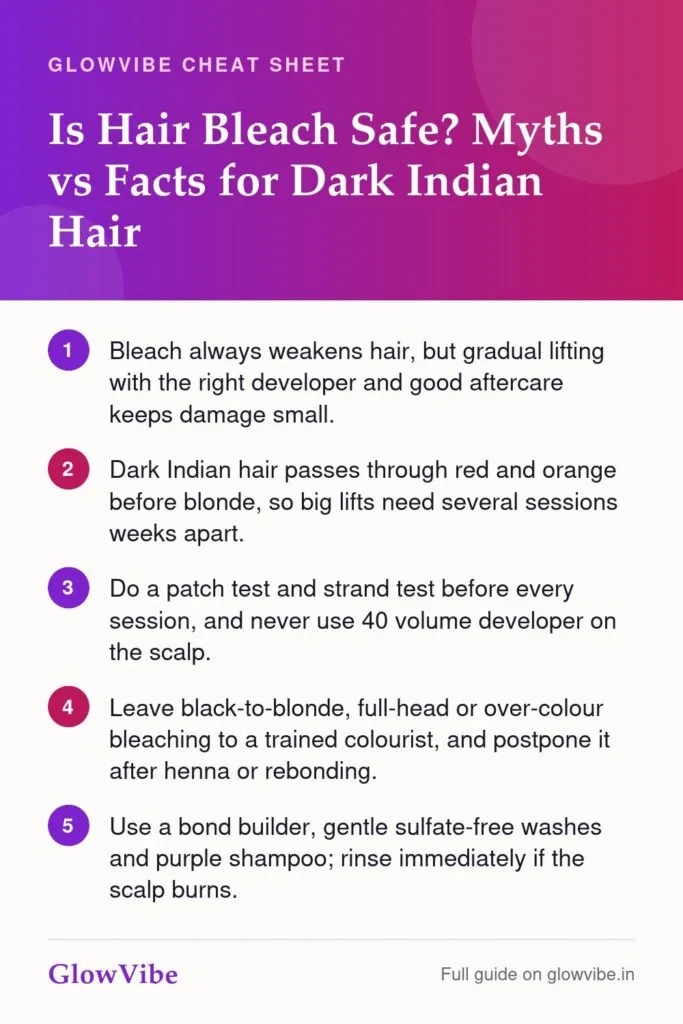
Hair bleach is reasonably safe when it is done carefully: the right developer strength, a patch and strand test, gradual lifting and good aftercare. It is not harmless, though. Bleach always changes the structure of your hair, and on dark Indian hair a rushed or DIY job is the most common route to orange tones, breakage and scalp burns.
This guide explains how bleach actually works, why black and dark brown hair turns brassy, the real side effects, the myths you can ignore, and how to look after bleached hair in Indian heat, humidity and hard water.
Is Hair Bleach Safe? The Short Answer
- Safe-ish for healthy hair when lifted slowly, ideally by a trained colourist.
- Always some damage: bleach weakens the hair shaft. The goal is to keep that damage small, not to avoid it entirely.
- Biggest risks: breakage, dryness, scalp irritation or chemical burns, and allergic reactions.
- Dark Indian hair passes through red and orange before it reaches blonde, so big lifts need several sessions.
- Skip or postpone it if your scalp is irritated, your hair is already damaged, or you have recently used Henna (mehendi)A plant dye that stains hair reddish-brown and coats strands for a glossy feel. Pure henna is different from "black henna", which can contain harsh dyes.See glossaryRead the guide.
How Hair Bleach Works
Bleach is usually a powder or cream lightener mixed with a developer (hydrogen peroxide). The alkaline mix swells the hair cuticle so the peroxide can get inside the strand. There it oxidises melanin, the natural pigment that gives your hair its colour, breaking it into colourless compounds.
The catch is that the same oxidation also attacks the protein bonds that hold your hair together. That is why bleached hair feels rougher, absorbs water faster and snaps more easily. The longer and stronger the process, the more of those bonds are lost.
Developer Volumes Explained
The “volume” on a developer bottle tells you how much peroxide it contains. Higher volume lifts faster but is harsher on hair and skin. Here is how the common strengths are generally used:
| Developer | Peroxide strength | Typical use | Risk level |
|---|---|---|---|
| 10 volume | About 3% | Toning, deposit-only colour, very gentle lift | Lowest |
| 20 volume | About 6% | Standard lift of one to two levels; most common for on-scalp work | Moderate |
| 30 volume | About 9% | Faster lift, usually off the scalp (foils, balayage) by professionals | High |
| 40 volume | About 12% | Maximum lift, professional use only, never on the scalp | Very high |
Your scalp releases heat, which speeds up the reaction. That is one reason colourists use lower volumes near the roots and keep strong developers well away from the skin.
Bleaching Dark Hair: Why Indian Hair Turns Orange
Most Indian hair is naturally black or dark brown, rich in a dark pigment called eumelanin and also carrying warm red-orange pigment underneath. Bleach breaks down the dark pigment first. The warm pigment is more stubborn, so as your hair lightens it moves from dark brown to red, then orange, then gold, and only after that to yellow and pale blonde.
If you stop early, you get brassy, coppery hair. If you push to icy blonde in one sitting, you risk “chemical haircut” breakage. A good colourist lifts in stages, often a few weeks apart, and then uses a toner to cancel leftover warmth. For many people, caramel, honey or ash-brown balayage is a more realistic and healthier target than platinum. If you are still deciding on a shade, our guides to hair colour for Indian women and hair colour for men with brown skin can help.
Hair Bleach Side Effects and Risks
- Breakage and split ends: weakened strands snap during combing, tying or heat styling, especially at the mid-lengths.
- Dryness and frizz: a raised cuticle loses moisture quickly, which shows up badly in humid monsoon weather.
- Scalp irritation and chemical burns: stinging, redness, scabs or blisters can happen with strong developers, long processing times or an already irritated scalp.
- Allergic reactions: some people react to ingredients in bleach powders, such as persulfates, with itching, rash or swelling.
- Uneven, patchy colour: common with home kits, overlapping applications or hair with old dye or henna on it.
A note on PPD: para-phenylenediamine is a well-known allergen, but it is found in many permanent hair dyes, not in bleach. The confusion arises because most people dye or tone after bleaching. If you plan to add a fashion shade or a permanent colour on top, you need a separate Patch testTrying a small amount of a new product behind the ear or on the inner arm for a few days to check for a reaction before using it widely.See glossary for that product too.
Hair Bleach Myths vs Facts
| Myth | Fact |
|---|---|
| Bleach causes permanent hair fall. | Bleach works on the hair shaft, not the root. It causes breakage, which can look like hair fall, but it does not normally stop new hair growing. A severe scalp burn is the exception, so see a doctor if that happens. |
| You must wash your hair right before bleaching. | Many colourists prefer hair that was washed a day or two earlier, because natural scalp oils can reduce irritation. Avoid heavy oiling just before, as it can block even lifting. |
| Higher developer means better results. | Higher volume only lifts faster. Slow lifting with a lower volume usually gives a more even colour and less damage. |
| Toner fixes any bleach mistake. | Toner only adjusts tone, such as cancelling yellow or orange. It cannot repair damage or even out patchy lifting. |
| Hair dye can lighten dyed hair. | Colour cannot lift colour. To go lighter over old dye you need a lightener or a colour remover. |
| Lemon juice and sun are a safe natural bleach. | They may lighten slightly, but results are unpredictable and very drying. They are not gentler in any useful way. |
| Bleached hair can be fully repaired. | Bond builderA treatment that helps repair broken bonds inside the hair fibre, often used after colouring, bleaching or heat damage.See glossary, masks and conditioners improve strength and feel, but lost structure does not fully return. Trimming is the only true fix for badly damaged ends. |
| Curly hair should never be bleached. | Curls can be bleached, but they are naturally drier and more fragile, so they need gentler lifting and extra moisture. |
Hair Bleach at Home vs Salon
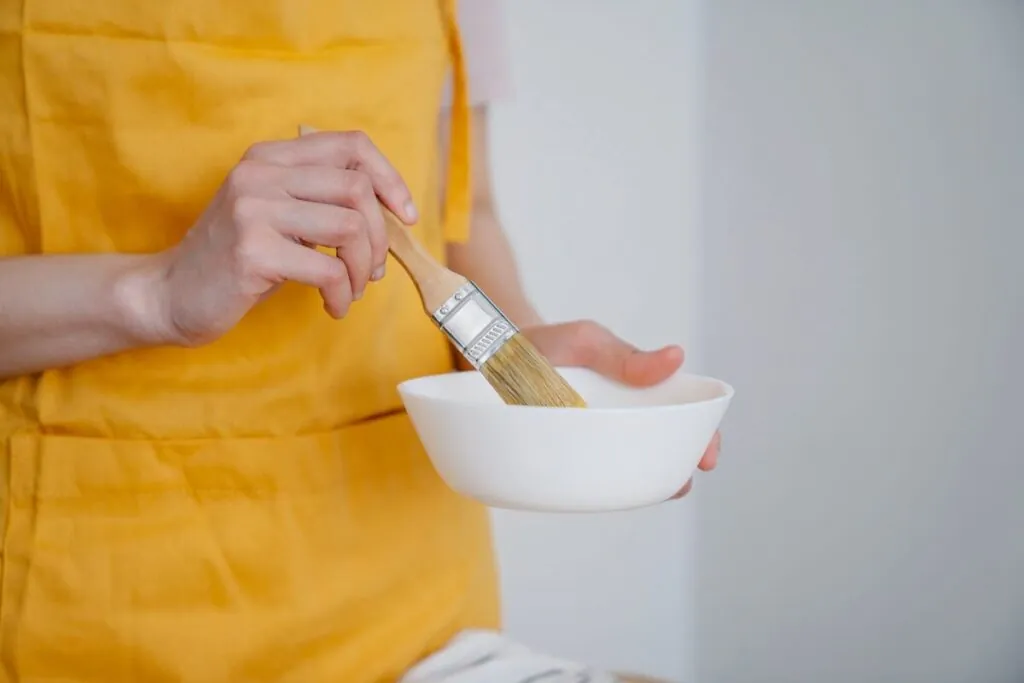
A small lift, such as a few face-framing strands or refreshing light brown ends, can be done at home if you follow the pack instructions to the letter. Anything bigger, like going from black to blonde, full-head lightening, or bleaching over old colour, is a job for a trained professional.
A colourist can judge your hair’s Hair porosityHow easily your hair absorbs and holds moisture. Low-porosity hair resists water; high-porosity hair absorbs it fast but loses it quickly.See glossaryRead the guide, apply lower strengths at the roots, use foils to keep bleach off the scalp, watch the lift minute by minute and add a bond builder into the mix. Those steps are hard to manage alone in front of a bathroom mirror.
- Never use 40 volume on your scalp at home. It is the most common cause of serious DIY scalp burns.
- Never leave bleach on longer than the maximum time on the pack, even if your hair still looks orange.
- Do not overlap fresh bleach onto hair that is already lightened.
- Wear gloves, work in a ventilated room, and keep the mix away from eyes and brows.
Patch Test and Strand Test: Do Not Skip Them
These two quick tests prevent most bleach disasters. They take a little patience but cost almost nothing.
- Patch test: follow the product’s instructions, which usually means dabbing a small amount on the skin behind your ear or on your inner elbow and waiting the stated time (often 48 hours for dyes). Any itching, redness or swelling means do not use it.
- Strand test: bleach a small hidden section from the underneath of your hair. Check how fast it lifts, what colour it reaches and whether it turns gummy or stretchy when wet. Stretchy, mushy hair is a clear sign to stop.
- Repeat the tests each time you switch brands, and before every session if you have had a reaction to any hair product before.
Who Should Avoid Bleaching (or Wait)
- Scalp conditions: psoriasis, eczema, active dandruff flare-ups, cuts, sunburn or any open sores. Let your scalp heal first.
- Recent henna users: henna coats the hair and can make lifting slow and unpredictable. Some packaged “henna” products contain metallic salts that may react badly with peroxide. Tell your colourist honestly and expect a strand test, or wait for it to grow out. If you love henna, our post on natural hair dyes covers gentler options.
- Already damaged hair: hair that is breaking, recently rebonded, keratin-treated or heavily heat-styled needs recovery time first.
- Pregnancy or breastfeeding: evidence is limited, so check with your doctor before any chemical hair treatment. Many people choose to wait or opt for off-scalp highlights in a well-ventilated salon.
- Past reactions: anyone who has reacted to hair colour or bleach before should speak to a dermatologist first.
How to Take Care of Bleached Hair
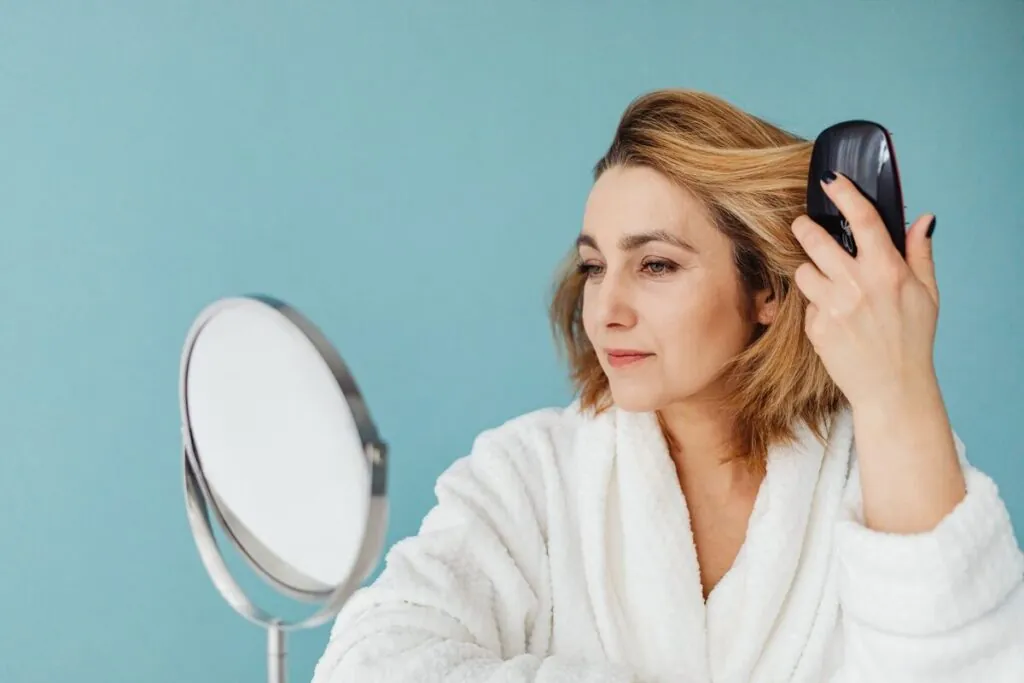
Bleached hair is more porous, so it gains and loses water quickly and needs both strength and moisture. Build your routine around these steps:
- Use a bond builder. Bond-repair treatments such as Olaplex are designed to support the bonds bleach breaks. Ask your salon to add one during lightening and use an at-home step as directed.
- Balance protein and moisture. Alternate a protein treatment (KeratinThe protein that hair is made of. "Keratin treatments" are salon smoothing services, and some contain formaldehyde-releasing chemicals.See glossary, amino acids) with a moisturising mask. Too much protein makes hair stiff and brittle; too little leaves it limp and gummy. Our guide to the best hair mask for damaged hair can help you pick one.
- Wash gently. Use a mild, Sulfate-freeShampoo made without strong sulfate cleansers like SLS. Gentler on dry, curly or colour-treated hair, though it may lather less.See glossaryRead the guide shampoo two or three times a week in lukewarm water, and always follow with conditioner.
- Tone brassiness with purple shampoo. Purple pigment cancels yellow. Use it once a week or as needed; overuse can leave a lilac tint. For orange tones, a blue shampoo works better.
- Protect from heat. Apply Heat protectantA spray, cream or serum applied before blow-drying, straightening or curling to reduce heat damage to the hair.See glossary before every blow-dry or straightener session, keep tools on lower settings and air-dry when you can.
- Trim regularly. Snip the ends every 8 to 10 weeks so splits do not travel up the strand.
Hard Water, Humidity and Sun
Hard water in cities like Delhi, Bengaluru and Chennai leaves mineral deposits that make bleached hair dull, rough and brassier. A shower filter and an occasional clarifying or chelating wash can help. In monsoon humidity, a light Leave-in conditionerA light conditioner you do not rinse out. It helps with detangling, frizz and moisture, especially for curly or dry hair.See glossaryRead the guide or serum smooths frizz, and in summer a scarf or UV-protective spray stops the sun from drying and yellowing your colour further. For more on everyday care, see our natural hair care tips at home.
Common Hair Bleaching Mistakes
- Trying to go from black to platinum in one session.
- Choosing a strong developer to “save time”.
- Bleaching right after rebonding, keratin or henna.
- Re-bleaching the whole head instead of only the regrowth.
- Skipping conditioner and heat protection in the weeks after.
- Ignoring burning on the scalp and leaving the bleach on anyway.
When to See a Dermatologist
Mild tingling during bleaching can be normal, but strong burning is not. Rinse the bleach off immediately with plenty of cool water if your scalp burns. See a dermatologist promptly if you notice:
- Blisters, oozing, crusting or open sores on the scalp
- Swelling of the scalp, face, eyelids or neck
- Itchy rash or hives that spread or do not settle within a day or two
- Patches of hair loss where the scalp was irritated
Get emergency medical help straight away if you have difficulty breathing, wheezing or rapid swelling of the face or throat.
Frequently Asked Questions
Yes, if your hair and scalp are healthy and the lift is done gradually. Dark hair needs more lifting, so it is more exposed to damage and brassiness. Spreading the process over sessions and using a professional for big changes keeps it much safer.
The bleached lengths stay structurally weaker until they are cut off, although care products can make them feel much better. New hair growing from the root is not affected. With good aftercare and regular trims, your hair can look healthy again over time.
Most colourists suggest leaving several weeks between sessions, commonly six to eight, and only bleaching new regrowth for touch-ups. Re-bleaching already lightened hair is what causes most breakage. Let your strand test and your hair’s condition guide you.
Small, low-strength lifts on healthy hair can be done at home if you patch test, strand test and follow the instructions exactly. Big changes, full-head lightening and bleaching over old colour are better left to a professional. Never use 40 volume developer on your scalp.
Dark hair contains warm underlying pigment that is revealed as the darker pigment breaks down. Orange means the lift stopped partway. A toner or blue shampoo can soften it, but reaching a lighter blonde usually needs another careful session after a gap.
Bleach lighteners do not usually contain PPD; it is mainly found in permanent hair dyes. However, many people apply dye or toner after bleaching, so check those labels and patch test each product separately.
It is risky and often unpredictable. Henna can block even lifting, and some henna blends contain metallic salts that may react with peroxide. Tell your colourist, insist on a strand test first, or wait until the henna has grown out.
Quick poll
What is your biggest hair concern?
The Bottom Line
Hair bleach is neither a villain nor a harmless beauty step. It works by oxidising your natural pigment, and that always costs some strength. Go slow on dark hair, keep strong developers off your scalp, test before every session and invest in aftercare, and you can enjoy lighter hair without wrecking it. If anything burns, blisters or swells, rinse it off and see a dermatologist.