Long Hair Care: How to Protect Your Lengths and Ends
How to keep long hair from breaking as it grows, with practical steps for detangling, night braids, heavy wet hair, safer styles and well-timed trims.


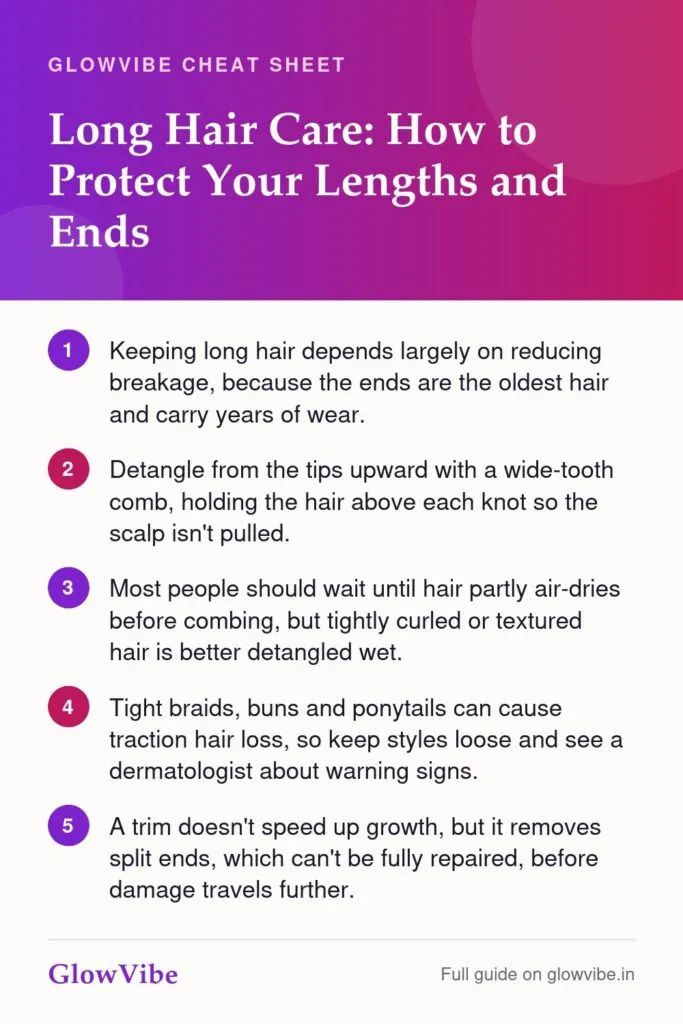
To take care of long hair, focus on stopping breakage: detangle from the ends upward, keep rubbing to a minimum, sleep in a loose braid and trim damaged ends before the damage can spread. Your scalp keeps growing hair on its own schedule, so the length you actually keep depends largely on how well the older hair survives daily handling.
This guide covers only that part of the job. For how quickly hair grows and why it stops at a certain length, read how fast hair really grows. For habits that suit every length, see these everyday hair care tips.
The quick answer
- After washing: shampoo the scalp, condition the lengths, then blot and wrap instead of rubbing.
- Detangling: use a wide-tooth comb, start at the tips and hold the hair above each knot.
- At night: wear a loose braid with a soft tie, and go to bed with hair that is mostly dry.
- By day: change where your ponytail or bun sits, and loosen anything that hurts or pulls at the hairline.
- Trims: let the condition of your ends decide the timing, and cut just above the damage.
Why long hair breaks at the ends
The hair at your tips is the oldest hair on your head. On long hair, those ends may have spent years going through combs, clips, sun, heat, hard water and pillows. Hair is not living tissue, so that wear adds up.
A steady growth rate means little if the ends snap as fast as the roots grow. A published review of hair cosmetics, in the International Journal of Trichology, names friction as a direct cause of damage and links split ends to rubbing combined with twisting. So the steps below all aim for fewer tugs, less rubbing and less twisting.
It also helps to check whether you are seeing breakage or normal shedding. A shed hair is usually full length, often with a tiny pale bulb at one end. A broken hair is shorter, has no bulb and often has a blunt or frayed tip. Lots of short pieces on your comb point to breakage.
How to detangle long hair without snapping it
The American Academy of Dermatology (AAD) advises most people to handle wet hair as little as possible, because it breaks more easily when combed or brushed. It makes one clear exception: people with tightly curled or textured hair should detangle when wet, because that lowers the chance of breakage on their hair type.
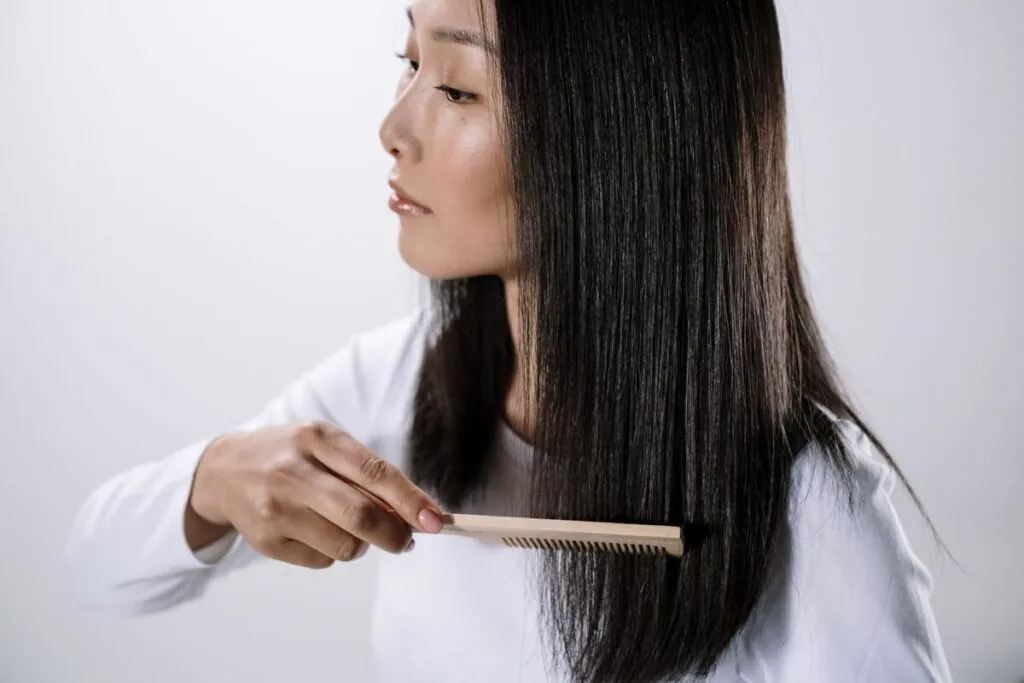
So the right moment depends on your texture. Straight and most wavy hair does well once it has partly air-dried. Tight curls and coils do better wet, with conditioner still in. Either way, the method is the same:
- Divide the hair into two to four sections and clip them apart. Thick hair needs more sections.
- Add slip first. Conditioner, a Leave-in conditionerA light conditioner you do not rinse out. It helps with detangling, frizz and moisture, especially for curly or dry hair.See glossaryRead the guide or a small amount of oil on the lengths all help the comb glide.
- Hold the section firmly above the area you are combing, so any pull stops at your hand and never reaches the scalp.
- Comb the last few centimetres first with a wide-tooth comb, then move up a little at a time.
- Loosen a stubborn knot with your fingers. Tearing through it costs more hair than the extra minute does.
Brush only as much as you need for styling. The AAD says the old 100-strokes-a-day habit can cause split ends, so there is no reason to keep it up. If you prefer a brush for dry hair, this guide to brushes for each hair type will help you pick one.
Managing heavy hair after washing
In the shower
Put shampoo on your scalp and let the lather rinse through the lengths. Don’t pile the hair on top of your head to scrub, because that creates one big knot. Follow with conditioner, since the AAD notes it coats the strands and reduces breakage and split ends. Concentrate it from the mid-lengths down.
If your water is hard, your hair may feel rough and tangle more even after conditioner. Leave the conditioner on for the full time the label suggests and rinse well. A final rinse with filtered water is a small option to try, not a requirement.
Getting the water out
- Squeeze, don’t wring. Press water down the length with your palms before you step out.
- Wrap, don’t rub. A towel or soft cotton T-shirt absorbs water without the roughing-up that a vigorous towel dry causes.
- Keep the wrap loose. A hard twisted turban hangs the full wet weight from your hairline, so take it off once it has stopped dripping.
- Dry in stages. Let the hair partly air-dry, then comb it. If it won’t dry in time, use a low setting on the roots and leave the ends to finish on their own.
Protecting long hair at night
You turn over many times in your sleep, and loose long hair can slide, catch and knot through the night. A simple routine takes under two minutes:
- Finger-comb or gently comb out any tangles from the day, especially after a sweaty commute or a polluted day outdoors.
- Make one loose braid that starts at the nape, or two if your hair is very thick. Don’t start it high on the head.
- Secure the end with a soft fabric scrunchie or a seamless tie, wrapped only as much as it needs to hold.
Silk or satin pillowcases and bonnets are popular for this. The AAD says a head covering of silk or satin is gentler on hair than other materials, but it says that about coverings, not pillowcases. A smoother pillowcase should mean less friction, yet the tests behind that claim mostly come from companies selling silk, and independent studies are hard to find. See one as an optional extra. A loose braid costs nothing, so start there.
Try not to sleep on soaking wet hair, since wet hair is at its most fragile. If you wash at night, dry it most of the way first. Overnight oiling is a personal choice, but oil the lengths gently and leave the plait loose. For method and amounts, follow this guide to oiling your hair correctly.
Braids and buns: protective or harmful?
A braid can keep long hair from tangling and rubbing, but the same braid can damage hair if it is tight. The AAD says constant pulling can cause traction alopecia, a form of hair loss that can become permanent if it goes on. Ponytails, cornrows, locs, tight braids, weaves, and hair pulled back tightly under a covering can all be involved.

Warning signs from the AAD include broken hairs around the forehead, a receding hairline, pain, stinging and scalp crusts. Long hair adds its own weight to any style, so a high ponytail that feels fine at 9 am can ache by evening. Pain is a reason to take the style down.
| Style | Where it can go wrong | A gentler way to wear it |
|---|---|---|
| Everyday plait | Pulled tight from the hairline, often when freshly oiled | Start it lower and keep the front relaxed |
| High ponytail | Full weight pulls on one spot | Wear it lower, and change the position day to day |
| Tight bun | Pins and elastic grip the same hairs daily | Use a loose twist with a claw clip, and vary the spot |
| Cornrows or long-wear braids | Strain at the edges over weeks | Ask for looser edges; the AAD advises 6 to 8 weeks at most |
| Headscarf, turban or other covering | Hair pulled tight beneath it | Wear it loosely over relaxed hair; the AAD prefers silk or satin coverings |
| Occasion updo | Many pins and heavy accessories for long hours | Fine for a day; take pins out slowly and let the hair down that night |
A simple check for any style: if you can feel it pulling at your hairline, loosen it. For a child’s hair, keep plaits and school ponytails loose too, and ask a doctor about any bald patches or sore spots.
How to know when to trim, and how much
Trimming does not make hair grow faster, because growth happens at the root. What a trim does is remove a split end for good. Trichologists at the Philip Kingsley hair clinic say a split can’t be fully repaired once it appears and that the damage can travel up the strand. They add that leave-in and smoothing products can seal it for a few washes, and no longer.
Many salons suggest a fixed schedule, but no single interval suits everyone. If you handle your hair gently, you may be able to wait longer. Look at your ends in good daylight and book a trim when you notice any of these:
- Visible splits or white dots near the tips
- Ends that tangle right after you have combed them
- A see-through, wispy hemline compared with the hair just above it
- Ends that feel rough and dry even after conditioner
Ask for the amount you want to lose before the scissors come out. Show it with your fingers, as “a small trim” means different things to different people. Cut just above the damage, and a very small dusting may be all you need.
Heat, sun and oil: the rest of the protection plan
Heat tools age your lengths quickly. The AAD suggests flat irons on dry hair at a low or medium setting, no more often than every other day, and a curling iron held in place for only a second or two. Add a heat-protectant product, and keep heat for occasions if your ends are already fragile.
Sun and sweat matter too, especially when your lengths hang loose on a long commute or a two-wheeler ride. A loose braid under a scarf or cap protects the most exposed sections, and you can read more on shielding hair from strong sun in the dedicated guide.
Oil can help as a lubricant. The hair cosmetics review says regular use can enhance lubrication and help prevent breakage, and it cites one study where Coconut oilA common Indian hair oil that can soak into the hair shaft, which may reduce protein loss during washing. It can feel heavy on fine hair.See glossary reduced protein loss in both undamaged and damaged hair. The same review also says few studies exist on oils and human hair, so expect less friction, not extra length. Use only enough to coat the lengths, and skip heating it until it is hot, since the AAD warns that hot-oil treatments can further damage fragile hair.
Patch testTrying a small amount of a new product behind the ear or on the inner arm for a few days to check for a reaction before using it widely.See glossary any new oil, mask or leave-in on a small area first, and stop if you notice itching or redness.
Common mistakes
- Combing from the roots down. This pushes all the small tangles into one big knot at the ends.
- Skipping conditioner on oily scalps. Your roots may be oily while your ends stay dry, so condition the lengths only.
- Using the same tight hairstyle every day. Pulling on the same spot daily is how hairline trouble tends to build.
When to see a dermatologist
Everything above is for breakage in hair that is otherwise doing well. See a dermatologist or trichologist if you notice a receding hairline, bald patches, sudden heavy shedding, or a sore, crusted or stinging scalp. The AAD says traction hair loss responds best when treated early, before it becomes permanent, and finding the cause early improves results for hair loss more generally. This overview of hair loss treatment options in India can help you prepare questions for that visit. If you are pregnant or have a medical condition, ask your doctor about any new treatment first.
Frequently Asked Questions
Comb it through before bed, then make a loose braid starting at the nape and secure it with a soft tie. Very thick hair may do better in two braids. A smooth pillowcase is an optional extra, though independent evidence for it is hard to find.
Tying it is fine, but tying it tightly in the same spot every day is the problem. Constant pulling can lead to traction hair loss. Keep styles loose, change their position and give your hair days down.
No, because growth happens at the root and a trim only touches the ends. It helps you keep length by removing split ends before the damage can travel further up the strand.
Most people should wait until it has partly air-dried, as wet hair breaks more easily. Tightly curled or textured hair is the exception, and the AAD advises detangling it wet. In both cases, use a wide-tooth comb and start from the ends.
One common reason is that the ends are breaking about as fast as the roots are growing. Each person’s hair also has its own natural growth cycle, which sets a limit on length. Reducing breakage helps you reach your own limit, but no routine can promise a particular length.
Quick poll
What is your biggest hair concern?
The bottom line
Long hair care is mostly about handling hair less roughly. Detangle from the ends up, wrap instead of rubbing, braid loosely at night, keep styles from pulling at your hairline, and trim when your ends tell you to. Start with the night braid and the comb technique, because both take almost no time.