Which Foundation Formula Suits Your Skin Type?
Liquid, cream, stick, serum or powder? See which foundation format and finish suit oily, dry, combination and mature skin in Indian weather, and how to test one.

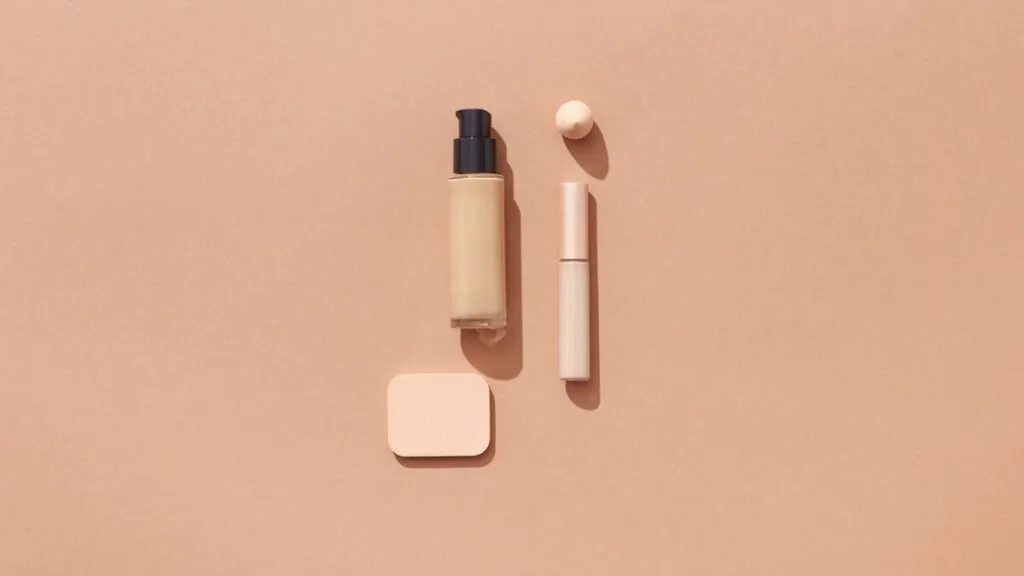
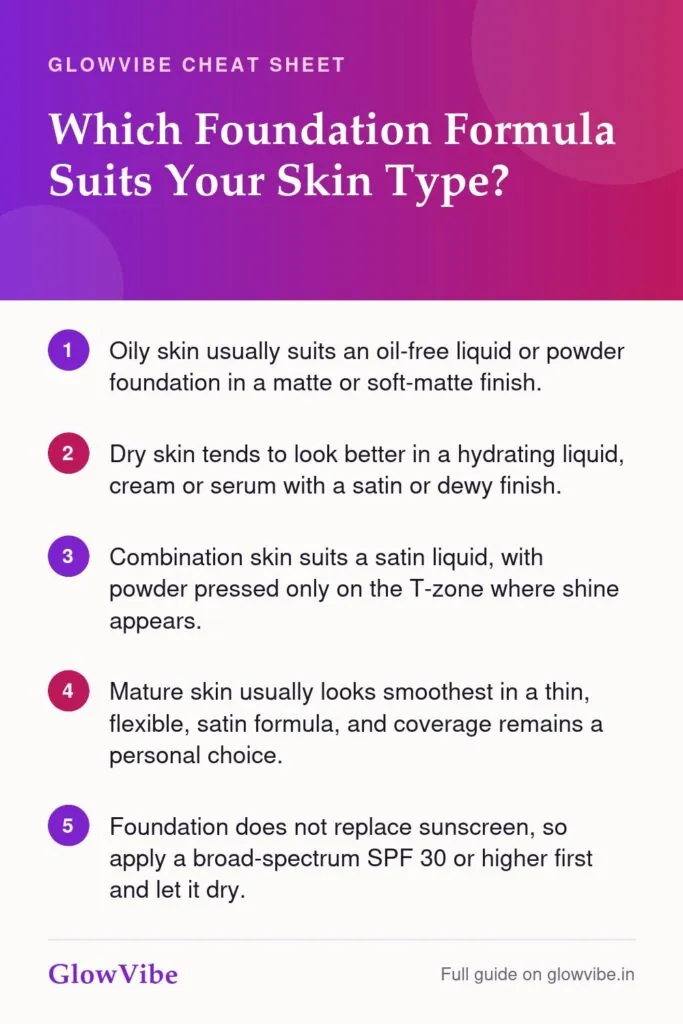
Oily skin usually does best with an oil-free liquid or a powder foundation in a matte or soft-matte finish, while dry skin tends to look better in a hydrating liquid, cream or serum with a satin or dewy finish. Combination skin suits a satin liquid with powder only where you get shiny, and mature skin usually looks smoothest in a thin, flexible, satin formula.
That is the short version. Below, you will see why each format behaves the way it does, how Indian heat, humidity and winter change the choice, and how to test a formula before you commit to a full bottle.
The quick answer
| Skin type | Formats to try first | Finish | Usually skip |
|---|---|---|---|
| Oily | Oil-free liquid, powder foundation | Matte or soft matte | Rich creams, very dewy formulas |
| Acne-prone | Oil-free liquid labelled Non-comedogenicA label meaning a product is formulated not to clog pores. Useful for acne-prone skin, though it is not a regulated or guaranteed claim.See glossaryRead the guide | Soft matte or natural | Heavy, waxy sticks over active breakouts |
| Dry | Hydrating liquid, cream, serum | Satin or dewy | Full-matte liquids, powder foundation |
| Combination | Lightweight liquid, serum plus spot powder | Satin or natural | All-over full matte or all-over dewy |
| Mature | Serum, thin hydrating liquid, light cream | Satin or natural glow | Thick full-matte layers, heavy powder |
Treat this as a starting point and not a rule. Your skin can shift with the season, so the foundation that works in a Delhi December may feel far too rich in a Mumbai monsoon.
Work out what your skin does under makeup
You probably know your skin type already, but it helps to look at it the way a foundation will meet it. Wash your face, apply your usual moisturiser and sunscreen, then look at your skin a few hours later without any makeup on.
- Oily: shine across the forehead, nose, chin and often the cheeks.
- Dry: tightness, visible flakes or a dull look, with little or no shine.
- Combination: a shiny T-zone with normal or dry cheeks.
- Mature: this describes changes over time more than a separate type. Skin may feel drier, and fine lines and texture may show more, so choose for those along with your oil level.
Also note the difference between oily and dehydrated. Skin can be shiny and still feel tight, especially after hours in air conditioning. In that case a very drying matte formula often makes things look worse, so a soft-matte or satin finish is the better first try.
Foundation formats compared
Format decides how a foundation sits on skin. Coverage varies within each format, so read these as general patterns and check the label for the coverage a particular product claims.
| Format | Feel and typical coverage | Tends to suit | Watch out for |
|---|---|---|---|
| Liquid | Fluid, widest range from sheer to full | Almost everyone, because formulas vary from oil-free matte to hydrating | Long-wear matte versions can cling to dry patches |
| Cream | Rich, medium to full, builds easily | Dry and some mature skin, cooler weather | Can feel heavy and slide on oily skin or in humidity |
| Stick | Solid and portable, medium to full | Normal to dry skin, spot coverage, quick touch-ups | Waxy textures can sit in creases and on texture |
| Serum | Thin and skin-like, sheer to light, sometimes medium | Dry, combination and mature skin wanting a light look | May separate over oily skin, less coverage for marks |
| Powder | Dry and quick, sheer to medium, builds in layers | Oily skin, hot days, quick routines | Can emphasise flakes and fine lines, and can look flat on dry skin |
If you are new to foundation, a liquid is the easiest place to start because you can choose how sheer to go. Add a small amount, blend, and build only where you need more. Powder foundation is a different product from setting powder, and this guide to face powder types explains how each one is used.
Matte, satin or dewy: picking the finish
Finish is how light bounces off your face once the foundation has settled. It is separate from coverage, so a sheer formula can be matte and a full-coverage one can be dewy.
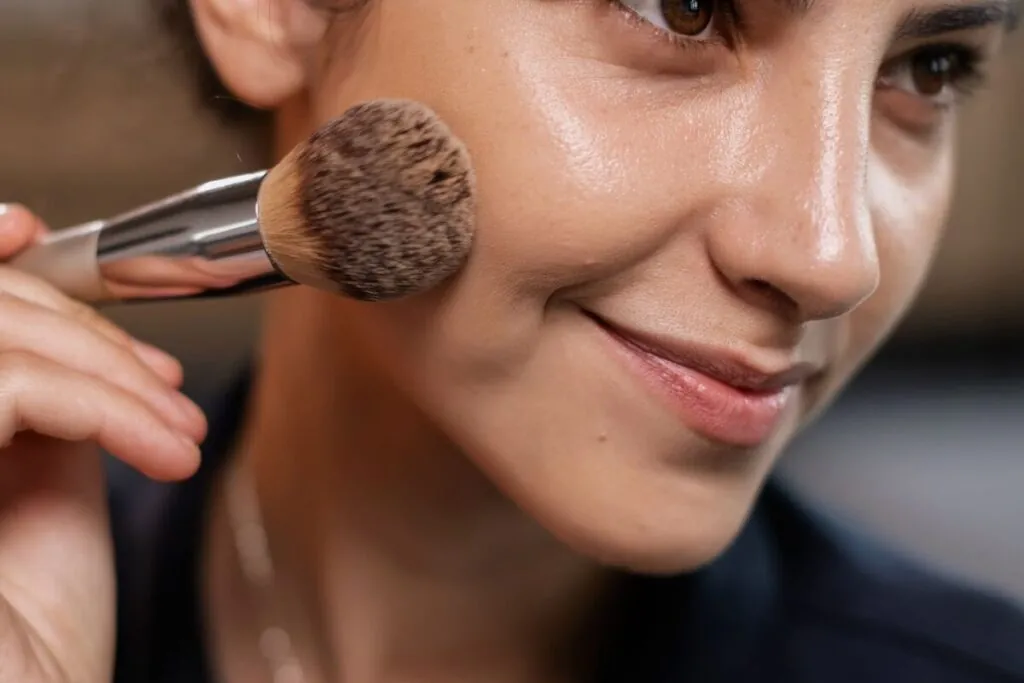
- Matte: little or no shine. It helps control the look of oil, though it can emphasise dryness and texture.
- Soft matte: a gentler version with a slight skin-like sheen. It is a useful middle ground for oily skin that also gets dehydrated.
- Satin or natural: a soft sheen, close to bare skin. It is the most forgiving finish across skin types.
- Dewy: visible glow. It flatters dry skin, but on oily skin it can turn from glow to shine within a few hours.
No finish is better than another. A dewy base on oily skin can still look lovely for an evening if you want that look, and you can always press a little powder through the centre of your face to keep it in check.
The best match for each skin type
Oily skin
Look for a liquid labelled oil-free or long-wear with a matte or soft-matte finish, or try a powder foundation over a light moisturiser. Thin layers last better than one thick layer, because a heavy base has more to break up when oil comes through.
If you are already deciding between two widely sold brands, this Lakmé vs Maybelline foundation comparison for oily skin goes through that choice.
Acne-prone skin
The American Academy of Dermatology says people with acne can wear makeup, and advises choosing products labelled oil-free, won’t clog pores or non-comedogenic. It also notes that some foundations and concealers can worsen acne, and that this kind of breakout, called acne cosmetica, can take anywhere from a few days to 6 months to appear, which makes the cause hard to spot.
Add one new product at a time so you can tell what caused a flare. If breakouts continue or are painful, see a dermatologist before adding more coverage.
Dry skin
Go for hydrating liquids, creams or serums with a satin or dewy finish, and apply them over well-moisturised skin. Full-matte formulas and powder foundation tend to catch on flakes, so keep any powder to a very light dusting. For prep and flake fixes in the cold months, see this guide to makeup for dry skin in winter.
Combination skin
A satin or natural liquid is the simplest answer. Apply it evenly, then press a small amount of powder only on the T-zone instead of mattifying the whole face. If your cheeks are quite dry, you can also apply a thinner layer there and a slightly fuller one where you want more coverage.
Mature skin
Thin, flexible formulas usually move better with the face than thick ones. Try a serum, a light hydrating liquid or a small amount of cream in a satin finish, and use only as much as you need rather than covering everything evenly. Coverage is a personal choice at any age, and lines are not something you have to hide. For more on application and colour, read this guide to makeup for mature skin.
Sensitive skin
Formula matters less than ingredients here. Fragrance-freeA product with no added perfume or essential oils for scent. Often the safer pick for sensitive or reactive skin. "Unscented" can still contain masking fragrance.See glossary options are worth considering, and it makes sense to introduce one product at a time. Patch testTrying a small amount of a new product behind the ear or on the inner arm for a few days to check for a reaction before using it widely.See glossary anything new on a small area such as the side of your neck or behind the ear for a day or two before using it on your whole face, and speak to a dermatologist if you have eczema, rosacea or repeated reactions.
How Indian weather changes the choice
The same skin can need a different formula in different months. You could keep two foundations for different seasons, or keep one and change what goes under and over it.
| Weather or setting | What usually works | What to change |
|---|---|---|
| Hot, dry summer | Thin oil-free liquid, serum or powder | Use less product and carry blotting paper |
| Monsoon or coastal humidity | Soft-matte or lightweight liquid in thin layers | Skip rich creams and set the areas where you sweat |
| North Indian winter | Hydrating liquid, cream or serum | Add more moisturiser first and go light on powder |
| Long hours in air conditioning | Satin liquid or serum | Moisturise well, since skin may feel tighter by evening |
| Evening function or wedding | Liquid or cream with more coverage if you like | Set the T-zone and test the formula beforehand |
Whatever the weather, foundation does not replace sunscreen. Cleveland Clinic explains that SPF (sun protection factor)A measure of protection against UVB rays, which cause sunburn. SPF 30 blocks about 97% of UVB and SPF 50 about 98%, if you apply enough and reapply.See glossaryRead the guide is tested with a thick layer and people usually apply far less makeup than that, so its rough estimate is that you get about half the protection you expect at best. Apply a generous layer of Broad spectrumA sunscreen label meaning it protects against both UVB rays (which cause burning) and UVA rays (which cause tanning and ageing).See glossaryRead the guide sunscreen of at least SPF 30 first, and give it a few minutes to dry before foundation goes on.
How to test a formula before you buy
- Go in with bare, moisturised skin if you can, since a store counter is the best chance to test the texture on your own face.
- Apply a small strip along your jaw and let it sit. Check the colour in daylight and use the GlowVibe Shade Finder to narrow down your undertone. The aim is to match your skin as it is, not to go lighter.
- Wear it for several hours, ideally through a normal day out. Look for shine, patchiness and whether it settles into lines.
- Check it at the end of the day in natural light. If it broke up only on the nose or T-zone, the formula may still work with powder there. If it looks tired all over, try a different format.
- Buy a mini or sample size where one is available, and patch test before full-face use.
Sometimes the formula is right and the application is the problem. If your base looks cakey, patchy or orange by lunchtime, check these common foundation mistakes and their fixes before you give up on a bottle.
Common mistakes
- Choosing by finish alone. A matte label does not tell you how the base will feel on your skin, so test the texture too.
- Assuming full coverage means a thick layer. Spot concealing often looks better than piling on foundation everywhere.
- Using one formula all year. A winter cream can feel heavy in humid months, and a summer matte can cling in the cold.
- Applying it on wet skincare. Give your moisturiser and sunscreen time to settle, or the foundation may pill.
- Choosing a lighter shade. It tends to look ashy. Match your face, neck and chest as they are.
- Sleeping in it. Take your base off fully at night, especially if you are prone to breakouts.
Frequently Asked Questions
Start with an oil-free liquid in a matte or soft-matte finish, or a powder foundation, and apply thin layers. Set only the areas that get shiny, and carry blotting paper for touch-ups. No foundation stays perfect through heavy sweat, so expect to refresh it.
Neither wins outright. Liquid gives more choice in finish and coverage and suits most skin types, while powder is quick and helps on oily skin. Dry skin usually prefers liquid because powder can catch on flakes.
For an everyday look, it often is, since most serum foundations are sheer to light. If you want to cover dark spots or marks, add a little concealer only where you need it. You can also check the label for a formula that claims more coverage.
They do a similar job with less coverage, so they work well on hot days and for quick routines. Choose them using the same logic of oil level and finish. As with foundation, wear a separate sunscreen even if the label lists SPF.
Yes, if you like the look. Matte formulas can show texture more, so a soft-matte version in a thin layer over well-moisturised skin is usually easier to wear. Keep powder to the areas where you actually get shine.
The usual causes are a formula that does not suit your oil level, too much product, or skincare that had not settled. Heat and sweat speed this up. Try a thinner layer first, then change the format if it still breaks up.
Quick poll
How much do you usually spend on one beauty product?
The bottom line
Choose foundation in this order: your skin’s oil level, then the weather you will wear it in, then the finish you enjoy. Start with an oil-free soft-matte formula for oily skin, a hydrating satin or dewy one for dry skin, satin with spot powder for combination skin, and a thin, flexible formula for mature skin. Then test it through a real day before you commit.