Is Lip Plumper Safe? How It Works and Who Should Skip It
Why lip plumpers tingle, how long the effect lasts, which side effects need attention, who should skip them, and how a plumping gloss differs from injected filler.

The quick answer
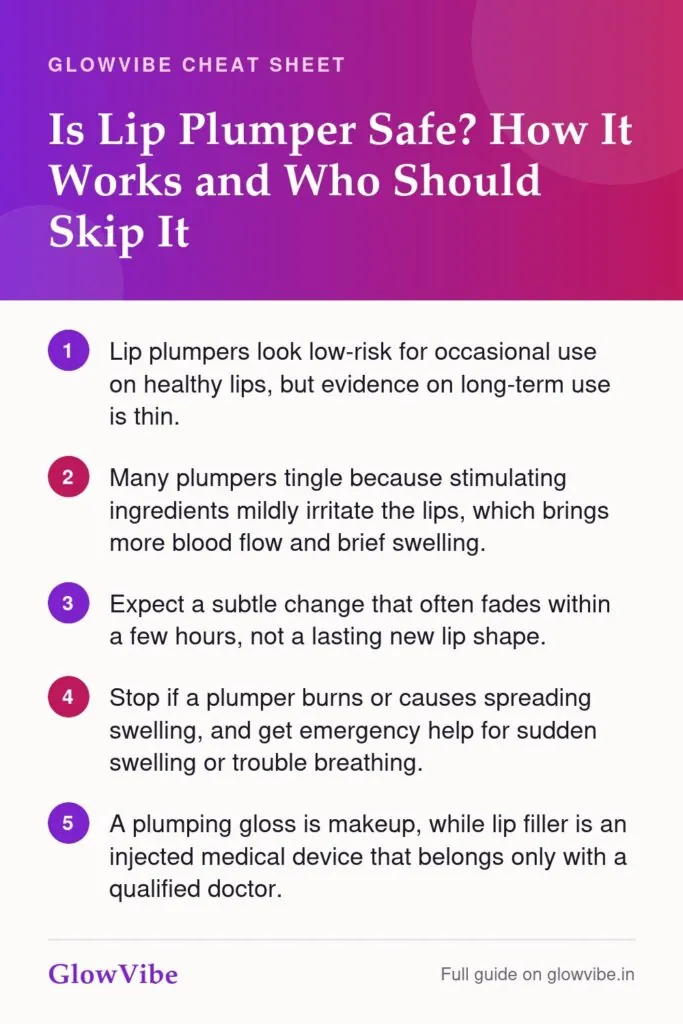
A cosmetic lip plumper looks low-risk for occasional use on healthy, unbroken lips, but it isn’t risk-free and evidence on long-term use is thin. Many formulas work by mildly irritating the lips, so a brief tingle is expected, while burning, spreading swelling or a rash means you should stop.
The change is usually subtle and short-lived, often gone within a few hours. Skip plumpers if your lips are cracked or you have an active cold sore, and ask a doctor first if you are pregnant, breastfeeding or have a history of severe allergies.
One thing worth saying early: fuller lips aren’t better lips. Thin, full, uneven, pink or dark, every lip shape and colour is simply normal. If you enjoy the look of a plumper, use it the way you would use any other makeup, and if the tingle isn’t for you, you are not missing anything.
Why lip plumpers tingle
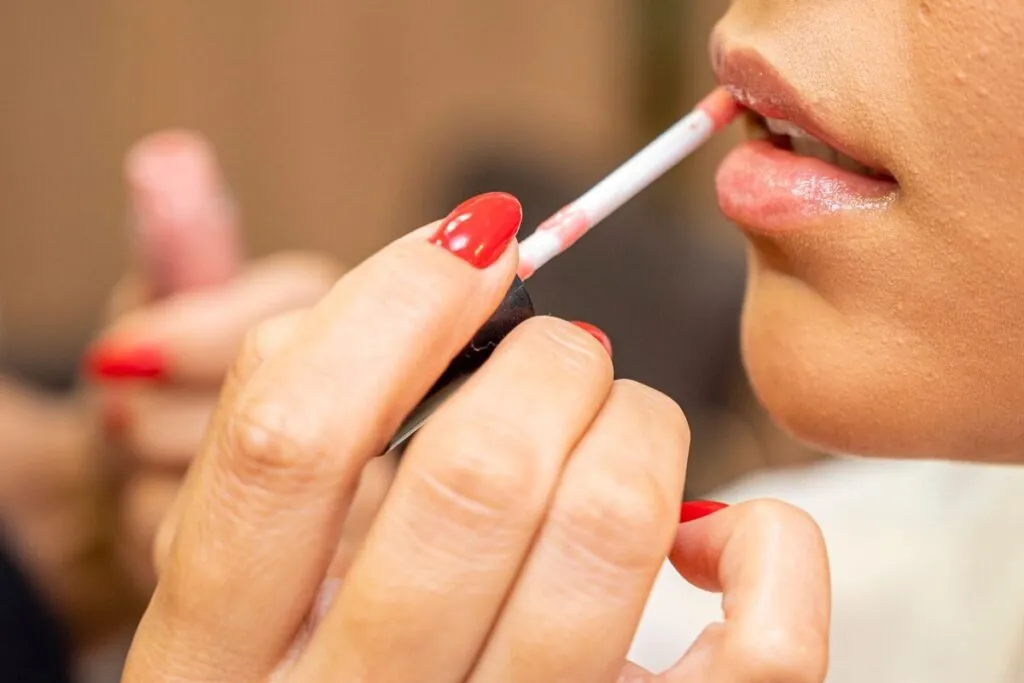
The tingle is the product working, and it is also a sign of irritation. Classic plumpers contain stimulating ingredients such as capsicum, cinnamon, mint, ginger or wintergreen. These increase blood flow to the lips, which causes mild swelling and some redness for a while.
Not every plumper relies on that heat. The labels fall into three broad groups, and one tube can mix them, so read the full ingredient list rather than the claim on the front.
| Type | Look for | How it acts | Main concern |
|---|---|---|---|
| Stimulating | Capsicum or capsaicin, cinnamon, menthol, mint, ginger, wintergreen | Mild irritation brings more blood flow and brief swelling | Burning, irritation, allergy |
| Hydrating | Hyaluronic acidA humectant that holds water in the skin for a plump, hydrated look. Despite the name, it is not an exfoliating acid. Apply on damp skin.See glossaryRead the guide | May make lips look fuller by holding on to moisture | Subtle effect; fragrance or flavouring can still bother some people |
| “Treatment” formulas | PeptidesShort chains of amino acids used in serums and creams to support firmer, smoother-looking skin. Generally gentle and easy to layer.See glossary, marine collagen, growth factors | Brands claim longer-term support for collagen | Claims are hard to verify; don’t expect a dramatic change |
Labels may use botanical or chemical names, so look up anything you don’t recognise. For help comparing product types and finishes beyond plumpers, see this guide to lip makeup and building a lip kit.
How much difference it makes and how long it lasts
Expect a small, temporary change rather than a new lip shape. Part of what you see may also come from shine, since a glossy finish reflects light differently from a matte one.
Good data is limited. One small trial, published in the Journal of Drugs in Dermatology in 2018, tested a single plumper containing capsaicin, cinnamon and menthol. Twenty-two people enrolled and 18 finished. Investigators saw improved fullness in all 18 at 15 minutes and in 12 of 18 at one hour, and participants’ own ratings were 17 of 18 and 16 of 18.
Participants also reported tingling and heat, and most said it lasted under 15 minutes. Remember the limits, though. This was one product, people knew what they were using, and the study covered only two clinic visits, so it can’t tell you what months of regular use might do.
Hydrating formulas may look more comfortable, but they aren’t a route to lasting size either. No lip gloss can do what an injected filler does, and a daily plumper won’t permanently change your lips.
Likely side effects, and what is not normal
The most likely problems are local: stinging, redness and, with frequent use, dryness and scaling. Lip products are also a well-known cause of contact reactions. DermNet, a dermatology reference, notes that spices such as cinnamon and cayenne can cause irritant cheilitis (inflamed lips) or hive-like reactions, and it lists flavourings such as cinnamaldehyde among possible allergens, with a reported lip reaction to peppermint oil in a balm.
| What you notice | What it may mean | What to do |
|---|---|---|
| Mild tingle that fades soon, slight fullness | The expected effect of a stimulating formula | Nothing, but don’t add another layer |
| Burning, or a tingle that keeps getting stronger | Irritation beyond what is expected | Wipe it off gently, rinse with water and stop using it |
| Dry, flaky, peeling or itchy lips over days or weeks | Irritant or allergic cheilitis | Stop the product and see a dermatologist if it doesn’t clear |
| Blisters or hives on or around the lips | Possible contact reaction | Stop, and get medical advice the same day |
| Sudden or spreading swelling of the lips, mouth, tongue or throat | Possible serious allergic reaction | Get emergency help now |
When swelling is an emergency
The NHS advises emergency help if your lips, mouth, throat or tongue suddenly swell, your throat feels tight, you struggle to swallow, or you are struggling to breathe. Being dizzy or faint, or having a hoarse voice, adds to the urgency. Call your local emergency number or have someone take you to the nearest hospital emergency department, and don’t drive yourself.
Reactions that hang around
An ongoing allergy can cause redness, scaling, dryness and itch that last for weeks or months if you keep using the product. Avoiding the trigger usually clears it. A dermatologist can arrange Patch testTrying a small amount of a new product behind the ear or on the inner arm for a few days to check for a reaction before using it widely.See glossary, so take along every lip product you use, because some people react only to their own products.
Rarely, a reaction to a lip product leaves brown-black discolouration called pigmented contact cheilitis. DermNet links this mainly to lipstick ingredients rather than plumpers, and says it may fade over about 12 months but may not clear fully. Your natural lip colour isn’t a problem to fix, whatever it is, but new darkening or burning after any product is worth showing to a dermatologist.
Who should skip it or ask first
Skip plumpers for now if you have:
- Cracked, chapped, peeling or sunburnt lips. Heal them first with this winter routine for chapped lips, which also helps in dry, polluted months.
- An active cold sore, mouth ulcer on the lip, or any lip infection.
- A past reaction to lip products, or a known allergy to cinnamon, mint, chilli, fragrance or flavourings.
- Eczema or irritation around the mouth. These tips for choosing products for sensitive skin are a better starting point.
Ask a doctor first if you:
- Are pregnant or breastfeeding, or are buying for a child or young teen.
- Have had anaphylaxis, severe allergies or angioedema (sudden deep swelling), or have a medical condition you manage regularly.
- Take a blood pressure medicine called an ACE inhibitor. The NHS names these as the most common medicine cause of non-allergic angioedema, so a product that deliberately swells your lips could make new swelling harder to judge.
- Had recent lip filler, lip surgery or dental work on the area. Ask whoever treated you when it is fine to use one.
How to try one more safely
- Read the label. Note any stimulating ingredient or flavouring, and check that it isn’t something you react to. Formulas change, so check again when you buy a new tube.
- Patch test first. The American Academy of Dermatology suggests applying a new product to a small coin-sized spot, such as the underside of your arm or the bend of your elbow, twice a day for 7 to 10 days. Stop if you see redness, itching or swelling.
- Start small on your lips. Lips can still react after a clear arm test. Use a thin layer on the centre of your lower lip when you have nothing important to attend, and wait to see how it feels.
- Keep it on your lips. In heat and humidity a slippery gloss can drift beyond the lip line, so apply less and blot the edges. Wash your hands afterwards and keep them away from your eyes.
- Keep it occasional. Use it for an evening out or a function rather than as daily wear, because too much or too often can leave lips dry and scaly.
- Remove it and soothe. At the end of the day, wipe it off gently and follow with a simple lip balm for dry or sensitive lips. By day, a balm with sunscreen is a sensible everyday habit.
If a product does sting, the academy’s first-aid advice applies: wash it off gently as soon as you can, stop using it, and use a cool compress or petroleum jelly if needed. See a dermatologist if a severe reaction doesn’t improve.
Plumping gloss vs injected lip filler
These are very different things, even though both get sold as “plumping”. A gloss sits on the surface and wipes off. A filler is a medical device implant placed under the skin by injection, so it comes with medical risks and needs medical training.
| Cosmetic plumper | Injected lip filler | |
|---|---|---|
| What it is | Makeup applied to the surface | Medical device injected into the lips, often hyaluronic acid |
| How long it lasts | Often around an hour or a few hours | Roughly 6 to 14 months by one hospital’s estimate; depends on the material and area |
| Common effects | Tingling, heat, redness, dryness | Bruising, redness, swelling, pain, tenderness, itching, rash |
| Serious risks | Severe allergic reaction, though this is not expected for most users | Injection into a blood vessel, which can cause tissue death, vision problems including blindness, and stroke |
| Who applies it | You, after a patch test | A qualified doctor only, such as a dermatologist or plastic surgeon |
If you are thinking about filler, take your time and speak to a qualified doctor about whether it suits you at all. Ask what product will be used, ask to see the sealed packaging, and don’t book at a salon or a home visit. The US Food and Drug Administration warns against buying fillers sold directly to the public, injecting yourself, or using needle-free devices, and those warnings make sense anywhere.
After filler, get immediate medical help for unusual pain, vision changes, skin near the area turning white, grey or blue, or signs of stroke such as a drooping face, weakness or trouble speaking. The FDA also says safety in pregnancy and breastfeeding is unknown, and that active skin inflammation or infection should be dealt with before treatment.
Common mistakes
- Making a DIY plumper. Don’t rub cinnamon, chilli, pepper or essential oils on your lips. Kitchen spices can cause real irritation, and there is no way to control the strength at home.
- Chasing more tingle. A stronger burn is more irritation, not a better result.
- Layering through the day. Reapplying over irritated lips raises the chance of dryness and peeling.
- Scrubbing just before use. Freshly scrubbed lips are more likely to sting, so keep a gentle lip scrub for another day, if you use one at all.
- Licking your lips. It adds to dryness and can keep irritation going, and you may also spread the product around your mouth.
- Ignoring slow changes. Flaking that lasts for weeks often gets blamed on the weather when a lip product may be the cause.
Frequently Asked Questions
A mild tingle or slight warmth that fades soon is common with stimulating formulas. Real burning is not something to push through. Wipe the product off, rinse with water and stop using it.
There is little good evidence on daily long-term use, so occasional use is the safer choice for stimulating formulas. Too much or too often can leave lips dry and scaly. A hydrating formula may suit regular wear better, as long as your lips stay comfortable.
There is no good evidence that a cosmetic plumper stretches lips permanently, and the swelling is temporary. Long-term data is limited, however. Ongoing irritation can cause persistent dryness and scaling, and a rare reaction can leave discolouration, so stop if your lips change.
There isn’t enough specific information to give a blanket yes. Show your doctor the ingredient list before using one, and do the same while breastfeeding. A plain balm or a regular gloss is a simple alternative in the meantime.
A formula without stimulating ingredients is less likely to sting, but any product can trigger a reaction in someone. A gloss sold on its hyaluronic acid can still contain mint or other flavourings, so read the whole list. Patch test it just as you would any other new lip product.
If you like a soft, glossy look, a balm and a non-plumping gloss give shine without any tingle. Keeping lips moisturised also makes colour sit more smoothly. And there is no need to change your lips at all if you are happy with them.
The bottom line
A lip plumper can be a reasonable bit of occasional makeup if your lips are healthy, you patch test first and you stop at any burning or spreading swelling. Expect a subtle effect that fades within hours. Filler is a medical procedure and belongs only with a qualified doctor. This guide is general information rather than medical advice, so see a doctor or dermatologist about anything that worries you, and get emergency help for sudden swelling or trouble breathing.
Quick poll
What does your everyday makeup look like?
Sources
- A Single Site, Open Label Clinical Trial, Evaluating the Duration, Efficacy, and Safety of a Novel Lip Plumper, Journal of Drugs in Dermatology
- Contact reactions to lipsticks and other lipcare products, DermNet
- Angioedema, NHS
- Dermal Fillers (Soft Tissue Fillers), US Food and Drug Administration
- How to test skin care products, American Academy of Dermatology