Best Lip Balm for Dry, Chapped Lips in India (2026)
The best lip balms in India for dry, chapped and sensitive lips, plus SPF picks, ingredients to avoid, realistic dark lip advice and a night routine that works.

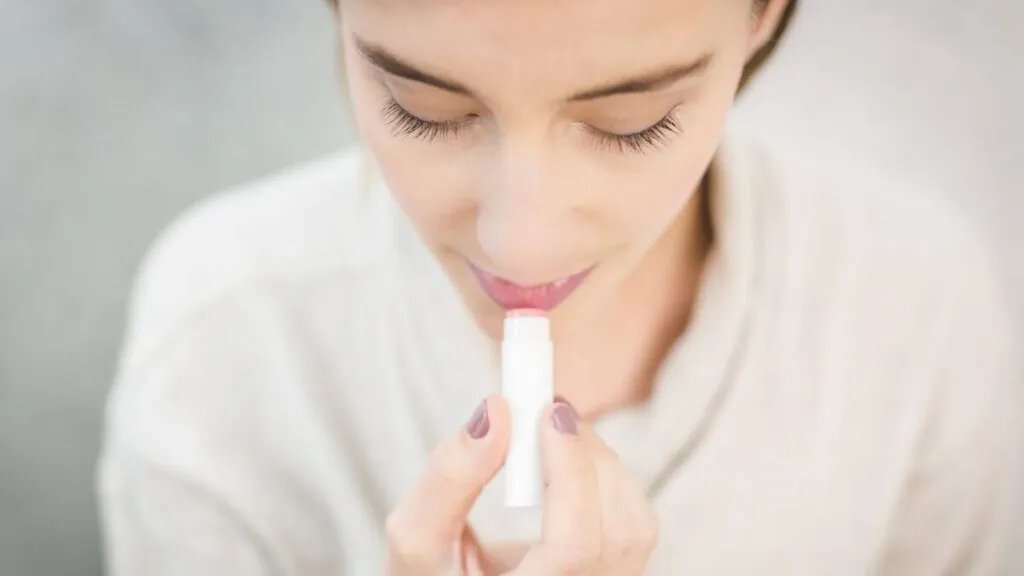
The best lip balm for dry, chapped lips is a plain, OcclusiveAn ingredient that forms a protective layer to stop water escaping from the skin, such as petrolatum, shea butter or dimethicone.See glossaryRead the guide one built on petrolatum, shea butter, CeramidesFats that naturally hold skin cells together like mortar between bricks. Moisturisers with ceramides help support a dry or damaged skin barrier.See glossaryRead the guide or beeswax, without menthol, camphor or heavy fragrance. For most people in India, Vaseline Lip Therapy or Nivea Lip Balm Original Care by day, a sunscreen lip balm when you step out, and a thick layer of Laneige Lip Sleeping Mask or plain petroleum jelly at night usually settles chapped lips within a week or two.
If your lips sting or peel easily, labels matter even more. Below: why lips dry out, ingredients to seek and avoid, the best lip balms in India, dark lips, and when to see a dermatologist.
Quick Picks: Best Lip Balms in India
- Best basic lip balm for dry lips: Vaseline Lip Therapy
- Best everyday budget stick: Nivea Lip Balm Original Care
- Best for very dry, sensitive lips: Bioderma Atoderm Lip Stick
- Best lip balm with SPF (sun protection factor)A measure of protection against UVB rays, which cause sunburn. SPF 30 blocks about 97% of UVB and SPF 50 about 98%, if you apply enough and reapply.See glossaryRead the guide: Sebamed Lip Defense SPF 30
- Best overnight treatment: Laneige Lip Sleeping Mask
- Best Indian herbal option: Himalaya Lip Balm
- Best tinted, fun daily balm: Maybelline Baby Lips
- Best for badly cracked (non-sensitive) lips: Carmex Classic Lip Balm
Comparison Table
| Product | Best for | Texture | Sensitive-lip friendly? | Price range |
|---|---|---|---|---|
| Vaseline Lip Therapy | Dry, chapped lips, all-day use | Thick, glossy jelly | Yes, very simple formula | Budget |
| Nivea Lip Balm Original Care | Daily moisture, office bag | Smooth stick | Mostly; contains fragrance | Budget |
| Bioderma Atoderm Lip Stick | Very dry, reactive lips | Rich, waxy stick | Yes, made for sensitive lips | Mid-range |
| Sebamed Lip Defense SPF 30 | Sun protection, outdoor days | Firm stick | Generally yes | Mid-range |
| Laneige Lip Sleeping Mask | Overnight repair, flaky lips | Thick balm-paste | Patch testTrying a small amount of a new product behind the ear or on the inner arm for a few days to check for a reaction before using it widely.See glossary; has fragrance | Premium |
| Himalaya Lip Balm | Herbal lovers, mild dryness | Soft balm | Patch test plant extracts | Budget |
| Maybelline Baby Lips | Light tint plus moisture | Sheer stick | Not ideal; fragranced | Budget |
| Carmex Classic Lip Balm | Severely chapped, non-sensitive lips | Waxy, tingly | No; has camphor and menthol | Budget |
Why Your Lips Get Dry and Chapped
Lip skin is much thinner than facial skin and has no oil glands, so it loses water fast and relies on what you put on it.
Common reasons lips dry out in India:
- Licking your lips: saliva evaporates quickly and its digestive enzymes irritate the skin, so the more you lick, the drier lips get.
- Winter and dry air: North Indian winters, AC offices and air coolers all pull water out of lip skin. If your face also feels tight, follow our winter skincare routine for dry skin.
- Sun and heat: UV damage dries and darkens lips, especially during long commutes or beach trips.
- Matte and long-wear lipsticks: transfer-proof formulas are designed to dry down, which can leave lips flaky by evening.
- Some toothpastes: flavouring agents (like cinnamon or strong mint) and foaming agents can irritate the lip border in some people.
- Mouth breathing and some medicines: acne medicines such as isotretinoin are known to dry lips heavily.
Ingredients That Help vs Ingredients That Irritate
Look for these in a lip balm for dry lips
- Petrolatum (petroleum jelly): one of the most effective occlusives; it seals in moisture and rarely causes allergy.
- Shea butter and cocoa butter: soften and cushion rough lips.
- Ceramides: support the Skin barrierThe outermost layer of skin that keeps water in and irritants out. A damaged barrier feels tight, stings and reacts more easily.See glossaryRead the guide, useful if your lips crack repeatedly.
- Lanolin: very effective for cracked lips, but skip it if you have a known wool or lanolin allergy.
- GlycerinOne of the most common and effective humectants. It draws water into the skin and is found in most moisturisers and cleansers.See glossary and Hyaluronic acidA humectant that holds water in the skin for a plump, hydrated look. Despite the name, it is not an exfoliating acid. Apply on damp skin.See glossaryRead the guide: draw water in, but need an occlusive on top.
- Sunscreen filters (SPF): Zinc oxideA mineral UV filter that protects against both UVA and UVB. It is gentle, but it can leave a white cast.See glossaryRead the guide, titanium dioxide or chemical filters protect against sun damage and darkening.
Avoid these if your lips are sensitive
- Menthol, camphor and peppermint: the cooling tingle feels like it is working, but it can irritate and dry already damaged lips.
- Strong fragrance and flavours: a common cause of lip allergy; this includes cinnamon (cinnamal), vanilla and fruity flavours.
- Essential oils: clove, citrus and tea tree oils can all cause reactions on thin lip skin.
If you react easily on your face too, our guide to the best moisturizer for sensitive skin covers the same fragrance-free logic for the rest of your skin.
Best Lip Balms in India: Detailed Reviews
1. Vaseline Lip Therapy
Who it suits: Anyone with dry or chapped lips who wants something simple that works, including sensitive lips.
Key ingredients and features: Petroleum jelly as the base, in a pocket tin. The Original variant is the plainest; tinted and flavoured versions such as Rosy Lips add colour and scent.
How to use: Dab a thin layer by day and a thick layer before bed.
Pros:
- Seals in moisture very well
- Low allergy risk (Original)
- Sold everywhere
Cons:
- Tin is less hygienic
- Greasy shine, no SPF
2. Nivea Lip Balm Original Care
Who it suits: Students and office-goers who want a neat stick for regular reapplication.
Key ingredients and features: A classic wax-and-oil stick with shea butter and natural oils that glides on without much shine.
How to use: Swipe on after brushing, after meals and before stepping out.
Pros:
- Comfortable, non-sticky texture
- Budget and widely available
- Works well under lipstick
Cons:
- Contains fragrance
- Not enough on its own for badly cracked lips
3. Bioderma Atoderm Lip Stick
Who it suits: People with very dry, easily irritated lips, or those whose lips flare up with flavoured balms.
Key ingredients and features: A rich stick from Bioderma’s Atoderm range, which is designed for very dry and sensitive skin.
How to use: Apply several times a day and before sleep.
Pros:
- Made for sensitive lips
- Rich, long-lasting texture
Cons:
- Mid-range price
- No SPF
4. Sebamed Lip Defense SPF 30
Who it suits: Anyone outdoors a lot or worried about sun-related lip darkening.
Key ingredients and features: A lip stick with SPF 30 from the German skincare brand Sebamed, combining moisture and sun protection.
How to use: Apply before going out; reapply every two hours and after eating.
Pros:
- Moisture and SPF in one step
- Helps prevent sun-related darkening
Cons:
- Needs frequent reapplication like any sunscreen
- Firmer texture than a plain balm
5. Laneige Lip Sleeping Mask
Who it suits: Lips that are flaky every morning, or as a weekly night treatment.
Key ingredients and features: A thick, balm-like overnight mask with fruit extracts and emollients.
How to use: Apply a generous layer as the last step at night. In the morning, wipe off softened flakes with a damp cloth.
Pros:
- Lips feel smooth by morning
- A little goes a long way
Cons:
- Premium price
- Fragranced; patch test if sensitive
6. Himalaya Lip Balm
Who it suits: People who prefer an Indian herbal brand for mild dryness.
Key ingredients and features: A soft balm with plant oils and herbal extracts from Himalaya’s personal care range.
How to use: Use through the day as a regular balm.
Pros:
- Budget and easy to find
- Light, non-greasy feel
Cons:
- Plant extracts can still irritate some people
- Not strong enough for deeply cracked lips
7. Maybelline Baby Lips
Who it suits: Anyone who wants a hint of colour with moisture for casual days.
Key ingredients and features: A sheer, tinted moisturising stick that comes in several shades and flavours.
How to use: Swipe on like a lip balm. For more colour, layer two coats. If you want stronger colour that still feels light, see our best lip tint in India guide.
Pros:
- Pretty sheer colour
- Light and budget
Cons:
- Fragranced and flavoured, not ideal for sensitive lips
- Needs frequent reapplication
8. Carmex Classic Lip Balm
Who it suits: Very chapped lips in people who are not sensitive and like a tingling feel.
Key ingredients and features: A waxy balm with petrolatum and lanolin plus camphor, menthol and phenol, which give the familiar tingle.
How to use: Apply as needed, but stop if it stings or your lips get redder.
Pros:
- Thick, protective layer
- Cult favourite for cracked lips
Cons:
- Camphor and menthol can irritate sensitive lips
- Not for lanolin allergy
Note: Burt’s Bees Beeswax Lip Balm is popular, but its peppermint oil may not suit sensitive lips.
Lip Balm With SPF: Why It Matters for Indian Skin
Lip skin is thin, has a weaker protective outer layer than the rest of your face, and almost never gets sunscreen. Over years of Indian sun, that adds up to dryness, fine lines and uneven, darker lips.
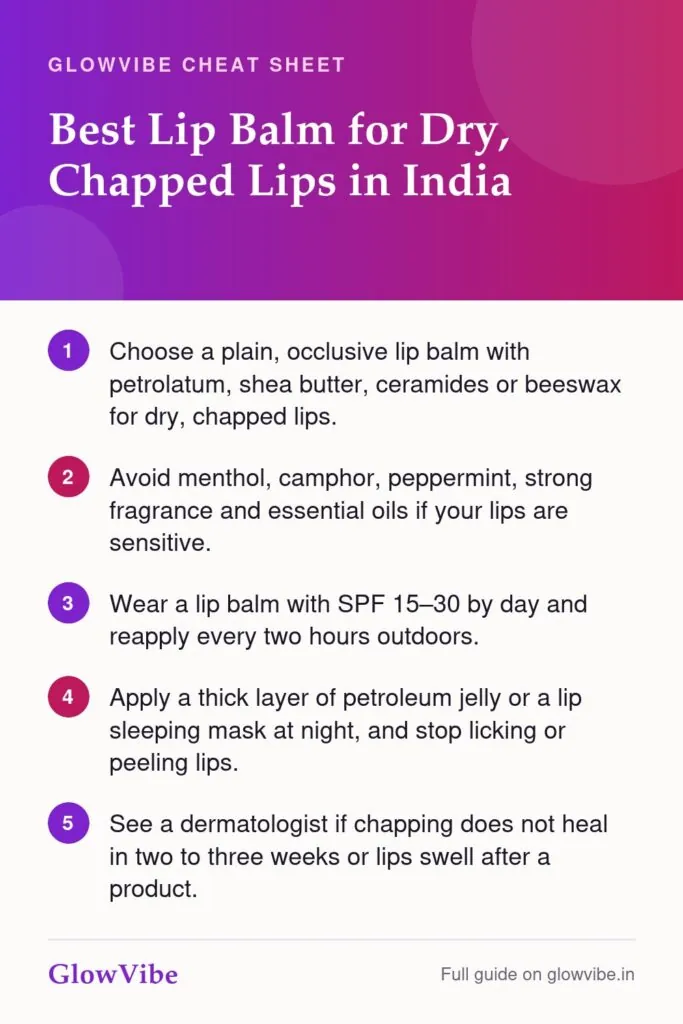
Use a lip balm with SPF 15 to 30 or higher by day, especially on a bike or outdoors. Reapply every two hours and after meals. At night, switch to a plain balm.
Dark Lips: What Causes Them and What Really Helps
Dark or uneven lips are very common in Indian skin, and some of it is simply genetic. You cannot bleach that away safely, and you should not try. What you can change are the factors that make pigmentation worse:
- Sun exposure: the biggest controllable cause. Daily SPF on lips is the single most useful step.
- Smoking: heat and nicotine darken lips over time; quitting is the only real fix.
- Friction and habits: biting, picking, licking and harsh scrubbing all cause darkening as the skin heals.
- Allergy to lip products: repeated irritation from a lipstick, balm or toothpaste can leave pigmentation behind.
Be realistic: sun protection and moisture can make lips look more even over a few months, but will not change your natural lip tone. Skip lemon, baking soda and “whitening” remedies, which irritate lips. If you want to even out the look today, a well-chosen shade from our best lipstick in India guide does it instantly.
How to Choose the Best Lip Balm for You
- Sensitive or allergy-prone lips: pick fragrance-free, flavour-free formulas based on petrolatum or ceramides. Avoid tingling balms.
- Severely chapped lips: go for thick ointment textures over light sticks, and apply often.
- Outdoors a lot: keep a lip balm with SPF in your bag and a plain balm at home.
- Humid cities (Mumbai, Chennai, Kolkata): lighter sticks feel more comfortable by day; save heavy layers for the night.
- Dry North Indian winters and AC offices: use richer balms and reapply more often.
- Lipstick wearers: choose a non-greasy balm that sits well under colour.
Night Routine for Chapped Lips
- Remove lip colour gently: use micellar water or a bit of oil on cotton, never scrub off long-wear lipstick.
- Lightly dampen lips: a few drops of water or a damp cloth after cleansing.
- Ease off loose flakes once or twice a week: only when lips are not cracked or bleeding. Our lip scrub guide explains how to do this safely.
- Apply a thick layer: petroleum jelly, Laneige Lip Sleeping Mask or Bioderma Atoderm Lip Stick, slightly beyond the lip line.
- Morning: wipe off with a damp cloth, then use a lip balm with SPF before you leave.
Common Lip Care Mistakes
- Licking lips to “wet” them, which dries them further.
- Peeling or biting dry skin instead of letting it soften and fall off.
- Reaching for menthol or camphor balms when lips are already sore.
- Scrubbing daily or scrubbing cracked lips.
- Skipping sunscreen on lips and then trying to fix dark lips with home bleaching remedies.
When to See a Dermatologist
Most dry lips get better within one to two weeks of gentle care. See a dermatologist if:
- Chapping or cheilitis does not heal after two to three weeks, even with a plain balm.
- The corners of your mouth stay cracked, sore or crusted (angular cheilitis can be linked to infection or nutritional causes).
- Your lips swell, itch, burn or develop a rash after a product, which suggests an allergic reaction. A dermatologist can do patch testing.
- You notice a sore or scaly patch that does not heal, or a sudden change in lip colour.
Patch test any new lip product on your inner arm for a day or two first.
Frequently Asked Questions
For most people, a petrolatum-based balm such as Vaseline Lip Therapy works best. For sensitive lips, try Bioderma Atoderm Lip Stick, and add a lip balm with SPF for daytime.
No lip balm can change your natural lip colour. A balm with SPF can prevent sun-related darkening, and moisturised lips look more even over time.
Yes. Petroleum jelly is one of the most effective ingredients for chapped lips because it seals in moisture and rarely causes allergy. Apply a thick layer at night and a thin layer through the day.
Usually the balm contains menthol, camphor, fragrance or flavours that irritate lips, or it lacks an occlusive. Switch to a plain, fragrance-free balm for a week and see if it improves.
Apply whenever lips feel dry, usually four to six times a day, plus after meals and before bed. If you are using a lip balm with SPF, reapply every two hours outdoors.
Only gently, once or twice a week, and never when lips are cracked or bleeding. Scrubbing raw lips worsens irritation and darkening.
See a dermatologist if lips do not heal in two to three weeks, the corners of your mouth stay cracked, your lips swell or itch after a product, or you notice a non-healing sore or patch.
Quick poll
How much do you usually spend on one beauty product?
The Bottom Line
Healthy lips need three things: a plain, occlusive balm through the day, SPF when you are out in the sun, and a thick layer at night. Skip the tingling, heavily fragranced balms if your lips are sensitive, stop licking and picking, and give a new routine two weeks.
If dryness, cracked corners or reactions keep returning, see a dermatologist rather than buying balm after balm.