Is Natural Skincare Better Than Chemical? What Matters
Natural skincare is not automatically better or gentler than lab-made skincare. Here is what preservatives, essential oils and vitamin C show about the belief.

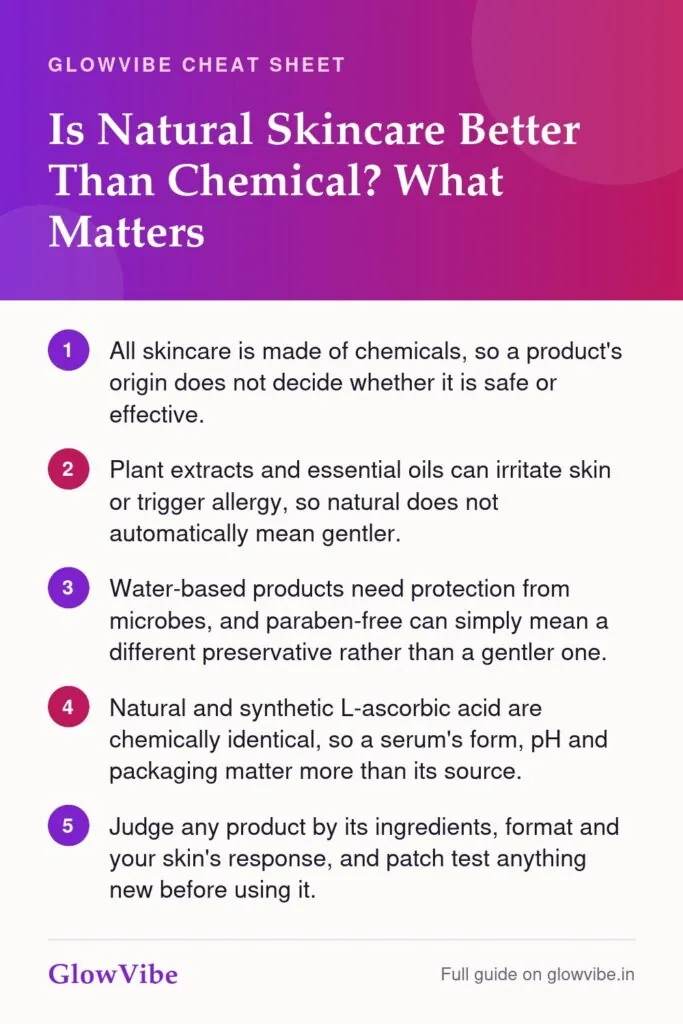
Natural skincare is not automatically better than chemical skincare, and it is not automatically worse. Whether a product is gentle or effective depends on which ingredients it contains, how much of each, and how your skin responds, not on whether they came from a plant or a lab.
This guide works through the belief using three examples where it gets tested: preservatives, essential oils and Vitamin CAn antioxidant that brightens dull skin, helps fade the look of dark spots and supports sunscreen against daily damage. Best used in the morning.See glossaryRead the guide.
The quick answer
- Everything in skincare is a chemical. Water, aloe gel and Coconut oilA common Indian hair oil that can soak into the hair shaft, which may reduce protein loss during washing. It can feel heavy on fine hair.See glossary are all made of chemicals, so “natural vs chemical” is a false contest.
- Plant-based does not mean gentler. Plant extracts and essential oils are well-known causes of skin reactions.
- Lab-made does not mean harsher. Some synthetic ingredients are very mild, and some can irritate. The same is true of plant ones.
- Dose and format matter. The same ingredient can be fine in a face wash you rinse off and a problem in a cream you leave on.
- Natural products can still be a good choice. Choose one because its formula suits your skin, not because of the word on the front.
Why “natural vs chemical” is the wrong question
People who say “chemical” usually mean something more specific: synthetic, harsh or unfamiliar. That worry is reasonable, but the word does not separate safe from unsafe. Water is a chemical, and so is the fragrant oil in a rose petal.
Origin is also blurrier than labels suggest. GlycerinOne of the most common and effective humectants. It draws water into the skin and is found in most moisturisers and cleansers.See glossary usually comes from plant or animal fats but can also be made from propylene, a petroleum product, and it is the same molecule either way.
The US Food and Drug Administration puts the safety point plainly: an ingredient’s source does not determine its safety, and many plants contain substances that may be toxic or allergenic. A viewpoint in JAMA Dermatology titled “Natural Does Not Mean Safe” makes a similar case, calling natural a marketing term that does not necessarily mean safer or more effective. Its authors note the FDA has not defined the term. On any pack, treat it as a claim to look into rather than a standard the product has met.
Are plant-based products gentler?
Sometimes, but not because they are plant-based. A plant extract is rarely one substance. It is a mix of many compounds, and any one of them can bother your skin. The JAMA Dermatology authors describe botanical extracts as a leading cause of irritant and allergic contact dermatitis, and they cite an Italian survey of dermatology outpatients in which 15 of 241 herbal product users (6.22%) reported at least one skin reaction. Those were clinic patients describing their own reactions, so treat it as a rough signal, not a rate for everyone.
Sun exposure can add another layer. Lime juice contains natural chemicals that react with sunlight, and DermNet, a dermatology resource, describes the result as phytophotodermatitis: redness and blistering, followed by dark marks that may last for years and may be more pronounced on skin of colour. That is one more reason to keep lime and lemon juice off your face, however traditional the recipe sounds.
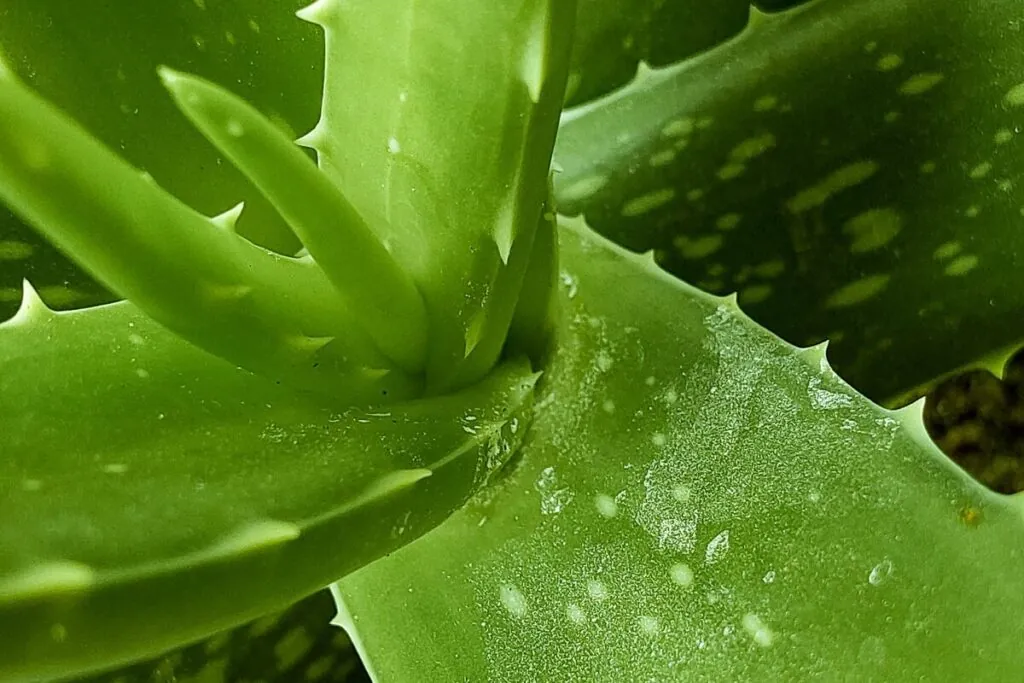
None of this makes plants the enemy. Some have a sensible place in a routine, and this guide to using aloe vera on skin and hair covers one familiar example. Just give a plant ingredient the same scrutiny you would give anything with a long chemical name.
Example 1: preservatives and the paraben question
Preservatives are where the natural-versus-chemical belief causes the most confusion. Water is the main ingredient in most cosmetics, and water supports microbial growth. A 2018 review of cosmetic preservation in the journal Molecules explains that these products need protection against contamination to keep people safe. Think of a cream on a warm bathroom shelf through the monsoon, with fingers going into the jar every morning.
What is known about parabens
Parabens are a family of preservatives used to stop bacteria and mould. The FDA says it does not have information showing that parabens, as used in cosmetics, affect human health, and that its scientists continue to look at published studies. That is not a permanent all-clear, but it is far from the fear found in many social media posts.
On allergy, the JAMA Dermatology piece, a 2019 opinion article rather than a study, calls parabens among the least allergenic preservatives, with sensitisation rates of around 0.5% to 1.4%. It gave a rate above 4% for isothiazolinones in Europe at that time, and warned that avoiding parabens can lead to more allergenic preservatives being used. Treat those numbers as context, not current measurements. The point that holds is that “paraben-free” can mean a different preservative rather than a gentler one.
Can natural preservatives do the job?
Some can contribute. The Molecules review calls plant extracts and essential oils interesting future alternatives, but it also lists their limits: they can lose activity when diluted, their activity depends on pH, and essential oils bring a strong scent. It also says synthetic preservatives are not free of concerns, since higher concentrations work better but are more toxic.
“Preservative-free” is not always a red flag either. Waterless balms and oils give microbes less to work with, and careful formulas and packaging can reduce the need for added preservatives. What deserves caution is a water-based product with no clear preservation plan, and that includes home-made mixes. If you make a face pack with curd, rose water or fruit, use it once and throw away the rest.
Example 2: essential oils
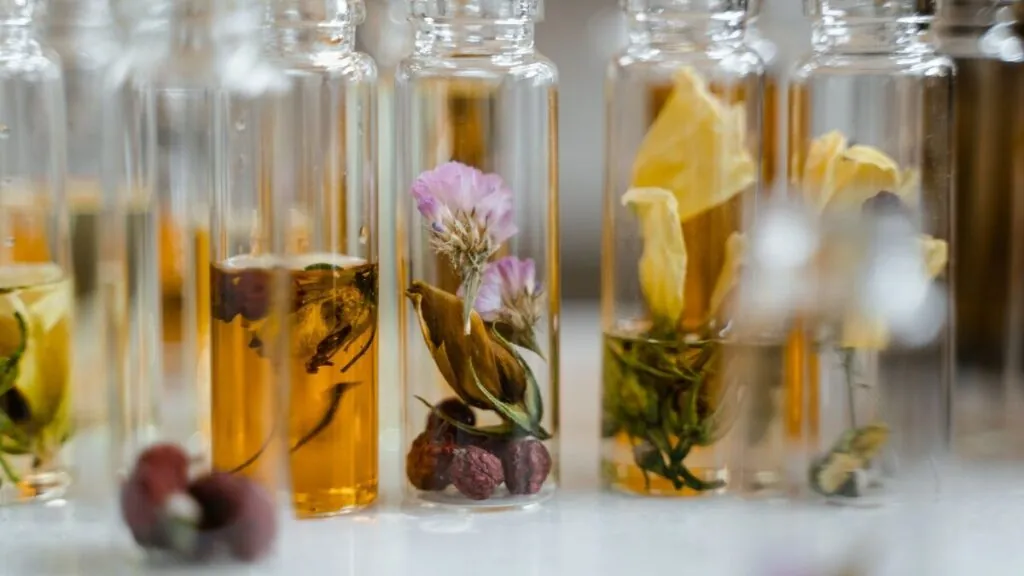
Essential oils are probably the clearest case against “natural means gentle”. A 2020 paper in the International Journal of Women’s Dermatology, titled “Art of Prevention: Essential Oils – Natural Products Not Necessarily Safe”, says about 80 essential oils have been shown to cause contact allergy. Some oils contain hundreds of components.
Two details are worth knowing. First, lavender’s calm image can hide a problem, because the authors say people often fail to mention it to their doctors since it is marketed as natural and safe. Second, oils change with age. Air exposure can turn tea tree oil into stronger sensitisers, so an old bottle may behave differently from a new one.
The US National Center for Complementary and Integrative Health says tea tree oil might help acne but that more evidence is needed. It also says most people use topical products without problems, while some develop redness or irritation.
Fragrance on an ingredient list deserves a look as well, synthetic or not. The FDA names fragrances and preservatives among the common classes of cosmetic allergens, lists lavender, peppermint and clove among fragrance-related ones, and warns that labels may simply say “fragrance” or “perfume” without naming what is inside. If your skin is reactive, the guide to choosing sensitive skin products goes through what to look for on the shelf.
Example 3: vitamin C from fruit vs vitamin C from a lab
Vitamin C answers the “are natural ingredients more effective?” part of the belief. The Linus Pauling Institute at Oregon State University states that natural and synthetic Ascorbic acid (L-ascorbic acid)The pure, most researched form of vitamin C. It works best in low-pH serums but oxidises (turns orange) with air and light, so store it closed and away from sunlight.See glossaryRead the guide are chemically identical.
What does change results is the formula. According to the Institute, ascorbic acid is the most effective form for topical use but also the least stable, breaking down with air, heat and light. Animal studies suggest a pH below 4 helps absorption. In human studies, 3% to 10% vitamin C used for at least 12 weeks has been linked to fewer wrinkles, though the effects are not apparent in everyone.
This is why a pack that highlights AmlaIndian gooseberry, used in Ayurvedic hair oils, powders and packs. It is valued for conditioning hair and adding shine.See glossaryRead the guide or citrus extract tells you little by itself. An extract’s vitamin C content and stability can be hard to judge from the label, and rubbing fruit on your face is not the same as using a stabilised serum. If you are choosing between actives, see how niacinamide and vitamin C compare.
What about sulphates?
Sodium lauryl sulphate (SLS) is often held up as the villain in “chemical” skincare, and the concern is partly fair. A European Medicines Agency report calls it a known skin irritant, with effects more pronounced in people with eczema. The same report says sensitivity varies with concentration and contact time, and that it rarely causes problems in products designed to be washed off quickly, such as shampoos and soaps. It also notes that SLS is derived from coconut and palm oils, which shows how little “plant-based” tells you.
So an SLS cleanser is not a safety emergency, but it can be a poor match if your skin is dry, eczema-prone or already stinging. That decision comes from your skin and the product type, not a blanket rule about chemicals. If your face feels tight and stings with everything, read about signs of a damaged skin barrier first.
How to judge any product, natural or not
- Start with your actual need. Most routines come down to cleansing, moisturising and sunscreen. This rundown of the face skincare essentials shows what you can skip.
- Read the back, not the front. Words like “herbal”, “pure” and “clean” tell you less than the ingredient list. Note any past triggers, fragrance and essential oils, and look up anything unfamiliar in this skincare and haircare ingredients glossary.
- Consider rinse-off vs leave-on. A cleanser touches your skin briefly, while a serum or cream stays on for hours. Be choosier about what stays on.
- Check how it is stored and packed. Keep products away from sun and heat, close them properly, and prefer pumps or tubes for water-based creams if you can. Discard anything that smells or looks different.
- Patch testTrying a small amount of a new product behind the ear or on the inner arm for a few days to check for a reaction before using it widely.See glossary first. Apply a small amount to your inner arm or behind your ear for several days before using it on your face. Stop if you notice redness, itching or swelling.
Common mistakes
- Treating a reaction as “detox”. Burning, rash or swelling is a reason to stop, however natural the product is.
- Trusting family or social media recipes without question. Tradition can be meaningful, but it does not test a remedy on your skin. Lemon, baking soda and toothpaste stay off your face.
- Dropping sunscreen because of a “chemical” fear. Daily sun protection remains a basic part of skin care, so look for a texture you will wear rather than skipping it.
- Replacing medical treatment with a natural product. Persistent acne, eczema or pigmentation deserves proper assessment, and a label cannot provide that.
When to see a dermatologist
Stop the product and see a dermatologist if a rash spreads, blisters, keeps coming back or does not settle after you stop using something. A dermatologist can arrange patch testing, which the FDA says takes two to three office visits, and it can help identify the actual allergen. Swelling of the face or lips, or any trouble breathing, needs urgent medical help.
If you are pregnant, breastfeeding or have a skin condition, or are choosing products for a child, ask your doctor before using new actives or essential oils.
Frequently Asked Questions
Not by default. All skincare is made of chemicals, and a product’s origin does not decide how safe or effective it is. Look at the specific ingredients, their amounts and how your skin responds.
Not necessarily. Plant extracts and essential oils can be a problem for reactive skin, so a short, simple formula may suit you better than a long botanical one. Patch test either way, and see a dermatologist if reactions keep happening.
You can if you prefer, or if a dermatologist has found you are allergic to them, but fear alone is not a strong reason. The FDA says it has no information showing that parabens as used in cosmetics affect human health, while it continues to study the research. A paraben-free product still needs another way to stop microbes.
L-ascorbic acid is chemically the same from either source. For a serum, the form, pH and packaging matter more than where the molecule came from. Stop using it if it changes colour noticeably or irritates your skin.
Not automatically. A home-made pack has no preservative and its strength is not measured, though a simple one made fresh may suit some people. Use it once, patch test first and leave out citrus juice, baking soda and undiluted essential oils.
Quick poll
How often do you wear sunscreen?
The bottom line
Natural skincare can be lovely to use and may suit your skin well, and lab-made skincare can be just as good or better for a particular job. Neither wins by origin alone. Choose by ingredient, amount, format and your own skin’s response, patch test anything new, and ask a dermatologist when a problem keeps returning.