Chapped Lips in Winter: Causes, Routine and the Right Lip Balm
Why lips crack in winter, a day and night lip routine, which balm ingredients heal and which irritate, lip SPF, lipstick prep and when to see a doctor.

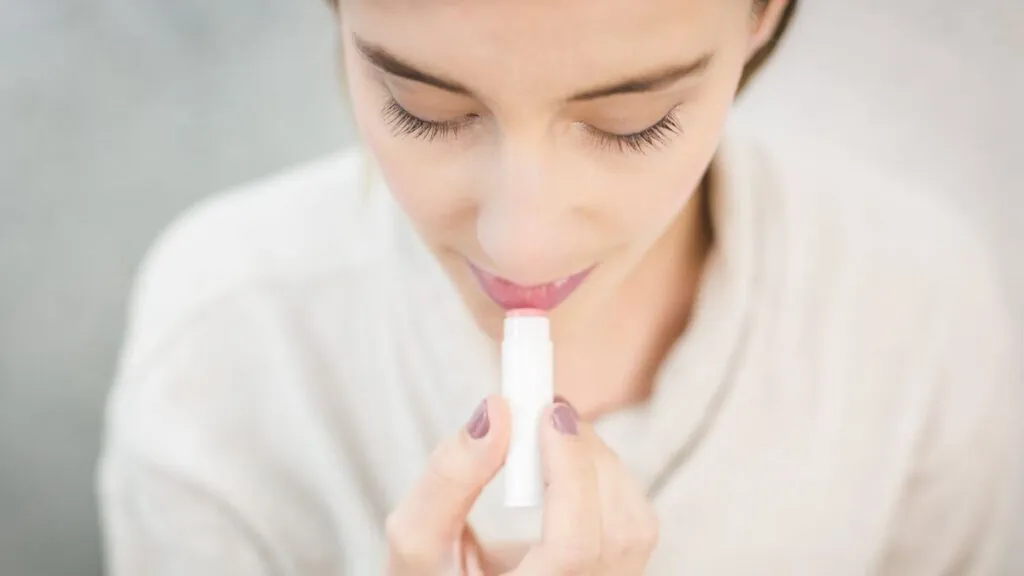
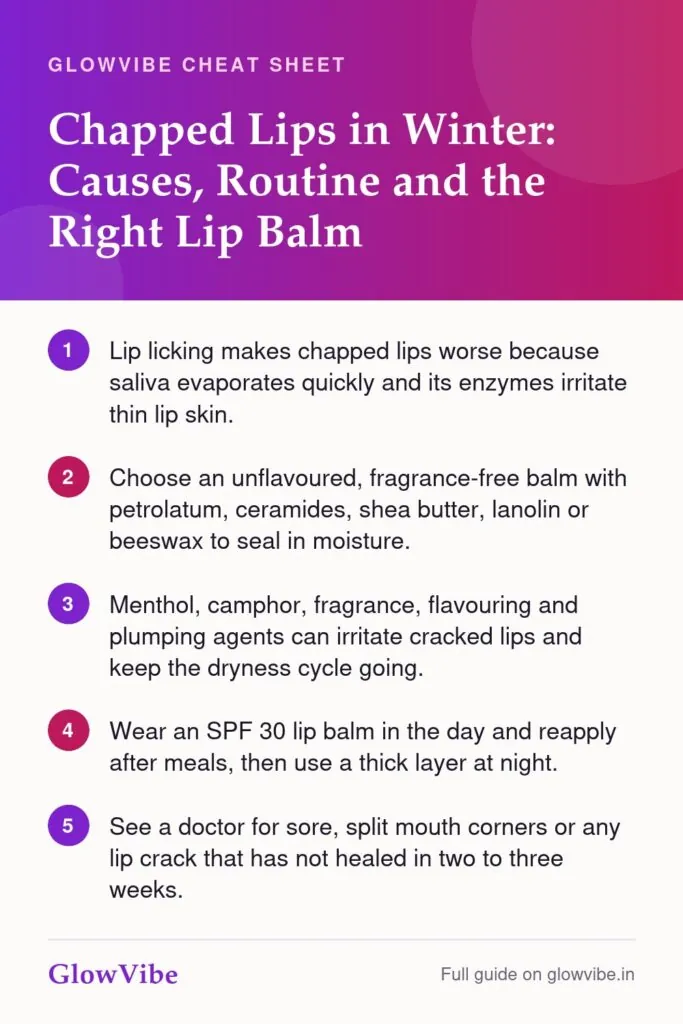
Chapped lips in winter usually come from dry air, lip licking and balms that irritate rather than protect, and the fix is a plain, Fragrance-freeA product with no added perfume or essential oils for scent. Often the safer pick for sensitive or reactive skin. "Unscented" can still contain masking fragrance.See glossary OcclusiveAn ingredient that forms a protective layer to stop water escaping from the skin, such as petrolatum, shea butter or dimethicone.See glossaryRead the guide balm used often, plus a thick layer at night. Most dry, cracked lips heal in one to two weeks once you stop the habits that strip them and seal in moisture with ingredients like petrolatum, shea butter or CeramidesFats that naturally hold skin cells together like mortar between bricks. Moisturisers with ceramides help support a dry or damaged skin barrier.See glossaryRead the guide.
Your lips have a much thinner outer layer than the rest of your face and almost no oil glands of their own. So when the air turns dry from November to January, especially in North India or in rooms with heaters running all night, lips lose water faster than any other part of your skin. Here is why it happens and what to do about it.
Quick winter lip checklist
- Stop licking your lips, even when they feel tight.
- Switch to an unflavoured, fragrance-free balm with petrolatum, shea butter, ceramides or beeswax.
- Use a lip balm with SPF (sun protection factor)A measure of protection against UVB rays, which cause sunburn. SPF 30 blocks about 97% of UVB and SPF 50 about 98%, if you apply enough and reapply.See glossaryRead the guide 30 in the day and reapply after eating and drinking.
- Put a thick layer of plain balm or petroleum jelly on before bed.
- Skip scrubs, menthol, camphor and “tingling” plumpers until cracks heal.
- Run a humidifier or keep a bowl of water near the heater at night.
- See a doctor if a crack has not healed in two to three weeks or the corners of your mouth stay split and sore.
Why your lips crack more in winter
Dry air, cold wind and heaters
Cold air holds less moisture, and room heaters and blowers dry it out further. Lips have no natural oil layer to slow that water loss, so they dry out and flake first. Cold scooter rides and sleeping with your mouth open during a winter cold make it worse.
Licking your lips
Licking feels like relief for a few seconds, but saliva evaporates quickly and takes more moisture with it. Saliva also contains digestive enzymes that irritate thin lip skin. Doctors call the red, scaly ring that forms around the mouth from repeated licking “lip licker’s dermatitis”, and it is very common in children and adults in winter.
Flavoured and tingling balms
Strawberry, mint or chocolate balms taste nice, which is exactly the problem: you lick them off and reapply, over and over. Balms with menthol, camphor or peppermint give a cooling “it’s working” feeling, but that tingle is mild irritation. If you reach for your balm every 20 minutes and your lips never get better, the balm may be part of the cycle.
SPF gaps
Winter sun in India is still strong, and lips have very little melanin to protect them. Many people wear sunscreen on the face but skip the lips. Over time, UV damage makes lips drier, rougher and more likely to crack, and in the long run it can cause a sun-damage condition called actinic cheilitis. Our guide on why you still need sunscreen in winter explains how strong the cold-season sun really is.
Allergies and hidden irritants
Sometimes lips stay dry because of contact allergy, called contact cheilitis. Common triggers are fragrance and flavours (especially cinnamon flavouring), some lipstick dyes, sunscreen filters, lanolin in a small number of people, and flavoured or whitening toothpastes. If your lips are red, itchy or swollen as well as dry, and nothing helps, think about what touches your lips every day.
Medicines can play a part too. Acne treatments such as isotretinoin almost always dry the lips, and topical retinoids applied too close to the mouth can do the same. Low iron or low B vitamins can show up as sore, split corners of the mouth.
Lip balm ingredients: what helps and what irritates
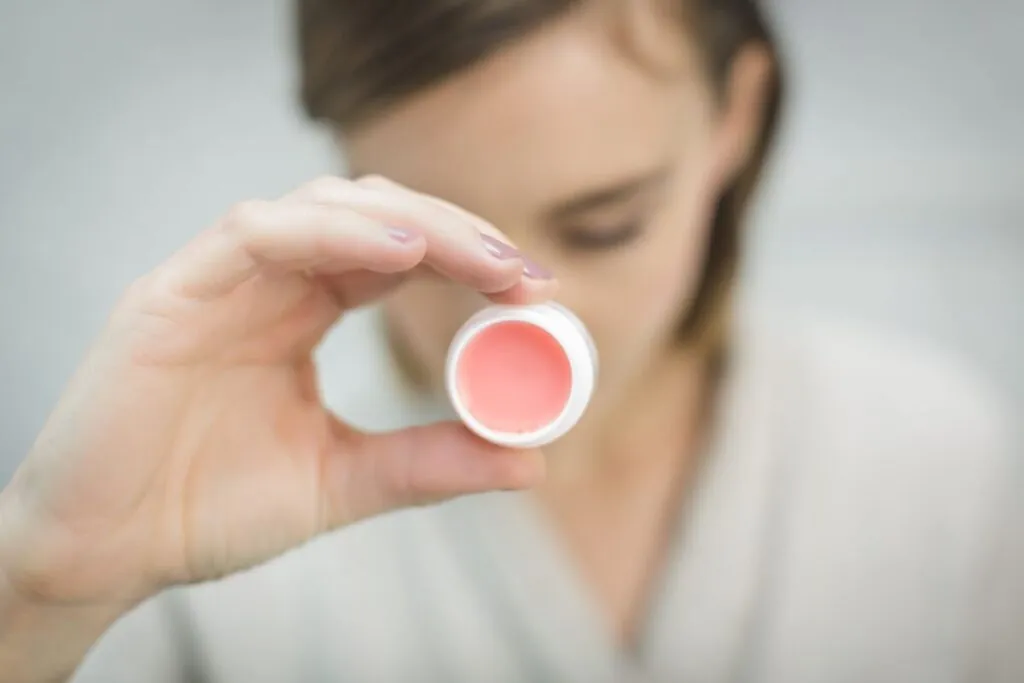
A good winter lip balm needs an occlusive, an ingredient that sits on top and stops water escaping. HumectantAn ingredient that attracts water, such as glycerin or hyaluronic acid. Humectants hydrate best when sealed in with a moisturiser.See glossaryRead the guide like GlycerinOne of the most common and effective humectants. It draws water into the skin and is found in most moisturisers and cleansers.See glossary and Hyaluronic acidA humectant that holds water in the skin for a plump, hydrated look. Despite the name, it is not an exfoliating acid. Apply on damp skin.See glossaryRead the guide pull water in, but on their own they can make lips feel drier in dry air, so they work best under an occlusive layer. Read the label before you buy, and remember that formulas change, so check the current ingredient list rather than relying on what a product contained last year.
| Ingredient | What it does | Verdict for chapped lips |
|---|---|---|
| Petrolatum (petroleum jelly) | One of the most effective occlusives; seals in water and protects cracks | Excellent, especially at night |
| Ceramides | Help repair the Skin barrierThe outermost layer of skin that keeps water in and irritants out. A damaged barrier feels tight, stings and reacts more easily.See glossaryRead the guide | Very good for lips that crack again and again |
| Shea butter, cocoa butter | Rich butters that soften and seal | Very good; pick unscented versions |
| Lanolin | Heavy occlusive that softens rough skin | Good for most people, but a few are allergic; patch test |
| Beeswax, candelilla wax | Give the balm body and a protective film | Good |
| Dimethicone | Silicone that forms a breathable barrier | Good, light feel |
| Glycerin, hyaluronic acid, panthenol | Draw in and hold water; panthenol soothes | Good when combined with an occlusive |
| Menthol, camphor, peppermint, eucalyptus | Cooling, tingling feel | Avoid on cracked lips; can irritate |
| Fragrance, flavour, cinnamon | Taste and smell | Avoid; common allergy triggers and encourage licking |
| Salicylic acid, phenol | Exfoliating or numbing | Avoid until lips heal |
| Plumping agents (capsaicin, cinnamon, ginger) | Swell lips by irritating them | Avoid in winter |
Plain petroleum jelly from any pharmacy is one of the simplest and most effective options. Natural oils such as coconut oil or almond oil feel lovely but are not strong occlusives on their own, so use them under a balm rather than instead of one.
Your day and night lip routine for winter
Lip care fits neatly into the routine you already follow for your face. If your whole face feels tight this season, pair this with our winter skincare routine for dry skin, since the same dry air is behind both.
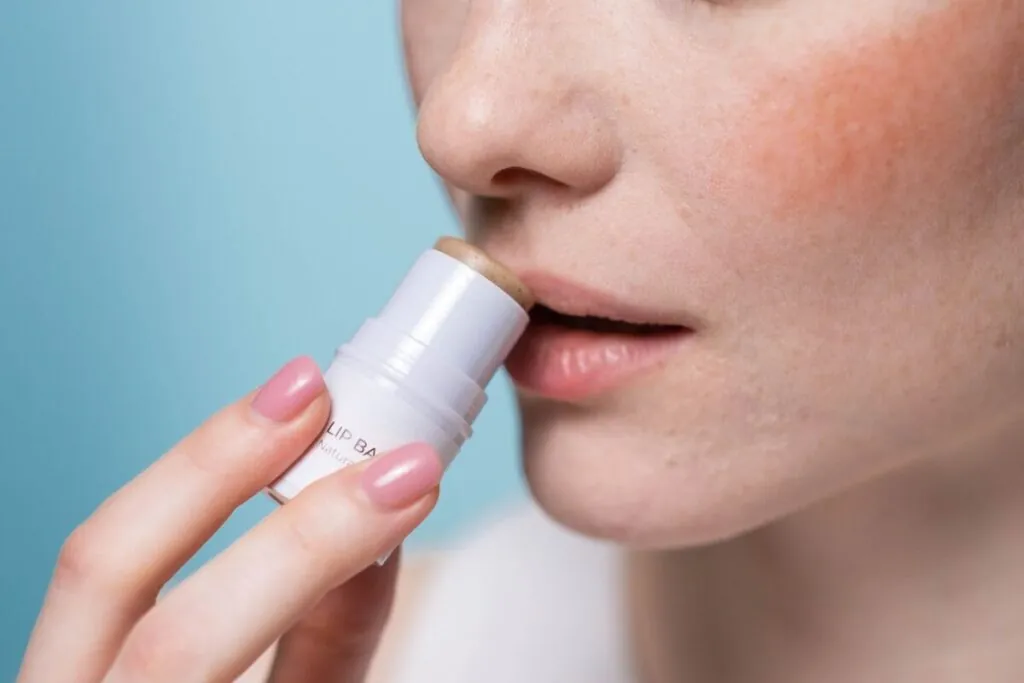
Morning (2 minutes)
- After brushing: rinse toothpaste off your lips and the corners of your mouth with plain water, then pat dry.
- Hydrate (optional): if your lips are very dry, dab on a thin layer of a balm with glycerin, hyaluronic acid or panthenol while they are still slightly damp.
- Protect: apply a lip balm with SPF 30 as the last step, at the same time as your face sunscreen.
During the day
- Reapply your SPF balm every two hours outdoors and after every meal, tea or coffee.
- Keep one balm in your bag and one at your desk so you never reach for your tongue instead.
- Cover your mouth with a scarf or dupatta on cold, windy scooter rides.
Night (1 minute)
- Remove lipstick gently: use an oil-based remover or micellar water on a cotton pad. Press and hold, do not rub.
- Seal: apply a thick layer of plain petroleum jelly or a rich, fragrance-free balm with shea or ceramides. Think of it as an overnight lip mask.
- Fix the air: run a humidifier, or place a bowl of water near the heater, and try not to point the heater at your face.
Once a week, only when lips are not cracked
If you have dry flakes but no open cracks, a soft scrub once a week can help balm and lipstick sit better. Use light pressure for 20 to 30 seconds and follow straight away with balm. Read our guide on how to use a lip scrub the right way for gentle recipes. Never scrub split or bleeding lips; it reopens the wound and slows healing.
Lip SPF: what to look for
Choose a lip balm labelled SPF 30 or higher with broad-spectrum or PA protection where listed. Mineral filters such as zinc oxide can suit sensitive lips, though some leave a slight white tint. If a lip sunscreen makes your lips sting or itch, the filter may not suit you, so try a different type.
Lip SPF wears off fast because you eat, drink and talk. Reapply more often than you would on your face. A lipstick gives some physical cover but is not a replacement for SPF unless the label says it contains sunscreen.
Wearing lipstick over dry lips
Winter is wedding season, so you will probably need lipstick on lips that feel like paper. Matte liquid lipsticks are the most drying because they are designed to set hard, and they settle into every line and flake. If you love the look, read our tips on choosing a matte liquid lipstick and save the most long-wear formulas for short events.
- The night before: apply a thick layer of petroleum jelly or balm and leave it on overnight.
- 30 minutes before makeup: apply a thin layer of balm and let it sink in while you do your base.
- Just before lipstick: blot off the excess with a tissue so the colour grips instead of sliding.
- Line, then fill: a creamy lip liner over the whole lip gives a smoother base and helps colour last.
- Pick a forgiving finish: satin, cream or tinted balm formulas hide dryness far better than flat matte.
For full-face tips on flaky patches, primer and foundation, see our guide to makeup for dry skin in winter. To explore creamy and satin formulas, our overview of lip makeup products and finishes explains how they differ.
When to see a doctor
Some lip problems look like chapping but need proper treatment. See a dermatologist or your GP if you notice any of these:
- Angular cheilitis: red, cracked, sore corners of the mouth that keep splitting. It is often linked to a yeast or bacterial infection where saliva collects, and sometimes to low iron or B vitamins or ill-fitting dentures. Balm alone rarely clears it.
- A crack or sore that will not heal: anything still open after two to three weeks of good care should be checked, especially a rough, scaly or white patch on the lower lip.
- Swelling, itching or a rash: this points to an allergy, and a doctor can help work out the trigger.
- Blisters or crusting: clusters of small blisters may be a cold sore, which needs different treatment and is contagious.
- Lips that stay dry all year or dryness that started with a new medicine.
Do not self-treat with steroid creams or antifungal creams from the chemist without advice, as the wrong cream can make some lip conditions worse.
Common chapped lip mistakes
- Peeling or biting flakes: it tears healthy skin underneath and can cause bleeding. Soften flakes with balm and let them fall away.
- Using a balm that tastes good: it trains you to lick. Choose plain, unflavoured formulas.
- Scrubbing every day: daily scrubbing strips an already weak barrier.
- Skipping SPF because it is cold: winter sun still damages lips.
- Switching balms every few days: give one fragrance-free balm at least a week, and patch test any new product on a small area first.
Frequently Asked Questions
With a plain occlusive balm, no licking and an overnight layer of petroleum jelly, most mildly chapped lips feel better in two to three days and heal in one to two weeks. Deep cracks take longer. If a crack is still open after two to three weeks, see a doctor.
Yes. Petroleum jelly is one of the most effective occlusives and is widely recommended by dermatologists for dry, cracked lips. It is usually fragrance-free and rarely causes allergy. It works best as a thick layer at night or over a hydrating balm.
Your balm may contain an irritant such as menthol, camphor, fragrance or flavouring, or an ingredient you are allergic to. Flavoured balms also make you lick your lips more. Switch to a plain, fragrance-free balm for a week and see if things improve.
Coconut oil and ghee can soften lips and are fine to try if they do not irritate you. They are not as protective as petrolatum or a wax-based balm, though, so seal them with a balm on top. Stop if you notice any itching or bumps.
Yes. Lips have very little natural sun protection, and UV exposure continues through Indian winters. A lip balm with SPF 30, reapplied after meals and every couple of hours outdoors, helps prevent dryness and long-term sun damage.
Splits at the corners are often angular cheilitis, where saliva collects and yeast or bacteria can grow. Lip licking, dentures and low iron or B vitamins can all play a part. If the corners stay sore for more than a week or two despite balm, see a doctor for the right treatment.
Quick poll
How much do you usually spend on one beauty product?
Soft lips all winter
Winter lip care is simpler than the crowded balm shelf suggests. Stop licking, swap flavoured and tingling balms for a plain occlusive one, wear SPF in the day and seal your lips with a thick layer at night. Give it a week, prep well before wedding lipstick, and see a doctor for corners or cracks that refuse to heal.