Makeup for Dry Skin in Winter: Prep, Products and Flake Fixes
How to prep dry, flaky skin for makeup in winter, choose the right primer and foundation finish, set smartly and fix cakiness during the day.


The best makeup for dry skin in winter goes on over well-hydrated skin, uses a hydrating primer and a dewy or satin foundation, and relies on cream products rather than powders. Set only the areas that crease or get oily, and keep a hydrating mist handy to fix flakes and cakiness during the day.
Cold winds, heaters and low humidity pull water out of the skin, so a foundation that looked fine in October can suddenly cling to every dry patch. This guide walks you through prep, product choices, setting, mid-day fixes, lips, under-eyes and gentle removal for dry, flaky Indian skin.
Quick checklist for dry-skin winter makeup
- Exfoliate gently two to three days before an event, never on the day.
- Layer hydration: toner or essence, serum, then moisturiser.
- Wait 10–15 minutes before primer.
- Choose a hydrating primer and a dewy or satin foundation, not matte.
- Swap powder blush and bronzer for creams.
- Powder only the T-zone and under-eye crease, lightly.
- Remove makeup with an oil or balm cleanser, then moisturise straight away.
Skin prep: where good dry-skin makeup really starts
No foundation can hide skin that is thirsty underneath. Most of the work happens before you open your makeup bag. If your skin feels tight and flaky all season, set up a proper winter skincare routine for dry skin first, then use the steps below on makeup days.

Two to three days before: exfoliate gently
Flakes are dead skin cells that haven’t shed, and foundation grabs onto them. Use a mild exfoliant such as a Lactic acidA gentle AHA (first found in milk) that exfoliates and also hydrates. A good starter acid for dry or sensitive skin.See glossary or PHA (polyhydroxy acid)The gentlest family of exfoliating acids, such as gluconolactone. Larger molecules work slowly, so they suit sensitive skin.See glossaryRead the guide toner, or a very soft cream exfoliant, once in the days before a big event. Avoid harsh walnut-type scrubs, which cause tiny tears in dry skin.
Don’t exfoliate on the day. Freshly exfoliated skin can sting under makeup and may look red. If you are using RetinolA vitamin A derivative that speeds up skin renewal for smoother texture, fewer clogged pores and fewer visible fine lines. Use at night and wear sunscreen by day.See glossaryRead the guide, pause it for two or three nights before the event, as it can increase flaking.
On the day: layer hydration
- Cleanse gently: a cream or soap-free cleanser, or just lukewarm water if your skin is very dry. Cetaphil Gentle Skin Cleanser is one widely available option.
- Hydrating toner or essence: press it in with your palms while the skin is still slightly damp. Look for GlycerinOne of the most common and effective humectants. It draws water into the skin and is found in most moisturisers and cleansers.See glossary, Hyaluronic acidA humectant that holds water in the skin for a plump, hydrated look. Despite the name, it is not an exfoliating acid. Apply on damp skin.See glossaryRead the guide or PanthenolPro-vitamin B5, a soothing and hydrating ingredient used in skin and hair products to calm and soften.See glossary.
- Hydrating serum: hyaluronic acid or a CeramidesFats that naturally hold skin cells together like mortar between bricks. Moisturisers with ceramides help support a dry or damaged skin barrier.See glossaryRead the guide serum. Our guide to the best makeup serum for dry skin covers formulas that sit well under foundation.
- Moisturiser: a cream with ceramides, SqualaneA light, stable oil similar to the oils your skin makes. It moisturises without feeling heavy and suits most skin types.See glossary or shea butter. Use a richer layer on flaky cheeks and a thinner one on the T-zone.
- Sunscreen in the daytime: pick a creamy, hydrating formula.
How long to wait before makeup
Wait 10–15 minutes after moisturiser and sunscreen before primer or foundation. If you go too soon, the layers mix and the foundation pills or slides. If your face still feels sticky, press a tissue over it lightly to lift the extra.
Very dry patches can take one drop of face oil mixed into your moisturiser. Use it sparingly, though. Our guide to using face oil under makeup without sliding explains how much is too much.
Choosing a primer and foundation finish
Primer
Skip mattifying and pore-blurring primers, which are made to soak up oil and can make dry patches look worse. Look for a hydrating or illuminating primer with glycerin, hyaluronic acid or light oils.
The base of your primer matters too. Match it to your foundation: a water-based primer with a water-based foundation, and a silicone- or oil-based primer with a similar foundation, so they don’t separate. Our explainer on oil-based vs water-based primer shows how to check labels and which one suits your skin.
Foundation: dewy or satin, not matte
Matte foundations are built to control oil, so on dry winter skin they settle into fine lines and cling to flakes. Choose a dewy finish for a fresh, glowy look or a satin finish if you want a little less shine. Skin tints, serum foundations and tinted moisturisers are also kind to dry skin.
- Apply with a damp sponge, pressing rather than rubbing. Damp sponges add moisture and sheer the formula.
- Use less product than you think. One thin layer, plus concealer where needed, looks more like skin.
- Match the shade to your neck in daylight. Dry skin can look duller in winter, so a shade with a warm or golden undertone often looks more alive on Indian skin.
Cream vs powder products for dry skin
Powders sit on the surface and absorb moisture, which shows every flake. Creams melt into the skin and move with it. That doesn’t mean you can never use powder, but creams should do most of the work.
| Product | Better for dry skin | Use with care |
|---|---|---|
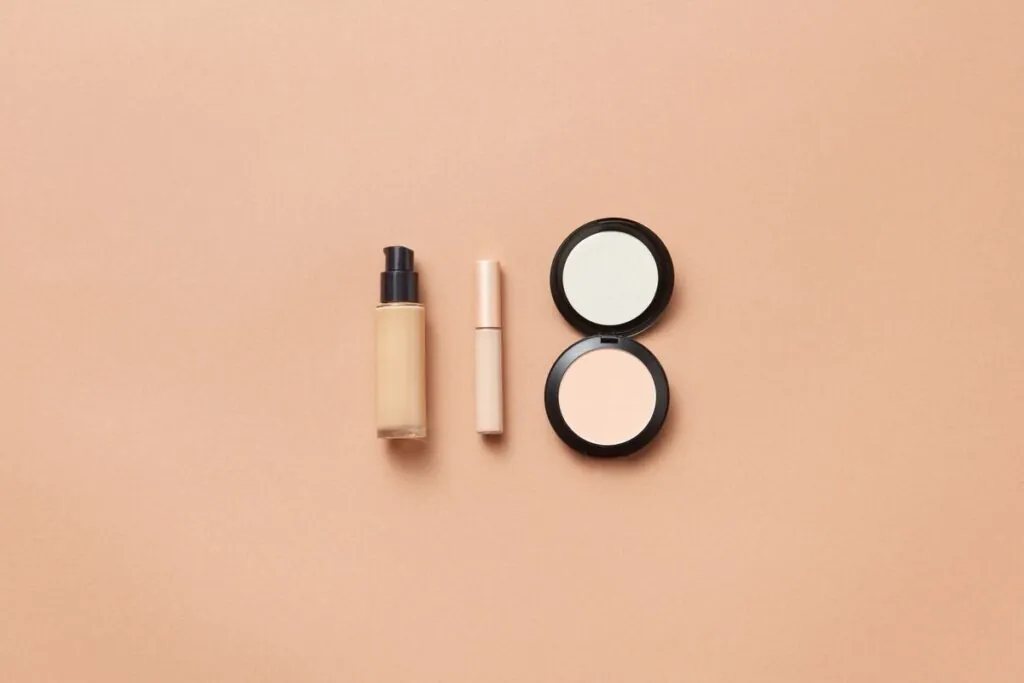
| Foundation | Liquid dewy or satin, skin tint, serum foundation | Matte liquid, powder foundation, pressed compact as a base |
| Concealer | Creamy, hydrating formula | Thick, full-matte concealer under the eyes |
| Blush | Cream or liquid blush, lip-and-cheek tint | Powder blush over dry patches |
| Bronzer and contour | Cream stick or liquid | Heavy powder contour |
| Highlighter | Liquid or balm highlighter | Chunky glitter powders that sit on texture |
| Setting | Finely milled translucent powder, only where needed | All-over baking |
| Eyeshadow | Cream shadows or powders over an eye primer | Powder on bare, dry lids |
Setting only where you need it
Many people with dry skin still get a shiny nose or creasing under the eyes. The answer is targeted setting, not skipping powder entirely or powdering everywhere.
- Use a finely milled translucent or skin-toned loose powder.
- Tap off the extra, then press a small fluffy brush or a powder puff onto the sides of the nose, the centre of the forehead, the chin and the inner under-eye crease.
- Leave the cheeks and any flaky areas unpowdered.
- Finish with a hydrating setting spray to melt everything together.
Fixing flakes and cakiness mid-day
Even with good prep, a long winter day in an air-conditioned or heated office can leave you patchy by afternoon. Don’t add more powder or foundation. Try this instead:
- Mist: spray a hydrating face mist or setting spray over the face.
- Press: gently press a clean, slightly damp sponge over caked areas. This melts and lifts extra product.
- Smooth flakes: tap a tiny amount of moisturiser or balm onto the flaky patch with your ring finger, then press with the sponge.
- Re-conceal only if needed: a dot of creamy concealer, pressed in, not swiped.
A small tube of moisturiser and a mist in your bag solve most problems. Avoid rubbing flakes off with your fingers, which lifts the makeup around them too.
Lips and the under-eye area
Lips
Chapped lips make any lipstick look patchy. Use a thick balm with petrolatum, shea butter or beeswax every night. Once or twice a week, gently buff away flakes; our guide on how to use a lip scrub the right way explains how often and how softly to do it.
- Apply balm 10 minutes before lipstick, then blot it off.
- Choose creamy, satin or hydrating lipsticks and tinted balms over long-wear matte liquids.
- If you love matte, apply a thin layer and keep a balm to dab in the centre during the day.
- Avoid licking your lips, which dries them faster in cold air.
Under-eyes
The skin under the eyes is thin and dries out first, so concealer creases here quickly.
- Tap a light eye cream on the area and wait a few minutes.
- Use a peach or orange corrector only on the darkest part, if needed.
- Apply a thin layer of creamy concealer, mainly at the inner corner and outer edge, not the whole area.
- Press a tiny amount of powder only into the crease line.
Removing makeup without over-drying
Harsh removal undoes all your careful prep. Strong foaming face washes and repeated rubbing with wipes strip the oils that dry skin is already short of.
- Massage a cleansing oil or balm onto dry skin for about a minute to dissolve makeup.
- Add a little lukewarm water to emulsify, then rinse. Avoid hot water.
- If you still feel residue, follow with a gentle cream or soap-free cleanser.
- Pat dry and apply a hydrating serum and rich moisturiser within a minute or two, while the skin is still slightly damp.
Patch-test any new cleanser, primer or foundation on your jawline for a couple of days before a special occasion. If your skin cracks, bleeds, itches badly or develops a rash, see a dermatologist, as this may be eczema or another condition that needs treatment.
Common mistakes with makeup for dry skin
- Applying makeup straight after moisturiser: wait 10–15 minutes so it can absorb.
- Scrubbing on the morning of an event: it leaves skin red and sensitive.
- Using a pressed compact as your base: it emphasises texture on dry skin.
- Baking under the eyes: heavy powder creases and ages the area.
- Fixing cakiness with more product: mist and press instead.

Frequently Asked Questions
Dewy and satin finishes suit dry skin best because they reflect light and don’t cling to flakes. Skin tints and serum foundations are good lighter options. Matte foundations tend to look patchy on dry skin in winter.
Usually because the skin underneath is dehydrated and has dead cells on the surface. Gentle exfoliation a few days before, layered hydration and a hydrating primer help most. A matte formula or too much powder makes it worse.
Yes, but only where needed. A light press of finely milled powder on the T-zone and under-eye crease stops shine and creasing. Leave the cheeks and dry patches unpowdered.
A drop mixed into your moisturiser can help very dry patches. Too much oil makes foundation slide, so let it absorb fully and press off any extra with a tissue before primer.
Hydrate with a light eye cream first, use a creamy concealer in a thin layer, and press a tiny amount of powder only into the crease. Avoid baking with lots of powder, which settles into lines.
They are fine in an emergency, but rubbing with wipes every night can irritate dry skin. A cleansing oil or balm followed by a gentle cleanser removes makeup more thoroughly and more kindly.
Quick poll
What does your everyday makeup look like?
Soft, smooth makeup all winter
Makeup for dry skin works when the skin underneath is comfortable. Exfoliate gently a few days ahead, layer hydration, wait before primer, and choose dewy or satin finishes with cream products. Set only where you must, refresh with a mist instead of more powder, and remove everything gently at night. Your skin and your makeup will both look better for it.