Natural Face Cream: How to Choose One for Your Skin Type
Which plant oils, butters and humectants suit dry, oily and sensitive skin, how to read the label, and what a month of using a natural face cream can realistically change.

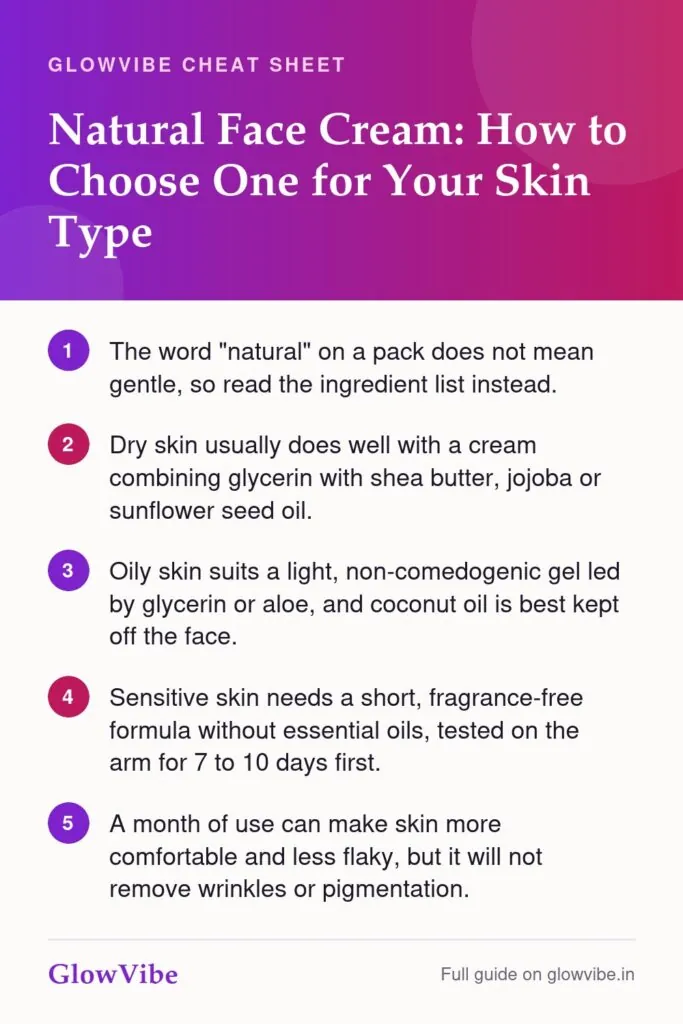
To choose a natural face cream, start with your skin type and then read the first few ingredients: dry skin usually does well with shea butter, plant oils and GlycerinOne of the most common and effective humectants. It draws water into the skin and is found in most moisturisers and cleansers.See glossary, oily skin with a light gel built on HumectantAn ingredient that attracts water, such as glycerin or hyaluronic acid. Humectants hydrate best when sealed in with a moisturiser.See glossaryRead the guide, and sensitive skin with the shortest Fragrance-freeA product with no added perfume or essential oils for scent. Often the safer pick for sensitive or reactive skin. "Unscented" can still contain masking fragrance.See glossary formula you can find. The word “natural” on the front of the pack tells you far less than the list on the back.
This guide is for you if you have already decided you prefer plant-based formulas and want to pick well. For a broader look at everyday options, natural or not, see our guide to daily face creams. Not sure of your type yet? The skin type quiz takes a couple of minutes and makes the rest of this page easier to use.
The quick answer
- Dry skin: a proper cream with shea butter, jojoba or sunflower seed oil, plus glycerin.
- Oily or acne-prone skin: a gel or light lotion led by glycerin or aloe, labelled Non-comedogenicA label meaning a product is formulated not to clog pores. Useful for acne-prone skin, though it is not a regulated or guaranteed claim.See glossaryRead the guide. Skip Coconut oilA common Indian hair oil that can soak into the hair shaft, which may reduce protein loss during washing. It can feel heavy on fine hair.See glossary on the face.
- Sensitive skin: fragrance-free, no essential oils, as few ingredients as possible.
- Everyone: test it on your arm for 7 to 10 days before it goes on your face.
- After a month: expect more comfortable, less flaky skin. Don’t expect wrinkles, dark spots or acne to disappear.
What “natural” does and doesn’t tell you
“Natural” sounds like a promise of gentleness, but it isn’t one. The US FDA has no established definition of the term, and India’s Cosmetics Rules 2020 don’t define it for skincare either. Treat it as marketing language wherever you shop, and let the ingredient list do the talking.
Plant ingredients can also cause reactions. A paper in JAMA Dermatology looked at 1,651 natural personal care products from US retailers and found that about 94% contained at least one known contact allergen. That doesn’t mean those products would irritate you, since an allergen only matters if your skin reacts to it. It does mean the label can’t replace a Patch testTrying a small amount of a new product behind the ear or on the inner arm for a few days to check for a reaction before using it widely.See glossary. As one dermatologist puts it on the American Academy of Dermatology (AAD) website, “all natural” in no way means hypoallergenic.
Be equally careful with “chemical-free” claims. Everything in a jar is a chemical, plant oils included. A water-based cream also needs a preservative to stay safe once opened, so “preservative-free” on a watery formula deserves a closer look, not extra trust.
Oils, butters and humectants: what each one does
Most natural creams are built from three groups. Our ingredients glossary explains any unfamiliar names.
Humectants hold water
Glycerin is the workhorse here, and aloe is a common lighter base. Humectants draw and bind water, so they feel light and suit humid weather. In very dry air, a humectant-only gel can leave skin feeling tight, because nothing is slowing the water from leaving.
Plant oils soften and slow water loss
Oils don’t add water. A 2022 overview of clinical studies in Frontiers in Pharmacology describes them as semi-occlusive: they slow the water escaping from your skin and soften its surface. Oils differ a lot from each other, and the balance of two fatty acids may be part of the reason.
A separate review says linoleic acid plays a direct role in keeping the Skin barrierThe outermost layer of skin that keeps water in and irritants out. A damaged barrier feels tight, stings and reacts more easily.See glossaryRead the guide intact, while oleic acid can disturb it with continued use. The 2022 overview found that oleic-rich oils may worsen inflamed skin, though skin without inflammation may not react badly to them. It also notes that the studies are small and varied, so treat this as a useful guide and not a firm rule.
Butters add richness
Shea butter and cocoa butter make a cream thick and cushiony, which is lovely in a Delhi winter and rather less so in a Chennai summer. The AAD’s advice on very dry skin notes that butters and oils tend to liquefy on the skin, which makes them less effective moisturisers. So look for them in a cream with humectants rather than relying on a plain butter.
| Ingredient | What is known | Who may want it |
|---|---|---|
| Glycerin | On the AAD’s list of ingredients to look for in dry skin creams | All skin types |
| Sunflower seed oil | Relatively high in linoleic acid; shown to preserve the skin’s outer layer in adults | Dry and sensitive skin |
| Jojoba oil | Rich in wax esters; on the AAD’s dry skin list | Dry and combination skin |
| Rosehip oil | High in linoleic acid; barrier benefit listed only as possible | Dry skin, after a patch test |
| Argan oilA light oil from Moroccan argan kernels, used in serums and leave-ins to smooth frizz and add shine without much greasiness.See glossary | Mostly monounsaturated; linked with better hydration in daily use | Normal to dry skin |
| Shea butter | On the AAD’s dry skin list; contains oleic, stearic, linoleic and palmitic acids | Dry skin, cold or dry weather |
| Olive oil | Mostly oleic acid; raised water loss from skin in adult volunteers | Avoid high on the list if your skin is inflamed or sensitive |
| Coconut oil | Described by a Cleveland Clinic dermatologist as highly pore-clogging | Dry skin on the body; not the face, and not the chest or back if you get breakouts |
How to choose for your skin type
Dry skin
Choose a cream over a lotion. The AAD says creams and ointments add more moisture and work better than lotions on dry skin, and it names jojoba oil, shea butter and glycerin among the ingredients to look for. A good label for you pairs a humectant with an oil or butter in the first several ingredients.
Apply it while your face is still damp from washing, which the AAD also advises. On very dry winter days, or if dry skin looks grey or whitish on your skin tone, a cream with ceramides can help seal in moisture, so it is worth checking for them on the label. Our winter routine for dry skin shows where the cream fits morning and night.
Oily or acne-prone skin
You still need moisturiser, says the AAD, but not a rich one. Look for a water-based gel or a light lotion led by glycerin or aloe, and check for “non-comedogenic” or “oil-free” on the pack. The AAD notes that too much moisturiser can clog pores and lead to acne, so use less than you think you need, and on humid days a very thin layer may be plenty.
Keep coconut oil off your face, and be cautious with cocoa butter near the top of the list until you know how you respond. Pore-clogging charts online often disagree, so judge by your own skin over a few weeks. This matters more on deeper skin tones, where acne can leave lasting marks. A simple oily skin routine will help more than any single cream.
Combination skin
The AAD suggests treating your face as though it were two faces. Use a light humectant gel across the T-zone and add a small amount of something richer only on the dry patches.
Sensitive skin
Sensitive skin gains the least from an elaborate botanical blend. Every extra extract is one more thing that could sting, so short lists are easier to live with and easier to troubleshoot. Look for “fragrance-free” specifically, because the AAD warns that “unscented” products can still contain chemicals that hide the smell of other ingredients.
Essential oils are the main thing to avoid. Cleveland Clinic flags fragranced oils such as lavender and tea tree as possible irritants or allergens, and a paper in the International Journal of Women’s Dermatology estimates that about 80 essential oils have been shown to cause contact allergy. Oils like tea tree can also become more sensitising as they age in air. For more on this skin type, read our guide to the best moisturisers for sensitive skin.
How to read the label in five steps
- Ignore the front. Words like “botanical”, “pure” and “herbal” don’t tell you what suits your skin.
- Read the first five or six ingredients. India’s Cosmetics Rules 2020 require ingredients above 1% to be listed in descending order of weight or volume, with those at 1% or below in any order after them. If the hero plant extract you paid for sits at the very end, there is probably little of it. Packs of 60 ml or 30 g and under can skip the list, and a cream licensed as an Ayurvedic medicine follows separate rules that give each ingredient’s quantity.
- Find the base. Water and glycerin up top suggests a lighter feel. Shea butter or oils up top suggests a richer one.
- Scan for fragrance. Look for “fragrance”, “parfum”, or named oils such as lavender, rose, ylang-ylang, peppermint, tea tree or citrus. Citrus oils such as bergamot have also been linked to sun-triggered reactions that leave dark marks, so take extra care with them in a day cream.
- Check the pack. A pump or tube limits air and fingers better than an open jar. Note the expiry date, and keep the cream away from a hot windowsill, since plant oils can turn stale in heat.
How to test a new cream safely
For the AAD’s home test, apply your normal amount to a small spot on the underside of your arm or the bend of your elbow, where it won’t rub off, twice a day for 7 to 10 days. If you see no redness, itching or swelling, you can start using it on your face.
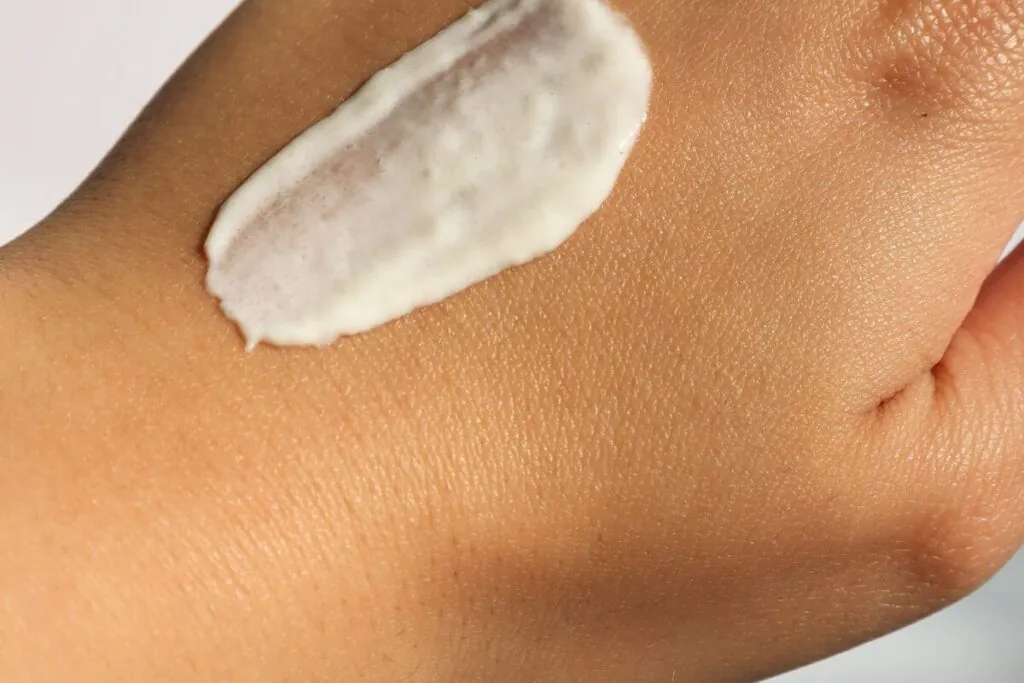
If a reaction appears, wash the cream off gently and stop using it. A cool compress can ease the discomfort. See a dermatologist if the reaction is severe or doesn’t settle, and ask about formal patch testing if you keep reacting and can’t tell why.
Then introduce the cream on its own, with no other new product alongside it, so you can tell what is responsible for any change. In the morning, follow it with sunscreen, since a face cream isn’t sun protection unless the label gives it a tested SPF.
What a month of use can realistically change
A month is a fair trial for comfort, and not much else. Moisturiser holds water in the skin, so comfort can change quickly, and the AAD says it can plump up fine lines within a few days. That is a surface effect, not wrinkle removal. Deeper concerns move far more slowly: the same organisation says most anti-ageing products take at least six weeks, and sometimes up to three months, to work.
Use the checkpoints below as a rough guide to what to watch for, not as a promise.
| Stage | What to check | What it may mean |
|---|---|---|
| First few days | Comfort after washing, stinging, greasiness | Stinging or redness means stop. Greasiness means less product or a lighter texture. |
| Weeks 1 to 2 | New bumps, tightness by evening | New bumps may mean it is too rich. Tightness may mean it is too light. |
| Weeks 3 to 4 | Flaking, rough patches, how makeup sits | Less flaking and smoother texture are the realistic wins. |
What a plant-based moisturiser won’t do in 30 days: it won’t remove wrinkles, fade pigmentation, clear acne or heal scars. It won’t change your natural skin tone either, and that was never something that needed changing. If a pack promises any of this from oils and butters alone, be sceptical. Persistent acne, dark patches or a rash are worth taking to a dermatologist, who has treatments a moisturiser can’t replace.
Common mistakes
- Choosing by scent. A beautiful rose or lavender smell usually comes from the very ingredients most likely to bother reactive skin.
- Using one texture all year. The rich cream you needed in January can feel heavy in the monsoon.
- Layering on more when skin reacts. If your face stings, simplify. More oils won’t calm a reaction.
Frequently Asked Questions
Not automatically. A plant-based cream can work very well if its formula suits your skin, and a conventional one can too. Choose by texture, ingredients and how your skin responds, not by the category.
It can, if the oil is low on the list and the overall formula is light and labelled non-comedogenic. Start with a thin layer once a day and watch for new bumps over a few weeks. If you are breaking out, a dermatologist can help you sort out the cause.
For oily skin in humid weather it may feel like enough, especially in a formula that also has glycerin. Dry skin usually needs something richer on top, because a watery gel does little to slow water loss. Patch test aloe too, since plant-based doesn’t rule out a reaction.
It can’t treat either condition, and some plant ingredients may aggravate inflamed skin. Oleic-rich oils and essential oils are the ones to be most careful with. See a dermatologist first and ask which moisturiser fits your treatment plan.
Don’t assume so just because a product is plant-based. Essential oils in particular are worth asking about. Check with your doctor or your child’s paediatrician before you start, and take the full ingredient list along.
Quick poll
How many steps are in your skincare routine?
The bottom line
A good natural face cream is one whose ingredients match your skin type and your weather, not one with the longest list of botanicals. Use butters and linoleic-rich oils for dryness, humectant gels for oiliness, and short fragrance-free formulas for sensitivity. Patch test first, give it a few weeks, and expect comfort, not transformation.