Zumba for Beginners: What a Class Is Like and How to Start
Thinking about a first Zumba class? Here is what happens in the room, which format to choose, what to wear, how to protect your knees and how to fit it into your week.

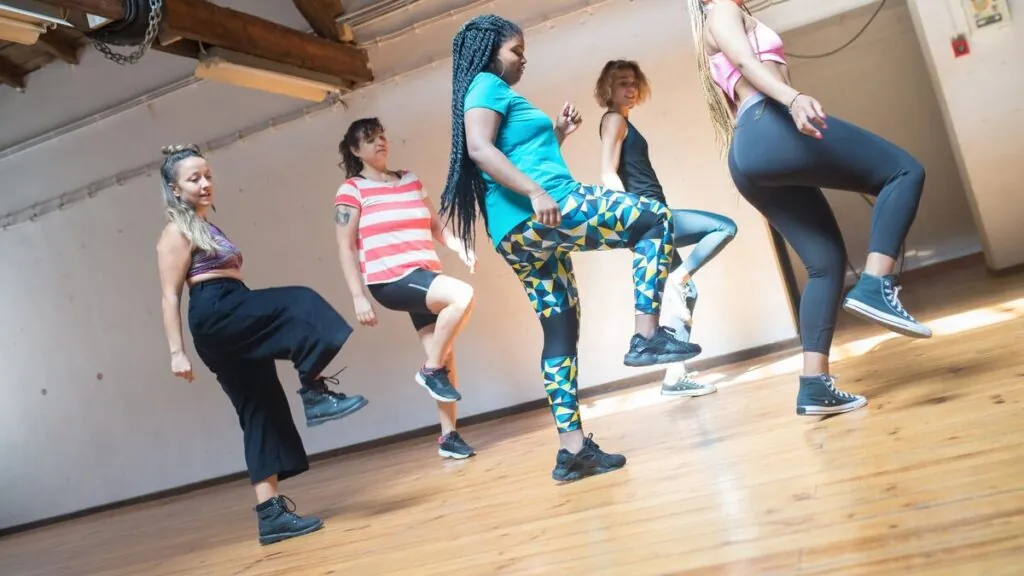
Zumba for beginners is simpler than it looks: you copy an instructor through dance-based cardio routines set to music, and nobody expects you to get the steps right on day one. To start, book a lower-intensity class if your studio has one, wear supportive shoes, go once a week for the first fortnight and let your knees and stamina set the pace.
This guide is for someone thinking about a first class. It covers what actually happens in the room, which class type to choose, what to wear, how hard it can be on knees and where it fits in your week. Zumba is a trademark, and GlowVibe has no link with the brand; the name is used here only to describe the class.
The quick answer
- What it is: a group cardio class built on dance moves, usually with a warm-up, a run of routines and a cool-down.
- Best first class: a gentler format such as Zumba Gold, or a regular class where you keep the moves small.
- What to wear: breathable clothes and supportive shoes without too much grip on the sole.
- Knees: turns and jumps are the moves to respect. Lift your heel when you turn and skip jumps until you feel steady.
- How often: once a week at first, then twice a week, with strength work and rest around it.
What happens in a Zumba class
Plan on about an hour, though some gyms run shorter slots, so check the timetable. The class has three parts: a warm-up, the main routines and a cool-down. Arrive 10 minutes early to fill your bottle, find a spot and tell the instructor it is your first class.
How the session flows
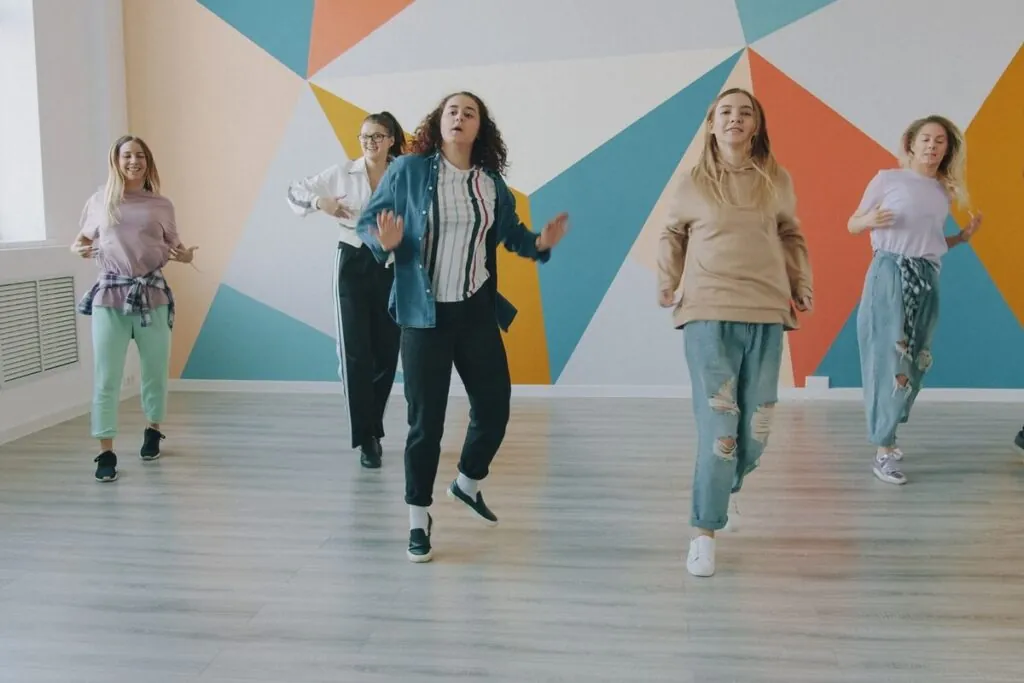
The warm-up uses easy steps to raise your heart rate and loosen your hips and ankles. The main section then moves from track to track, with faster, harder songs mixed with easier ones, so effort rises and falls like interval training. The cool-down slows everything down and usually ends with some gentle stretching.
Music depends on the instructor. Latin rhythms such as salsa and merengue are the traditional base, and you may also hear pop or Hindi film songs. Instructors usually lead by demonstrating and using hand signals rather than stopping to teach, so you will be following along from the first minute.
Feeling lost is normal
You will miss steps, turn the wrong way and lose the beat. That matters less than it feels, because you are still moving and the cardio still counts. An instructor interviewed by YMCA North suggests attending at least three classes before you judge it, and standing near the front so you can see clearly.
If a step is too quick, march on the spot until the next one you recognise. Footwork first, arms later is an easy rule. Routines often return in later classes, so the moves start to feel familiar with repetition.
Which class type suits a beginner
Not every studio offers every format, and names can vary. The descriptions below come from gym and class listings, which differ a little from place to place, so treat this table as a starting point and ask the studio how its class actually runs.
| Format | What it involves | Who it may suit |
|---|---|---|
| Regular Zumba | Fast-paced dance cardio that mixes lower and higher intensity moves | Most healthy beginners who are happy to modify moves |
| Zumba Gold | Similar style at a gentler pace, with lower impact and fewer jumps | Older adults, people returning to exercise and nervous first-timers |
| Aqua Zumba | Dance moves in a pool, using water for resistance; sources describe the impact as low to medium | People who want less pounding on their joints and can get to a pool |
| Toning | Adds light weighted sticks to the routine | People who already feel steady in a regular class |
You may also see “dance fitness” or “Bollywood dance workout” on a timetable. These can be just as enjoyable but are not necessarily the same format, so ask about the pace and how many jumps to expect. A trial class is the fastest way to tell if a teacher and a room suit you, so ask whether the studio offers one.
What to wear and bring
Regular workout clothes are fine, and shoes matter far more than the outfit. Look for side-to-side stability and a sole that lets you turn. Very grippy soles can hold your foot in place while your body rotates, which puts the twist into your knee. The authors of the Hawaii survey covered below advise against running shoes for this reason, because the tread can stick to the floor.
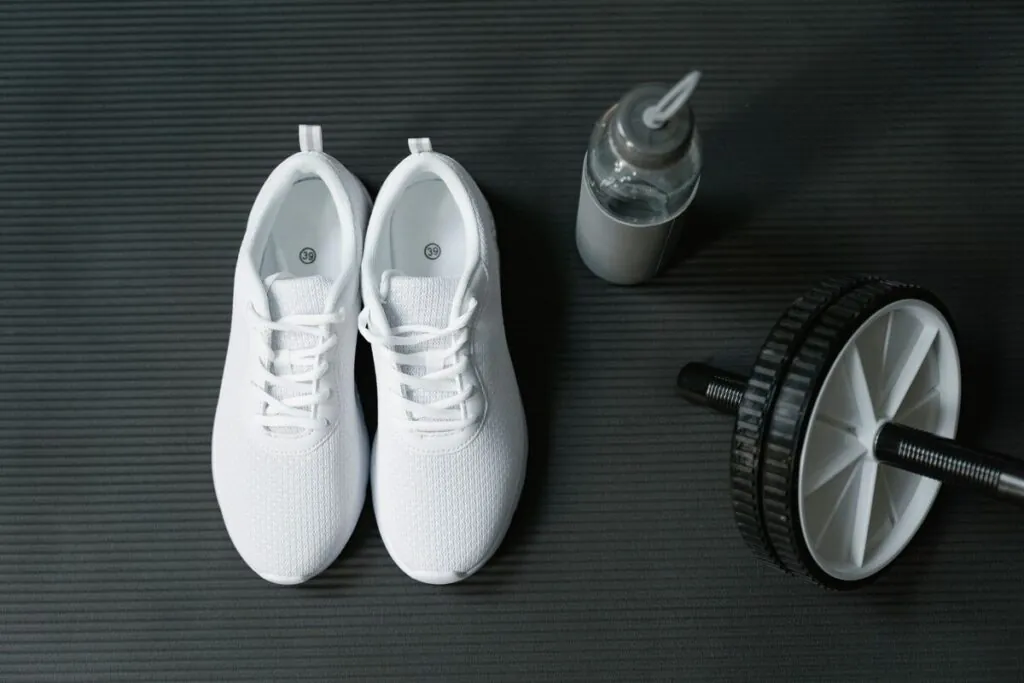
- Shoes: clean indoor trainers with a fairly smooth sole. Avoid chappals, bare feet and deep-tread outdoor shoes.
- Clothes: a T-shirt or kurti that lets your arms move, with leggings, track pants or shorts. Skip long dupattas and wide hems you could step on.
- Support: if you wear a bra, a well-fitted sports bra is more comfortable once the jumping starts.
- Bag: a full water bottle, a small towel and a hair tie. Take off long earrings and bangles before you start.
In humid months, quick-drying fabric feels better than heavy cotton, and a packed studio can get hot even with fans running. Drink water before and during class, and slow down if you feel light-headed. For something to eat beforehand, a light snack an hour or two earlier usually sits better than a full meal. These Indian pre-workout meal ideas work for dance classes too.
Is Zumba hard on your knees?
It can be, mainly when a beginner adds fast turns, jumps, poor footwear or too many classes too soon. The evidence is limited, but it does point to the knee as the area to watch.
A small survey of 49 adults in Hawaii, published in the Hawaii Journal of Medicine and Public Health, found that 14 had a past Zumba-related injury, and the knee made up 42% of the injuries reported. People with injuries went to more classes, averaging 3.8 a week against 2.7 for those without. The authors noted limits, including people’s memories of past injuries and no set definition of injury, so this does not prove that more classes cause injuries.
A separate conference abstract, based on an online survey of 138 women who recalled the past year, found 3.9 injuries per 1,000 hours among the 119 class participants. It described the activity as relatively safe, with most injuries that caused time off being minor. Neither study is large or strong, so the sensible reading is only that Zumba seems reasonable for many people and that it pays to build up slowly.
How to go easier on your knees
- Lift the heel on turns. Let your hips and foot turn together, rather than twisting over a planted foot.
- Remove the jump. Step or march instead, and land softly with bent knees when you do add jumps back.
- Keep squats shallow. Your knees should follow the line of your toes and stay in a range that feels pain-free.
- Check the floor. Bare concrete or tile feels harsher than a sprung or wooden floor, so choose lower-impact moves on hard surfaces.
- Build leg and hip strength. Simple functional training moves on other days can help you feel steadier in class.
When to get medical advice
Check with a doctor before you start if you have a knee, heart or other medical condition, a recent injury, or are pregnant. Parents should also ask a doctor if a child has a health condition before joining a kids’ class. Stop and get urgent help for chest pain, severe breathlessness or fainting.
Mild muscle soreness after a new activity is common, but sharp joint pain is a reason to stop. The UK’s NHS advises seeing a doctor if knee pain does not improve within a few weeks. It advises urgent help if the knee is very painful, badly swollen, changes shape, locks, gives way or cannot take your weight.
How hard is it, really?
You control a lot of the effort, since bigger arms, higher knees and full jumps all make the same routine harder. The NHS lists dancing as an example of moderate activity and aerobics as vigorous, and a class can land at either level. Its simple test: during moderate activity you can talk but not sing.
One small study, funded by the American Council on Exercise, measured 19 women aged 18 to 22, all with Zumba experience. They averaged 369 calories per class in sessions of 32 to 52 minutes, or about 9.5 calories a minute, with individual rates from 5.1 to 15.3. That wide spread comes from one group of experienced young women, so don’t expect the number to apply to you.
Calories are also not the best reason to go. Other goals are easier to feel: climbing stairs without puffing, better coordination, more stamina and an hour that feels like fun. These wider benefits of regular exercise do not depend on your size or on the number on a tracker.
How to fit Zumba into your week
Start with one class a week for two weeks, then try two a week if your knees and energy feel fine the next day. The NHS recommends at least 150 minutes of moderate activity a week, or 75 of vigorous activity, plus strength work on at least 2 days. Zumba can cover much of the cardio, but it does not replace the strength sessions.
| Day | Weeks 1 and 2 | Week 3 onwards |
|---|---|---|
| Monday | 20-minute strength session | 20 to 30 minutes of strength |
| Tuesday | Zumba class | Zumba class |
| Wednesday | Rest or easy stretching | Rest or easy stretching |
| Thursday | 20 to 30-minute walk | 20 to 30 minutes of strength |
| Friday | Rest | Rest |
| Saturday | 20-minute strength session | Zumba class |
| Sunday | 20 to 30-minute walk | 30-minute walk |
Move the days around your life, but keep a gap between classes while you are new. For the strength days, this core routine at home or a 30-minute full-body workout will do. To see how it all fits together over the longer term, read this guide on building a fitness routine you can keep.
Once classes feel comfortable, you might want a sharper option on another day. Short HIIT sessions at home are a very different style of training, with hard, timed efforts rather than choreography. Wait until you have a solid base, and avoid scheduling them right before or after a class.
Common mistakes
- Going all out in class one. Keep something in reserve. You should be able to walk comfortably the next morning.
- Hiding at the very back. You see the fewest cues from there. A middle or front spot makes following easier.
- Wearing worn-out or very grippy shoes. Both can make turns uncomfortable. Change them before you change the workout.
- Skipping the warm-up or cool-down. Arriving late or leaving early cuts out the gentlest and most useful minutes.
- Copying the fittest person in the room. They may have years of practice. Follow the lower-impact option if the instructor shows one.
- Pushing through joint pain. Tiredness is fine. Sharp or swelling pain is your signal to stop.
Frequently Asked Questions
No. The patterns are designed to be followed, and many people in a beginner-friendly class will have no dance background. Coordination tends to improve with repetition, so give it a few classes before deciding.
Yes, a video can be a low-pressure way to try the style, especially if a studio feels intimidating. The trade-off is that nobody can correct your movement or suggest a modification. Clear some space, avoid slippery floors and skip jumps if you have neighbours below or a hard floor.
It can add to your weekly activity, which may help as part of a wider plan with food and sleep, but no class guarantees weight loss. Results vary from person to person. It is more useful to judge it by stamina, mood and whether you enjoy going back.
It can be, and Zumba Gold is designed with older adults and people easing back in mind. Ask your doctor first if you have a health condition, a past joint problem or have been inactive for a long time. Tell the instructor too, so they can show you easier options.
Some studios run separate kids’ classes, though names and age bands vary and not every place offers them. Adult classes often set their own minimum age, so check with the studio. If your child has a health condition, ask their doctor first.
There is no fixed timeline, because it depends on your starting fitness and how often you go. Many people find the steps become familiar first, and the stamina follows later. Attending regularly for a few weeks gives you a fairer picture than one tiring first class.
The bottom line
Zumba can suit anyone who wants cardio that feels like music and movement rather than a chore, and you don’t need a particular body type or a dance background to join. Start with a gentler class or smaller moves, wear shoes that let you turn, and go once a week before adding more. Give it three classes, listen to your knees and ask a doctor first if you have a health condition.