Home Remedies for Skin: Which Are Safe and Which to Skip
Which kitchen remedies are reasonably safe, which can harm your skin, and which problems, such as fungal infections and severe acne, need a doctor instead.


Some home remedies are reasonably safe for healthy skin, such as a short honey mask or plain aloe gel, but others can cause real harm, and lemon, toothpaste, baking soda and raw garlic should stay off your skin. No kitchen remedy is a reliable treatment for a fungal infection or severe acne, so those need proper medicine.
This guide sorts the common remedies into low risk, use with care, and skip. If you are still working out what your skin problem is, start with our guide to common face skin problems in India.
The quick answer
- Usually low risk: honey, aloe gel, curd or milk, and plain oils on dry body skin. Expect comfort and softness, not treatment.
- Use with care: turmeric, Coconut oilA common Indian hair oil that can soak into the hair shaft, which may reduce protein loss during washing. It can feel heavy on fine hair.See glossary on the face and multani mitti.
- Skip: lemon, toothpaste, baking soda, garlic, apple cider vinegar, undiluted essential oils and salt or sugar scrubs on the face.
- See a doctor instead: ringworm and other fungal rashes, deep or painful acne, burns that are large or deep, and anything spreading or getting worse.
“Natural” does not mean gentle. Garlic and lemon are as natural as honey, and both can burn. Evidence for most kitchen remedies is also thin, so “low risk” here means unlikely to hurt most people, not shown to work.
A quick check before you apply anything
If any answer stops you, leave the remedy in the kitchen.
- Is the skin whole? Nothing from the kitchen goes on cuts, open pimples, oozing patches or burns.
- Is it a cosmetic concern or a medical one? Mild dryness or a dull look is fine to try at home. An itchy spreading rash or painful lumps are not.
- Does this involve pregnancy, a child or a skin condition? Ask a doctor first, because the usual advice may not apply.
Remedies that are usually low risk
These suit most people when used on healthy skin for short periods. Mix a small amount fresh, use it straight away, throw away the rest and keep it away from your eyes. The timings below are only suggestions, not tested routines.
| Remedy | What to expect | How to use it |
|---|---|---|
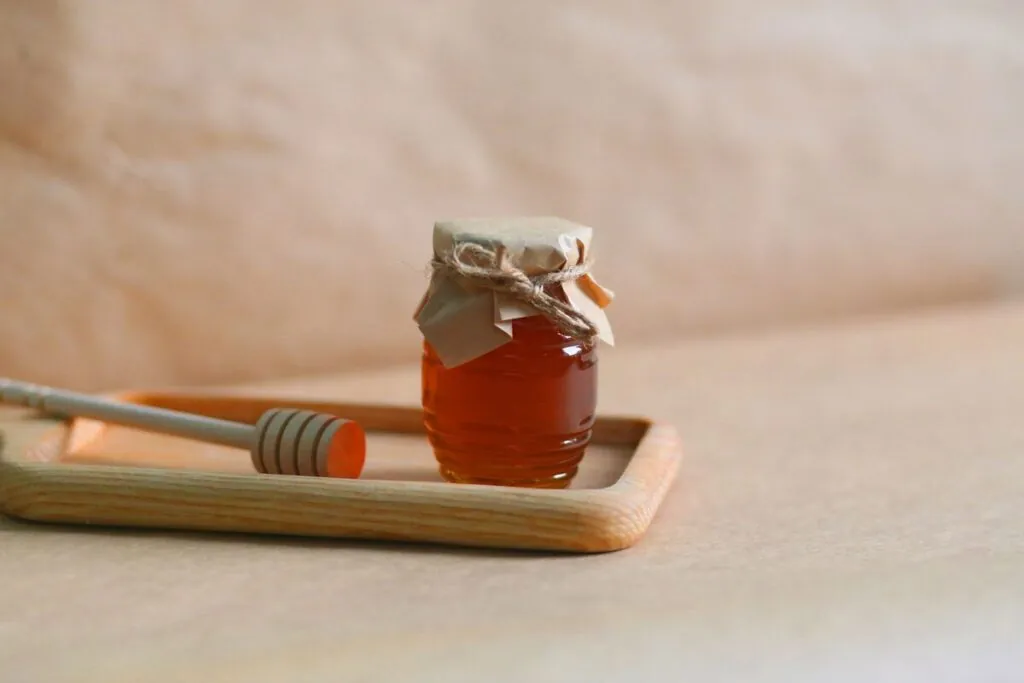
| Honey | Softer-feeling skin for a while | Thin layer on clean skin, 10 minutes, rinse with cool water |
| Aloe gel | Light moisture, a cooling feel | Thin layer on clean skin, leave on or rinse if it feels tacky |
| Curd or milk | A soothing feel on dry skin | 5 to 10 minutes, then rinse well |
| Coconut or sesame oil | Less dryness on arms, legs and feet | A little on damp body skin after a bath |
Honey
Honey is a reasonable choice for a short rinse-off mask, but kitchen honey has not been shown to clear acne or fade marks. Skip it if you react to bee products. Our guide to using honey on your face has more detail.
Aloe vera
The US National Center for Complementary and Integrative Health says aloe gel on the skin is generally well tolerated, though it notes occasional reports of burning, itching, rash and eczema. The evidence for its skin uses is limited, so treat it as a soothing moisturiser rather than a treatment. Read more in our guide to aloe vera for skin and hair.
Remedies to use with care
Good evidence is mostly missing here too, and these can go wrong depending on your skin.
- Turmeric (haldi): it has a long place in Indian skincare and ceremonies, but the same US agency notes that curcumin on the skin can cause hives or itching. It also stains. Use a small amount in a rinse-off pack, and stop if your skin itches.
- Coconut oil on the face: fine on dry body skin, but it can feel heavy on the face in humid weather and may worsen breakouts if you are acne-prone.
- Multani mitti: it can feel refreshing on oily skin but may leave dry or sensitive skin tight. Rinse before it dries fully, and keep it to once a week at most.
Remedies to skip, and why
Lemon
Lemon rind and pulp contain furocoumarins, which react with sunlight on the skin and can cause a burn-like injury called phytophotodermatitis. A case report in the journal Wounds, about a child who rubbed lemon on her face before playing in the sun, describes redness within about a day, blisters over the next one to three days, and dark marks that can last up to a year.
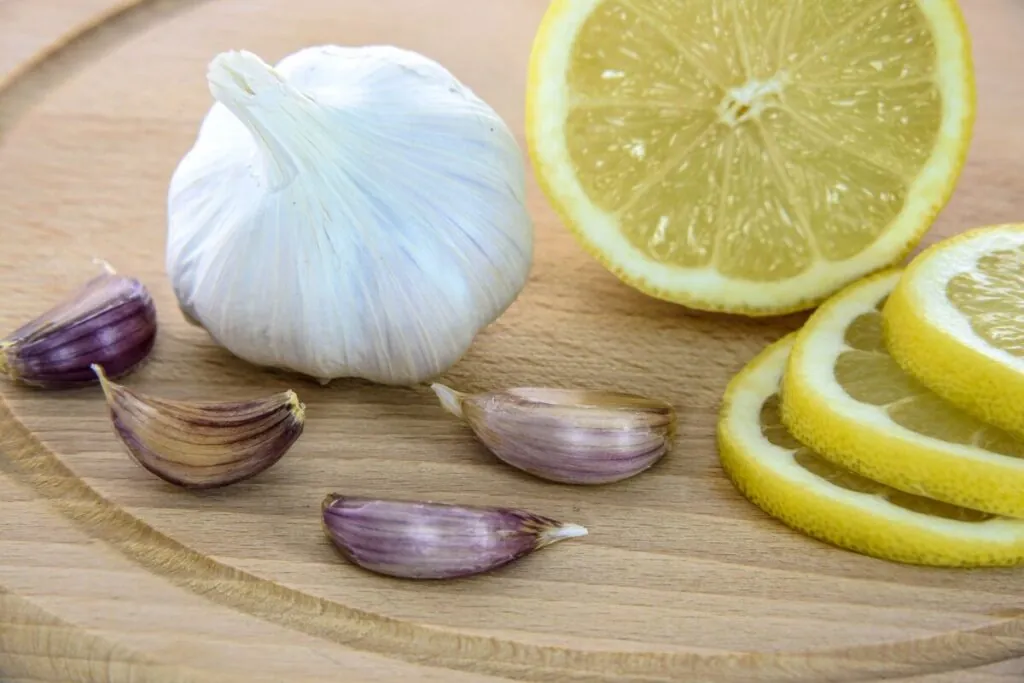
Humidity can increase absorption, which matters in much of India. Lemon is also often promoted for fading dark spots, when the reaction can leave you with new ones. If you get juice on your skin while cooking, wash it off with soap and water before heading outside.
Toothpaste
Toothpaste is not an acne treatment. The American Academy of Dermatology (AAD) explains that it often contains abrasives such as calcium or baking soda, whitening agents like peroxide, colour and flavour. None of these fight acne, and they can irritate or harm your skin.
Baking soda
Healthy skin is mildly acidic and baking soda is alkaline, so a paste or scrub pushes your skin the wrong way. That can leave it dry, tight and easily irritated, and the gritty texture adds friction. If your skin already stings at everything, our guide to repairing a damaged skin barrier will help more than any new remedy.
Garlic
Raw garlic is a strong skin irritant and can cause allergic reactions too. A case report in the Dermatology Online Journal describes a man who developed a painful, blistering chemical burn after wrapping a garlic and salt paste on his shin under plastic for 3 hours. Burns from garlic are a recognised problem, so don’t press it on pimples or tie it over a rash.
Other ones to leave out
- Apple cider vinegar: a weak acid, but a case report in the Journal of Clinical and Aesthetic Dermatology notes that vinegars can cause significant chemical burns, especially under a bandage.
- Undiluted essential oils: these are highly concentrated, and the same US agency says even products containing tea tree oil can redden or irritate some people’s skin.
- Salt, sugar or coffee scrubs on the face: the NHS warns that scrubbing can irritate skin and make acne worse.
Problems you should never treat at home
Some skin problems need a diagnosis and medicine. A paste can delay that, and the problem may spread in the meantime.
| Problem | What it may look like | What to do |
|---|---|---|
| Fungal infection (ringworm, jock itch, athlete’s foot) | Itchy, scaly, often ring-shaped patches, common in heat and sweat | Antifungal medicine, on a pharmacist’s or doctor’s advice. Check that it contains no steroid. |
| Severe acne | Deep, painful lumps, or spots that leave scars | See a dermatologist |
| Possible skin infection | Skin that is hot, swollen, painful or spreading, or has pus, with or without a fever | See a doctor promptly |
| Serious burns | Large or deep burns, burns on the face or genitals, chemical burns | Get urgent medical care |
| Changing spots and patches | A mole changing in size, shape or colour, or new patches of colour change | See a dermatologist |
Fungal infections
Garlic, vinegar and coconut oil are not substitutes for treatment. The NHS says you may need an antifungal medicine every day for up to 4 weeks, and that you should use it for the full time even after the rash has gone. It advises seeing a doctor if the rash doesn’t improve with that medicine, if it is on your scalp, or if you have a weakened immune system.
The AAD adds some practical steps that do belong at home: keep the area clean and dry, use a separate towel for it, and wash your hands after touching it.
Severe acne
The AAD says acne that is large, deep, painful or scarring needs a dermatologist. Don’t try to manage it with masks and spot pastes, because scars are much harder to treat than acne. Even standard treatment takes time, as our realistic acne treatment timeline explains.
A warning about steroid-mixed creams
When a home remedy fails, many people move on to a tube of cream a friend or a local shop recommends for itching or pimples. Check it carefully, because some of these creams combine a strong steroid with an antifungal or antibiotic. The itch may ease for a while, and that can feel like healing while the infection continues.
A letter in the Indian Journal of Dermatology, Venereology and Leprology links these combinations to widespread tinea that responds poorly to treatment. It also lists red face syndrome, steroid acne and thinning skin among the effects of misuse. It describes a 5-year-old whose father took an ankle patch for ringworm and applied a clobetasol-containing cream bought without a prescription. The patch improved slightly at first, then grew considerably over about a month. The authors note that corticosteroids appear on India’s prescription-only drug lists, yet are easy to buy without a prescription.
- Read the composition on the tube. Clobetasol, betamethasone, mometasone and beclometasone are all steroids.
- Don’t use a steroid cream on your face, on a rash or on a child unless a doctor has prescribed it for that area and told you how long to use it.
- If you have used one on your face for a long time, see a dermatologist for advice on stopping. The NHS warns that skin may get worse after long use ends, and that stopping suddenly can cause a withdrawal reaction.
A paper in the Indian Journal of Practical Pediatrics also calls misuse of these combination creams the most important factor behind hard-to-treat tinea in India. The NHS describes clobetasol as much stronger than other steroid treatments and says it should only be used on the face for 5 days, because facial skin can thin easily.
Steroids are useful medicines when correctly prescribed. The trouble comes from using them unsupervised, on the wrong problem or for too long.
How to patch test a home remedy
The AAD suggests this method for skin care products, and it works as a sensible guide for low-risk kitchen ingredients as well.
- Choose a coin-sized spot on the underside of your arm or inside your elbow, where it won’t rub off.
- Apply the amount you would normally use, twice a day for 7 to 10 days.
- For anything you would rinse off, leave it on for about five minutes.
- Watch for redness, itching or swelling. If there is none by the end, you can try it on a wider area.
- If you do react, wash it off gently and stop. A cool compress or petroleum jelly can help, and a severe reaction that doesn’t settle needs a dermatologist. Swelling of the face or trouble breathing is an emergency.
A clear Patch testTrying a small amount of a new product behind the ear or on the inner arm for a few days to check for a reaction before using it widely.See glossary doesn’t make everything safe: lemon’s reaction depends on sunlight, so a covered arm could miss it. Don’t test the “skip” items at all.
Common mistakes
- Treating a rash before knowing what it is. Ringworm, eczema and allergic rashes can look alike but need different care.
- Mixing several ingredients. If your skin reacts, you won’t know which one caused it.
- Waiting too long. If nothing has improved after two weeks, or the problem is getting worse sooner, stop and get advice.
Frequently Asked Questions
Some are, when used briefly on healthy skin after a patch test. Honey, aloe gel and curd are usually low risk, while lemon, toothpaste, baking soda and raw garlic can cause irritation or burns.
No, don’t rely on either. Ringworm is a fungal infection and needs an antifungal medicine used for the full recommended time. Garlic can also burn the skin.
No. Toothpaste ingredients don’t fight acne and can irritate skin, so use a gentle cleanser and a proper acne product instead.
First aid comes first: the NHS advises cool running water for 20 minutes and no creams, oils or butter. Some clinical research suggests aloe gel may help burns heal, but that doesn’t make it first aid.
Ask a doctor first in both cases. Children’s skin can react more easily, and a rash in a child should be checked rather than treated with a paste. In pregnancy, the AAD also advises seeing a dermatologist before treating acne on your own.
The bottom line
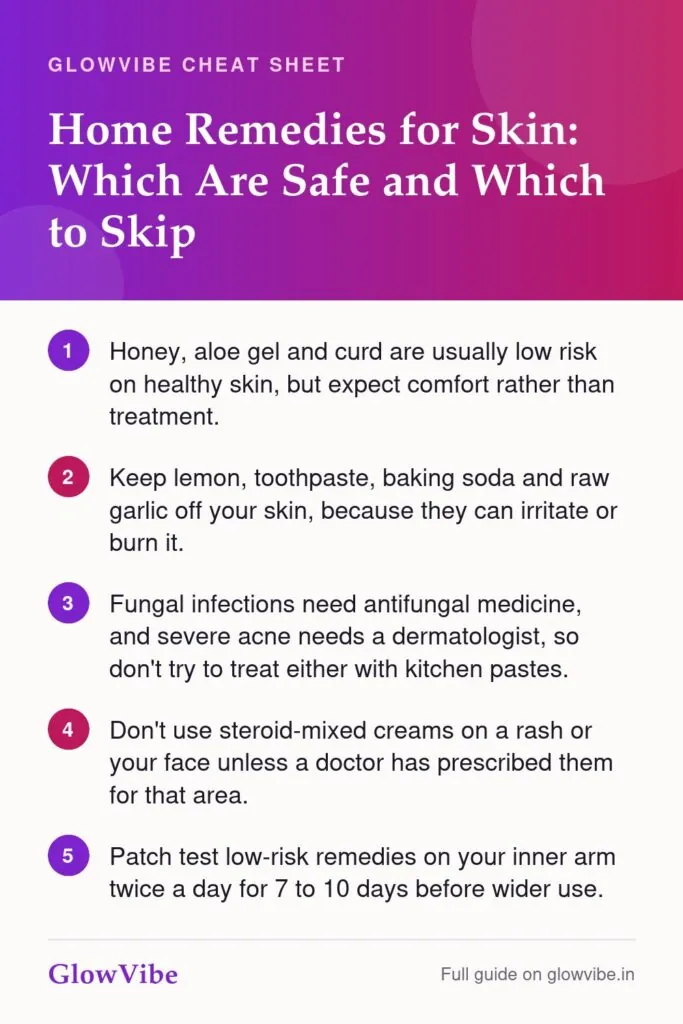
Use home remedies for comfort on healthy skin, keep them simple and patch test first. Leave out lemon, toothpaste, baking soda and garlic, and be wary of any tube that promises a quick fix for a rash. Take fungal infections, severe acne and serious burns to a doctor or dermatologist. This is general information, not medical advice, so ask a professional about your own skin.
Quick poll
What is your biggest skin concern right now?
Sources
- Clobetasol: steroid for skin conditions, NHS
- Adult acne treatment dermatologists recommend, American Academy of Dermatology
- Ringworm, NHS
- Surrogate advertisement of a super-potent corticosteroid-containing cream: An alarming development and a cautionary tale of its consequences, Indian Journal of Dermatology, Venereology and Leprology
- Lemons in the Arizona Sunshine: The Effects of Furocoumarins Leading to Phytophotodermatitis and Burn-like Injuries, Wounds