Kegel Exercises for Men: Step-by-Step Guide and 8-Week Plan (2026)
Learn how to do Kegel exercises for men correctly: find your pelvic floor, follow a simple 8-week plan, avoid common mistakes and know when to see a doctor.

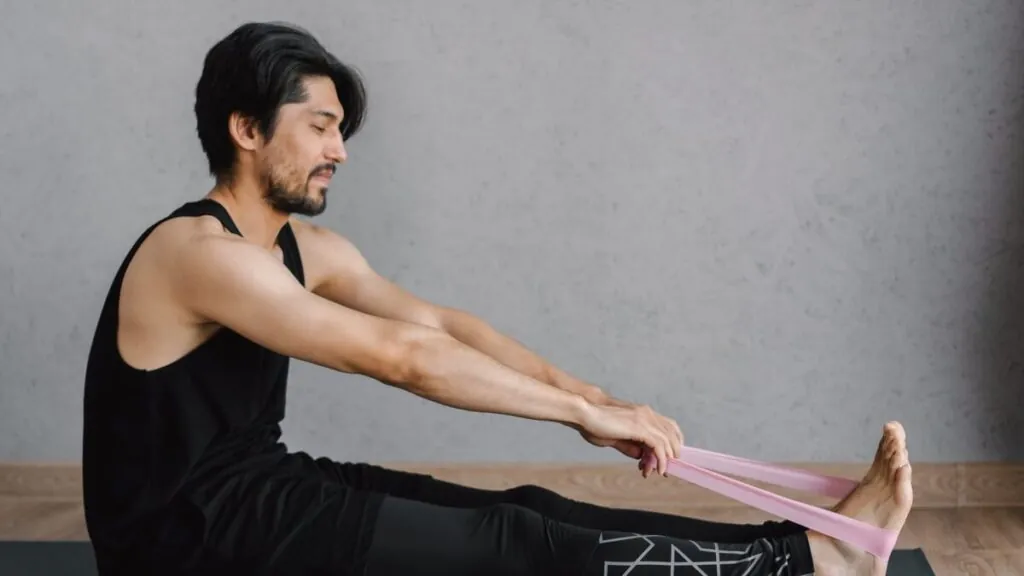
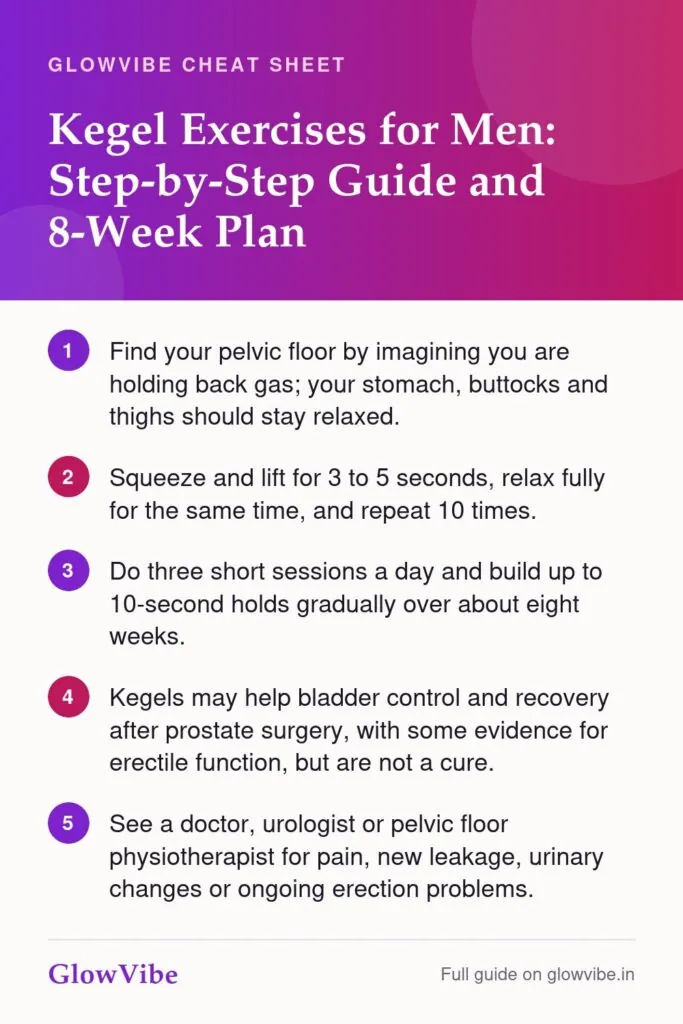
To do Kegel exercises as a man, find your pelvic floor muscles (the ones you would use to stop the flow of urine or hold back gas), squeeze and lift them for 3–5 seconds, then relax fully for the same time. Repeat 10 times, three times a day, and build up to 10-second holds over a few weeks.
That is the whole method in two sentences. The rest of this guide shows you how to find the right muscles, a simple week-by-week plan, the mistakes that stop most men from seeing results, and when you should see a doctor instead of just doing more reps.
What are Kegel exercises for men?
Kegels are simple squeeze-and-release exercises for the pelvic floor, a sling of muscles that runs from your pubic bone at the front to your tailbone at the back. In men, these muscles support the bladder and bowel, help control the flow of urine, and play a part in sexual function.
Most people think of Kegels as a women’s exercise, usually after pregnancy. But men have the same muscle group, and it weakens with age, long hours of sitting, heavy straining, excess weight and some surgeries. Like any muscle, it responds to regular, correct training.
The best part is that you need no equipment, no gym and no special clothes. Once you know the technique, you can do a set while sitting at your desk or waiting at a traffic signal, and nobody will notice.
Benefits of Kegel exercises for men: what the evidence says
Pelvic floor training is a well-established, low-risk exercise, but it is not a cure-all. Here is a realistic picture of where it helps, from the strongest evidence to the more modest.
- Bladder control: Pelvic floor exercises are commonly recommended for men with mild urine leakage, a sudden urge to pass urine, or dribbling after urinating (post-micturition dribble). Many men notice fewer leaks with consistent practice.
- Recovery after prostate surgery: Leakage is common after prostate removal surgery. Urologists and pelvic floor physiotherapists often teach Kegels before and after the operation because they may help some men regain control sooner. Your surgical team should guide the timing.
- Bowel control: The same muscles help you hold back gas and stools, so training them can support bowel control too.
- Erectile function (some evidence): A few studies suggest pelvic floor training may help some men with mild erection problems, possibly alongside other treatment. The evidence is limited, and Kegels are not a substitute for a medical check, since erection problems can be an early sign of diabetes, high blood pressure or heart disease.
Treat Kegels as one helpful habit within a wider healthy lifestyle, not a quick fix. Regular activity, a healthy weight and not smoking all support pelvic health as well. Our guide to the benefits of exercise covers why general fitness matters here too.
How to find your pelvic floor muscles
Finding the right muscles is the step most men get wrong. If you squeeze your stomach, thighs or buttocks instead, you will feel like you are working hard but the pelvic floor will barely move. Try these methods.
- The “hold back gas” cue: Imagine you are in a quiet meeting and need to stop yourself passing wind. The gentle tightening and lifting you feel around the back passage is your pelvic floor.
- The “stop the flow” test: While passing urine, try to slow or stop the stream for a second. If you can, you have found the muscles. Do this only once or twice to learn the feeling; do not make it a regular exercise, because repeatedly stopping urine can interfere with normal bladder emptying.
- The “lift” cue: Many physiotherapists describe it as drawing the base of the penis slightly in and lifting the scrotum upward, without moving your legs or buttocks.
You can check yourself in a mirror while standing without clothes: when you contract correctly, the base of the penis should draw in slightly and the scrotum should lift. Your stomach, buttocks and thighs should stay relaxed, and you should keep breathing normally.
Kegel exercises for men step by step
Start lying down, because gravity is not pulling on the pelvic floor in this position, which makes it easier to feel the muscles working. Once the movement feels natural, move on to sitting and then standing.
- Get comfortable: Lie on your back with knees bent and feet flat on the floor or bed. Empty your bladder first.
- Breathe: Take a slow breath in and let your belly relax.
- Squeeze and lift: As you breathe out, tighten your pelvic floor muscles and lift them upward and inward.
- Hold: Keep the squeeze for 3–5 seconds while breathing normally. Do not hold your breath.
- Relax fully: Let go completely and rest for the same 3–5 seconds. The relaxation is as important as the squeeze.
- Repeat: Do 10 slow squeezes. That is one set.
- Add quick flicks: Finish with 10 fast squeezes, tightening hard for one second and releasing straight away. These train the muscles to react quickly, for example when you cough or sneeze.
If you can only hold for two seconds at first, that is fine. Start where you are and stretch the hold time gradually. A shorter, correct squeeze is far more useful than a long one where your buttocks are doing the work.
How often to do Kegels: a simple 8-week plan
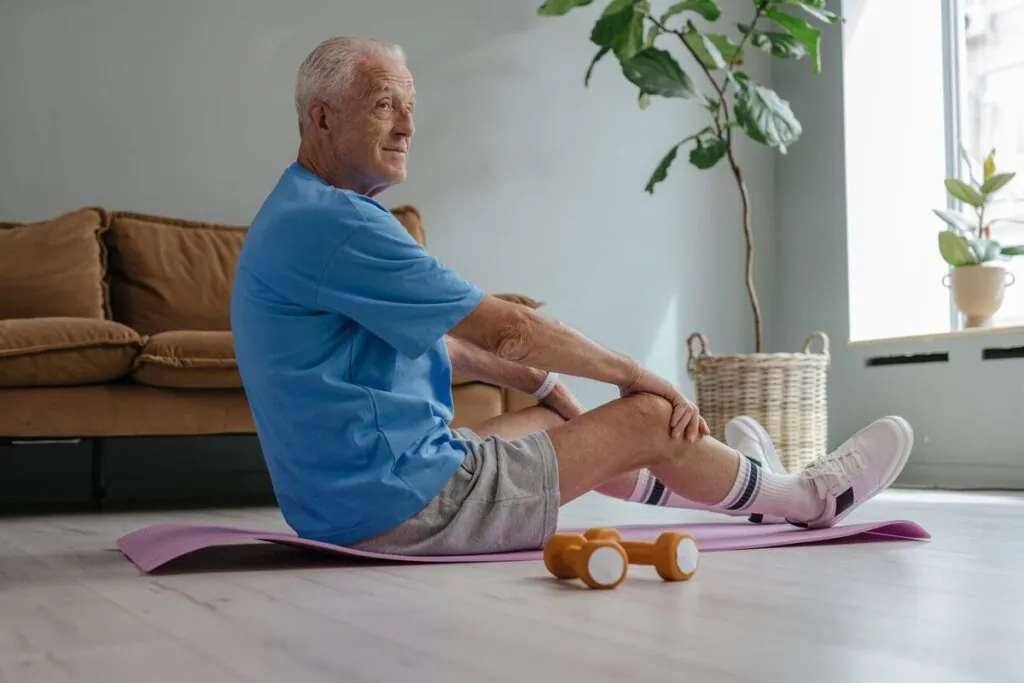
Aim for three short sessions a day, for example morning, afternoon and before bed. Each session takes only three to five minutes, so it is easy to tie to habits you already have, like brushing your teeth or your evening chai.
| Weeks | Position | Slow squeezes | Quick flicks | Sessions per day |
|---|---|---|---|---|
| 1–2 | Lying down | 10 × 3–5 sec hold, equal rest | 10 | 3 |
| 3–4 | Lying and sitting | 10 × 5–7 sec hold | 10 | 3 |
| 5–6 | Sitting and standing | 10 × 8–10 sec hold | 10–15 | 3 |
| 7–8 onwards | Standing, walking, before lifting or coughing | 10 × 10 sec hold | 10–15 | 2–3 (maintenance) |
Only move to the next stage when the current one feels easy and you can relax fully between squeezes. If your muscles feel tired or you lose the squeeze before the hold ends, stay at that level for another week.
How to make Kegels part of daily life
Once you have the basics, the aim is to use your pelvic floor automatically during everyday activities. Physiotherapists sometimes call this “the knack”.
- Before effort: Tighten your pelvic floor just before you cough, sneeze, laugh, stand up from a chair or lift a heavy bag.
- After urinating: A firm squeeze after you finish can help clear the last few drops and reduce dribbling on your clothes.
- Habit anchors: Do a set each time you sit in the car or metro, wait for your laptop to start, or during TV ad breaks.
- Pair with core work: The pelvic floor works as a team with your deep abdominal muscles. A gentle core exercise routine at home complements Kegels well.
Some men use phone reminders or a free pelvic floor training app for the first few weeks. Whatever you use, consistency matters far more than intensity.
Common Kegel mistakes men make
- Squeezing the wrong muscles: Clenching your buttocks, pulling in your stomach or pressing your thighs together means the pelvic floor is not doing the work.
- Holding your breath: This raises pressure inside your abdomen and pushes down on the pelvic floor, the opposite of what you want.
- Bearing down: Pushing outward, as if straining on the toilet, is the reverse movement. You should feel a lift, not a push.
- Not relaxing between squeezes: A muscle that never lets go becomes tight and tired. Full relaxation is part of the exercise.
- Doing far too many: More is not better. Hundreds of squeezes a day can cause muscle fatigue and pelvic or groin discomfort.
- Practising while urinating: Use the “stop the flow” test only to learn the feeling, not as your daily workout.
- Giving up too soon: Muscle strength builds slowly. Most men need several weeks of regular practice before they notice a difference.
Who should be careful, and when to see a doctor
Kegels are safe for most men, but they are not right for every pelvic problem. Some men have a pelvic floor that is already too tight (overactive) rather than weak. For them, more squeezing can make pain or urinary symptoms worse, and they need to learn relaxation first.
Stop the exercises and see a doctor, urologist or pelvic floor physiotherapist if you have any of the following:
- Pain in the pelvis, testicles, penis, perineum or lower back, especially if Kegels make it worse.
- Blood in your urine or semen, burning while urinating, or fever.
- A weak stream, difficulty starting, or a feeling that your bladder is not emptying, which can be signs of an enlarged prostate or other conditions.
- Leakage that is new, sudden or getting worse.
- Ongoing erection problems, since these deserve a proper medical check for underlying causes.
- Recent prostate, bladder or bowel surgery, where you should follow your surgeon’s instructions on when and how to start.
A pelvic floor physiotherapist can check whether you are contracting correctly and tailor a plan to you. Many larger hospitals in Indian cities now have physiotherapy departments with pelvic health services, so it is worth asking your urologist for a referral.
Lifestyle habits that support your pelvic floor
- Avoid constipation: Straining on the toilet puts heavy pressure on the pelvic floor. Eat enough fibre from dal, vegetables, fruit and whole grains, and drink plenty of water, especially in Indian summers.
- Keep a healthy weight: Extra weight around the belly adds constant load on these muscles. Our list of the best exercises for weight loss is a good starting point.
- Lift smart: When lifting weights or heavy loads, breathe out and gently tighten your pelvic floor on the effort rather than holding your breath.
- Watch bladder irritants: Too much tea, coffee, cola and alcohol can increase urgency for some men. Cutting back may help alongside Kegels.
- Stay active: Regular walking and strength training support overall health. If you need structure, try one of our free workout plans.
Frequently Asked Questions
Many men notice some improvement in bladder control after about 6 to 12 weeks of regular practice, though it varies from person to person. Keep going for at least three months before judging results. If you see no change by then, get your technique checked by a pelvic floor physiotherapist.
A common starting point is three sets a day, each with 10 slow squeezes and 10 quick ones. Build the hold time up to around 10 seconds over several weeks. Doing far more than this does not speed up results and can tire the muscles.
There is some evidence that pelvic floor training may help some men with mild erection problems, but it is not a guaranteed fix. Erection problems can signal conditions like diabetes or heart disease, so see a doctor or urologist first. Kegels can then be one part of a wider plan.
Yes, pelvic floor exercises are commonly recommended to help men regain bladder control after prostate surgery, and some teams advise starting before the operation. Always follow your surgeon’s advice on when to begin, especially while a catheter is in place. A pelvic floor physiotherapist can guide you safely.
Yes. Overdoing Kegels, or never fully relaxing between squeezes, can leave the muscles tired and tight and may cause pelvic or groin discomfort. If the exercises cause pain, stop and get checked, as you may need relaxation work instead.
You should feel a lift and tightening between your legs, with the base of the penis drawing in and the scrotum rising slightly. Your stomach, buttocks and thighs should stay relaxed and you should breathe normally. If you are unsure, a pelvic floor physiotherapist can confirm your technique.
Yes, Kegels are safe for most adult men of any age when done correctly. Younger men often do them to support bladder control and general pelvic fitness. If you have pelvic pain or urinary symptoms, see a doctor before starting.
The bottom line
Kegel exercises for men are simple: find the right muscles, squeeze and lift, hold, relax fully, and repeat three times a day. Start lying down with short holds, build up slowly over eight weeks, and fold the habit into your normal routine.
Be patient and realistic. Kegels may help with bladder control, recovery after prostate surgery and, for some men, erectile function, but they are not a cure. If you have pain, new symptoms or no progress after three months, see a doctor, urologist or pelvic floor physiotherapist.