How to Lose Weight in 15 Days: A Realistic, Safe Plan (2026)
A realistic, safe 15-day weight loss plan: what results to expect, Indian veg and non-veg meal ideas, a daily step and strength schedule, and mistakes to avoid.


If you want to lose weight in 15 days, aim for about 1 kg of real fat loss, or up to 2 kg if you have more weight to lose. Safe fat loss is about 0.5 kg per week for most people and 1 kg at the very most, so that’s the honest range for two weeks. The scale may drop faster in the first few days, but most of that early loss is water and stored carbohydrate (glycogen), not fat.
That’s still a good start. Fifteen days is enough to start habits that can keep working long after the deadline: a sensible calorie deficit built on everyday Indian food, more protein, more walking, a few strength sessions, and better sleep. This guide gives you a day-by-day plan, sample veg and non-veg meals, and a clear list of what to avoid.
How Much Weight Can You Lose in 15 Days?
For most healthy adults, a realistic target is about 1 kg of fat in 15 days, or up to 2 kg if you have more weight to lose. You might see the scale move by more than that, especially if you’ve been eating a lot of salty, carb-heavy or restaurant food. Cut back on those and your body releases stored water along with glycogen, which can show up as a sudden 1–2 kg drop in the first week.
That quick drop is normal and harmless, but don’t read it as fat loss. It also comes back quickly if you go back to old habits. Fat loss is slower and steadier, and that’s the part worth protecting.
| What changes | Typical timeline | What it means |
|---|---|---|
| Water and glycogen | Days 1–5 | Fast early drop on the scale; not fat, and it can bounce back |
| Fat loss | Steady, about 0.5 kg per week, 1 kg at most | The real, lasting change; about 1 kg over 15 days, up to 2 kg if you have more weight to lose |
| Bloating and digestion | Within 1–2 weeks | Less salt, more fibre and water often make you feel lighter |
| Energy, sleep, stamina | Within 2 weeks | Daily walking and regular meals often help here first |
How much you lose depends on your starting weight, age, sex, activity level, sleep and health conditions. People with more weight to lose often see faster early results; people who are already fairly lean will see slower changes. Neither is a sign that the plan isn’t working.
How Weight Loss Actually Works
You lose fat when you take in fewer calories than you use, consistently, over time. This is called a calorie deficit. A modest deficit of around 300–500 calories a day is enough for most people and is far easier to stick to than starving yourself. Over 15 days it adds up to roughly 0.5–1 kg of fat.
You don’t need to count every calorie to get there. Smaller portions of rice and roti, more dal and sabzi, less oil and fewer sugary drinks will create a deficit on their own for most people. Adding daily steps makes it bigger without you having to eat less.
Protein and strength training matter too. They help you keep muscle while you lose fat, so you end up looking and feeling firmer rather than just smaller and tired.
15 Days Weight Loss Diet Plan (Indian)
This weight loss diet plan uses normal Indian home food. It isn’t a special “diet menu”. It’s your usual thali, rebalanced. Follow these rules at every meal:
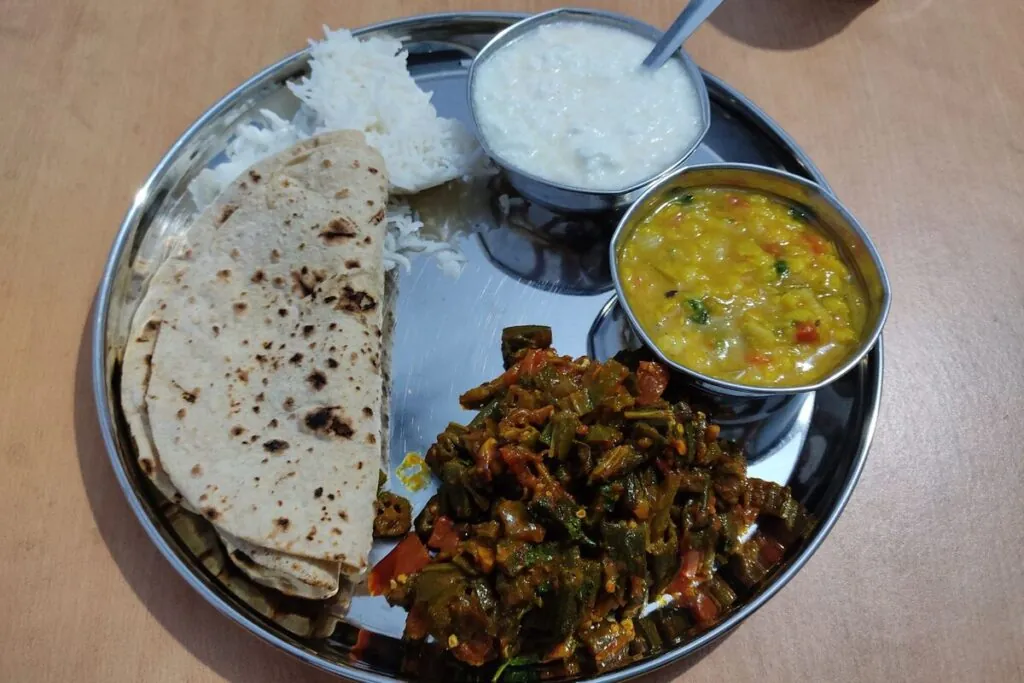
- Protein at every meal: dal, chana, rajma, paneer, curd, eggs, chicken or fish. See our list of high-protein foods in India for more veg and non-veg options.
- Half your plate vegetables: sabzi, salad, or a bowl of vegetable soup. They fill you up for very few calories.
- Measured carbs: 1–2 rotis or a small katori of rice, not both in large amounts. Millets like jowar, bajra or ragi are good swaps.
- Less oil and ghee: cook with a teaspoon or two rather than pouring freely, and keep fried snacks (pakoras, samosas, puris) for rare occasions.
- No sugary drinks: skip packaged juices, colas, sweetened lassi and sugary chai. Switch to water, buttermilk (chaas), lemon water without sugar, or tea with little or no sugar.
Sample Day: Vegetarian
| Meal | What to eat | Protein source |
|---|---|---|
| Early morning | Warm water or tea with little sugar | None |
| Breakfast | Moong dal chilla (2) with mint chutney, or vegetable poha with peanuts | Moong dal / peanuts |
| Mid-morning | 1 fruit (apple, guava, orange or papaya) | None |
| Lunch | 2 rotis or small katori rice, dal, sabzi, salad, curd | Dal, curd |
| Evening | Roasted chana or sprouts chaat, buttermilk | Chana / sprouts |
| Dinner | Paneer bhurji or palak paneer with 1 roti and a big bowl of sabzi | Paneer |
Sample Day: Non-Vegetarian
| Meal | What to eat | Protein source |
|---|---|---|
| Early morning | Warm water or black coffee | None |
| Breakfast | 2-egg vegetable omelette with 1 multigrain toast or roti | Eggs |
| Mid-morning | 1 fruit with a small handful of nuts | Nuts |
| Lunch | Chicken curry (home-style, less oil) with small katori rice, sabzi and salad | Chicken |
| Evening | Boiled egg or sprouts chaat, buttermilk | Egg / sprouts |
| Dinner | Grilled or tandoori fish, or chicken tikka, with dal and a big bowl of sabzi | Fish / chicken, dal |
Portions are a guide, not a prescription. A tall, active man will need more food than a petite woman who works at a desk. If you feel weak, dizzy or constantly hungry, add a little more protein or a roti. See a doctor if it keeps happening. If you take insulin or tablets that lower blood sugar, these can be signs of a low, so check your sugar and treat any low first with a small glass of juice or a sugary drink. For more ideas, read our guide to protein-rich foods for weight loss.
15-Day Activity Plan: Steps Plus Strength
Exercise burns some extra calories, but its bigger job is protecting muscle and making you feel better. Set a daily step goal and add three short strength sessions a week. If you’re a beginner, start at 6,000–7,000 steps and build up; if you already walk a lot, aim for 9,000–10,000.
| Day | Activity | Daily steps |
|---|---|---|
| 1 | Brisk walk 20–30 min | 6,000–7,000 |
| 2 | Strength: full body (squats, wall push-ups, glute bridges, plank) | 6,000–7,000 |
| 3 | Brisk walk + 10 min stretching | 7,000 |
| 4 | Strength: full body | 7,000 |
| 5 | Brisk walk 30 min or cycling | 7,000–8,000 |
| 6 | Strength: full body | 7,000–8,000 |
| 7 | Rest or gentle yoga | 5,000+ |
| 8 | Brisk walk 30–40 min | 8,000 |
| 9 | Strength: add a set or slightly harder variation | 8,000 |
| 10 | Brisk walk + stairs | 8,000–9,000 |
| 11 | Strength: full body | 8,000–9,000 |
| 12 | Brisk walk 40 min or a dance/sport session | 9,000 |
| 13 | Strength: full body | 9,000 |
| 14 | Rest or gentle yoga | 6,000+ |
| 15 | Long walk 45 min; note how you feel | 9,000–10,000 |
Short on time? A 30-minute workout at home covers your strength days with no equipment. Women who want a structured routine to continue after these 15 days can follow our weight loss workout plan for females.
In Indian summers and humid monsoons, walk early in the morning or after sunset, carry water, and move indoors (stairs, mall walking, home workouts) on very hot days.
Sleep, Stress and Water
Poor sleep makes you hungrier the next day and pushes you towards sugary, fried food. Aim for 7–9 hours, keep a regular bedtime, and put your phone away 30 minutes before sleeping.

Stress works the same way. Many people eat when they’re anxious, bored or tired. A 10-minute walk, a few minutes of slow breathing, or calling a friend can break the habit of reaching for snacks.
Drink water through the day, more in hot weather and on workout days. Thirst is easy to mistake for hunger, so try a glass of water before you reach for a snack.
What Not to Do When You Want to Lose Weight Fast
Searching “lose weight fast” brings up plenty of shortcuts. Most of them either don’t work or cost you more than they give.
- Crash diets: eating very little, or only fruit or soup, leads to tiredness, irritability, muscle loss and rebound eating. A lot of the early drop is water, and the weight tends to come back.
- Detox teas and “flat tummy” drinks: many act as laxatives or diuretics. You lose water, not fat, and they can upset your digestion and dehydrate you.
- Skipping meals: skipping breakfast or dinner can lead to overeating later. Regular meals with protein are easier to manage.
- Diet pills and fat burners: unregulated pills can contain stimulants or undeclared ingredients. Never take any weight-loss medicine unless a doctor prescribes it.
- Over-exercising: two-hour workouts on a low-food diet raise your injury risk and make you hungrier. Steady daily movement works better.
- Weighing yourself obsessively: weight swings by 0.5–1 kg day to day from water, salt and hormones. Weigh in once or twice a week at the same time, or track your waist measurement instead.
Who Should Talk to a Doctor First
A modest diet and walking plan is safe for most healthy adults, but check with your doctor before changing how you eat if any of these apply to you:
- Diabetes or prediabetes: especially if you take insulin or tablets that lower blood sugar, as eating less can cause low sugar levels.
- Thyroid conditions: your doctor may want to review your medicine and test results. If you take levothyroxine in the morning, have it on an empty stomach, 30 to 60 minutes before tea, coffee or breakfast.
- PCOS: a doctor or dietitian can tailor your diet and activity to your symptoms.
- Pregnancy or breastfeeding: this isn’t the time for a calorie deficit without medical guidance.
- A current or past eating disorder: deadline-based plans and calorie cutting can be triggering. Speak to a doctor or mental health professional first.
- Under 18, or already underweight: don’t diet to lose weight without a doctor’s advice. Teens need enough food to grow, and dieting young can lead to eating disorders.
- Heart, kidney or blood pressure conditions, or regular medication: get the go-ahead before starting new exercise or diet changes.
Also see a doctor if you’re losing weight without trying. If you feel faint, have chest pain or feel unusually breathless during exercise, stop straight away and see a doctor, even if it settles. Call for emergency help if chest pain doesn’t go away or gets worse, or comes with sweating, feeling sick, light-headedness or breathlessness.
How to Keep Going After Day 15
- Keep what worked: if the protein breakfast and evening walk felt easy, make them permanent.
- Loosen what didn’t: if a rule felt miserable, adjust it rather than dropping the whole plan.
- Plan for festivals and eating out: enjoy the meal, then go back to normal the next day. One heavy meal won’t undo two weeks.
- Add variety to workouts: try some of the best exercises for weight loss to keep things interesting.
Frequently Asked Questions
A safe, realistic target is about 1 kg of fat, or up to 2 kg if you have more weight to lose. That’s based on a rate of about 0.5 kg per week, and 1 kg at the very most. The scale may show a bigger drop early on, but that extra loss is mostly water and glycogen, not fat.
Losing 5 kg of fat in 15 days isn’t realistic or safe for most people. If the scale drops that much, most of it is likely water, and getting there usually means extreme restriction. Aim for steady fat loss instead.
The best plan is one you can stick to: home-style meals with protein at every meal (dal, paneer, curd, eggs, chicken or fish), half a plate of vegetables, measured roti or rice, and little oil and sugar. You don’t need special foods or expensive supplements.
No. Rice can fit into a weight loss diet in sensible portions. Have a small katori with plenty of dal and sabzi, and avoid having large servings of rice and several rotis in the same meal.
Walking helps, but your diet has a bigger effect on the scale. Combine a daily step goal with a modest calorie deficit and two or three strength sessions a week to lose fat while keeping muscle.
The first-week drop is mostly water and glycogen leaving your body as you eat less salt and fewer refined carbs. After that, you’re seeing mainly fat loss, which is slower. This is normal and means the plan is working.
They may make the scale dip for a day because many work as laxatives or diuretics, but that’s water, not fat. They can also cause dehydration and stomach upset, so skip them.
The Bottom Line
Losing weight in 15 days is realistic if your goal is realistic: about 1 kg of fat (up to 2 kg if you have more weight to lose), a flatter-feeling stomach and better energy. Eat balanced Indian meals with protein at every meal, cut back on fried food and sugary drinks, walk daily, do three short strength sessions a week, and sleep well.
Skip crash diets, detox teas and pills, and talk to your doctor first if you have a health condition. Treat these 15 days as the start of a routine, not a one-off sprint.