Indian Diet Plan for Weight Loss: A Sustainable 7-Day Plan (2026)
A sustainable 7-day Indian diet plan for weight loss: veg meals with non-veg swaps, the plate method, roti and katori portions, smart swaps and why most diets fail.

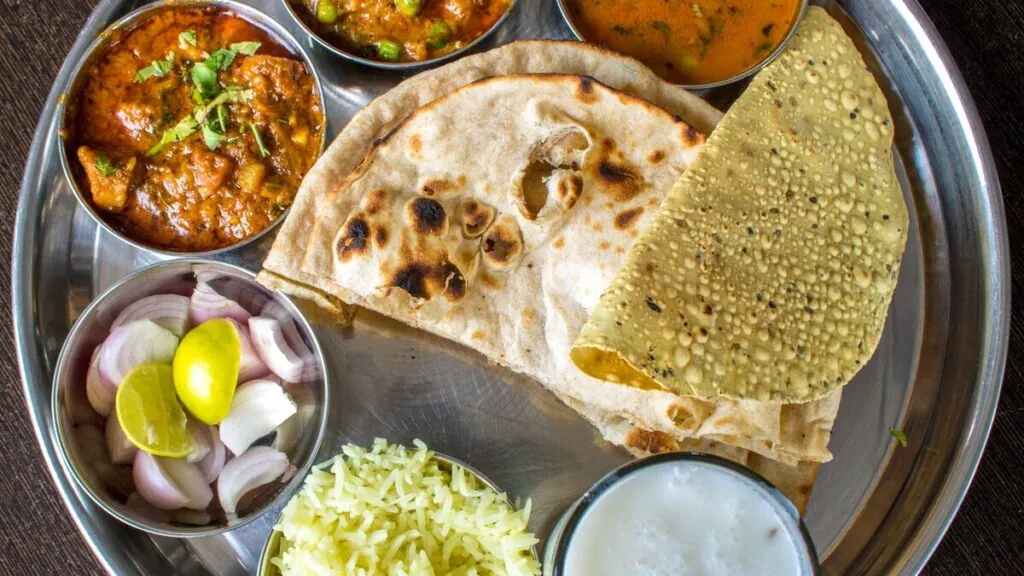
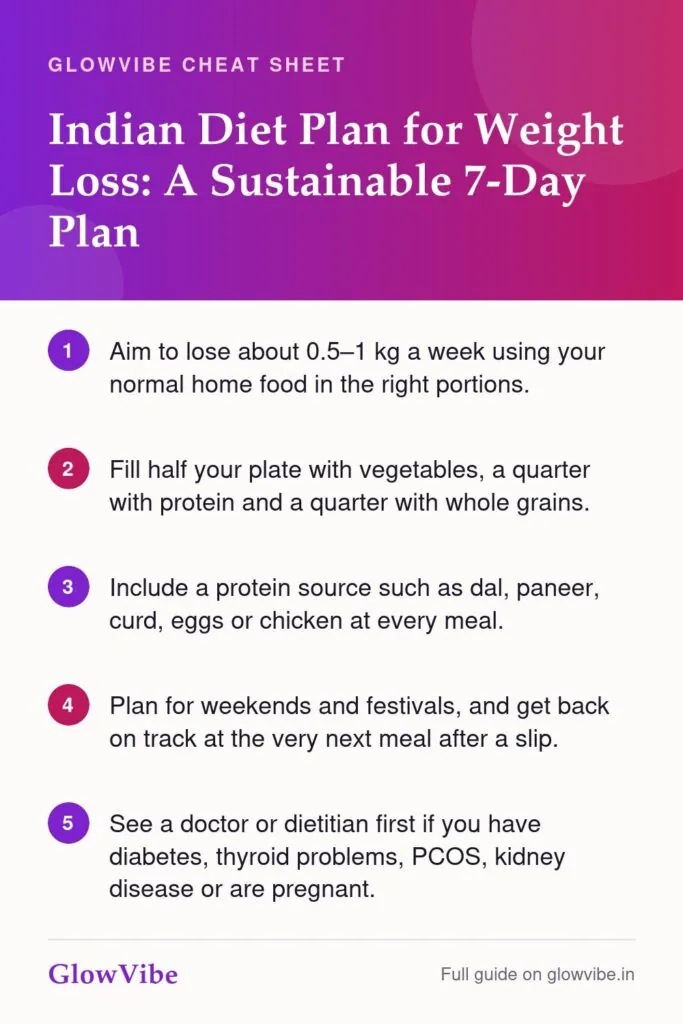
The best Indian diet plan for weight loss is not a crash diet. It is your normal home food (dal, sabzi, roti, rice, curd, eggs or chicken) eaten in the right portions, with more protein and vegetables, less sugar and fried food, and a pace of about 0.5–1 kg a week that you can actually keep up.
Below you will find a 7-day vegetarian diet plan for weight loss (with egg and non-veg swaps), a simple plate method, portion guides in rotis and katoris, smart swaps, and tips for eating out and festivals. We also look at why most diets fail, so you can avoid the traps that bring the weight back.
Need results for a wedding or trip coming up soon? Our realistic 15-day weight loss plan covers the short sprint. This guide is about the long game: eating in a way you can follow for months, not days.
Why Most Diets Fail (and How to Avoid It)
Most people don’t fail for lack of willpower. They fail because the diet was built to break, usually in one of these four ways.
- Too restrictive. Cutting out rice, roti, sweets and every snack at once leaves you hungry, tired and irritable. Sooner or later you eat everything you banned, and then some.
- Not enough protein. A typical Indian plate is heavy on carbs and light on protein. Without enough protein, you feel hungry soon after eating, and more of the weight you lose can come from muscle.
- The weekend rebound. Five careful days followed by a Saturday biryani, Sunday brunch and late-night snacks can cancel most of the week’s progress. The scale does not move, and you decide the diet “doesn’t work”.
- All-or-nothing thinking. One samosa becomes “I’ve ruined it, I’ll start again on Monday”. A single off meal does very little harm. Giving up for a week does a lot.
A sustainable plan fixes all four: it includes the foods you love in sensible amounts, puts protein on every plate, plans for weekends, and treats a slip as a single meal, not a failure.
How Much Weight Loss Is Safe and Realistic?
For most adults, losing about 0.5–1 kg a week is a safe and steady pace. You may lose more in the first week or two, but much of that is water as you cut back on salt, sugar and refined carbs. After that, progress slows down, and that is normal.
Losing much faster usually means eating too little, which costs muscle and is hard to keep up. A slower loss you can maintain beats a dramatic one that returns in three months.
The Plate Method: Your Daily Weight Loss Diet Chart
You don’t need to count every calorie. For lunch and dinner, use a regular dinner plate and divide it like this.
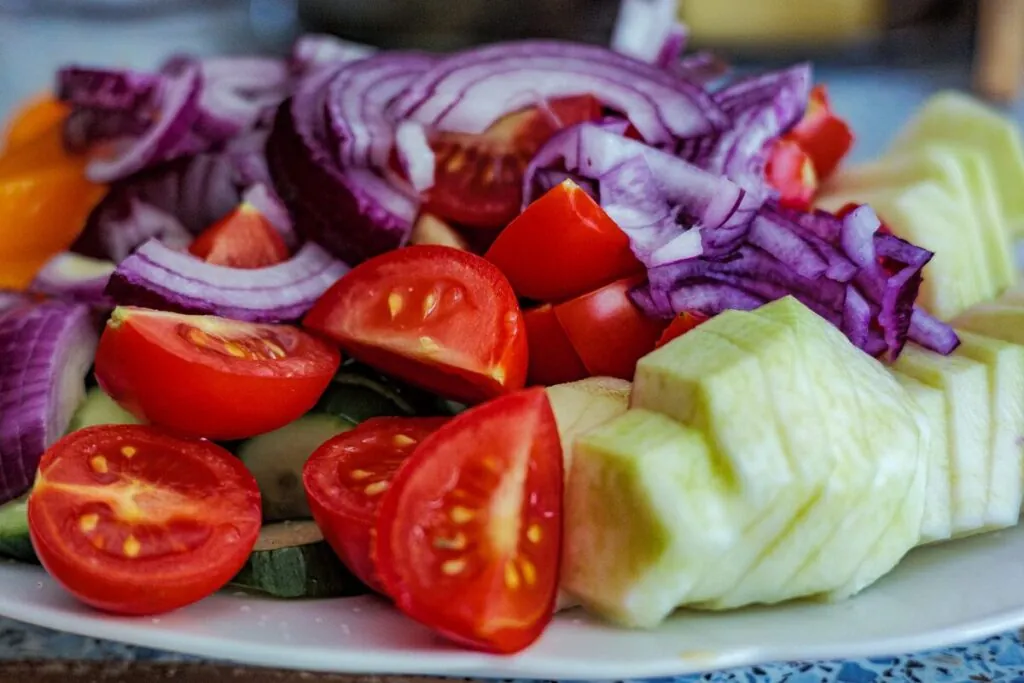
- Half the plate: vegetables. Sabzi, salad, raita with cucumber, steamed or stir-fried veggies. Go easy on potato, which counts as a starch.
- A quarter: protein. Dal, chana, rajma, paneer, tofu, curd, eggs, chicken or fish.
- A quarter: whole grains. Roti, brown or regular rice, millet roti, dalia or poha.
Most Indian thalis are the reverse, with half the plate rice or rotis. Simply flipping that ratio is often enough to start losing weight without feeling deprived.
Portion Guide in Rotis and Katoris
These are general starting points for an adult trying to lose weight. Taller, more active people (and most men) may need a little more; shorter, less active people a little less.
| Food | Portion per meal |
|---|---|
| Roti or phulka (medium, no ghee on top) | 2 rotis |
| Cooked rice | 1 katori (small bowl) |
| Dal, rajma, chana or sambar | 1 katori, thick rather than watery |
| Sabzi | 1–2 katoris (more if non-starchy) |
| Curd or raita | 1 katori |
| Paneer or tofu | About a palm-sized piece |
| Chicken or fish | About a palm-sized piece |
| Ghee or oil | About 1 teaspoon per dish |
| Fruit | 1 medium fruit or 1 katori of chopped fruit |
Choose either rotis or rice at a meal, not a full serving of both. If you love both, have one roti and half a katori of rice.
7-Day Indian Diet Plan for Weight Loss (Vegetarian, with Swaps)
This is a sample vegetarian diet plan for weight loss built from everyday Indian food. Follow the portion guide above. In the swaps column you’ll find easy egg or non-veg options if you eat them.
| Day | Breakfast | Lunch | Evening snack | Dinner | Egg / non-veg swap |
|---|---|---|---|---|---|
| Monday | Vegetable poha with peanuts + 1 katori curd | 2 rotis, dal, bhindi sabzi, salad | Roasted chana + less-sugar chai | Paneer bhurji, mixed veg, 1 roti | Breakfast: 2-egg omelette with veggies |
| Tuesday | 2 moong dal chillas with mint chutney | 1 katori rice, rajma, cucumber raita, salad | 1 fruit + a few almonds | Vegetable dalia khichdi + curd | Dinner: grilled fish with sautéed veggies |
| Wednesday | Vegetable upma + buttermilk | 2 rotis, chana masala, lauki sabzi, salad | Roasted makhana | Tofu or paneer stir-fry with veggies, 1 roti | Lunch: chicken curry in place of chana |
| Thursday | 2 idlis + sambar + coconut chutney (small) | Millet (bajra or jowar) roti, dal, palak sabzi | Sprouts chaat with lemon | Moong dal soup, mixed veg, 1 roti | Breakfast: 2 boiled eggs with 1 idli |
| Friday | Besan chilla with grated veggies + curd | 1 katori rice, sambar, beans poriyal, salad | Buttermilk + roasted chana | Paneer tikka (grilled), salad, 1 roti | Dinner: chicken tikka (grilled) |
| Saturday | Oats cooked in milk with fruit and seeds | 2 rotis, kadhi, cabbage sabzi, salad | 1 fruit + less-sugar chai | Planned treat meal: eat slowly, keep portions sensible | Lunch: egg curry in place of kadhi |
| Sunday | Stuffed paneer or veg paratha (1, light ghee) + curd | Vegetable pulao (1 katori), dal, raita | Roasted makhana | Light dinner: dal soup and a big bowl of sabzi | Lunch: chicken or fish pulao |
Drink water through the day and keep tea or coffee to 2–3 cups with little sugar. The Saturday treat meal and Sunday paratha are there on purpose, so the weekend is part of the plan instead of a rebound.
Protein: The Missing Piece in Most Indian Diets
Protein keeps you full for longer and helps you hold on to muscle while you lose fat. Many Indians, and vegetarians in particular, eat less of it than they need. The simplest target is to include a good protein source at every meal and snack, roughly a palm-sized serving or one katori.
Healthy adults generally need somewhere close to 1 g of protein per kg of body weight a day. People who are losing weight or doing strength training often benefit from a bit more. Your exact needs depend on your age, health and activity, so a dietitian can set a personal number, especially if you have any kidney problems.
Good vegetarian sources include dal, chana, rajma, soya chunks, paneer, tofu, curd, milk, sprouts and peanuts. Eggs, chicken and fish make it easier for non-vegetarians. See our full list of high-protein foods in India and these protein-rich foods for weight loss for more ideas.
Smart Swaps That Add Up
Small, repeatable swaps do more than a strict two-week diet. Pick two or three to start, and add more once they feel normal.
| Instead of | Try |
|---|---|
| Maida (naan, white bread, bakery items) | Whole wheat roti, or millets like jowar, bajra and ragi |
| Fried snacks (namkeen, chips, pakoras) | Roasted chana, roasted makhana, sprouts chaat |
| Chai with 2 spoons of sugar | Chai with less sugar, cut down a little each week |
| Packaged juice or cold drinks | Whole fruit, buttermilk, nimbu pani with little or no sugar |
| Deep-fried puri or bhatura | Phulka or a lightly roasted paratha |
| Cream-heavy gravies | Tomato-onion gravies, or curd-based gravies |
| Biscuits with tea | A handful of nuts or a fruit |
| Sweets after every meal | Sweets on a few planned days, in a small portion |
Eating Out and Festivals Without Undoing Your Progress
Restaurants, weddings and festivals like Diwali are part of Indian life. You don’t have to avoid them; just follow a few rules of thumb.
- Order smart. Pick tandoori, grilled or dry dishes over butter- and cream-based gravies. Share starters, and ask for tandoori roti instead of butter naan.
- Use the plate method at buffets. Fill half your plate with salad and sabzi first, then add protein, then a small serving of rice or roti.
- Don’t arrive starving. A katori of curd or a fruit before a wedding dinner makes it much easier to stop at one plate.
- Choose your sweets. At festivals, enjoy one or two mithais you truly love instead of tasting everything on the tray.
- Get back on track at the next meal. Not next Monday. A heavy dinner followed by a normal breakfast does very little damage.
Add Movement, Sleep and Stress Care
Food drives most of your weight loss, but movement helps you keep it off and protects muscle. Aim for at least 150 minutes of moderate activity a week, such as brisk walking, plus strength training two or three times a week. A 10–15 minute walk after meals is an easy habit to build.

If you want structure, try our 4-week workout plan for weight loss or pick moves from the best exercises for weight loss. Also aim for 7–8 hours of sleep. Short sleep and high stress both make cravings harder to manage.
How to Track Progress Beyond the Scale
Your weight can swing by a kilo from day to day because of water, salt and hormones. Judge only by the scale and you may quit during a normal plateau, so track a few things together.
- Weekly weigh-in: same day, same time, after waking up. Look at the trend over a month, not single readings.
- Waist measurement: measure at the navel every two weeks. Inches often drop when the scale stalls.
- How your clothes fit: keep one pair of jeans or a kurta as a test outfit.
- Progress photos: front and side, once a month, in the same light.
- Energy, sleep and strength: climbing stairs more easily or lifting heavier weights is real progress.
If nothing has changed for three to four weeks, check your portions honestly first, especially oil, ghee, sugar in tea and weekend meals.
Who Should Consult a Doctor or Dietitian First
This article is general guidance, not medical advice. Please talk to a doctor or a registered dietitian before changing your diet if any of these apply to you.
- Diabetes or prediabetes, especially if you take insulin or medicines that can lower blood sugar.
- Thyroid problems, where your medicine dose and timing matter.
- PCOS, which often needs a tailored eating and activity plan.
- Pregnancy or breastfeeding, when weight loss diets are usually not advised.
- Kidney disease, where protein, salt and potassium may need limits.
- A history of eating disorders, where a structured diet can do harm. Support from a professional matters most here.
The same applies if you have heart disease or high blood pressure, take regular medicines, are under 18 or over 65, or are losing weight without trying.
Common Mistakes to Avoid
- Skipping breakfast or dinner, then overeating later.
- Counting “healthy” foods as free: ghee, nuts, jaggery and fruit juice still add up.
- Drinking calories through sweet chai, lassi and cold coffee.
- Relying on “diet” namkeen, detox teas or fat-burner pills.
- Changing everything at once instead of building one habit at a time.
Frequently Asked Questions
The best plan is one built on the home food you already eat: half a plate of vegetables, a quarter protein and a quarter whole grains. Keep portions in check, cut down sugar and fried snacks, and stay consistent. A plan you can follow for months will always beat a strict one you quit in a week.
Yes. A vegetarian diet plan for weight loss works well as long as you get enough protein from dal, chana, rajma, paneer, tofu, curd, soya and sprouts. The usual problem is too much rice, roti and fried food, not the lack of meat.
Most adults trying to lose weight do well with about 2 medium rotis per meal, for two meals a day, along with plenty of sabzi and some protein. Your exact number depends on your size and activity level. If you eat rice at a meal, reduce the rotis.
No. Many people in South and East India lose weight while eating rice every day. Stick to about one katori of cooked rice per meal and pair it with dal or another protein and a large serving of vegetables.
At a safe pace of about 0.5–1 kg a week, you can expect roughly 2–4 kg a month. The first few weeks may show more because of water loss. If you are losing much faster than this, you are probably eating too little.
Most regain happens because the diet was too strict to continue, so old habits return once it ends. Very low-protein diets that also cost muscle make this worse. Losing weight slowly, with foods and portions you can live with, is the best way to keep it off.
The Bottom Line
Sustainable weight loss on an Indian diet comes down to a few simple habits: fill half your plate with vegetables, add protein to every meal, watch your roti and rice portions, and plan for weekends and festivals instead of fighting them. Aim for 0.5–1 kg a week, track more than just the scale, and get professional advice if you have a health condition.