Cardio Exercise Equipment for Home: Which Machine Suits You (2026)
Treadmill, exercise bike, cross-trainer, rower, skipping rope or stepper? Compare home cardio equipment by space, noise, joint impact and power needs for Indian homes.


The best cardio exercise equipment for home is the machine you will actually use, that fits your room, and that your neighbours and electricity supply can live with. For most Indian homes, that means an exercise bike or a skipping rope for small flats, a treadmill if walking is your main goal and you have the space, and a rower or cross-trainer if you want low-impact, full-body work.
This guide compares six options: treadmill, exercise bike, cross-trainer (elliptical), rowing machine, skipping rope and stepper. Instead of ranking brands, it looks at what decides whether a machine works in an Indian home: space, noise, joint impact, power cuts and heat.
Quick answer: which cardio machine suits you?
- Small flat, tight budget: a skipping rope, or a mini stepper if jumping is not an option.
- Joint pain, knee issues or heavier body weight: an exercise bike (recumbent if your back needs support) or a cross-trainer.
- Walking is your main exercise: a treadmill, ideally one with incline, placed on a ground floor or over a thick mat.
- Full-body workout in less time: a rowing machine, if you have the length for it.
- Frequent power cuts: a non-motorised option such as a magnetic bike, rower, rope or stepper.
Home cardio equipment comparison table
| Equipment | Floor space | Noise / floor impact | Joint impact | Needs power? | Best for |
|---|---|---|---|---|---|
| Treadmill | Large (long footprint, plus clearance behind) | Motor hum plus footfall thuds; worst on upper floors | Moderate when walking, higher when running | Yes, mains power with a decent motor load | Walkers, runners, weight-loss walking |
| Exercise bike | Small | Very quiet on magnetic models | Very low | Usually no, or small batteries for the console | Small flats, beginners, joint pain |
| Cross-trainer | Medium to large | Quiet, slight creaking on cheaper frames | Very low | Usually no on magnetic home models | Low-impact full-body cardio |
| Rowing machine | Long and narrow; many fold or stand upright | Air rowers whoosh; magnetic rowers are quiet | Low, but needs good back technique | No (some consoles use batteries) | Full-body conditioning, time-efficient workouts |
| Skipping rope | Minimal floor, but needs ceiling height | Landings can disturb neighbours below | Higher (repeated jumping) | No | Tiny spaces, travel, short intense sessions |
| Stepper | Very small (mini steppers fit under a bed) | Quiet | Low to moderate on knees | No | Small spaces, leg and glute endurance |
Treadmill: best for walkers with space
A treadmill is the most familiar piece of home cardio equipment, and for good reason. Walking is the easiest form of exercise to stick with, and a treadmill lets you walk every day regardless of monsoon rain, traffic, pollution or the summer heat.
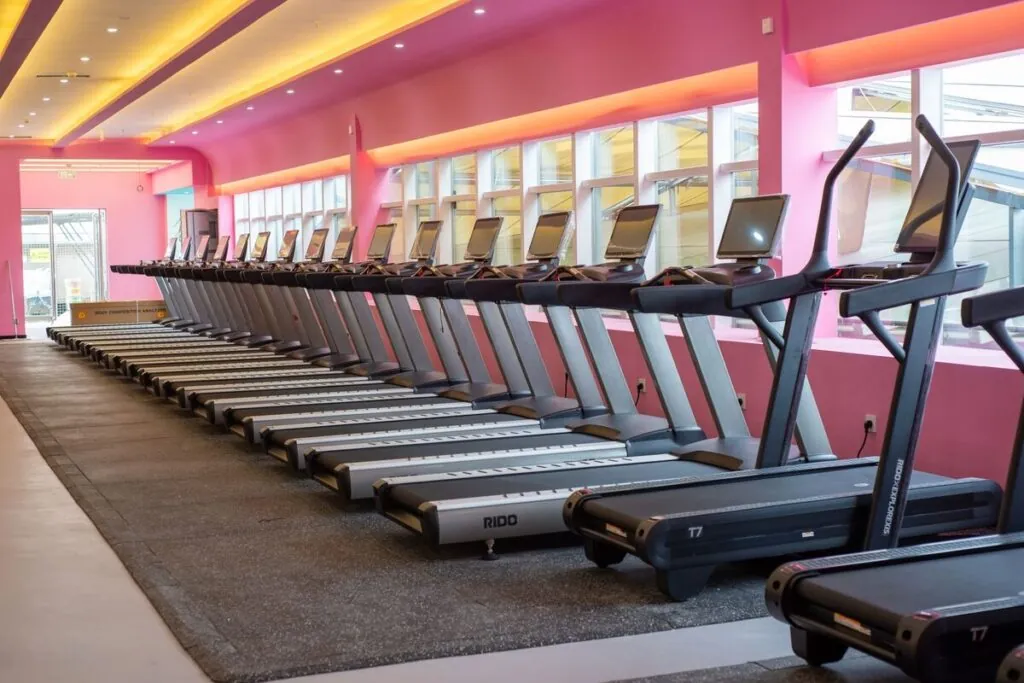
The trade-off: it is the largest, heaviest and most power-hungry machine here. It needs clear space behind it, and footfall thuds travel through the floor slab to the flat below, especially if you run.
What to look for:
- Motor rating: check the continuous (not just peak) rating; a stronger motor runs cooler and copes better with longer sessions and heavier users.
- Running surface: a wider, longer belt feels safer, especially if you plan to jog.
- Incline: even a few levels of incline make walking workouts much harder without needing to run.
Power and heat in India: treadmills draw significant current, especially at start-up. Plug into a properly earthed wall socket rather than an extension board, follow the manufacturer’s advice on stabilisers, and check with your inverter supplier before running one during a power cut.
Pros:
- Natural movement anyone can do from day one
- Incline walking is excellent, joint-friendly cardio
Cons:
- Biggest footprint and heaviest to move
- Noisiest for neighbours, particularly when running
Exercise bike: best for small flats and sore knees
An exercise bike is the most practical cardio machine for most Indian apartments. It takes up roughly the space of a chair, it is almost silent on magnetic-resistance models, and it puts very little stress on your knees, hips and ankles.
Upright bikes feel like a regular cycle. Recumbent bikes have a reclined, supported seat that suits older adults and people with lower back discomfort. Indoor cycling (spin) bikes have a heavier flywheel and suit hard interval sessions.
What to look for:
- Resistance type: magnetic resistance is quieter and needs less maintenance than friction pads.
- Adjustability: seat height and fore-aft position, plus handlebar height, so your knee stays slightly bent at the bottom of each pedal stroke.
Pros:
- Small footprint and very quiet
- Lowest joint impact of any option here
- Most magnetic bikes need no mains power, so they work through power cuts
Cons:
- Works mainly the legs, not the upper body
- Saddle discomfort is common at first
Cross-trainer (elliptical): best low-impact full-body option
A cross-trainer moves your feet in an oval path while your arms push and pull the handles. Your feet never leave the pedals, so there is no landing impact, yet you work upper and lower body together.
The catch is size and build quality. A decent cross-trainer is heavy and fairly long, and lightweight budget models can wobble or feel cramped. Stride length matters most: if it is too short for your height, the movement feels choppy and awkward. Try one in a showroom before buying if you can.
Pros:
- Very low impact, suitable for many people with knee concerns
- Works arms and legs together
- Quiet enough for early mornings
Cons:
- Bulky and heavy; hard to move once assembled
- Cheaper models can feel unstable
Rowing machine: best full-body workout in less time
A rowing machine works your legs, hips, back, arms and core in a single movement, which is why it is popular with people short on time. It is low impact, and you can row gently for steady cardio or hard for intervals.
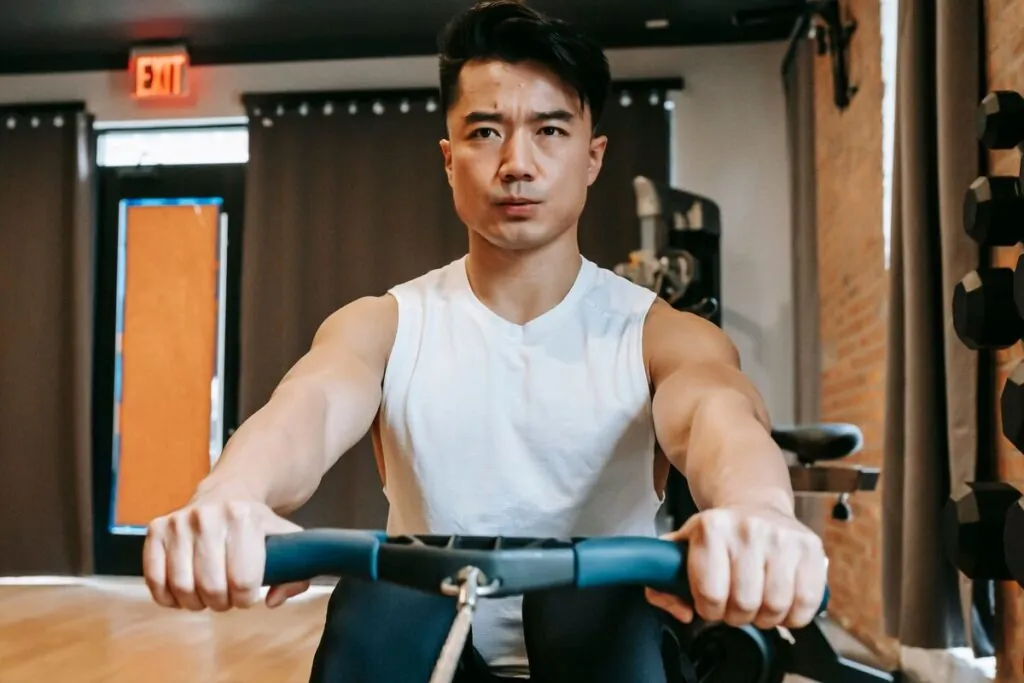
Rowers are long rather than wide. You need room for the rail plus clearance at both ends for the full stroke, but many models fold or stand upright against a wall when you are done. Resistance comes in three main types: air (a fan; responsive but loud, with a whooshing sound), water (a tank; a pleasant swishing sound and smooth feel) and magnetic (the quietest and usually the most compact).
Technique matters: push with the legs first, swing the body back, then pull with the arms. Rounding your lower back or yanking with your arms is the most common mistake, so learn the stroke at an easy pace.
Pros:
- Full-body work, so it is time-efficient
- Low impact on the knees and ankles
Cons:
- Needs a long clear strip of floor
- Poor technique can strain the lower back
- Air rowers can be loud for shared homes
Skipping rope: best for tiny spaces and short sessions
A skipping rope is the cheapest, most portable cardio equipment there is. A few minutes raises your heart rate quickly, and it fits in a drawer or suitcase.
The trade-offs are impact and ceiling height. Repeated landings load the calves, Achilles tendons and knees, and the thumping can bother neighbours. Jump on a firm mat, land softly on the balls of your feet, and start with rounds of 30 seconds on, 30 seconds off.
Pros:
- Budget, compact and needs no power
- Short sessions are effective for busy days
Cons:
- Higher impact; not ideal for heavier beginners or sore knees
- Needs ceiling clearance and a suitable floor
Stepper: best compact leg workout
For most homes, a mini stepper (two pedals on a small base that slides under a bed) is the realistic choice over a gym-style stair climber. It is quiet, needs no power and works the thighs and glutes hard.
Because the range of motion is short and it mostly trains the legs, a mini stepper works best as a supplement. Keep your posture upright, avoid leaning on a wall, and stop if you feel knee pain. Your building’s staircase is a free alternative.
Pros:
- Very small and quiet
- No electricity required
- Strong lower-body workout
Cons:
- Limited range of motion and mostly legs only
- Not ideal for people with existing knee pain
How to choose cardio equipment for your home in India
Measure your space first
Measure the floor area and ceiling height, then add clearance for getting on and off safely. Treadmills need extra room behind the belt and rowers need space at both ends. In a shared room, a folding treadmill, upright-storage rower or bike is easier to live with.
Think about noise and the flat below
Footfall noise from a treadmill or skipping travels down through the floor slab far more than through the air. If you live on an upper floor, place the machine on a thick rubber equipment mat, avoid early-morning running, or choose a bike, cross-trainer or magnetic rower instead.
Match the machine to your joints
If you have knee, hip or back problems, are significantly overweight, or are returning to exercise after a long break, start with low-impact equipment: a recumbent or upright bike, a cross-trainer, or incline walking. If you have a heart condition, high blood pressure, diabetes, are pregnant or have had recent surgery, speak to your doctor before starting a new cardio programme.
Plan for power cuts, voltage and heat
Only treadmills need significant mains power. If your area has frequent outages or voltage fluctuations, a non-motorised machine means you never miss a session. Indian summers and monsoons also bring heat, humidity and sweat, which can rust frames and bolts: keep equipment away from bathrooms and balconies exposed to rain, wipe off sweat after every session, and run a fan or cooler while you train.
Check service and parts
Buy from a brand or seller with service and spare parts in your city, especially for treadmills, and read the warranty terms for frame, motor and parts separately.
How to use home cardio equipment: a simple weekly routine
The general public-health guideline for adults is around 150 minutes of moderate activity a week, such as brisk walking or easy cycling. Here is a simple way to build up to that on any machine:
- Weeks 1–2: 15–20 minutes at an easy, conversational pace, 3–4 days a week.
- Weeks 3–4: 25–30 minutes, 4–5 days a week. Keep most sessions moderate: you can talk, but not sing.
- Week 5 onwards: keep three or four steady sessions, and add one interval session, for example 1 minute faster followed by 2 minutes easy, repeated 6–8 times.
- Every session: warm up for 3–5 minutes at a gentle pace and cool down for 3–5 minutes before stopping.
- Twice a week: add some strength work, such as a short core exercise routine at home or bodyweight moves, on separate days or after cardio.
If you are new to intervals, our interval training plan for beginners gives you a step-by-step walk-jog progression, and the guide to HIIT workouts explains how to push harder safely once your base is built.
Common mistakes to avoid
- Buying the biggest machine instead of the right one. A treadmill that blocks the living room often becomes a clothes stand.
- Ignoring your body weight. Always check the maximum user weight and choose a model rated well above yours.
- Skipping the mat. A rubber mat protects your floor, cuts noise and catches sweat.
- Holding on to the treadmill rails. Leaning on the handles reduces the workout and spoils your posture; lower the speed or incline instead.
- Doing every session at full effort. Most of your cardio should be moderate; hard sessions need recovery.
- Expecting cardio alone to drive weight loss. Food, sleep and strength training matter too; see our workout plan for weight loss for females and best exercises for weight loss for a fuller picture.
Frequently Asked Questions
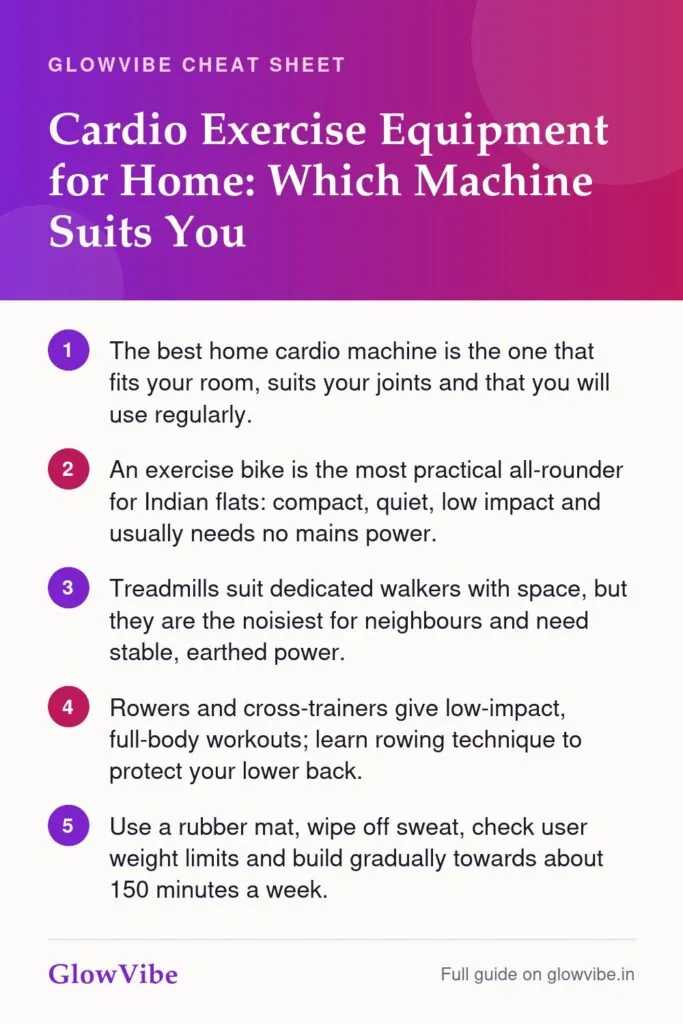
For most apartments, an exercise bike is the most practical all-rounder: compact, quiet, low impact and usually no mains power needed. Choose a treadmill if walking is your main exercise and you have the space and stable power. Choose a rower or cross-trainer if you want full-body, low-impact work.
Both can help, because weight loss depends mostly on your overall diet and activity, not on one machine. Incline treadmill walking suits people who like walking, while a bike is gentler on the joints and easier to fit into a small flat. The machine you use regularly will give better results.
Yes, as long as you learn the basic technique first: legs push, body swings back, then arms pull, and the reverse on the way forward. Start at low resistance and short sessions, and keep your back tall rather than rounded. If you have an existing back problem, check with a doctor or physiotherapist first.
A magnetic-resistance exercise bike is usually the quietest, followed by magnetic cross-trainers, magnetic rowers and mini steppers. Treadmills and skipping are the most likely to disturb the flat below because of footfall impact. A thick rubber mat under any machine helps.
It depends on your inverter’s capacity and the treadmill’s power draw, which is higher at start-up and under load. Check with both the inverter supplier and the treadmill manufacturer before trying it, as overloading can damage either. If power cuts are frequent, a non-motorised bike, rower or rope is a simpler backup.
Final thoughts
There is no single best cardio machine, only the best fit for your space, body and routine. Measure your room, think honestly about noise, joints and power supply, and choose the option you will enjoy using several times a week. For more ideas on combining cardio with strength and recovery, read our guide to mastering your fitness routine.