Ayurvedic Skincare Ingredients: Kumkumadi, Manjistha and the Evidence
What Kumkumadi, manjistha, turmeric, licorice and other Ayurvedic ingredients are traditionally used for, what modern evidence exists, and how to read a licence on the pack.

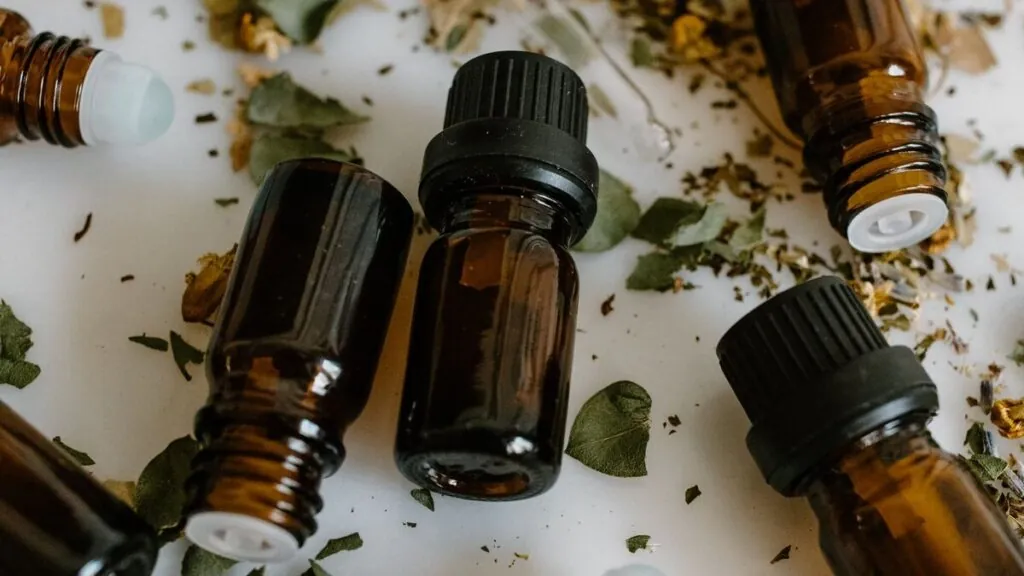
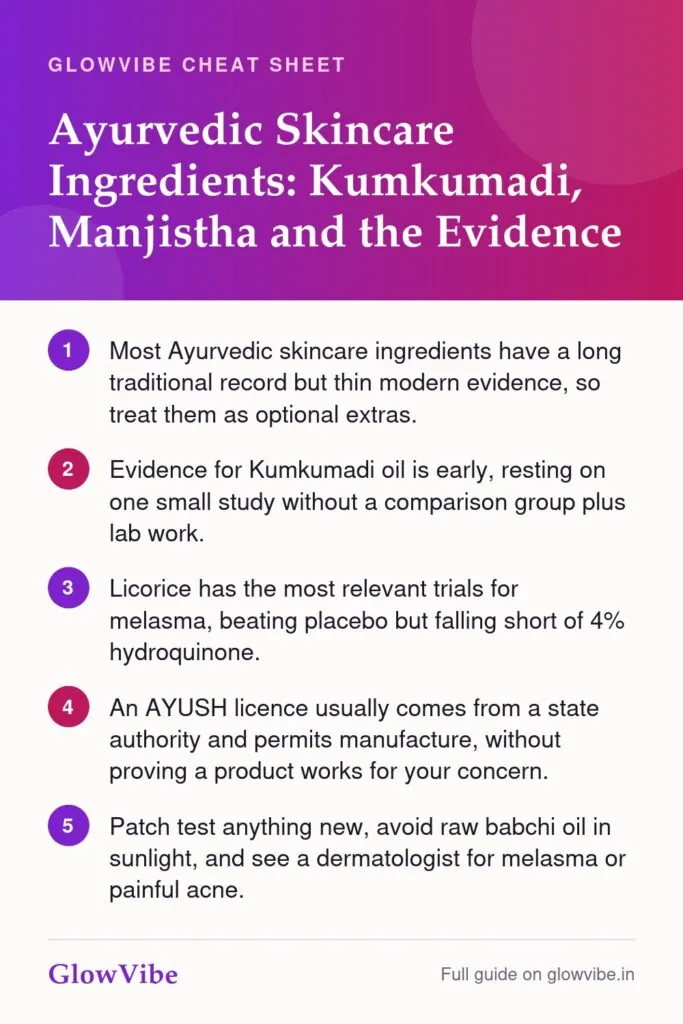
The Ayurvedic skincare ingredients you will see most often are Kumkumadi oil, saffron, manjistha, turmeric, yashtimadhu (licorice), mandukaparni (Centella asiatica (cica)A soothing plant extract, also called gotu kola or cica, found in calming creams and serums for irritated or sensitive skin.See glossaryRead the guide), AmlaIndian gooseberry, used in Ayurvedic hair oils, powders and packs. It is valued for conditioning hair and adding shine.See glossaryRead the guide and babchi. Most have a long traditional record but thin modern evidence, so treat them as optional extras in a routine rather than treatments for a skin condition.
This guide takes each one in turn, then explains what a licence number on an Ayurvedic pack means, because it tells you less than many shoppers assume.
The quick answer
Tradition tells you how an ingredient has been valued for a long time. It doesn’t tell you how well a particular bottle will work on your skin.
| Ingredient | Traditional use | Modern evidence on skin |
|---|---|---|
| Kumkumadi oil | Facial oil for uneven tone and dark patches | Very early: one small study with no comparison group, plus lab work |
| Saffron (kumkuma) | Complexion care, key herb in Kumkumadi | Very thin: one tiny study found no moisturising effect |
| Manjistha | Skin ailments and inflammation | Mostly lab and animal work |
| Turmeric (haldi) | Ubtan and everyday skin care | Early: many small studies across different conditions |
| Yashtimadhu (licorice) | Complexion care, used in Kumkumadi | Modest: the strongest of this list, for melasma, in small trials |
| Mandukaparni (centella) | Skin healing | Limited: a few trials, focused on wounds |
| Amla | Rejuvenating tonic | Thin: one small trial, and of a branch extract rather than the fruit |
| Babchi (bakuchi) | Skin conditions, including vitiligo | Purified BakuchiolA plant extract (from babchi seeds) often marketed as a gentler alternative to retinol for smoother-looking skin. It is generally less irritating.See glossary has some trials; raw babchi oil carries a burn risk in sun |
What each ingredient does, and what is known
Kumkumadi oil
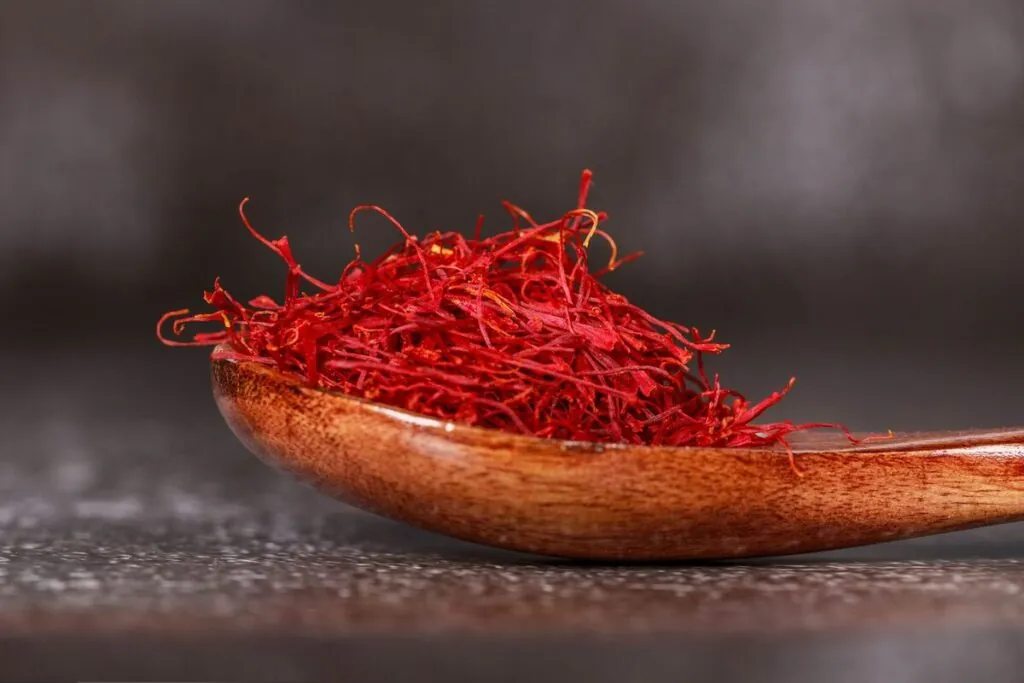
Kumkumadi is a formula, not a single herb. A comparison of the classical texts lists 14 ingredients in the Ashtanga Hridaya version, including saffron, licorice, manjistha, sandalwood, goat’s milk and a sesame oil base. Other classical versions differ, and a few add minerals or animal products.
The evidence is young. One exploratory study gave 30 healthy adults Kumkumadi oil once a day for 15 days, and instrument readings for melanin and redness fell. It had no comparison group, so it can’t show the oil caused the change, and the authors list that among its limits, yet their conclusion still calls the oil “clinically effective”. The paper also contradicts itself: its title says elasticity improved while its results say elasticity declined, its text gives a bigger melanin drop than its own table shows, and its funding statement says both that support was received and that it wasn’t. Read it as a weak early signal.
A separate lab study found less melanin in cultured cells, which says little about real faces. A 36-person trial on facial pigmentation is listed as completed, but the listing showed no results.
The 30-person study used 3 to 5 drops, massaged in for 5 minutes, left for another 15, then washed off. It did not test leaving oil on overnight. If your skin is oily or breakout-prone, the wash-off method may be the gentler way to try it.
Saffron (kumkuma)
Saffron gives Kumkumadi its name and much of its appeal. A small study of saffron lotions tested moisture on six volunteers and concluded that saffron added nothing beyond the lotion base. The same paper measured sun protection only in the lab, so a saffron cream should never replace your sunscreen.
Manjistha
Manjistha is the root of Rubia cordifolia, traditionally used as a blood purifier and for skin ailments. Lab work shows an extract slowing acne-linked bacteria, and animal work shows anti-inflammatory activity, but a narrative paper on the herb still says human studies are needed.
A search of the Europe PMC database for clinical trials of manjistha and skin or acne returned a single hit, and it combined the herb with triphala as a supplement and measured gut bacteria. One search can’t prove nothing else exists, but there is no good human evidence for expecting it to clear acne. For active breakouts, a proven routine or a dermatologist will serve you better.
Turmeric (haldi)
Turmeric has been studied across many conditions, though that doesn’t make it proven. A 2016 systematic review found 18 studies across conditions such as acne, atopic dermatitis, psoriasis and vitiligo, and about half tested turmeric by mouth rather than on skin. Ten reported significant improvement over a control group, but the authors called this early evidence and said more research is needed.
The US National Center for Complementary and Integrative Health (NCCIH) notes that curcumin on skin can cause hives or itching. Turmeric can also leave a yellow tint on skin and fabric, so try it before an event rather than on the day. Keep this advice to the skin: high-absorption curcumin supplements have been linked to liver damage in some people, so ask a doctor before taking them.
Yashtimadhu (licorice)
Yashtimadhu has the most relevant human data of this group, and it appears in every classical Kumkumadi version in the comparison above. A scoping review of herbal melasma trials calls it the most studied herbal option. Trials found it better than placebo but weaker than 4% hydroquinone, a conventional medical treatment.
The same paper says evidence for herbal melasma remedies overall is inadequate, citing few studies and small samples. Licorice on skin can still irritate, and the NCCIH says topical use may be safe in the short term. Don’t extend this to teas or supplements, because large or long-term intake of licorice can cause serious heart effects.
Mandukaparni (centella)
You may know this plant as gotu kola or cica. A systematic review on wound healing found just four clinical trials, covering diabetic wounds, second-degree burns, anal fissures and skin after laser treatment, with some using it by mouth. The authors say it “might enhance” healing and want more studies.
None of this means a cream will treat a wound or burn, and those need medical care. If your skin feels sore and reactive, first read about repairing a damaged skin barrier.
Amla
Amla is a respected rejuvenating food in Ayurveda, and eating it is a pleasant way to add fruit to your diet. The human skin data is slight. One 84-day, split-face trial in 20 volunteers tested a 0.1% gel made from amla branch, not the fruit, and hydration and wrinkles were not clearly better than with the plain gel, though pigment and elasticity showed small gains. So don’t read a fruit-based pack as tested by that trial.
Babchi and bakuchiol
These two names are often blurred, and the difference matters. Babchi seed oil contains psoralen-type compounds that react with sunlight. A published case describes a woman who applied babchi oil, sunbathed for under two hours and reached a burns unit with blisters.
Bakuchiol is a single compound purified from the plant. One 84-day trial of a psoralen-depleted 0.5% cream in 73 adults reported falls in wrinkle and pigmentation measures, with smaller or no changes on the plain base and no adverse events recorded, though its supplier funded the work. It has been pitched as a gentler alternative to retinol, and head-to-head data is still limited. Avoid raw babchi oil on your own, and if you have vitiligo, take treatment decisions to a dermatologist.
Aloe vera, the familiar one
Aloe is also part of Ayurvedic skin care, and it has its own guide to aloe vera for skin and hair. Think of it as a light soother. For modern actives such as NiacinamideA form of vitamin B3 that helps with oiliness, the look of large pores, uneven tone and barrier support. Gentle and easy to pair with most ingredients.See glossaryRead the guide, use the skincare ingredients glossary.
What an AYUSH licence on a pack means
People say “AYUSH licence”, but the licence comes from a state authority rather than as a stamp from the central ministry. Under the Drugs Rules 1945, each state government appoints the licensing authorities for Ayurvedic, Siddha and Unani manufacture, as Delhi and Tamil Nadu have done. The manufacturing licence itself is known as Form 25-D.
The licence allows a maker to manufacture named products for sale. It is not a ruling that the product will fade your spots. The rules even have a beauty category, Saundarya Prasadak, for Ayurvedic formulas meant for skin, hair, oral and body care. The maker submits a textual reference for the ingredients and runs safety studies if the formula has an ingredient from the rules’ list of poisonous substances, but for uses described in the classical texts no effectiveness study is required. Good Manufacturing Practice is a separate certificate as well, valid for five years.
Medicine or cosmetic: check which one you hold
Many herbal-sounding products aren’t sold as Ayurvedic medicines at all. The Cosmetics Rules 2020 don’t mention Ayurveda, so a face wash with herbs can simply be a licensed cosmetic, while an Ayurvedic beauty formula licensed under the Drugs Rules carries a medicine-style label. The pack tells you which route it took.
| On the label | Ayurvedic medicine | Cosmetic |
|---|---|---|
| Wording | “Ayurvedic medicine”, plus “For external use only” on skin products | Product name, with no such wording required |
| Licence | “Mfg. Lic. No.” or “M.L.”; a 2026 amendment phases in a “specific product code” (S.P.C.) that contains the licence number | Licence number after “M”, “M.L. No” or “Mfg. Lic. No.”; imported packs show an “RC” registration number |
| Ingredients | A full list with botanical names and quantities; a long list can go on an enclosed leaflet or behind a QR code or barcode | “Ingredients” list, largest first for those above 1%; packs of 60 ml or 30 g and under are exempt |
| Dates and batch | Batch number, manufacture and expiry dates | Batch number and use-before or expiry date |
A 60-second shop check
- Find the licence number or code, batch number and expiry date. If any is missing on a regular-sized pack, put it back.
- Read the ingredient list, not the front. On a cosmetic, see how high up the herb on the front actually appears, and on an Ayurvedic medicine, check its quantity. A tiny cosmetic pack may carry no list, so check the brand’s site or choose another.
- On a Kumkumadi label, look for saffron (kumkuma or Crocus sativus) and the base oil. Skip anything listing manashila, because that is arsenic disulphide.
- Be wary of cure language. A cream promising to remove melasma or acne permanently is telling you more than the evidence can support.
How to try one safely
- Patch testTrying a small amount of a new product behind the ear or on the inner arm for a few days to check for a reaction before using it widely.See glossary first. Apply a little to the underside of your arm or the bend of your elbow, twice a day for 7 to 10 days, as the American Academy of Dermatology suggests. Herbal allergies are real, and “natural” doesn’t mean safe. Those with reactive skin can also see this guide to sensitive skin products.
- Add one at a time. Otherwise, if you react, you won’t know which one caused it.
- Keep the basics. A gentle cleanser, a moisturiser and daily sunscreen matter more than any herb here, and dark patches are especially sun-sensitive.
- Give it time, then decide. The studies above ran from 15 to 84 days, so around 12 weeks is a reasonable trial as a rule of thumb. Stop at once if you get burning, itching or a rash.
- Know the goal. Aim for healthy, comfortable, even-looking skin in your own tone. Fairness is never the target, however a label words it.
When to see a dermatologist instead
Book a visit for melasma, painful or scarring acne, a spreading rash, white patches, or any mole that changes. Herbal products are not a replacement for dermatology. Ask a doctor first if you are pregnant, breastfeeding or have a skin condition, and before using these on children.
Common mistakes
- Treating a licence as proof it works. It permits manufacture and promises no result.
- Mixing in lemon or baking soda. Home “boosters” like these can irritate skin. Leave them out of every recipe.
- Delaying care for a condition. Trying an oil for a few weeks on mild unevenness is fine. Months of it on worsening melasma or acne can delay help that works.
Frequently Asked Questions
There is no good evidence that it removes pigmentation. One small study without a comparison group recorded lower melanin readings after 15 days, which is a reason for more research rather than proof. For melasma or stubborn patches, see a dermatologist.
It might not be, because classical versions use a sesame oil base and can feel heavy. If you still want to try it, patch test first and consider the wash-off method from the study above. Stop if new bumps appear, and avoid using it on active, painful acne.
No. It shows the maker holds a manufacturing licence. Check it as a basic sign of accountability, then judge the ingredients and evidence separately.
Not automatically. Licorice and turmeric can irritate some people, and babchi oil has caused a burn in sunlight. Judge each ingredient on its own and patch test anything new.
Licorice has the most relevant trials among these herbs for melasma, and it is still weaker than a standard medical option. Purified bakuchiol also has some trial data, though it is a single extracted compound rather than a traditional preparation. Neither is a cure.
Quick poll
How often do you wear sunscreen?
The bottom line
Ayurvedic skincare ingredients deserve respect for their history and honesty about their evidence. Licorice has the most relevant human data, centella has a few wound trials, Kumkumadi and turmeric are at an early stage, and manjistha and saffron remain mostly unproven on skin. Read the label, treat a licence as a basic check, patch test, and see a dermatologist for anything that needs treatment.