Atom Protein Powder for Weight Loss: Does It Really Help? (2026)
How Atom or any whey protein can support weight loss, how much protein you need, what to check on the label and how to use shakes without extra calories.

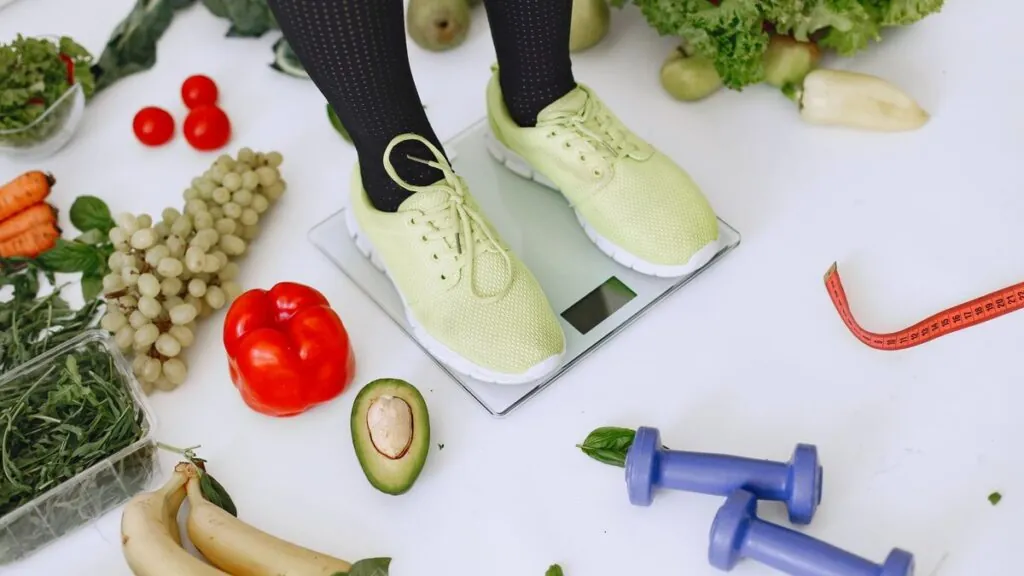
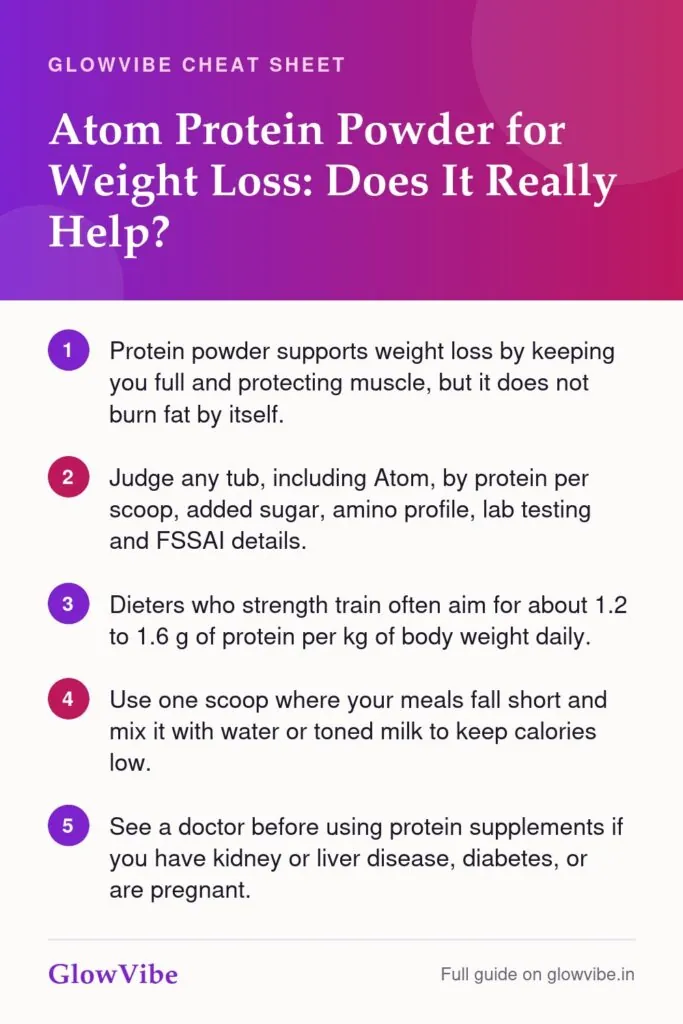
Atom protein powder, like any whey protein, can help with weight loss only in an indirect way: it makes it easier to eat enough protein while you are in a calorie deficit, which helps you stay full and hold on to muscle. It does not burn fat by itself, and the scale moves only if your total calories, activity and sleep are in order.
This guide explains what a protein powder can and cannot do for fat loss, how to read the label on Atom or any other brand, how much to take, and how to fit a shake into an Indian diet without adding hidden calories.
Quick answer: does protein powder help you lose weight?
- Yes, as a tool, not a fat burner. Protein is the most filling macronutrient, so a shake can curb snacking between meals.
- It protects muscle. Eating enough protein while dieting, especially with strength training, helps you lose more fat and less muscle.
- It fills a gap. Many Indian vegetarian diets are rich in carbs and short on protein; a scoop is a convenient top-up.
- It still has calories. Mixed with full-fat milk, bananas and peanut butter, a “diet” shake can cross 500 calories.
- Brand matters less than the label. Protein per scoop, added sugar, testing and your own digestion matter more than the name on the tub.
How protein supports weight loss
Weight loss comes down to eating fewer calories than you burn over weeks and months. Protein does not change that rule, but it makes the deficit easier to live with. Here is how.
It keeps you full for longer
Protein slows digestion and influences appetite hormones, so a protein-rich breakfast or evening snack tends to keep hunger quieter than a plate of biscuits with the same calories. Less hunger means fewer unplanned snacks, which is where most diets quietly fail.
It helps you keep muscle while dieting
When you cut calories, your body can break down muscle along with fat. Adequate protein plus regular strength training sends the signal to hold on to muscle. That matters because muscle keeps you strong, shapes how you look after the weight comes off, and makes maintenance easier.
It costs a little more energy to digest
Your body uses more energy digesting protein than carbs or fat. The effect is real but small, so treat it as a bonus rather than a reason to drink extra shakes. No powder “boosts metabolism” enough to replace a deficit.
Food should still do most of the work. Dal, paneer, curd, eggs, chicken, fish, soya and sprouts all count, and our list of protein-rich foods for weight loss has plenty of everyday options. A powder simply helps on the days your meals fall short.
Whey concentrate vs isolate vs hydrolysate
Atom, like most Indian sports-nutrition brands, sells whey protein, which is made from the liquid left over when milk is turned into cheese or paneer. Whey is a complete protein, meaning it contains all the essential amino acids, and it comes in three main forms.
| Type | Protein content | Lactose and fat | Best for | Cost |
|---|---|---|---|---|
| Whey concentrate | Lower per scoop | Some lactose and fat | Beginners on a budget with no dairy issues | Budget |
| Whey isolate | Higher per scoop | Very little lactose and fat | Calorie-conscious dieters, mild lactose sensitivity | Mid-range |
| Whey hydrolysate | High | Very little | People with sensitive digestion; often a bitter taste | Premium |
| Blend (concentrate + isolate) | Varies | Varies | A middle ground on price and taste | Budget to mid-range |
For weight loss, the difference between these is smaller than marketing suggests. Isolate gives slightly more protein and slightly fewer calories per scoop, but a well-made concentrate works fine if your stomach handles dairy. If you want to know how whey is processed and what “natural” or unflavoured versions offer, read our guide to natural whey protein.
What to check on Atom (or any) protein powder label
Atom is an Indian whey brand with several variants, including whey blends, isolates and beginner-oriented options in a range of flavours. Rather than taking any brand’s claims at face value, judge each tub on the points below. The same checklist works for every other brand on the shelf.
Protein per scoop and per 100 g
Look at grams of protein per serving and compare it with the scoop size. A product that gives a large share of protein per gram of powder has less room for fillers, sugar and fat. Many whey scoops land somewhere around 20 to 25 g of protein, but always go by the label of the tub you buy.
Calories, sugar and carbs
For fat loss, a lean powder with low added sugar is the smarter pick. Dessert-style flavours can carry more carbs and calories, so check the nutrition panel rather than the flavour name. Sweeteners such as sucralose are common; they are considered safe at normal intakes, but some people find they upset the stomach.
Amino acid profile and testing
A full amino acid profile on the pack is a good sign. Some low-quality powders inflate their protein numbers by adding cheap individual amino acids, a practice called amino spiking. Prefer brands that publish third-party lab reports for specific batches, and buy from the brand’s own site or authorised sellers to avoid fakes, which are a known problem in India.
FSSAI licence, dates and seal
Every legitimate tub sold in India should carry an FSSAI licence number, batch number, manufacturing and expiry dates, and an intact seal. If anything looks smudged, mismatched or tampered with, return it.
Taste and mixability
The best powder is the one you will actually use. Buy a small pack or sample first if you are unsure of a flavour, because a 1 kg tub you dislike will sit in the cupboard until it expires.
Pros and cons of using a protein powder for weight loss
Pros
- Quick, portable protein for busy mornings or post-workout
- Helps vegetarians reach their protein target without extra fat
- Easy to measure, which helps if you track calories
Cons
- Less filling than chewing a whole-food meal
- Quality varies widely; fakes and spiked products exist
- Can cause bloating in people sensitive to lactose or sweeteners
- An ongoing cost that whole foods like dal, curd and eggs can often cover
How much protein do you need for weight loss?
The basic Indian recommendation for healthy adults is a little under 1 g of protein per kg of body weight per day. People who are dieting and strength training often do better with more, commonly somewhere around 1.2 to 1.6 g per kg, spread across the day.
For a 70 kg person, that is roughly 85 to 110 g a day. Most people can get the bulk of it from meals and use one scoop, occasionally two, to close the gap. More is not better: extra protein beyond your needs is just extra calories.
If you have kidney disease, liver disease, diabetes, are pregnant or breastfeeding, or take regular medication, speak to your doctor or a registered dietitian before adding a protein supplement.
How to use protein powder for weight loss: a simple routine
- Set a calorie target. Aim for a modest deficit you can sustain, not a crash diet.
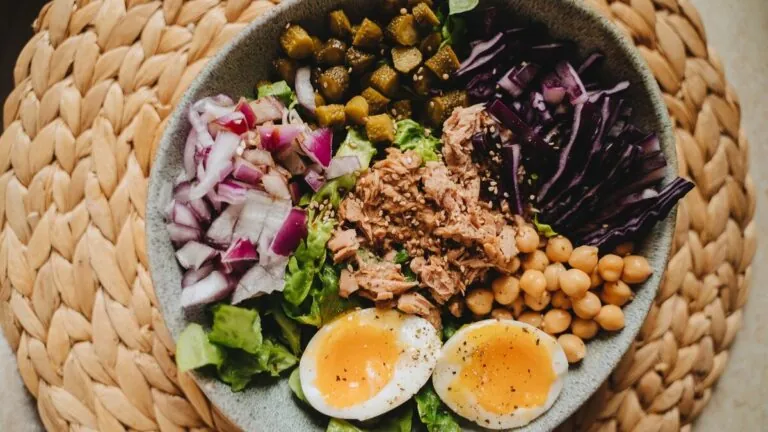
- Build meals around protein first. Add dal, paneer, curd, eggs, chicken or soya to every meal before reaching for a scoop.
- Use the shake where you usually slip. Common spots are a rushed breakfast, the 5 pm chai-and-namkeen slot, or after a workout.
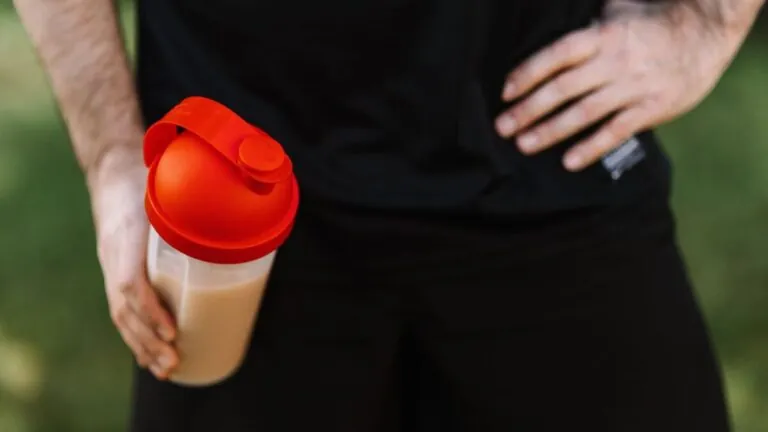
- Mix it lean. Water or toned milk keeps calories low; add fruit or a spoon of oats only if the shake replaces a meal.
- Train with weights 2 to 4 times a week. This is what turns extra protein into muscle you keep. Our 4-week workout plan for weight loss and roundup of the best exercises for weight loss are good starting points.
- Track progress for 4 to 6 weeks. Use waist measurement and how your clothes fit, not just the scale.
Easy shake ideas
- Snack shake: one scoop with cold water and ice.
- Breakfast shake: one scoop, toned milk, a small banana and a spoon of oats.
- Protein curd bowl: unflavoured or vanilla whey stirred into hung curd with berries or chopped apple.
- Cold coffee: a coffee-flavoured scoop blended with chilled black coffee and a splash of milk, a handy swap for café drinks in summer.
In hot, humid weather, store the tub in a cool, dry cupboard with the lid tightly shut, keep the scoop dry, and do not leave a mixed shake sitting in a warm bag for hours.
Common mistakes to avoid
- Adding a shake on top of normal meals. If nothing else changes, you have just added calories.
- Replacing every meal with shakes. You miss fibre, vitamins and minerals, and the hunger usually wins within weeks.
- Buying the cheapest tub from an unknown seller. Fakes and spiked powders are common; pay for authenticity.
- Confusing mass gainers with whey. Gainers are built to add calories and are the wrong choice for fat loss.
- Believing myths. Whey is not a steroid and does not damage healthy kidneys at sensible doses. Our article on common myths about whey protein covers the rest.
- Skipping water. A higher-protein diet works best with good hydration, especially in Indian summers.
Frequently Asked Questions
Atom whey can support weight loss in the same way any decent whey does: by helping you hit your protein target, stay fuller and keep muscle while in a calorie deficit. It will not cause fat loss on its own. Check the label for protein per scoop, sugar and batch testing before you buy.
Timing matters less than your total daily protein and calories. Drink it when it helps you most, such as at breakfast if you usually skip it, as an evening snack, or after a workout. Pick a slot and keep it consistent.
Yes, protein powder is simply food, and it can help if your diet is low in protein. However, pairing it with some form of strength training, even bodyweight exercises at home, gives much better results for body shape and muscle retention.
For weight loss, water gives the fewest calories. Toned or skimmed milk adds extra protein and a creamier taste for some added calories, which suits a meal-replacement shake. Avoid full-fat milk plus sugar if you are trying to cut calories.
Whey isolate and hydrolysate contain very little lactose, so many people with mild intolerance handle them well, while concentrate is more likely to cause bloating. They are not always fully lactose-free, so read the label and start with half a scoop. If dairy is a problem, plant proteins such as pea or soy are alternatives.
Whey comes from milk, so it suits lacto-vegetarians, though it is not vegan. Some powders use additives or capsules of animal origin, so look for the green vegetarian symbol on the pack.
Healthy adults generally tolerate whey well at normal servings. The most common issues are bloating, gas or acne flare-ups in some people. If you have a kidney or liver condition, or symptoms that do not settle, stop and consult a doctor.
The bottom line
Atom protein powder, or any well-made whey, is a convenient way to eat more protein while you lose weight, and that can make a calorie deficit easier to stick to. The real results still come from your overall diet, regular strength training, sleep and patience.
Choose a tub on the strength of its label and testing rather than its marketing, use one scoop where your diet falls short, and speak to a doctor or dietitian if you have a health condition. Done that way, a protein shake becomes a useful helper, not a shortcut.