Body Butter vs Body Lotion: Which Do You Need?
How body butter and body lotion differ, which suits your skin and Indian weather, how to use butter without feeling greasy, and when you don't need it at all.

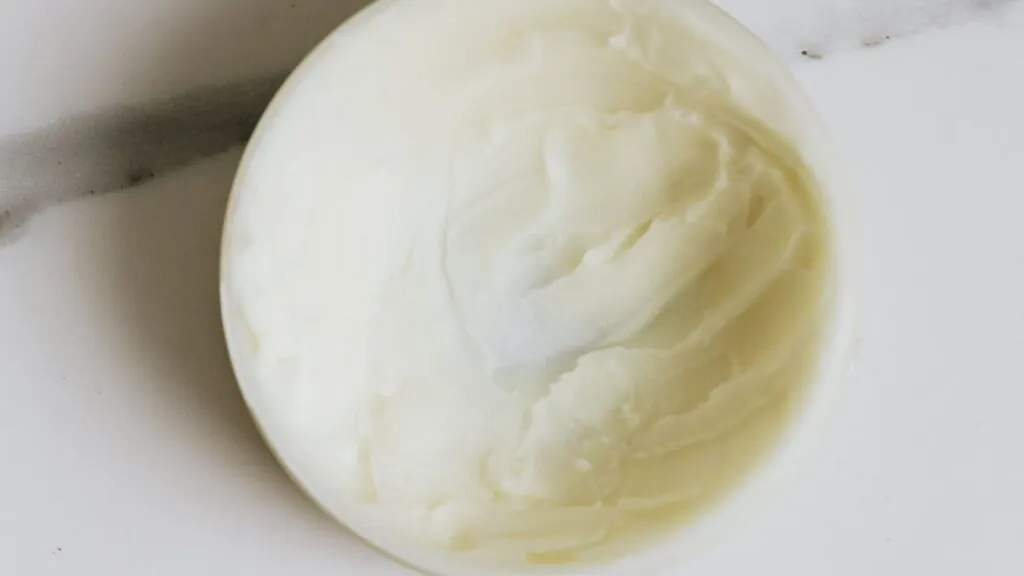
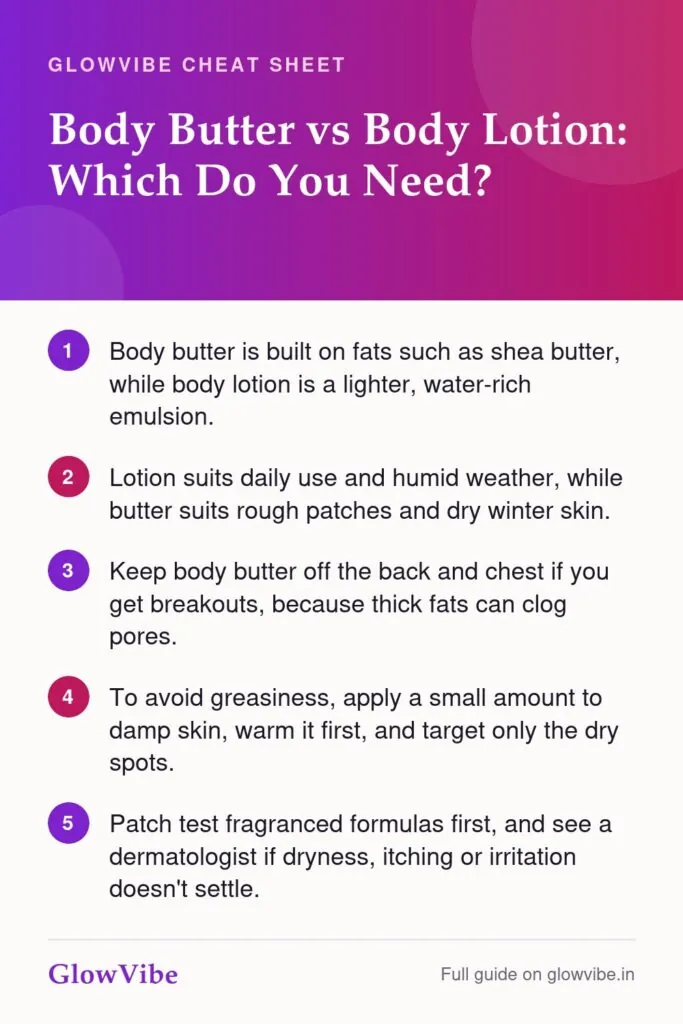
Body butter is a thick, fat-based moisturiser for rough or very dry skin, while body lotion is a lighter, water-rich formula that spreads quickly and suits daily use. In most of India, lotion is the sensible everyday choice, and butter earns its place only on dry winter skin or stubborn patches like heels, elbows and shins.
Plenty of people never need a butter at all. This guide covers how the two formats differ, which one suits your season and skin type, how to use butter without feeling greasy, and when to skip it.
The quick answer
- Choose lotion for daily all-over use, hot and humid weather, oily or combination skin, and areas with more body hair.
- Choose butter for rough, dry patches, dry winter skin, and night-time use when nothing has to go over it.
- Use both if your arms and torso feel fine but your heels and elbows stay rough: lotion all over, butter only on the dry spots.
- Skip butter on skin that breaks out, especially the back and chest, and through sticky weather if it leaves you uncomfortable.
Body butter vs body lotion: the real difference
The difference comes down to how much water and how much fat is in the jar. Body butter is built on fats, most often shea butter, along with others such as cocoa butter. Body lotion is an oil-in-water emulsion, so it holds far more water and much less fat.
That single change explains almost everything you feel on your skin. More water means a thinner product that spreads easily and sinks in fast. More fat means a thicker product that takes longer to absorb and stays noticeable for longer.
| Feature | Body butter | Body lotion |
|---|---|---|
| Base | Mostly fats such as shea or cocoa butter | Water with some oil |
| Texture | Thick, dense, often comes in a tub | Thin and runny, often comes in a pump or bottle |
| Absorption | Slow, may leave a film | Fast, usually light on skin |
| Moisturising strength | Stronger on rough, dry skin | Lighter, may not be enough for very dry skin |
| Chance of clogged pores | Higher | Lower |
| Best time | Night, or on dry patches | Morning, after a bath, any time of year |
| Good for | Heels, elbows, knees, shins | All-over daily use, hairy areas |
Where cream fits in
Think of moisturisers as a ladder of thickness. The American Academy of Dermatology (AAD) describes gels as often water-based and lighter than lotions, creams as thicker with more oil, and ointments as the thickest and most effective for dry skin. A body butter often feels closer to the thick end of that ladder.
You don’t have to jump straight from lotion to butter. If lotion feels too thin but butter feels too heavy, a body cream is often the comfortable middle step.
Read the label, not the name
“Butter” and “lotion” are descriptive names rather than fixed recipes. Some products sold as body butter are really rich creams with water in them, and some lotions are surprisingly heavy.
Ingredient lists help, with one catch. FDA rules in the US, and Indian labelling guides on the Cosmetics Rules, 2020, say ingredients above 1% go from the highest amount to the lowest, while those at 1% or less can follow in any order. So the top of the list tells you far more than the bottom.
Water (aqua) first with a butter further down points to a cream or lotion-style formula, whatever the name on the front. A fat such as shea butter near the very top points to something richer. Formulas change, so check the current label each time you buy.
Which one suits which season in India?
Climate matters as much as skin type here. A butter that feels lovely in a dry Delhi January can feel unbearable in a humid Chennai May, so it helps to choose by the weather where you live rather than by the calendar alone.
| Weather | What usually works | Why |
|---|---|---|
| Humid summer and coastal cities | Light lotion or gel, or nothing on oily areas | Sweat and a heavy layer feel sticky together |
| Dry summer heat | Lotion, with a little cream on dry patches | Skin can feel dry, but a thick layer still feels hot |
| Monsoon | Light lotion, kept away from damp skin folds | Skin stays damp longer, so less is more |
| Mild winter | Lotion or cream, butter on heels and elbows | Dryness tends to be limited to rough spots |
| Cold, dry winter in the north and hills | Cream or butter at night, lotion in the morning | Skin feels tighter and rougher, so a richer layer pays off |
Winter is the one season where a butter makes real sense for many readers. If you want the full picture for cold months, including face care, this morning and night routine for dry winter skin shows where a richer body layer fits.
Which one suits your skin type?
Oily or combination skin
Lotion, or even a gel, is the better fit. Lighter formulas are less likely to clog pores, and the AAD notes in its advice for oily skin that, for some people, too much moisturiser can clog pores and lead to acne. A “Non-comedogenicA label meaning a product is formulated not to clog pores. Useful for acne-prone skin, though it is not a regulated or guaranteed claim.See glossaryRead the guide” label, which the AAD explains means it doesn’t block pores, is worth looking for. This guide to non-greasy body lotions for oily skin goes into what to look for.
Normal skin
Lotion through most of the year is enough. Add a small amount of butter on elbows, knees and heels if they start to feel rough in winter.
Dry and very dry skin
This is where thicker formats help. The AAD says ointments and creams add more moisture to skin and are more effective than lotions, and it lists shea butter among the ingredients to look for. A butter is a fair option at night, though a plain Fragrance-freeA product with no added perfume or essential oils for scent. Often the safer pick for sensitive or reactive skin. "Unscented" can still contain masking fragrance.See glossary cream can do the same job with less fuss. For habits beyond the jar, see these home care steps for dry skin.
Sensitive skin
Format matters less here than what’s in it. Body butters are often scented, and the AAD advises avoiding fragrance on dry skin because it can irritate. Look for a fragrance-free label, and browse this guide to moisturisers for sensitive skin if your skin reacts easily.
Acne-prone skin on the back or chest
Keep butter away from these areas. Thick fats can clog pores, and the AAD warns that, for some people, too much moisturiser can lead to acne. If those areas feel dry, use a light non-comedogenic lotion, or a very small amount of gel, and see this realistic timeline for acne treatment if you are dealing with ongoing breakouts.
How to use body butter without feeling greasy
Most greasy butter experiences come from using too much at the wrong time. A few small changes usually solve it.
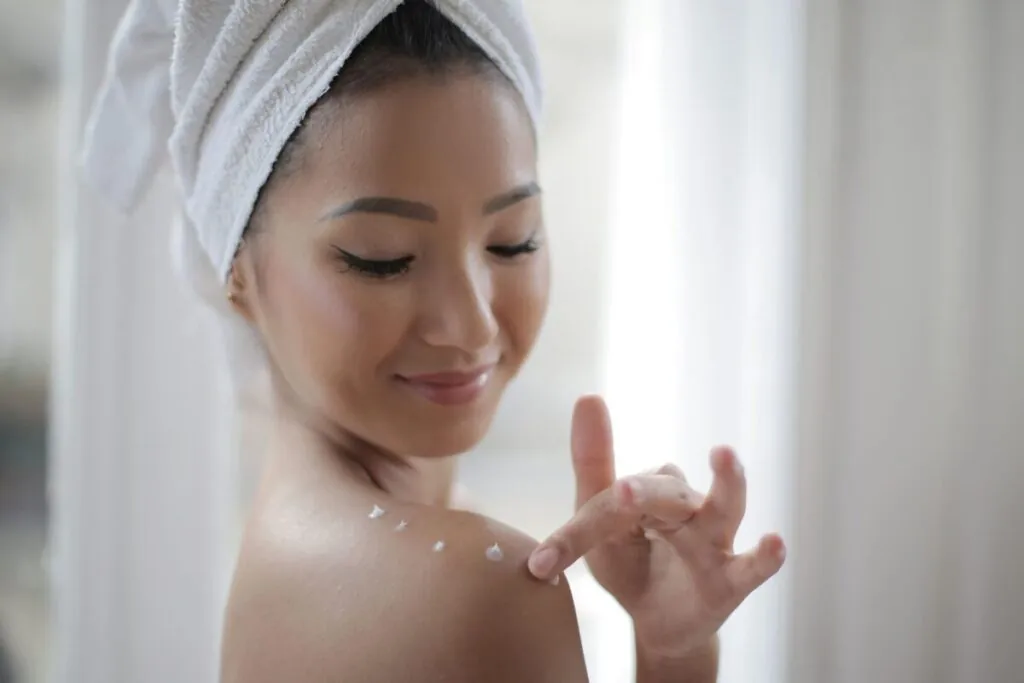
- Apply on damp skin. The AAD advises moisturising while skin is still damp after a bath, so pat dry gently rather than rubbing yourself fully dry.
- Start with less than you think. As a rough guide, start with a pea-sized scoop for one forearm, and add more only if the skin still feels dry.
- Warm it first. Rub it between your palms until it softens, which makes a dense butter much easier to spread thinly.
- Smooth, don’t scrub. The NHS advises smoothing EmollientAn ingredient that softens and smooths skin or hair by filling gaps between cells, such as squalane, shea butter or plant oils.See glossary gently in the direction of hair growth rather than rubbing them in, which helps stop hair follicles getting blocked.
- Target dry spots only. Heels, elbows, knees and shins usually need it most. Your stomach and upper back usually don’t.
- Use it at night. Apply it before bed so it has hours to settle, and wear old cotton clothes that you don’t mind marking.
- Give it time before dressing. If you must use it in the morning, wait until it no longer feels tacky, and keep it away from silk or dark, delicate fabrics.
If it still feels heavy after all that, the product is simply too rich for your skin or your weather. Switch to a cream rather than trying to make the butter work. For cracked heels, a thin layer at night under cotton socks keeps it off your bedding.
One safety note: the NHS warns that clothing and bedding that have been in contact with emollients of any type can easily catch fire. Keep freshly moisturised skin and clothes away from gas stoves, diyas and other open flames.
When not to bother with body butter
A butter is a texture preference more than a necessity. You can reasonably skip it in these situations:
- Your lotion already keeps skin comfortable. If your skin doesn’t feel tight or rough a few hours later, a thicker product adds little.
- You live somewhere hot and humid all year. Sticky, sweaty skin under a heavy layer is unpleasant, and a product you avoid using does nothing.
- You get breakouts on your body. A lighter, non-comedogenic product is the safer option.
- You have prickly heat or another rash. Leave butter off it. For prickly heat, the NHS advises keeping the skin cool and avoiding perfumed creams. A pharmacist can suggest what to use, and see a doctor if it doesn’t improve after a few days.
- You are allergic to or react to fragrance or a listed butter or oil. Choose a simpler, fragrance-free cream instead.
A butter also won’t fix what’s drying your skin in the first place. The AAD suggests keeping baths and showers to five to ten minutes in warm water, choosing fragrance-free cleansers, and wearing loose cotton clothes. In a dry North Indian winter, those habits are worth keeping alongside any jar.
Patch test first, especially with scented formulas
Rich, scented butters are easy to apply over a big area before you notice a problem, so test first. The AAD suggests a spot about the size of a large coin on the underside of your arm or the bend of your elbow, twice a day for seven to 10 days, using your normal amount.
If you get redness, itching or swelling, gently wash it off and don’t use it again. See a dermatologist if a severe reaction doesn’t improve.
Common mistakes
- Using butter all over in humid weather. It’s usually a dry-patch product. Lotion is the better all-over choice when it’s sticky outside.
- Applying it to fully dry skin. It drags and feels heavier, so apply it soon after your bath while skin is still damp.
- Assuming thicker always means better. The right product is the one your skin needs and you’ll actually use every day.
- Taking the word “butter” at face value. Check the ingredient list, because the name alone doesn’t tell you how rich it is.
- Layering it over back or chest breakouts. That’s the one place a heavy layer is most likely to work against you.
- Ignoring dryness that won’t go away. Persistent itching, cracking or rashes may need more than a moisturiser.
Frequently Asked Questions
Not across the board. Butter is usually stronger on rough, very dry skin, while lotion is more comfortable for daily use and warm weather. The better one is the one that suits your skin, your climate and your routine.
Yes, and it often works well. Use lotion all over after your bath, then press a little butter onto heels, elbows or shins. You can also use lotion in the morning and butter at night during winter.
It’s best not to. Body butters are thick and can clog pores, which makes them a poor fit for the face. Use a facial moisturiser chosen for your skin type instead.
It can, especially on skin that already breaks out. Body lotion is less likely to clog pores because it is lighter. If you’re acne-prone, look for a product labelled non-comedogenic and keep butter off your back and chest.
You can, but most people won’t enjoy it all over. Keep it to a thin layer on cracked heels or rough elbows at night, and use a light lotion everywhere else. If it feels sticky or you start breaking out, stop using it.
See a dermatologist if dryness continues despite gentle care, or if you have cracking, bleeding, a rash or intense itching. Conditions such as eczema may need a different treatment plan. If you are pregnant, or choosing a product for a child, ask a doctor first.
Quick poll
How many steps are in your skincare routine?
The bottom line
Lotion is the everyday default for most of India, and butter is a useful extra for rough patches and dry winters. Start with the lightest product that keeps your skin comfortable, and only move up the ladder if it stops being enough. If your skin stays dry, itchy or irritated despite that, a dermatologist can help you work out why.