What Is Organic Food, and Is It Better Than Non-Organic? (2026)
What organic food really means in India, what the evidence says about nutrition and pesticide residues, how to read Jaivik Bharat, India Organic and PGS-India labels, and when it's worth paying more.

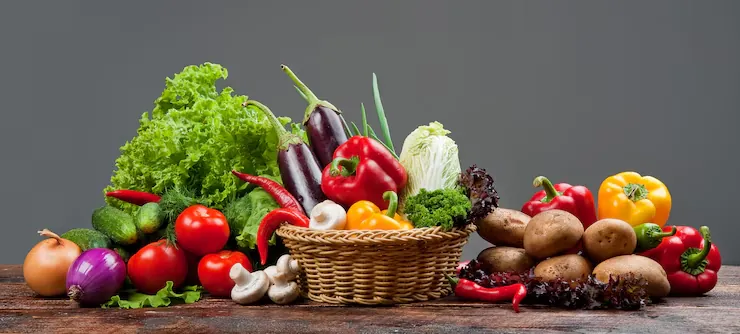
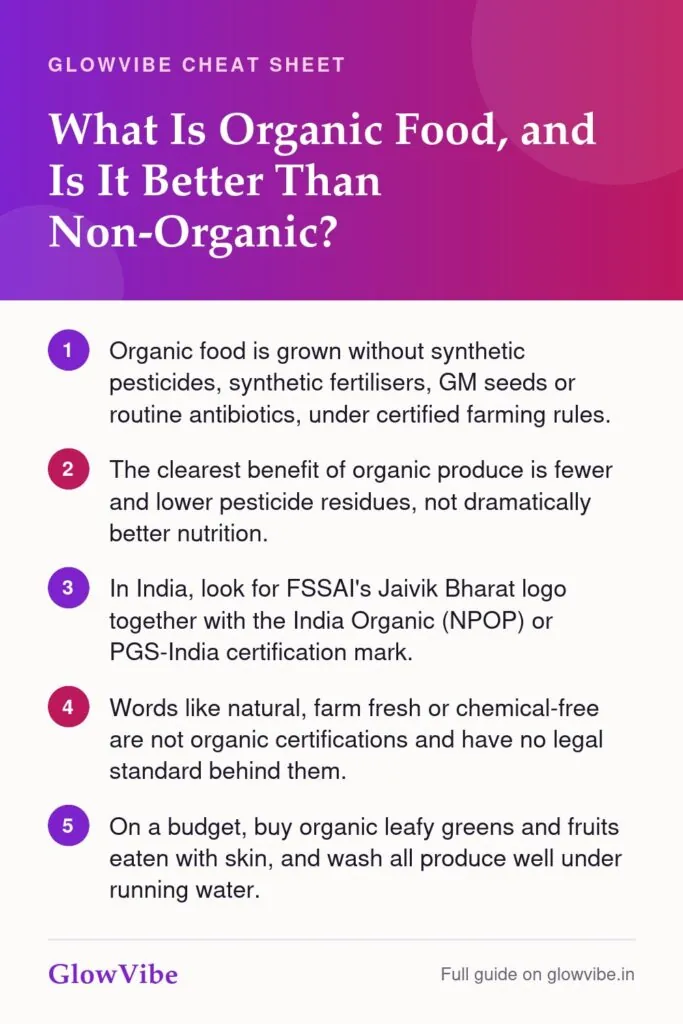
Organic food is food grown and processed without synthetic pesticides, synthetic fertilisers, genetically modified seeds or routine antibiotics, under a certified set of farming rules. Is it better than non-organic food? It reliably carries fewer pesticide residues, but the evidence that it is meaningfully more nutritious, or that it makes people healthier, is still weak.
That doesn’t make organic a scam, and it doesn’t make it a must-have either. This guide explains what “organic” legally means in India, what the research says about nutrition and safety, how to read the Jaivik Bharat, India Organic and PGS-India labels, and where your money actually makes a difference.
The quick answer
- Pesticide residues: organic produce has them less often and at lower levels. This is the clearest, most consistent difference.
- Nutrition: differences in vitamins and minerals are small and inconsistent. Some studies find more antioxidants (polyphenols) in organic crops and more omega-3 fats in organic milk and meat.
- Health outcomes: there is no strong proof that eating organic makes you live longer or prevents disease. Eating enough fruit, vegetables, pulses and whole grains matters far more.
- Labels: in India, packaged organic food must be certified (NPOP or PGS-India) and should carry FSSAI’s Jaivik Bharat logo. “Natural” or “chemical-free” means nothing legally.
- Best value: if your budget is limited, buy organic for foods you eat often and with the skin on, and buy conventional for everything else.
Organic vs non-organic food: side-by-side
| Factor | Organic | Conventional (non-organic) |
|---|---|---|
| Pesticides | Synthetic pesticides not allowed; some approved natural inputs permitted | Synthetic pesticides allowed within legal limits |
| Fertilisers | Compost, manure, green manure, crop rotation | Synthetic fertilisers (urea, DAP etc.) plus organic matter |
| GM seeds | Not allowed | Allowed where approved (in India, mainly Bt cotton) |
| Animal products | No routine antibiotics or growth promoters; organic feed; welfare rules | Antibiotics used under regulations; fewer welfare requirements |
| Residue levels | Detected less often and usually lower | More often detected; mostly within limits when tested |
| Nutrition | Broadly similar; sometimes more polyphenols and omega-3s | Broadly similar |
| Price | Usually noticeably higher | Lower and more widely available |
| Label to look for | Jaivik Bharat + India Organic or PGS-India logo | Standard FSSAI licence number |
What is organic food, exactly?
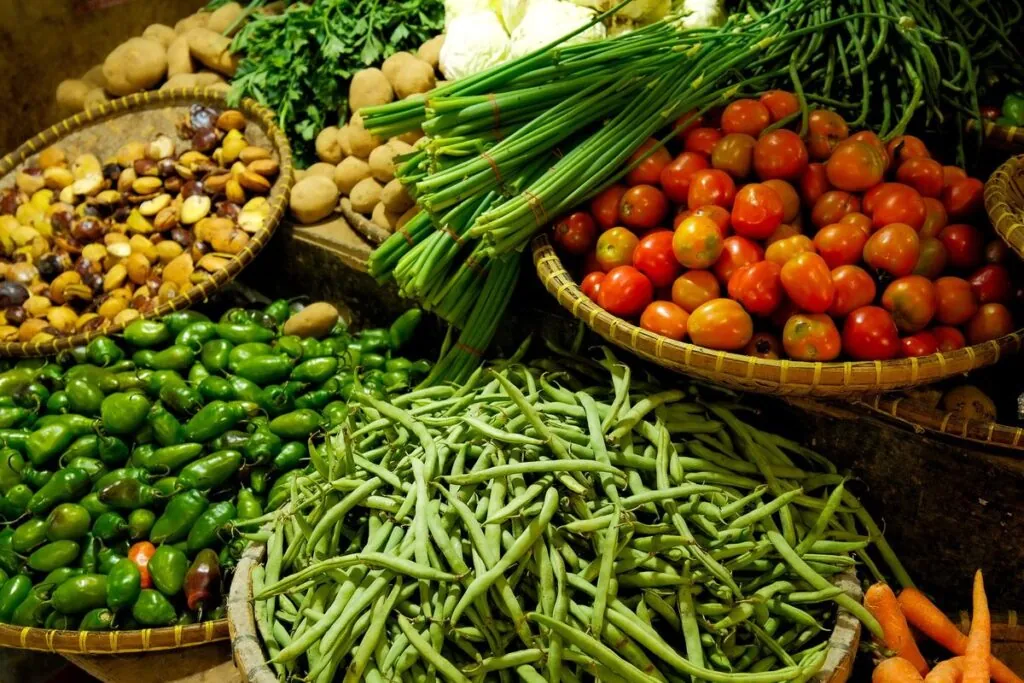
“Organic” describes how food is produced, not what it contains. An organic farm builds soil fertility with compost, farmyard manure, green manure and crop rotation instead of synthetic fertilisers. Pests are managed with crop diversity, resistant varieties, traps and a short list of approved natural inputs such as neem-based sprays.
For milk, eggs and meat, organic rules require organic feed, access to the outdoors and no routine use of antibiotics or growth promoters. Sick animals can still be treated, but there are withdrawal periods before their products can be sold as organic.
Two points often get missed. First, organic does not mean pesticide-free; it means synthetic pesticides are not used. Second, a farm cannot switch overnight. Land usually goes through a conversion period of a few years before its crops can be sold as fully organic.
Is organic food more nutritious?
This is the question most people care about, and the honest answer is “slightly, sometimes”. Large reviews of the research have reached fairly similar conclusions once you look past the headlines.
- Vitamins and minerals: a well-known 2012 Stanford review found no consistent difference in vitamin content between organic and conventional foods.
- Antioxidants: a 2014 analysis in the British Journal of Nutrition found higher levels of polyphenols in organic crops, along with lower cadmium and fewer pesticide residues. Whether that difference changes health in real life is unproven.
- Nitrates: organic vegetables tend to contain less nitrate, likely because they are not given fast-acting nitrogen fertiliser.
- Milk and meat: organic milk and meat often contain somewhat more omega-3 fatty acids, mainly because the animals eat more grass and fodder. Oily fish and seeds remain far richer sources.
Freshness, variety, ripeness and storage often affect nutrient levels more than the farming method does. A fresh conventional palak from your local market can easily beat an organic one that has spent a week in a cold chain. If your goal is better nutrition, eating more vegetables, dals and protein-rich foods will do more than switching labels.
Pesticide residues and food safety
Here the case for organic is strongest. Across many studies, organic produce is less likely to carry detectable pesticide residues, and when residues are present they tend to be lower. Studies that switch people to an organic diet for a short time also show lower pesticide markers in their urine.
What this means for long-term health is less clear. Most conventional produce tested falls within legal limits, and the health effects of eating low residues over years are hard to study. Some observational studies, such as a large French cohort, have linked frequent organic eating with lower rates of certain cancers, but organic buyers also tend to exercise more, smoke less and eat better overall, so cause and effect is not established.
Organic is also not automatically safer from germs. Raw produce of any kind can carry bacteria, and manure-based farming needs good handling. Washing, safe storage and proper cooking matter whichever way your food was grown.
Antibiotics in animal products
Organic livestock rules restrict routine antibiotic use, and reviews have found organic chicken and pork less likely to carry antibiotic-resistant bacteria. Antibiotic resistance is a genuine public health concern, so this is one of the more meaningful benefits, especially if you eat chicken, eggs or dairy often.
How to identify certified organic food in India
India has a clear legal framework, which is good news for shoppers. Under the FSSAI’s Food Safety and Standards (Organic Foods) Regulations, 2017, food sold as organic must be certified under one of two government systems, and the pack should carry FSSAI’s organic logo.
Jaivik Bharat (FSSAI organic logo)
Jaivik Bharat is FSSAI’s unified logo for organic food sold in India. It tells you the product is meant to be certified organic under NPOP or PGS-India. It does not replace the certification logo; a genuine pack should show Jaivik Bharat along with either the India Organic or PGS-India mark.
India Organic (NPOP)
The National Programme for Organic Production (NPOP) is run under the Ministry of Commerce, with APEDA as its secretariat. Farms and processors are inspected and certified by accredited third-party certification bodies. Products certified this way can use the India Organic logo, and this is the system used for organic exports.
PGS-India Organic and PGS-India Green
The Participatory Guarantee System (PGS-India) is run under the Ministry of Agriculture and is designed for small farmers selling within India. Instead of a paid third-party inspector, local farmer groups check each other’s farms. It is cheaper and community-based, but it covers only the domestic market.
Look closely at which PGS logo you see. PGS-India Organic means the farm has completed conversion. PGS-India Green means the farm is still in conversion: it has stopped using synthetic chemicals but is not yet fully organic.
Small direct sellers and misleading claims
Very small producers who sell directly to consumers, such as at a farmers’ market, are exempt from certification under the rules, but they are not allowed to use the Jaivik Bharat logo. With them, trust comes from knowing the farmer and asking how they grow.
Words like “natural”, “farm fresh”, “chemical-free”, “desi” or “pesticide-free” are not organic certifications. If a pack says organic but shows no certification logo or certifier details, treat the claim with caution.
Organic doesn’t automatically mean healthy
Organic biscuits, namkeen, jaggery cookies and fruit juices are still processed foods. Organic sugar is still sugar, and organic palm oil is still palm oil. A packet of organic chips is not a health food.
Read the nutrition panel and ingredient list as you would for any packaged food. Your diet’s overall pattern, built on whole grains, pulses, vegetables, fruit, nuts and adequate protein, matters much more than the logo on any single product.
Is organic food worth the price?
Organic food costs more because yields are often lower, labour is higher and certification adds cost. Whether it’s worth it depends on your budget and priorities. If you want to lower your pesticide exposure without doubling your grocery bill, spend selectively.
Where organic is worth considering
- Leafy greens you eat often, such as spinach, methi and coriander, which are hard to wash thoroughly.
- Fruits eaten with the skin, such as grapes, strawberries, guava, apples and tomatoes.
- Staples you eat every day in large amounts, like atta, rice or dal, if your budget allows.
- Milk and eggs, if antibiotic use and animal welfare matter to you.
Where conventional is usually fine
- Produce with thick peels you discard, such as bananas, oranges, onions, papaya and pomegranate.
- Root vegetables you peel well, such as potatoes and carrots.
- Highly processed snacks, where “organic” adds price but little health value.
How to shop and prepare produce smartly
Whether you buy organic or not, a few habits lower residues and help your food last longer in Indian heat and humidity.
- Buy seasonal and local. Seasonal produce is fresher, cheaper and usually needs fewer inputs to grow.
- Check the label. For packaged organic food, look for Jaivik Bharat plus the India Organic or PGS-India logo.
- Rinse under running water. Rub fruit and vegetables with your hands for several seconds, and scrub firm produce with a clean brush.
- Soak leafy greens. Separate the leaves, soak them in a bowl of clean water, lift them out, and rinse again so grit and surface residues are left behind.
- Skip soap and detergent. They are not meant for food and can leave their own residue.
- Peel and trim where sensible. Remove outer cabbage leaves and peel produce that is usually peeled, accepting a small loss of fibre.
- Store well and eat soon. Organic produce has no wax coating and may spoil faster, so buy smaller amounts. Our guide to food preservation methods at home covers simple ways to make produce last.
Common mistakes to avoid
- Eating fewer vegetables because organic is expensive. Conventional fruit and vegetables are far better than none.
- Trusting “natural” as if it meant organic. Only certified logos have rules behind them.
- Assuming organic means pesticide-free or germ-free. It still needs washing and safe handling.
- Treating organic junk food as healthy. Sugar, salt and fat count the same either way.
- Overlooking the PGS-India Green mark. It means in-conversion, not fully organic, which is fine as long as you know.
The same “read the label, not the marketing” rule applies beyond the kitchen. If you like organic beauty products too, see our picks for organic hair care products for fine hair.
Frequently Asked Questions
No. Organic farming bans synthetic pesticides but allows a limited list of approved natural inputs, such as neem-based products. Organic produce can also pick up traces from neighbouring farms, water or soil, though residues are usually lower than in conventional produce.
It has fewer pesticide residues and sometimes slightly more antioxidants or omega-3 fats. But there is no strong evidence that it leads to better health outcomes. What and how much you eat matters far more than whether it’s organic.
Jaivik Bharat is FSSAI’s organic food logo for products sold in India. It should appear together with the India Organic (NPOP) or PGS-India certification logo. Very small producers selling directly to consumers are exempt from certification but cannot use the Jaivik Bharat logo.
India Organic means certification under NPOP by an accredited third-party body, and it is the system used for exports. PGS-India is a lower-cost, group-based system in which local farmers inspect each other, and it is valid only for sale within India. Both are recognised by FSSAI.
Organic farms often have lower yields, need more manual labour for weeding and pest control, and pay for certification and the conversion period. Smaller supply chains and separate storage add cost too.
Some families choose organic for children and during pregnancy to reduce pesticide exposure, which is a reasonable choice if affordable. The bigger priority is a varied, balanced diet with well-washed produce. For specific dietary needs, speak to your doctor or a registered dietitian.
Washing under running water and rubbing or scrubbing removes some surface residues, dirt and germs, and peeling removes more. It cannot remove residues absorbed inside the plant, which is one reason some people choose organic for produce they eat often.
The bottom line
Organic food is a real, regulated category in India, and its clearest benefits are lower pesticide residues, less routine antibiotic use and better soil practices. Its nutritional edge is small. Buy organic where it matters most to you and your budget, check for the Jaivik Bharat and certification logos, wash all produce well, and focus on eating plenty of whole foods, organic or not.